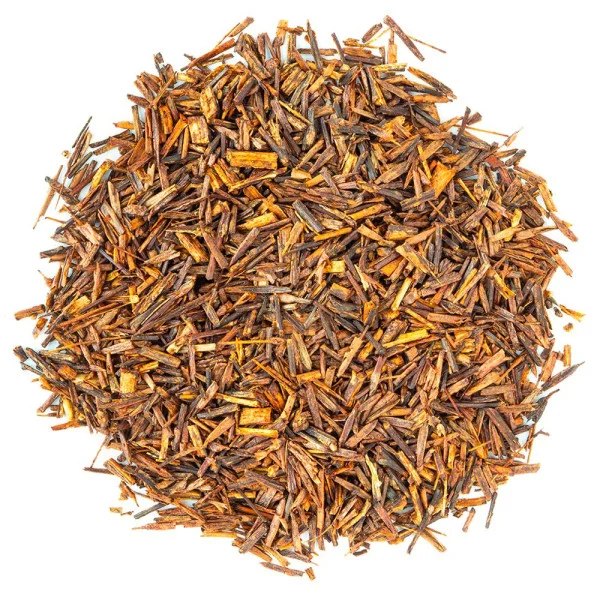
Organic LOVE PICK
Pure Rooibos
Caffeine-free beverage, perfect for evening enjoyment
Who would have thought that a humble shrub growing only in the arid soils of the Western Cape would one day become the darling of tea lovers the world over? Rooibos, the "tea that isn't a tea", breaks all the rules. Caffeine-free, rich in antioxidants and bursting with flavour, it's the perfect drink for any moment of the day, from dawn to dusk. Our collection brings together a wide selection of AB-certified organic rooibos and a few exceptional conventional varieties: plain, green, flavoured with fruit, spices or South African terroir.
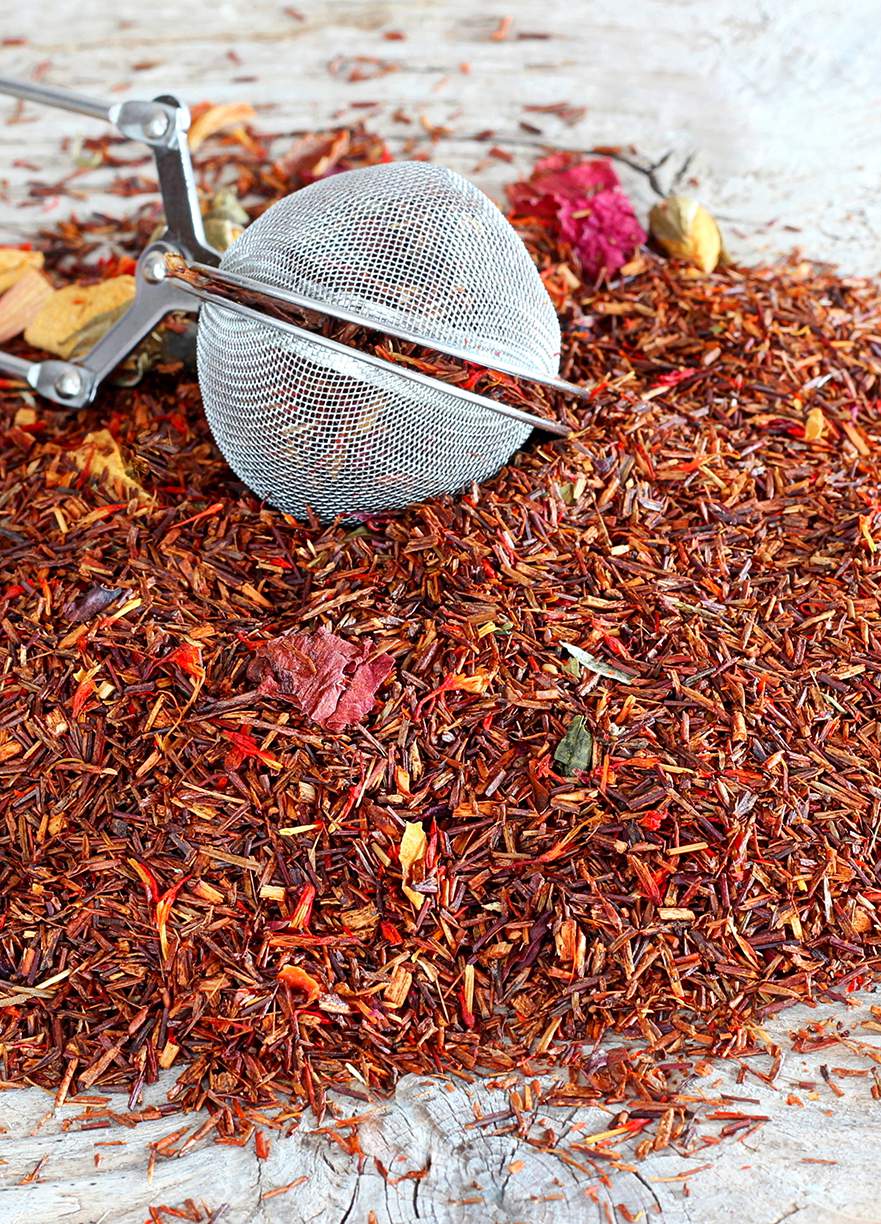
Rooibos, often mistakenly called "red tea" or "rooibos tea," is a truly unique herbal infusion from South Africa that has been winning hearts around the world. Unlike tea from the Camellia sinensis plant, rooibos comes from a wild shrub called Aspalathus linearis. Let's step into the fascinating world of this extraordinary drink.
Rooibos, meaning "red bush" in Afrikaans, is a plant native to the Cederberg region in the Western Cape of South Africa. Enjoyed by local communities for centuries, it wasn't until the early 20th century that cultivation and commercial production took off. Today, rooibos has become South Africa's national drink and a beloved choice for herbal infusion lovers worldwide.
Aspalathus linearis is a shrub from the legume family, related to acacia. It grows exclusively in the sandy, acidic soils of the Cederberg mountains. This hardy plant, well adapted to the semi-arid climate, produces fine needle-shaped leaves and small yellow flowers. The harvest takes place once a year, generally between January and March.
There are two main types of rooibos: red and green. Here is a comparison of their key characteristics:
| Characteristic | Red Rooibos | Green Rooibos |
|---|---|---|
| Production process | Fermented | Unfermented |
| Infusion color | Deep reddish | Golden yellow |
| Flavor profile | Round, smooth, naturally sweet | More herbaceous, slightly astringent |
| Antioxidant content | High | Very high |
All our organic rooibos carry the Organic Agriculture (AB) certification and come directly from partner farms in South Africa, primarily from the Cedarberg region, the only place in the world where Aspalathus linearis grows. Here is how we have organized our selection.
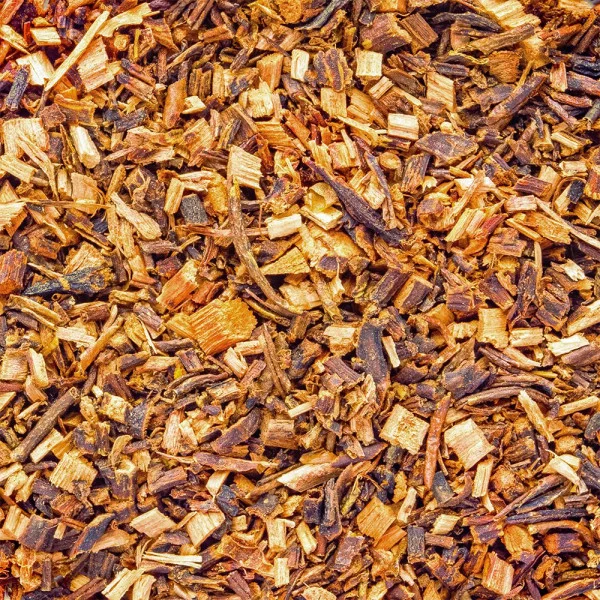
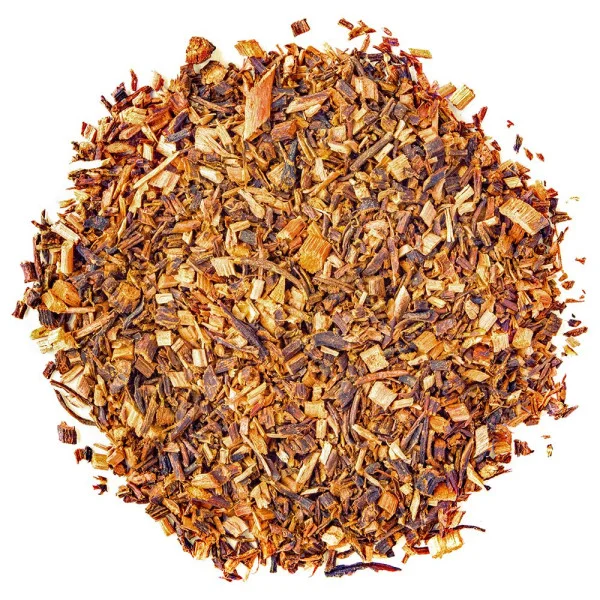
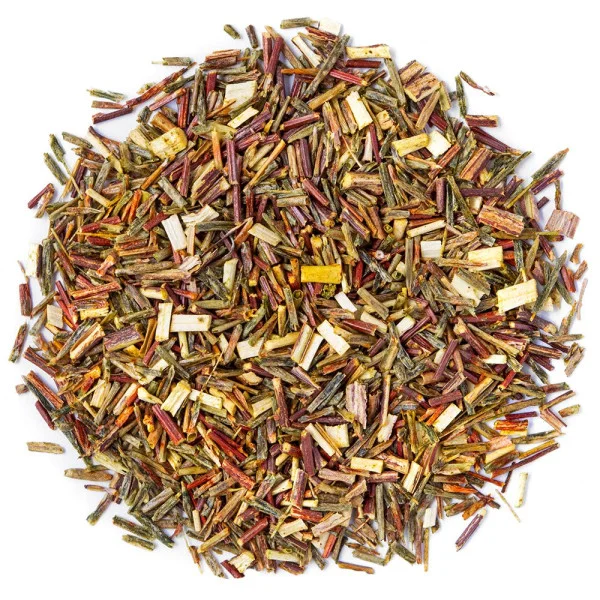
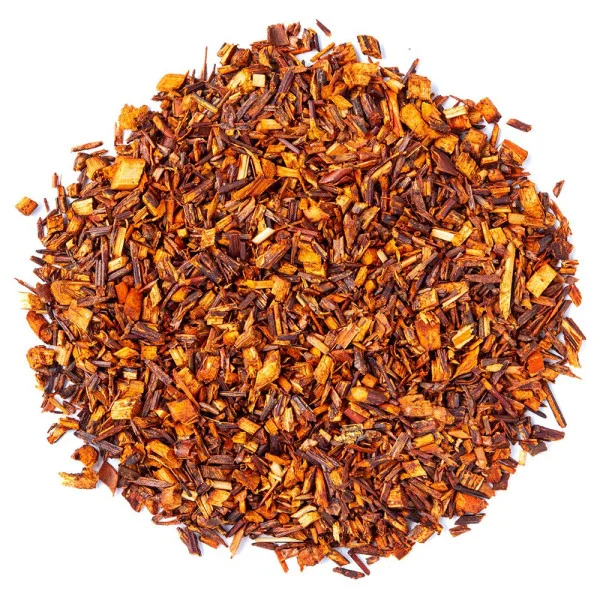
The perfect starting point to experience rooibos in its purest form, with no added flavoring. Natural Rooibos is the classic reference: smooth, gently woody, and naturally sweet with nothing added. Green Rooibos (unoxidized) offers more herbaceous notes and an even richer antioxidant profile.
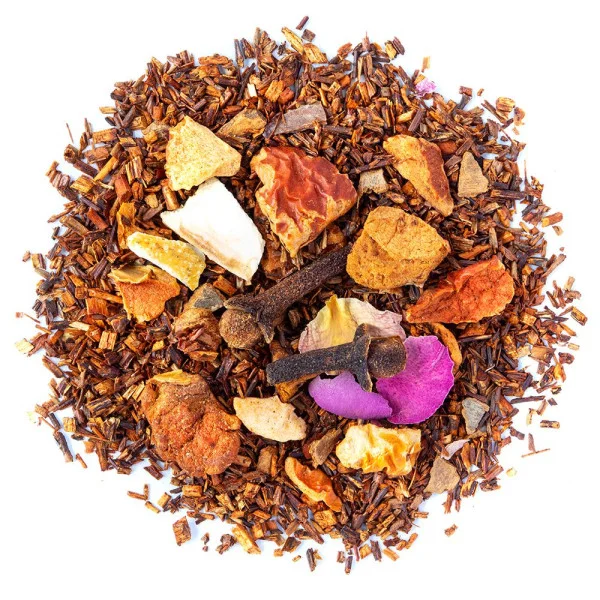
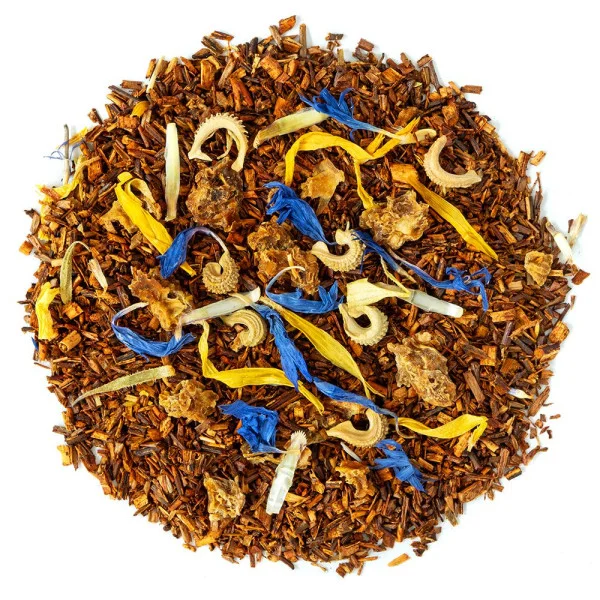
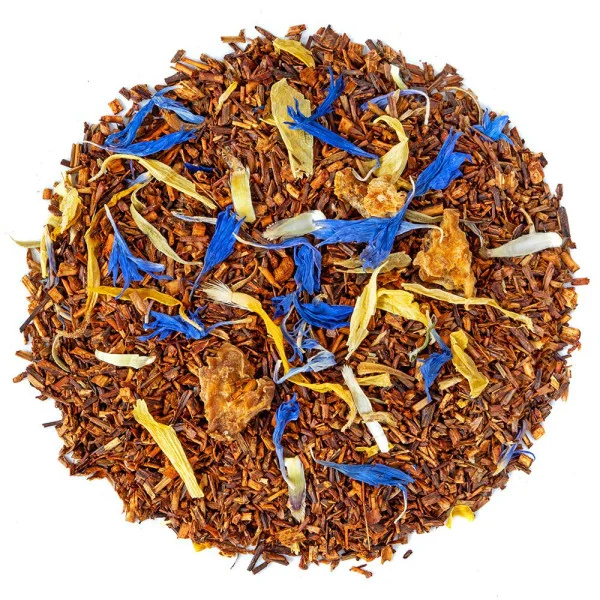
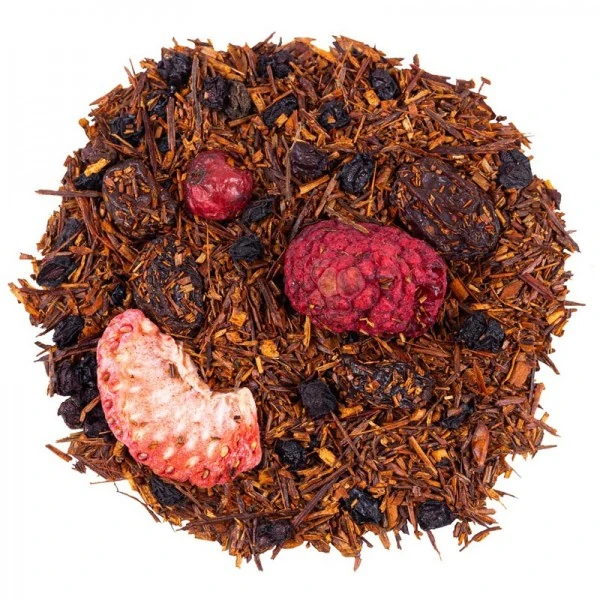
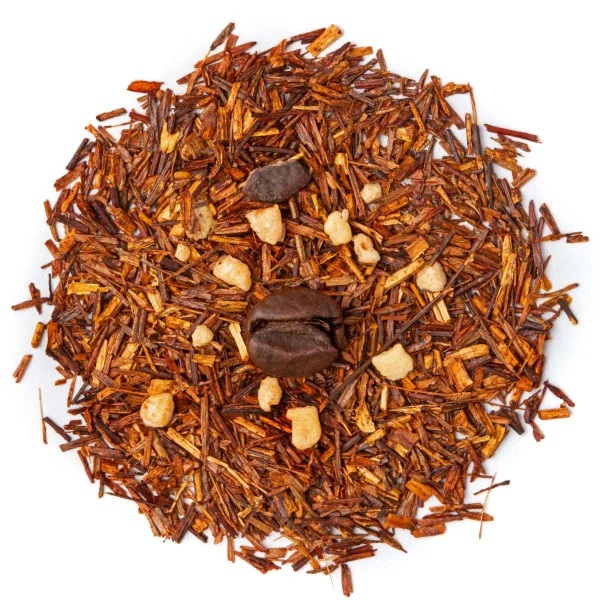
Our indulgent blends pair rooibos with organic fruits for naturally sweet infusions: Roasted Apple Cinnamon, Date Vanilla, Peach Apricot, Wild Berries.
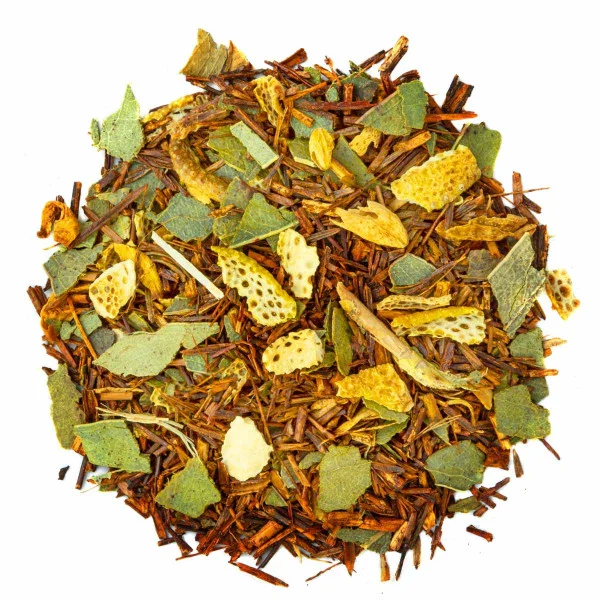
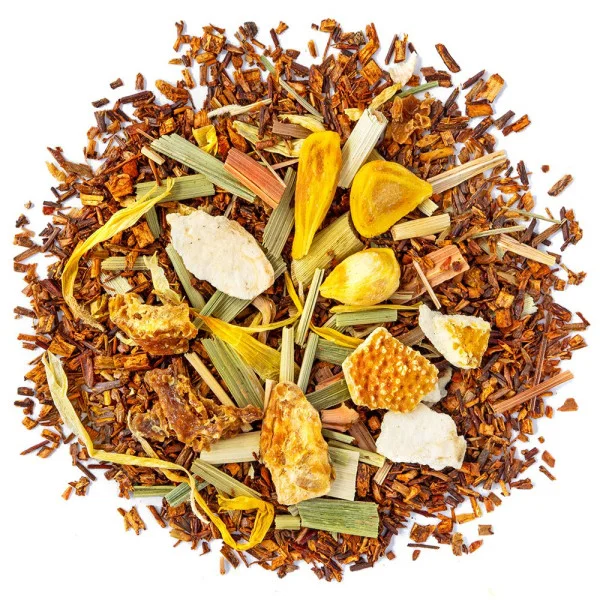
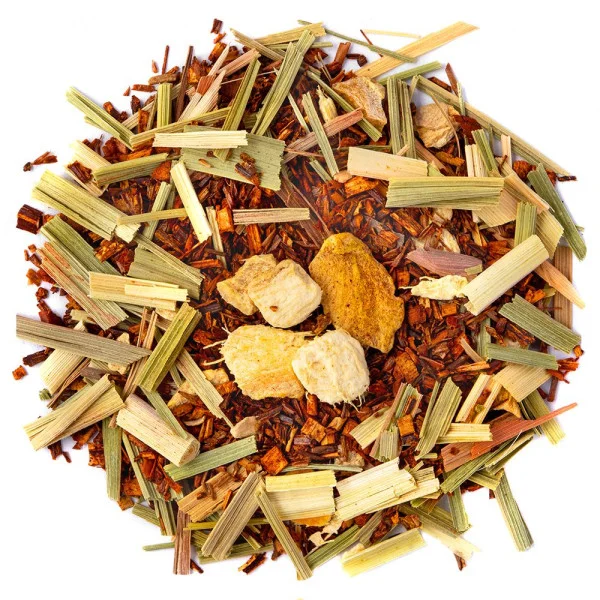
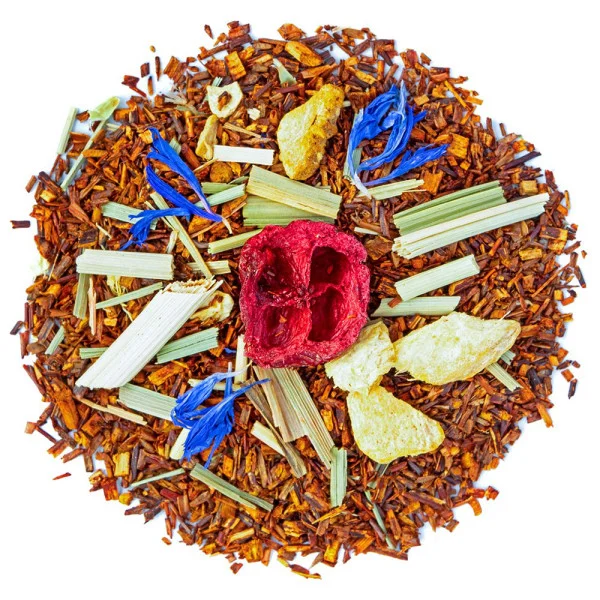
For those who love aromatic complexity: Cranberry Ginger (invigorating), Rooibos Earl Grey (a caffeine-free alternative to classic Earl Grey), Wellness Rooibos (a lemon, ginger and botanical blend for well-being rituals).
Single-origin rooibos from specific South African farms, each with a distinct profile shaped by its terroir and production method: Plumstead, Bellville (peppermint), Claremont, Middleton.
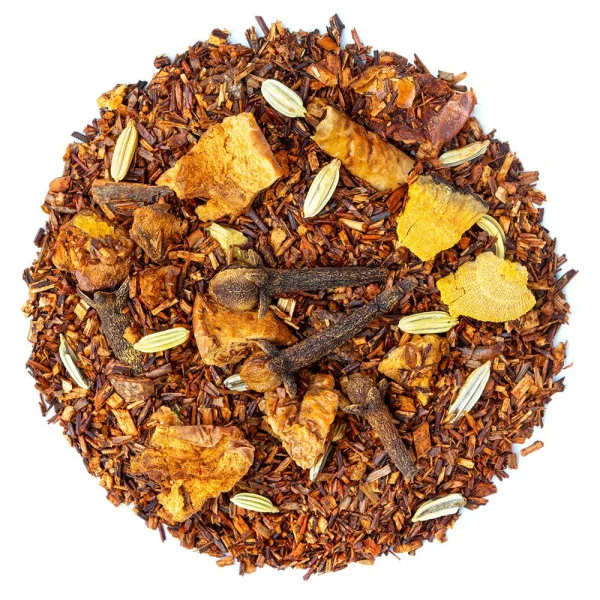
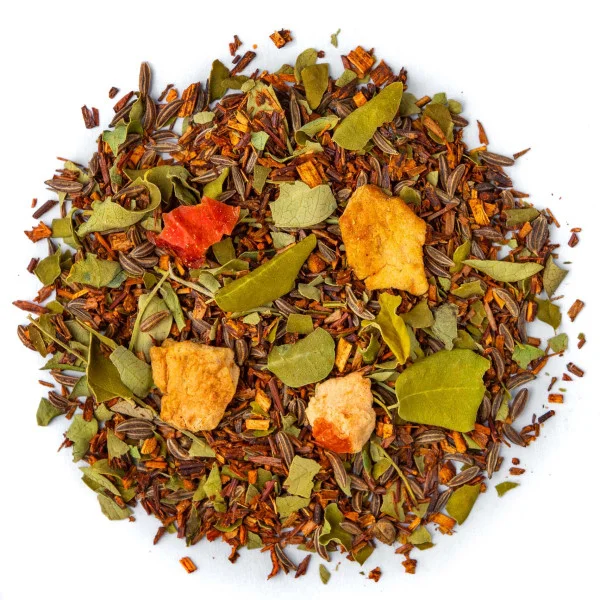
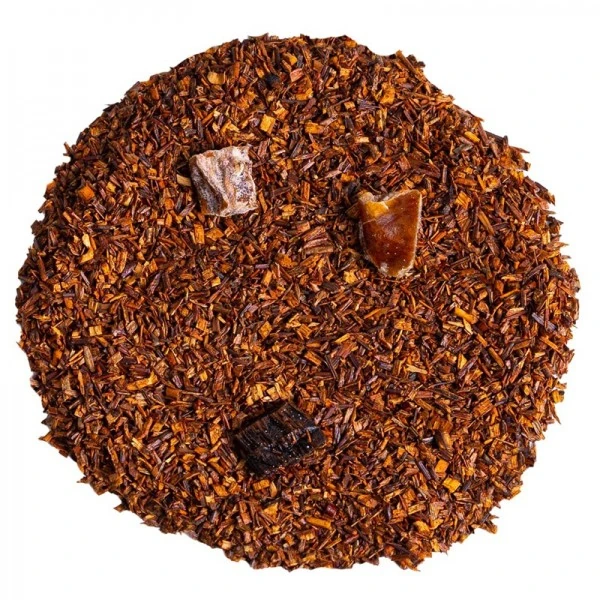
For special moments: Vanilla Rooibos (a timeless comfort blend), Christmas Rooibos (warming seasonal spices), Iced Lemon Orange Rooibos (perfect served cold).
Rooibos is particularly rich in antioxidants, including flavonoids such as aspalathin, a compound unique to this plant. These flavonoids are characteristic of rooibos and contribute to its natural richness as well as its warm amber color.
Rooibos stands out for its remarkable gentleness. Its low tannin content makes it a round, barely astringent infusion, pleasant at any time of day, where stronger teas might feel sharper on the palate.
Naturally rich in flavonoids, rooibos is also appreciated beyond the cup, particularly in the world of cosmetics:
Rooibos is traditionally enjoyed in the evening as a moment of calm. Unlike tea or coffee, it contains no caffeine: it is an ideal drink for those sensitive to caffeine and for the whole family, to be savored at any hour of the day.
An AB-certified organic rooibos is grown without synthetic pesticides, chemical fertilizers, or GMOs. Soils are preserved, biodiversity is respected, and producers follow a strict set of standards audited annually by an independent body. In practice, organic rooibos contains zero detectable pesticide residues.
Rooibos is steeped for a long time (5 to 7 minutes, sometimes longer), meaning any pesticide residues have more opportunity to migrate into the cup. It is one of the infusions where the gap between organic and conventional is most noticeable. Rooibos is also frequently recommended for pregnant women and children precisely because it is caffeine-free, making it all the more important to choose a residue-free version. For a spiced version with black tea, visit our chai teas.
Selected by Julien Huot, tea expert at Thés & Traditions
« With rooibos, the difference between organic and conventional isn't just a label: it shows up in the cup. The organic rooibos we source directly from the Cederberg has a purer, smoother character, with no bitterness, because the preserved soils and traditional farming practices let the plant express its terroir. That's also why I recommend it without hesitation for families, pregnant women, and young children. »
Although often called "red tea" or "rooibos tea", rooibos is not a true tea. Here is a comparison:
| Characteristic | Rooibos | Tea |
|---|---|---|
| Source plant | Aspalathus linearis | Camellia sinensis |
| Contains caffeine | No | Yes |
| Geographic origin | South Africa only | Asia, Africa, South America |
| Main types | Red and green | Black, green, white, oolong |
The name "red tea" comes from the reddish colour of brewed fermented rooibos. Although botanically inaccurate, the term spread through analogy with traditional tea and for commercial reasons. In many countries, "rooibos infusion" is preferred to avoid any confusion.
Contrary to popular belief, rooibos does not interfere with sleep. Naturally caffeine-free, it can be enjoyed in the evening without disrupting rest. Its calming properties make it a genuinely helpful companion for a peaceful night. It is often recommended for those who struggle with insomnia as an alternative to traditional herbal infusions.
All in all, rooibos is far more than a simple drink. Rich in benefits, wonderfully versatile, and full of flavour, it earns a place in everyday life. Whether you are a tea lover looking for a caffeine-free alternative, or simply curious to explore new tastes, rooibos has a quiet charm all its own.
Our organic rooibos selection makes it easy to find the right product for your preferences. Our online shop offers rooibos loose-leaf (100g pouches) or in individual tea bags, depending on how you like to brew. Loose-leaf rooibos delivers superior quality (whole, unbroken leaves), while tea bags are handy for the office or when travelling.
Our commitment: certified organic farming, direct sourcing from our South African cooperative partners, fair and transparent pricing. Free delivery on orders over €49, secure payment, fast shipping.
The plain rooibos is the pure, unadulterated version, ideal for purists who want to experience the authentic aroma of the South African red bush. Its flavour is smooth, naturally sweet, with a gentle woody quality. Flavoured rooibos blends add fruits, flowers, or spices to the rooibos base to create indulgent, aromatic cups. Our full range includes both.
Store your rooibos in an airtight tin, away from light and moisture. Properly stored, it keeps well for 18 to 24 months after opening. For brewing, use water at 95 to 100°C (just below or at a full boil): rooibos handles the heat beautifully without turning bitter. For a summer twist, our Lemon Orange Rooibos was designed with cold brewing in mind.
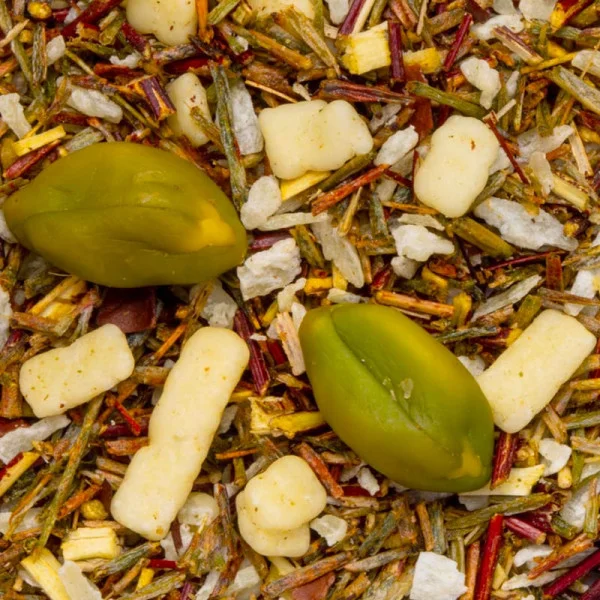
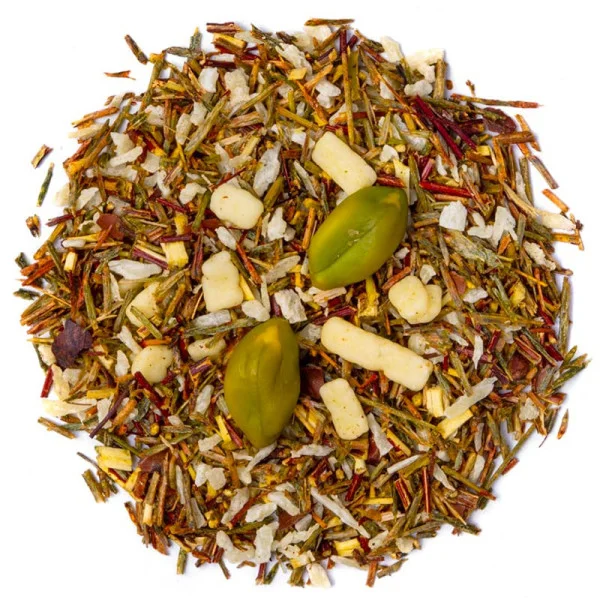
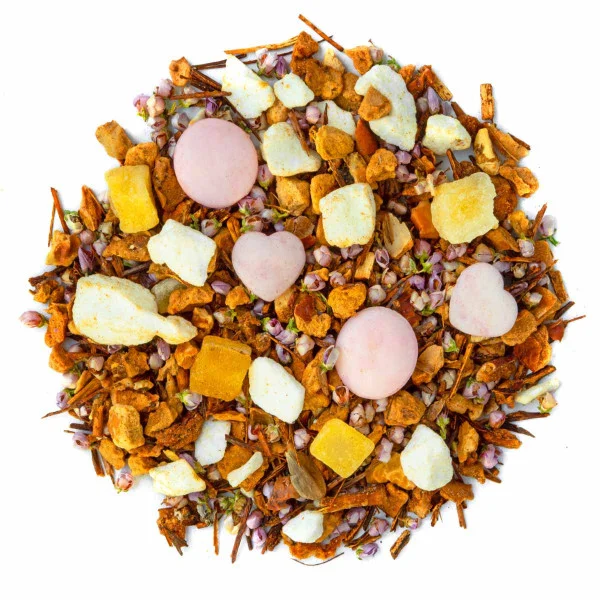
Feeling curious? Try our Piña Colada Rooibos for a holiday mood, the Lemon Meringue Rooibos for a bright, zesty cup, or the White Chocolate & Pistachio Rooibos for something truly indulgent: there is a red for everyone.
The AB label (French) and the EU Organic leaf (European) both certify organic farming: no synthetic pesticides, no GMOs, and responsible agricultural practices. Demeter goes further, applying biodynamic farming principles — a more demanding standard, though less common. Our rooibos is certified AB and EU Organic.
Yes, completely. Rooibos (Aspalathus linearis) contains no caffeine, whether organic or conventional — this is a botanical fact, not a production choice. It can be enjoyed throughout the day, including in the evening, and is suitable for pregnant women, children, and anyone sensitive to caffeine.
Rooibos is particularly rich in aspalathin (a polyphenol unique to this plant), nothofagin, and flavonoids. Scientific studies (Journal of Ethnopharmacology, Nutrients) suggest antioxidant effects, cardiovascular support, and a calming action. Organic rooibos better preserves these compounds thanks to the absence of chemical exposure.
Use one teaspoon (around two to three grams) per 250 ml of near-boiling water (95 to 100°C). Steep for 5 to 7 minutes. Unlike tea, rooibos does not turn bitter with longer steeping, so you can leave it for up to ten minutes for maximum polyphenol extraction. Organic rooibos also works beautifully iced (cold brew in the fridge for several hours) or as a latte with plant-based milk.
Stored in an opaque airtight tin, away from light and moisture, loose-leaf organic rooibos keeps for two to three years without significant loss of quality. Green rooibos (unoxidised) has a slightly shorter shelf life, as its volatile compounds are more delicate.
In practice, there is none: "red tea" is the traditional commercial name for rooibos in French, though botanically rooibos is not a tea at all (tea comes from Camellia sinensis, rooibos from Aspalathus linearis). When you see "organic red tea" or "organic rooibos", it is exactly the same plant. Not to be confused with Pu-erh (Chinese fermented tea), sometimes also called "red tea" in China — Pu-erh does contain caffeine.
Sources: Journal of Ethnopharmacology (rooibos bioactive compounds), Nutrients (aspalathin and cardiovascular benefits), INAO (Organic Agriculture label), South African Rooibos Council.
To brew a delicious cup of rooibos:
Rooibos is also wonderful served iced, making it a perfect companion for warm summer days.
Since rooibos is naturally caffeine-free, it can be enjoyed at any time of day or evening. It is especially appreciated:
Rooibos lends itself beautifully to all kinds of creative recipes. A few ideas to inspire you:
Aspalathus linearis, the rooibos plant, grows exclusively in the Cederberg region of South Africa: an arid area north of Cape Town, with a Mediterranean climate, sandy acidic soils, and an altitude ranging from 450 to 900 metres. It is the only biome in the world where this plant can be cultivated commercially.
We work through direct sourcing with a small number of Cederberg farms committed to certified organic farming. Organic rooibos remains rare. Direct relationships allow us to guarantee traceability down to individual plots, and to support agroecological practices.
Rooibos is harvested by hand between January and April (the southern summer), then chopped and sun-oxidised for 8 to 24 hours depending on the farm. It is this oxidation that develops the characteristic red colour and distinctive aromas. Green rooibos skips the oxidation step entirely: it retains a green hue, more vegetal notes, and an even richer antioxidant profile.
Explore our other caffeine-free infusions

French House
Independent since 2016.
Fast delivery
Home delivery or click & collect.
Made with heart
In the south of France.
Customer service
A real voice at the end of the line,
Monday to Friday: 04 22 91 35 75.
Sharing, passing it on: our teas, our tips, the occasional unexpected idea, and little attentions just for you. Pure pleasure, ready to steep.