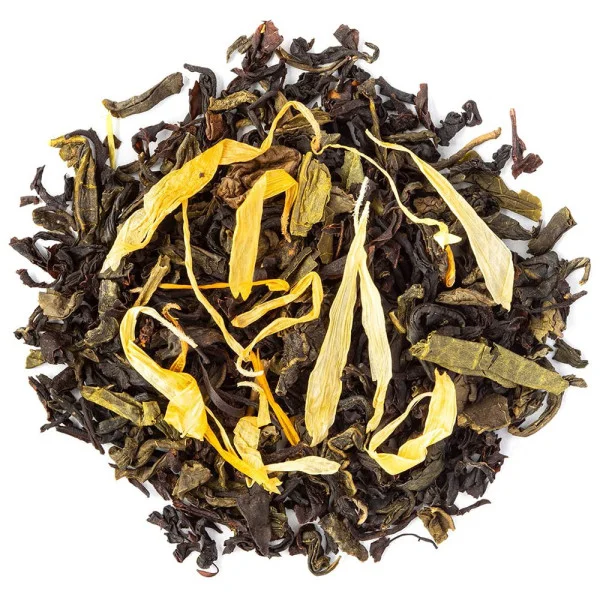
Buddha's Temple
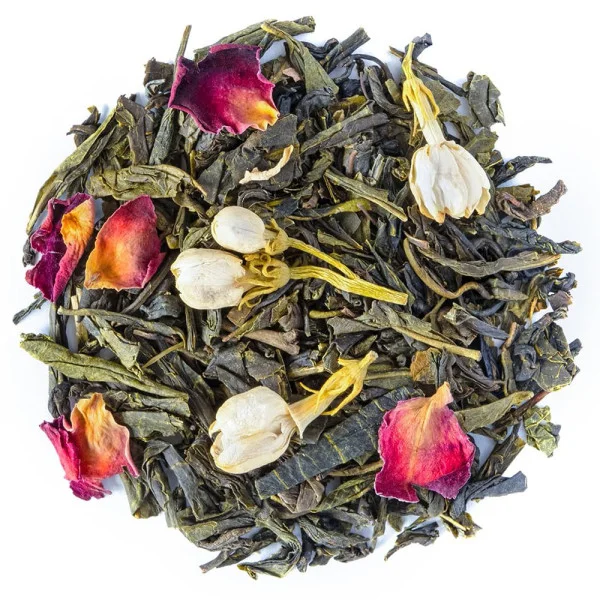
Jasmine, vanilla and bergamot! This delightful blend is one of a kind
A jasmine tea is a green, white or black tea scented with jasmine blossoms: a floral, smooth and beautifully aromatic cup, one of the great classics of Chinese tea culture. Twisted leaves, hand-rolled pearls or fruity blends: browse our selection of loose-leaf jasmine teas, crafted with quality in mind and largely sourced from organic farming.
Each variety has its own character. Some let the flower take centre stage; others pair it with fruit or other blossoms. Here is how our selection is composed, along with guidance to help you choose by taste and time of day.
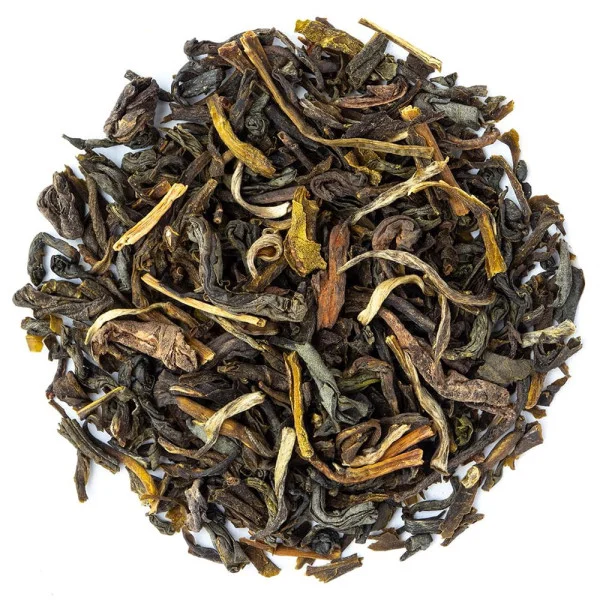
The organic Jasmin Chun Hao green tea is a fine Chinese tea naturally scented with fresh jasmine blossoms: delicate floral notes, a round and velvety palate, a fresh finish. It is the organic jasmine green tea to start with: subtle aromas, easy to love. For a fuller experience, the organic Jasmin Impérial blends four Chinese teas scented with jasmine: a clear, bright liquor and a more pronounced floral presence, for those who love a truly blooming cup.
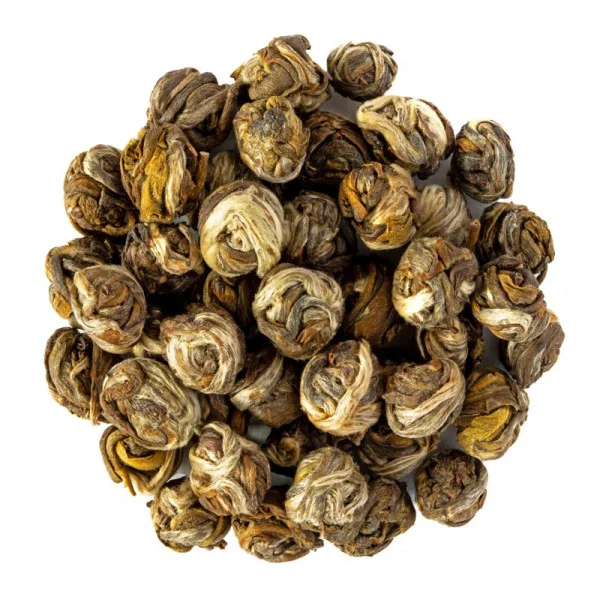
The organic Jasmine Dragon Pearls are young white tea buds hand-rolled into small pearls, then scented with jasmine. In warm water, each pearl slowly unfurls and releases a silky, gentle liquor with clean floral aromas. A tea you will enjoy watching steep, in a glass or a clear teapot.
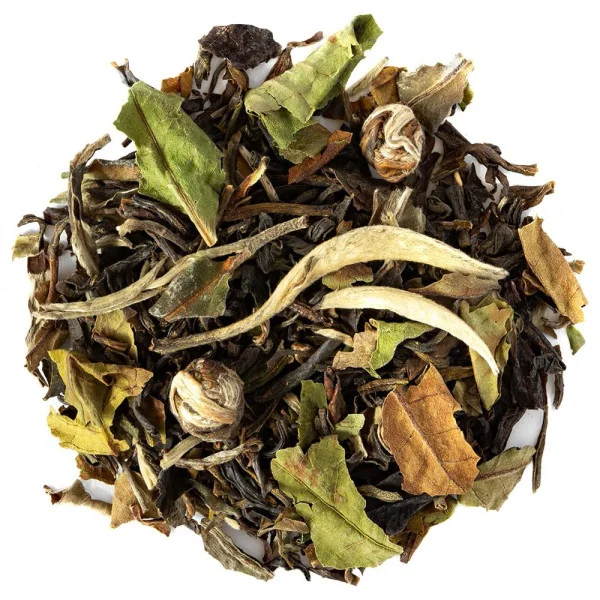
The Temple du Bouddha black tea brings together jasmine blossoms, vanilla and bergamot. Its black tea base gives it body, the bergamot echoes an Earl Grey, and the jasmine adds a floral touch: a rounded, luminous blend that feels right at home at breakfast.
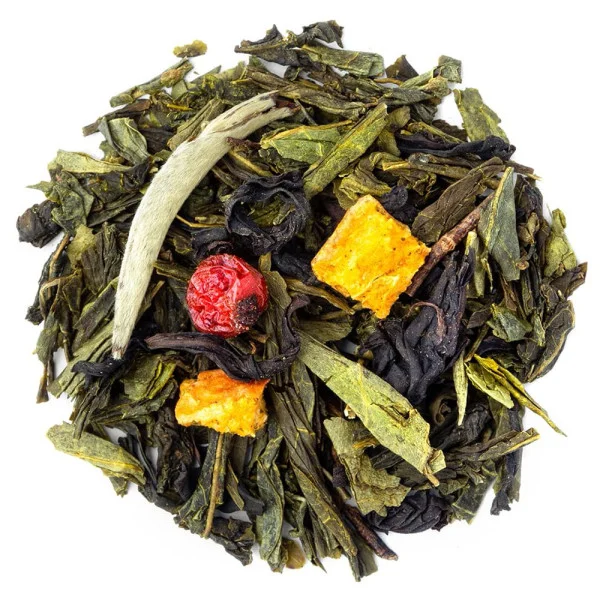
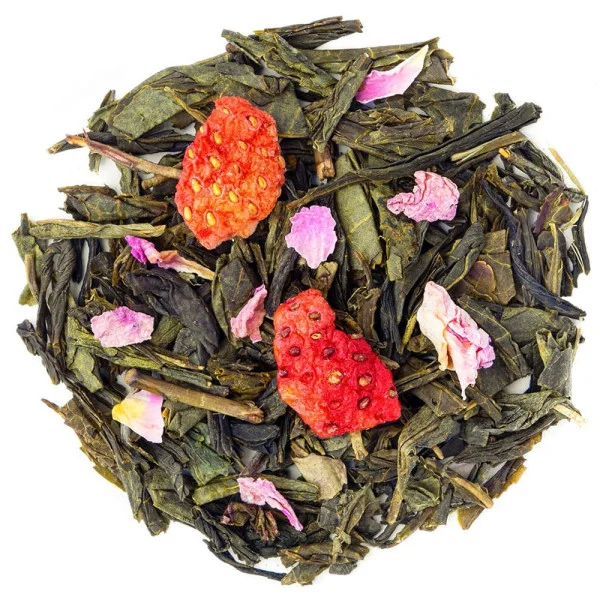
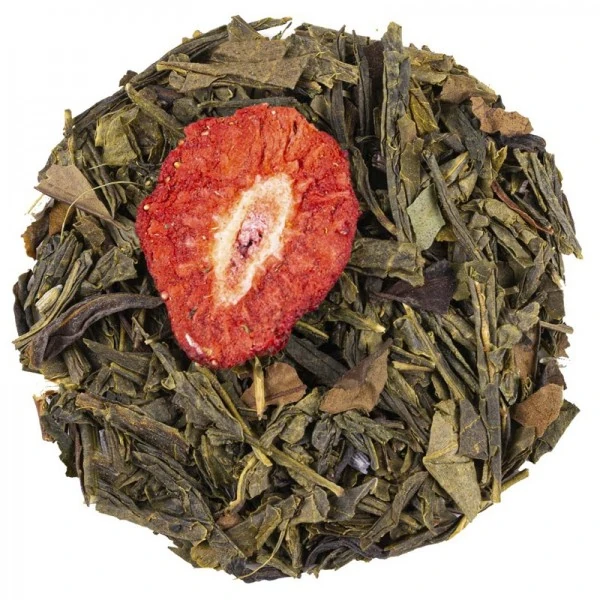
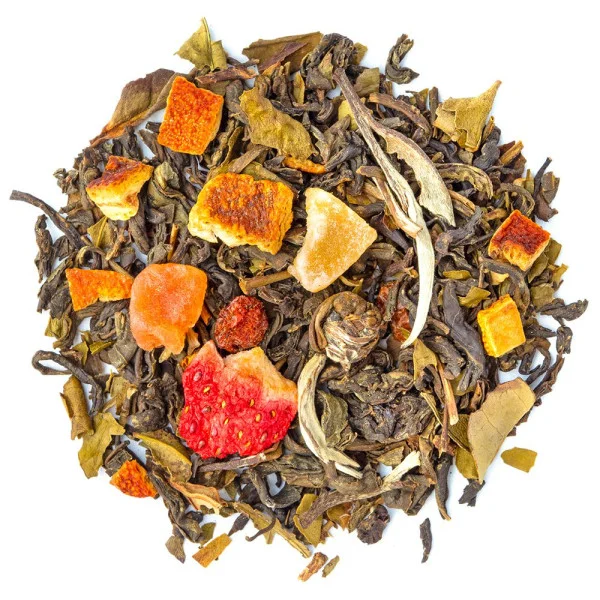
Jasmine pairs beautifully with fruit. Nuit à Tokyo brings together sencha, chun mee and jasmine green tea with rose petals and lychee notes: it is equally enjoyable as an iced tea. The organic Tianzhu green tea combines sencha and jasmine with strawberry, lavender and a hint of chilli. The organic Jiangkou weaves together three green teas, including jasmine pearls, with strawberry and raspberry, while Jiangsu plays on apricot and redcurrant. On the white tea side, the thé blanc du Dragon pairs lychee, peach and exotic fruits with a touch of jasmine.
The base makes all the difference. With a green tea, whether a Chinese green tea or a Sencha, the cup is fresh and vegetal, and the jasmine comes through beautifully: this is the most popular style. With a white tea, the liquor is softer and more silky, almost sweet. With a black tea, the flavor is rounder and fuller, and the flower settles into the background.
Whole leaves infuse quickly and deliver a consistent cup, making them easy to enjoy every day. Pearls need a little more room to unfurl, and their aromas open gradually over time. They also take well to a second infusion: simply allow a little extra steeping time.
To really taste the jasmine itself, choose a tea where it takes center stage: Chun Hao, Imperial Jasmine, or pearls. If you enjoy richer or fruitier teas, blends with strawberry, lychee, or apricot keep a floral note in the background without overpowering the cup. Love floral teas in general? Browse our flower teas as well.
Our jasmine teas are sold loose-leaf, and a large selection is organically grown: the status of each tea is listed on its product page, along with its ingredients. Loose-leaf gives the leaves and pearls room to open fully, something a tightly packed tea bag simply cannot do. If you prefer the convenience of a bag, paper filters you fill yourself work wonderfully.
Jasmine tea was born in China, where it has been part of tea history for centuries. The province of Fujian, a region of tea gardens and jasmine fields, remains closely associated with this craft. The traditional scenting method has changed very little over time. After the spring harvest, the leaves are dried and then stored until summer, when jasmine (Jasminum sambac) comes into bloom. The flower buds are picked during the day and open as evening falls: they are then layered with the tea leaves, which absorb their fragrance over several hours. The blossoms are removed afterwards, and the process may be repeated several times for the finest teas.
This is what sets a tea naturally scented with flowers apart from one that is simply flavored: the aroma comes from the flower itself, making it more delicate and longer-lasting in the cup. It is also a reliable quality indicator when choosing a jasmine tea. The few petals you sometimes spot among the leaves are there mostly for visual delight.
Nothing complicated here: a simple ritual, three things to remember, and a few tips for summer.
Allow one teaspoon per cup, or 12 to 15 g of loose-leaf tea per liter. For a jasmine green or white tea, pour water at 75 to 80 °C and steep for 2 to 3 minutes. Boiling water or over-steeping will bring out bitterness and overwhelm the floral notes. Jasmine black tea is more forgiving: use water just off the boil and steep for 3 to 5 minutes. Give the leaves room to open: a teapot or wide infuser will serve you better than a small tea ball.
Jasmine is wonderful served cold. Cold-brew the tea in a pitcher of water left in the fridge for a few hours, or brew a slightly stronger hot infusion and let it cool before adding ice. A handful of berries or a slice of lime is all you need. More ideas are waiting for you in our iced teas selection.
What is jasmine tea?
It is a tea, most often green, sometimes white or black, scented with jasmine blossoms. The leaves absorb the fragrance of fresh flowers, which are then removed. It is not a jasmine herbal infusion, but a true tea.
What types of jasmine tea are there?
The most widespread is jasmine green tea. Next come white tea pearls, followed by jasmine black tea, which is rarer. There are also flavored blends, where jasmine is paired with fruits or other flowers.
Does jasmine tea contain caffeine?
Yes, like all teas, since it is made from tea leaves. The amount varies depending on the tea chosen and the steeping time. For a floral, caffeine-free drink, explore our herbal infusions.
What does jasmine tea taste like?
Floral and smooth, with the vegetal character of green tea or the roundness of white tea. When properly steeped, it is free of bitterness and leaves a long, lingering floral finish.
What are the benefits of jasmine tea?
Like any green tea, it naturally contains antioxidants, and many people value it for the quiet moment it invites. We make no medical claims about it. To learn more about its history, uses and pairings, read our jasmine tea guide.
Can you drink jasmine tea in the evening?
It does contain caffeine: if you are sensitive to it, keep it for daytime and choose an herbal infusion in the evening. Otherwise, a lightly steeped cup after dinner suits many people perfectly well.
What pairs well with jasmine tea?
It goes beautifully with Asian cuisine, fish, lightly spiced dishes and fruit-based desserts. At the end of a meal, it makes a pleasant alternative to coffee.
How should jasmine tea be stored?
In an airtight tea caddy, ideally a metal tin, away from light, heat and moisture, and well away from coffee or spices: tea readily absorbs surrounding aromas, and the jasmine note is a delicate one.

French House
Independent since 2016.
Fast delivery
Home delivery or click & collect.
Made with heart
In the south of France.
Customer service
A real voice at the end of the line,
Monday to Friday: 04 22 91 35 75.
Sharing, passing it on: our teas, our tips, the occasional unexpected idea, and little attentions just for you. Pure pleasure, ready to steep.