Clove Herbal Tea: 5 Benefits and Precise Dosage

In brief: Cloves (Syzygium aromaticum) are the spice richest in eugenol, the aromatic compound that gives it its warm, recognisable scent. Clove herbal tea has long been enjoyed for its spiced warmth and comforting character, as part of age-old rituals. Dosage: 3 to 5 lightly crushed cloves per 250 ml cup, steeped for 8 to 10 minutes at 95°C (203°F), 2 to 3 cups per day maximum.
Cloves are an age-old spice whose use has been documented for more than 2,000 years, from Chinese and Ayurvedic medicine to the modern European pharmacopoeia. Their interest rests primarily on eugenol, which makes up 70 to 90% of the essential oil. This page covers the recognised traditional uses, how to prepare the infusion properly, and above all the precautions worth knowing, because cloves remain a potent spice.
Clove: composition and traditional uses
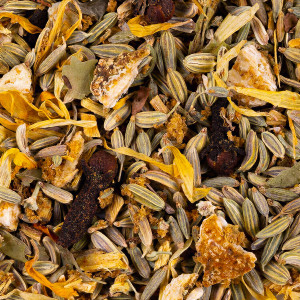
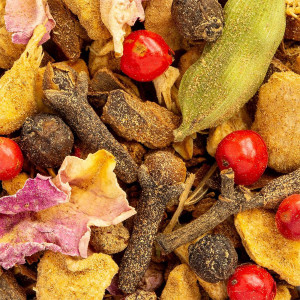
Clove is one of the most studied of all spices. Here is what tradition attributes to it and what research is exploring today:
- A long history in the mouth: clove has accompanied mouth care for centuries across many cultures, and the eugenol it contains has fed the interest of researchers. A heritage that explains its place in the history of dentistry.
- A spice of the table: across many cultures, clove traditionally accompanies dishes and spiced after-dinner drinks, for the pleasure of its warm aromas.
- A compound studied in the laboratory: numerous in vitro studies have looked at eugenol. These experimental findings in no way support presenting cloves as an antibiotic: the effect on the human body as a whole is not comparable to a medicinal treatment.
- Antioxidant power: cloves top the ORAC ranking for antioxidant foods, with values far exceeding those of other spices. This density explains the nutritional interest of moderate, regular consumption.
- Seasonal discomfort: tradition attributes a use for mild winter ailments (irritated throat, blocked nose). The EMA has not validated a formal claim, but the traditional use is widespread across Europe and Asia.
More broadly, cloves are included in the WHO monograph on selected medicinal plants, which represents international recognition of their traditional use.
A gentle way to enjoy it: find clove in our Orange & Clove organic herbal tea — warming, spiced and caffeine-free.
How to make a good clove herbal tea
The recipe is straightforward, but a few details matter. Cloves are hard and release their active compounds slowly, which is why a longer steeping time is needed compared to leaves.
- Amount: 3 to 5 whole cloves per 250 ml cup (around 1 g). Crush them lightly in a mortar to release the eugenol more effectively.
- Water: bring to a near-boil (95°C / 203°F), avoiding a prolonged rolling boil.
- Time: 8 to 10 minutes, covering the cup to retain the volatile essential oils.
- Straining: pass through a fine sieve. Once the infusion has cooled slightly, you can add a spoonful of honey and a dash of lemon juice.
- Frequency: 2 to 3 cups per day maximum, over a short course (5 to 7 days) when dealing with discomfort, or occasionally as needed.
Cloves keep for several years in an airtight jar away from light. Choose plump, dark cloves that release a drop of oil when pressed with a fingernail: this is the sign of freshness.
Pairings that bring out the best in cloves
Cloves become even more interesting when combined with other herbs or spices. Here are a few classic blends:
- For winter discomfort: 3 cloves + a cinnamon stick + a slice of lemon + a little honey. A warming, soothing hot drink.
- For digestive comfort: 3 cloves + 1 cm of fresh ginger + a cardamom pod. Our guide to ginger herbal tea covers this combination in detail.
- For an invigorating herbal tea: 3 cloves + 1 teaspoon of black tea + cinnamon + cardamom (a simplified Indian chai recipe).
- For an Ayurvedic blend: cloves, cardamom, ginger, black pepper and almond milk for a spiced drink.
Our clove and orange infusion is a ready-made example of this kind of blend, with no measuring required on your part.
Cloves, the spice of Christmas. Together with cinnamon, orange and cardamom, cloves give our festive teas and infusions their warmth, ready-blended for you:
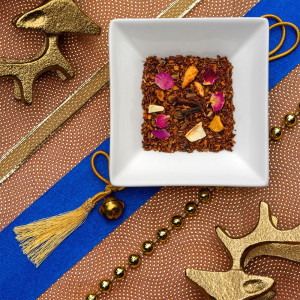 Christmas Rooibos€7.90
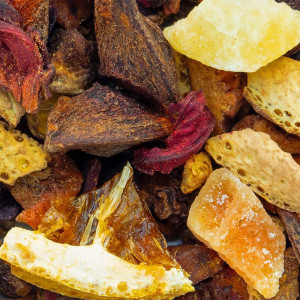 Herbal Infusion Monsieur Pain d'Épices€7.90
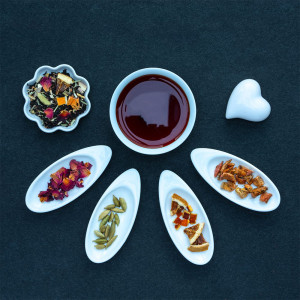 Winter House Cocktail Black Tea€8.50
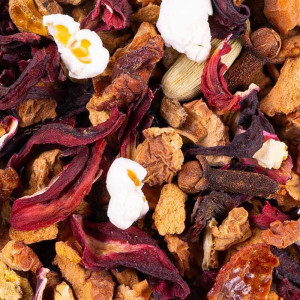 Winter Warmth Herbal Infusion€8.60
Explore our full selection of Christmas teas, or our Christmas Gift Box: 6 teas and infusions ready to give.
Precautions and contraindications
Cloves are a potent spice. A few rules to keep in mind:
- Pregnant and breastfeeding women: avoid concentrated infusions and essential oil. Eugenol crosses the placental barrier and passes into breast milk.
- Children under 6: avoid the essential oil. An occasional cup of tea (1 clove per cup) is acceptable from age 6 onwards, under supervision.
- Anticoagulant therapy: eugenol may interact with vitamin K antagonists. Mention your consumption to your doctor.
- Gastric ulcer or reflux: stimulation of gastric juices may worsen discomfort. Opt for gentler herbs instead.
- Allergy to Myrtaceae: cloves belong to the Myrtaceae family (eucalyptus, myrtle, guava). A known allergy calls for caution.
- Essential oil: never apply undiluted to the skin, and never take orally without professional advice. ANSES issued a warning in 2018 on the risks of improper use of phenol-based essential oils.
Disclaimer: the information in this article is for educational purposes only and does not replace medical advice. For persistent tooth pain, infection or concerning symptoms, please consult a doctor or dentist. Herbal teas are not medicines and cannot substitute for any prescribed treatment.
Sources: Cortés-Rojas D.F. et al., Asian Pacific Journal of Tropical Biomedicine on eugenol (PMID:25182278) · Lane B.W. et al., Journal of Dentistry on local anaesthetic effect (PMID:16487692) · Pérez-Jiménez J. et al., European Journal of Clinical Nutrition on antioxidant polyphenols (PMID:20096093) · WHO, monograph on selected medicinal plants Vol. 2 (Syzygium aromaticum) · ANSES, warnings on phenol-based essential oils (2018).
Written by
Julien Huot, founder of Thés & Traditions. Tea selector since 2016, trained in tasting and passionate about sharing the cultures of tea and herbal infusions.
Published on 8 November 2018 · Updated on 21 May 2026
Frequently asked questions
- 3 to 5 whole cloves per 250 ml cup, lightly crushed in a mortar to release the eugenol. Beyond that, the flavour becomes overpowering and the active compounds too concentrated.
- 8 to 10 minutes at 95°C (203°F), with the cup covered to retain the essential oils. A shorter steep releases only part of the active compounds; a longer one turns bitter.
- At the recommended doses, it is generally well tolerated. At very high doses or over a prolonged course, it may irritate the digestive tract. The main contraindications relate to pregnancy, anticoagulant therapy and gastric ulcers.
- Over a short course of 5 to 7 days when dealing with discomfort, yes. Continuously over several weeks, it is not recommended. Cloves remain a potent spice, best used occasionally rather than as a daily drink.
Going further
To explore more spice-based herbal teas, browse our guide to cinnamon herbal tea, discover our guide to ginger herbal tea, or take a look at our selection for digestive comfort. You can also explore our full range of organic herbal teas to find the infusion that suits you best.
Tempted to try it?
Our selection related to this article, loose leaf and organic.
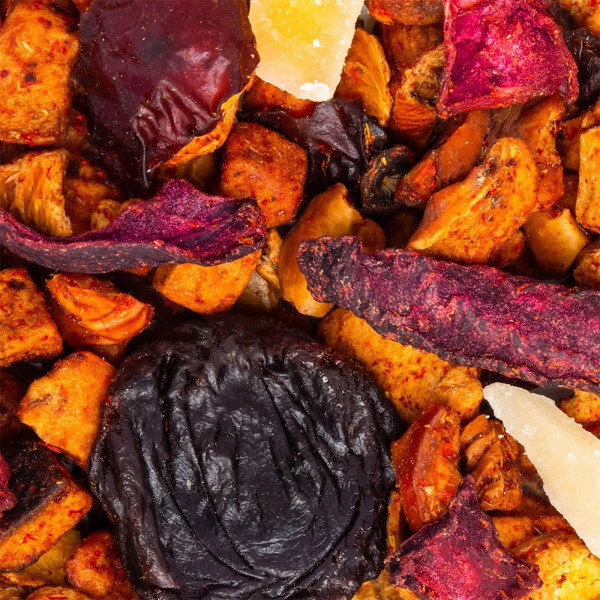
Cherry Cake Herbal Infusion
Cherry Cake herbal infusion, a truly indulgent cherry infusion, captures the warmth of a homemade pastry.
€6.90Discover
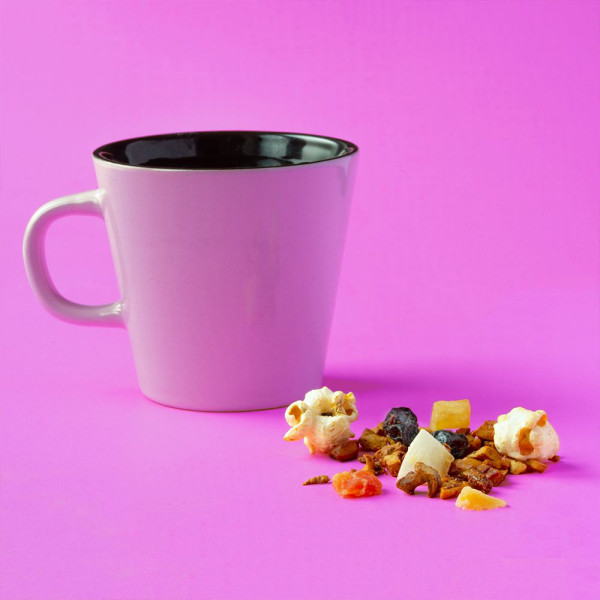
Almond Cloud Herbal Infusion
Almond Cloud herbal infusion is a tender, indulgent almond infusion that brings together roasted almond, apple and popcorn in a…
€7.20Discover
Hibiscus Flowers
Step into a swirl of deep crimson colour and captivating flavour with our hibiscus herbal infusion!
€5.90Discover