Where to Buy Quality Matcha? A Complete Buying Guide

You dream of savoring a truly authentic Japanese Matcha, one that reveals every nuance of this extraordinary powdered tea. A cup that turns each sip into a moment of pure stillness. We understand that quest completely.
At Thés & Traditions, we have spent years exploring Japan's tea gardens in search of the finest matchas. That journey has taken us from the hills of Uji to the plantations of Nishio, always guided by the same passion: bringing genuine authenticity to your cup.
Choosing your Matcha is far more than a simple purchase. It is a ritual, a precious pause in the rush of everyday life. It is also a way of making the most of everything this remarkable green powder has to offer.
The essentials before you begin
- Color tells the story: quality Matcha has a vivid, almost luminous emerald green, never dull or yellowish
- Origin makes the difference: always choose Matcha grown in Japan, in its traditional regions
- Grade determines use: ceremonial for pure drinking, culinary for your creative recipes
- Price reflects quality: expect to pay between €25 and €45 for 30g of genuine premium Matcha
- Freshness is everything: once opened, Matcha should be consumed within 6 months
Understanding matcha grades
Understanding Matcha grades is the key to making the right choice for your needs. In Japan, this classification follows centuries of tradition.
Ceremonial Matcha: pure excellence
This is the pinnacle of Matcha. Made from the very first leaves of the harvest, hand-picked in the early morning, this grade offers an unmatched delicacy. Its intense jade green color reflects its remarkable richness in chlorophyll and L-theanine.
Ceremonial Matcha is traditionally prepared with water at 70°C, whisked gently until it forms that distinctive, velvety foam. Every sip reveals deep umami notes, with no trace of bitterness.
Premium Matcha: the perfect balance
Slightly more accessible than the ceremonial grade, premium Matcha still delivers outstanding quality. It is ideal for your everyday matcha lattes or as an introduction to this time-honored drink.
The flavor remains smooth and well-rounded, with just enough character to delight without overwhelming.
Culinary Matcha: your creative partner
More robust in taste, this grade holds up beautifully to heat and blending. It brings that lovely green color and vegetal depth that work so well in baking, ice cream or smoothies.
One important note: even at culinary grade, quality still matters. A genuine Japanese culinary Matcha will always outperform a powder of uncertain origin, even one marketed as "ceremonial."
The best places to buy your matcha
Where you buy your Matcha is already a step toward quality. Not all retailers are equal, and we have done the groundwork for you.
Specialist tea houses: our top recommendation
Nothing replaces the expertise of a dedicated tea house. At Thés & Traditions, every Matcha is carefully selected, tasted and approved by our specialists. You benefit from personalized guidance and the assurance of an authentic product.
The real advantage? We know the story behind every Matcha: its terroir, its grower. That traceability means consistent quality and a truly memorable tasting experience.
Japanese grocery stores: guaranteed authenticity
These small shops are full of hidden gems. Their owners, often of Japanese heritage, choose their matchas with the same care they would apply to their own table. Do not hesitate to ask for advice: their enthusiasm is wonderfully contagious.
Organic and health food stores: a worthwhile option
More and more organic retailers now stock quality Matcha. Always check for Japanese origin and organic certification. Be cautious of prices that seem too good to be true: they often signal disappointing quality.
Online shopping: convenient, but approach with care
Buying online opens up an enormous range of options, but requires more scrutiny. Favour specialist retailers who clearly state the origin, grade and storage conditions. Read customer reviews carefully, and be wary of unusually low prices.
| Retailer | Advantages | Points to watch | Our advice |
|---|---|---|---|
| Specialist tea houses | Expertise, guidance, traceability | Prices can be higher | Ideal for beginners |
| Japanese grocery stores | Authenticity, passion | Sometimes limited selection | Great for discovery |
| Organic stores | Organic certification, accessibility | Check the origin | A solid compromise |
| Supermarkets | Price, availability | Very inconsistent quality | Best avoided at first |
| Online retailers | Huge choice, easy comparison | Cannot see or smell the product | Stick to specialists |
Recognizing exceptional matcha: our reliable criteria
After years of tasting and comparing matchas, we have developed a reliable method for identifying quality. Here are our insights.
The visual check: your first clue
Quality Matcha announces itself visually. The color should be a vivid, almost fluorescent green, a shade that comes from the high chlorophyll content of shade-grown leaves.
Avoid powders that look dull, yellowish or olive-toned. These signal either poor-quality Matcha or a product that has been badly stored and has lost its properties.
The aroma test: the nose never lies
Open your tin of Matcha and breathe in. Authentic Matcha has a fresh, grassy scent with subtle marine notes. Some detect hints of toasted hazelnut as well.
A smell of hay, bitterness or no scent at all? Move on.
The texture test
Take a pinch of Matcha between your fingers. The powder should be extraordinarily fine, almost silky, with no clumps at all, gliding between your fingers like talc.
This fineness comes from traditional stone-grinding, a slow and precise process that preserves every quality of the tea.
The ultimate test: tasting
Prepare your Matcha properly: water at 70°C, whisked briskly in a zigzag motion. The first sip will tell you everything.
An outstanding Matcha opens with a gentle vegetal sweetness, followed by complex umami notes. Any bitterness is subtle and pleasant. The mouthfeel is creamy, almost velvety.
Japan's exceptional growing regions
Japan is home to several outstanding terroirs for Matcha. Each brings its own distinct character, shaped by centuries of expertise.
Uji: the birthplace of matcha
Located near Kyoto, the Uji region has been producing Japan's most celebrated matchas since the 12th century. Its humid climate and morning mists create ideal conditions for growing tea.
Uji matchas are known for their exceptional smoothness and deep umami notes. This is where the most prestigious ceremonial grades are born.
Nishio: tradition meets modernity
This region in Aichi Prefecture combines ancestral tradition with modern technique. Nishio producers have developed particularly refined shade-growing methods.
Their matchas strike a beautiful balance between sweetness and character, with an especially vivid green color.
Kagoshima: respectful innovation
Further south, Kagoshima benefits from a unique volcanic climate. Mineral-rich soils give its matchas a more direct flavor profile, with slightly more body.
This region produces excellent premium matchas, perfect for discovering this drink without overspending.
Organic or conventional matcha: making the right choice
The organic question comes up often in our conversations with customers. Our view is clear: choose organic whenever possible.
Organic Matcha guarantees the absence of pesticides and chemical fertilizers. Since you are consuming the entire leaf in powder form, that guarantee carries real weight.
That said, never sacrifice origin and quality for an organic label alone. A high-quality conventional Japanese Matcha remains preferable to an organic powder of uncertain provenance.
At Thés & Traditions, we have made the choice to offer only authentic organic Japanese matchas. That dual commitment means you get the best of both worlds.
Storing your matcha properly: expert advice
Even the finest Matcha can lose all its qualities if stored incorrectly. Here is how to protect your investment.
Enemy number one: light
Light quickly degrades chlorophyll and strips Matcha of its beautiful green color. Always keep your Matcha in an opaque container, away from any light source.
The ideal temperature
Once opened, your Matcha keeps best in the refrigerator. Just be sure to let it come to room temperature before opening, to prevent condensation.
Humidity: watch out
Moisture is Matcha's other great enemy. Make sure your container seals hermetically. Matcha that has absorbed humidity will clump and lose its aroma.
The six-month rule
Even perfectly stored, an opened Matcha should be consumed within 6 months. Beyond that, it gradually loses its flavor and nutritional qualities.
Preparing matcha: an art within everyone's reach
Preparing Matcha can seem daunting at first, but a few simple gestures are all it takes. Let us walk you through it.
Traditional tools
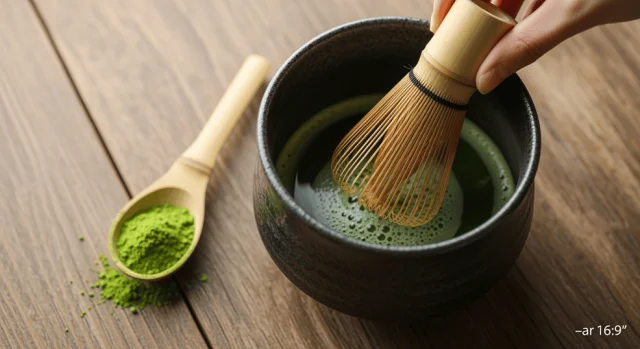
The bamboo whisk (chasen) remains the ideal tool for achieving that characteristic foam. Its fine tines whip air into the preparation perfectly.
The Matcha bowl (chawan) is more than a vessel. Its wide, open shape makes whisking easier, and its material helps maintain the ideal temperature.
The whisking technique
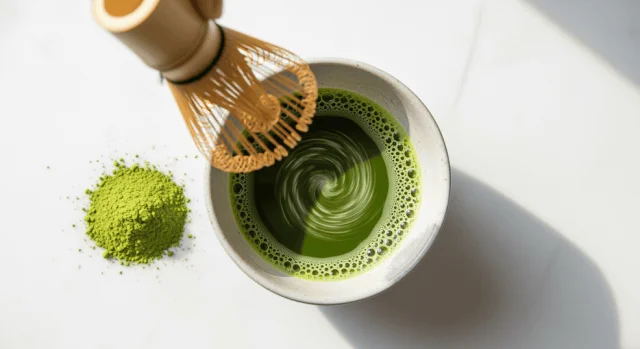
Add your Matcha to the bowl and mix in a small amount of warm water to form a smooth paste. Then add the remaining water at 70°C and whisk briskly in quick zigzag strokes.
The foam builds gradually. Keep going until you reach a creamy, even texture.
Modern alternatives
No bamboo whisk to hand? A small electric frother or milk foamer will do the job. The key is incorporating enough air to create that distinctive texture.
Matcha latte: where tradition meets the everyday
The matcha latte has won over the world, and it is easy to see why. This contemporary preparation makes Matcha wonderfully approachable while preserving all its benefits.
For a great matcha latte, reach for a premium rather than ceremonial Matcha. Its more assertive flavor holds up better against milk and any sweeteners.
Our tip: start by dissolving your Matcha in a little hot water, then gradually add your favorite plant-based milk. This prevents clumping and ensures a perfectly smooth result.
The benefits of matcha: far more than a drink
Beyond the pleasure of drinking it, Matcha offers remarkable benefits for your wellbeing. Consuming the whole leaf in concentrated powder form makes it a true boost of vitality.
Rich in antioxidants, particularly catechins, Matcha helps protect against oxidative stress. Its L-theanine content supports focus while promoting a sense of calm.
Unlike coffee, the energy from Matcha is steady and sustained, with no spike and no sudden crash. That makes it the ideal companion for focused work or moments of quiet reflection.
FAQ
A great question. Authentic Matcha comes exclusively from leaves grown in the shade for several weeks before harvest. This technique, known as "shading," increases the concentration of chlorophyll and L-theanine.
The leaves are then steamed, dried, stripped of their stems and veins, and ground on a stone mill. This careful, time-consuming process explains the quality and price of genuine Matcha.
Ordinary powdered green tea does not go through these specific stages and therefore offers a very different taste and nutritional experience.
Absolutely. Matcha has been a staple of the Japanese diet for centuries. One to two cups a day is an excellent source of antioxidants and L-theanine.
If you are sensitive to caffeine, however, do bear in mind that Matcha contains around 35mg per gram, less than coffee but more than regular green tea.
We recommend enjoying it in the morning or early afternoon to make the most of its energizing effects without disrupting your sleep.
For a traditional bowl, use around 1 to 2 grams of Matcha (a level teaspoon) with 60 to 80ml of water at 70°C.
For a matcha latte, you can increase the amount slightly to balance the dilution from the milk. Start with 1.5 grams and adjust to taste.
Our tip: invest in a small precision scale. Getting the dose right to the gram makes a real difference to the final result.
As with all teas and coffee, moderation is recommended during pregnancy. Since Matcha contains caffeine, we suggest limiting intake to one cup per day at most.
Please consult your doctor or midwife for personalized advice based on your own situation.
Technically yes, but it is a little like using a grand cru wine for cooking. Ceremonial Matcha reveals its full subtlety when enjoyed as a drink.
For culinary use, choose a quality culinary Matcha instead. It will deliver the color and flavor you are looking for, at a more practical price point.
Save your ceremonial Matcha for those quiet moments when you can truly appreciate every nuance in the cup.
Several signs give it away: a dull or yellowish color, an unusually low price, a non-Japanese or vague origin, a grainy texture.
Taste exposes impostors too: genuine Matcha should never be purely bitter or taste of hay. Aromatic complexity is the hallmark of authenticity.
At Thés & Traditions, we guarantee the Japanese origin of all our matchas and work directly with growers selected for their expertise and craft.
Why not give it a try ? Explore our ceremonial matcha and let yourself be tempted.
Tempted to try it?
Our selection related to this article, loose leaf and organic.
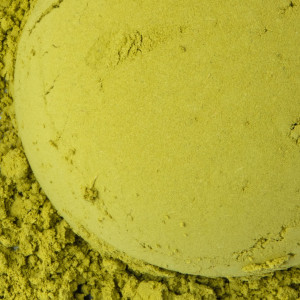
Matcha Aura Organic
Matcha Aura Organic is a finely milled green tea powder crafted for the perfect organic matcha latte.
€14.90Discover
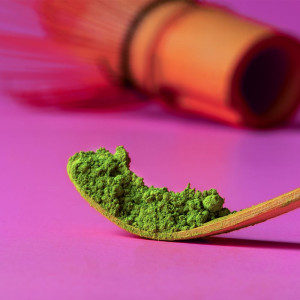
Shizuku Organic Ceremonial Japanese Matcha
Shizuku organic ceremonial Japanese matcha is a vibrant green powder, finely stone-ground, with silky umami notes and a delicat…
€16.90Discover
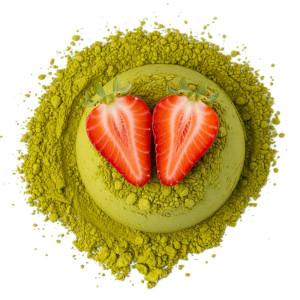
Strawberry Matcha Latte
Strawberry matcha latte, also loved as a strawberry matcha or matcha with strawberry, brings together the gentle vegetal depth …
€18.90Discover