 Matcha
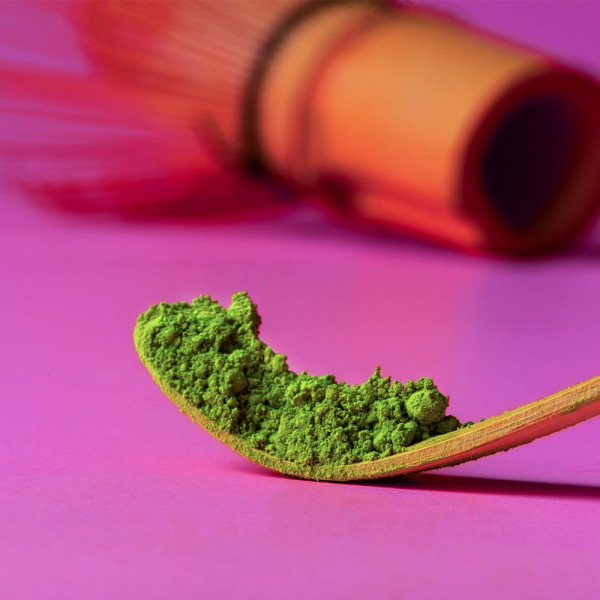


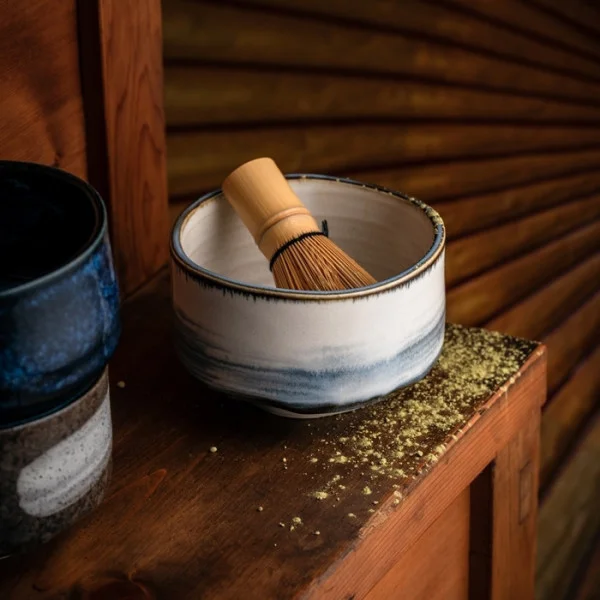
Harukasumi Matcha Bowl
Japanese elegance, white and blue ceramic, perfect for matcha
24,90 €
AddAdded
 Main Note:
Pure
Main Note:
Pure
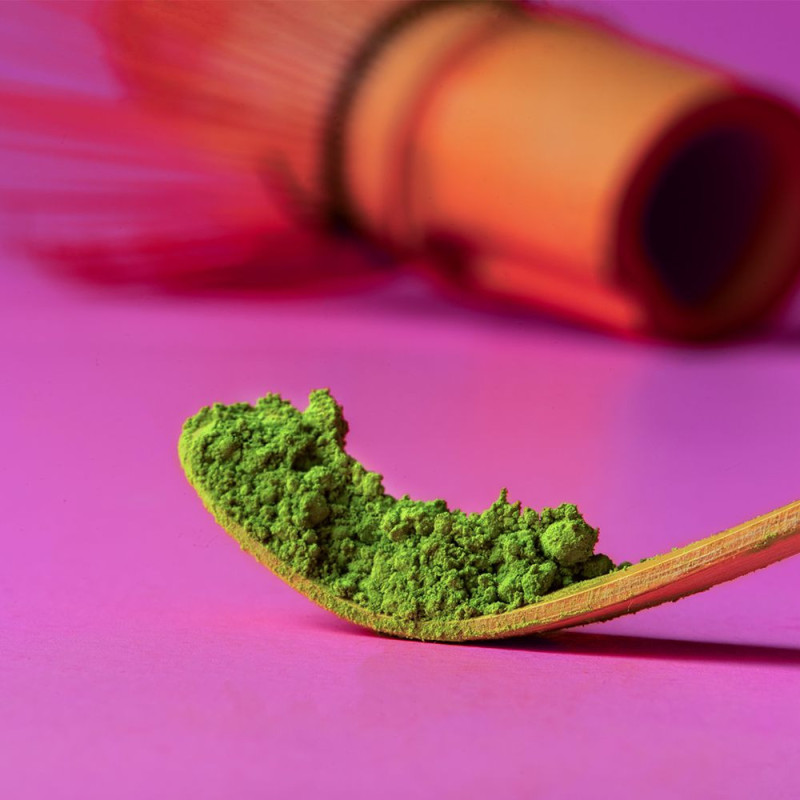
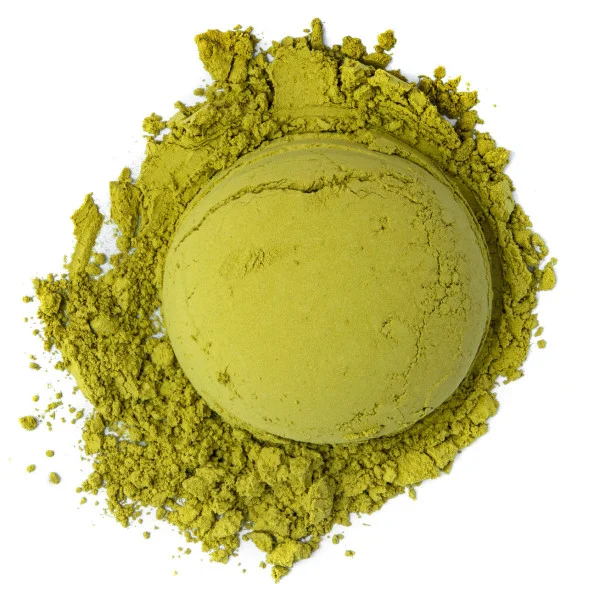
Our Shizuku organic ceremonial Japanese matcha is a vibrant green powder, finely stone-ground, with silky umami notes and a delicate vegetal finish. An exceptional ceremonial matcha, selected by our house for those who seek true authenticity.
our expertise


In our workshop in Provence, each blend is handcrafted with passion by our team.
Real pieces of dried fruit, whole plants and carefully selected teas of origin.
Carefully crafted to create unforgettable tasting moments. A signature taste, an authentic experience.
In a nutshell: Shizuku Organic Ceremonial Japanese Matcha, a fine powder of vibrant green, with silky umami notes. Preparation: 1 to 2 g per cup, water at 70–80°C, whisk for 15 seconds with a chasen.
Shizuku, in Japanese, evokes a droplet: one that hangs suspended for a moment before revealing its full purity. That is exactly the sensation this deep green powder offers, silky to the touch, luminous once whisked into the bowl.
We selected this ceremonial-grade matcha for those in search of something truly authentic: grown under rigorous Japanese organic standards and ground slowly on a traditional granite stone mill.
Julien Huot, founder of Thés & Traditions, chose Shizuku for its rounded umami character, its complete absence of bitterness, and the vibrancy of its color, three hallmarks of a genuine ceremonial matcha. Explore our matcha selection to go further.
The first impression is a fresh, herbaceous, vegetal scent, reminiscent of morning dew on young shoots. The silky-fine powder releases its aromas instantly on contact with hot water.
On the palate, the attack is round and velvety. Umami, that fifth flavor so distinctive of finely ground Japanese green tea, unfolds in a soft, almost creamy wave, without a trace of roughness.
The mid-palate reveals deeper notes: tender sea vegetable, young spinach, a subtle briny hint that speaks to its authentic Japanese origin. The flavor profile remains pure, understated, true to the nature of the leaf.
The finish is long and gently sweet, with no astringent bitterness. This is precisely what sets a ceremonial grade apart from a culinary matcha: the roundness, the persistence, the natural sweetness.
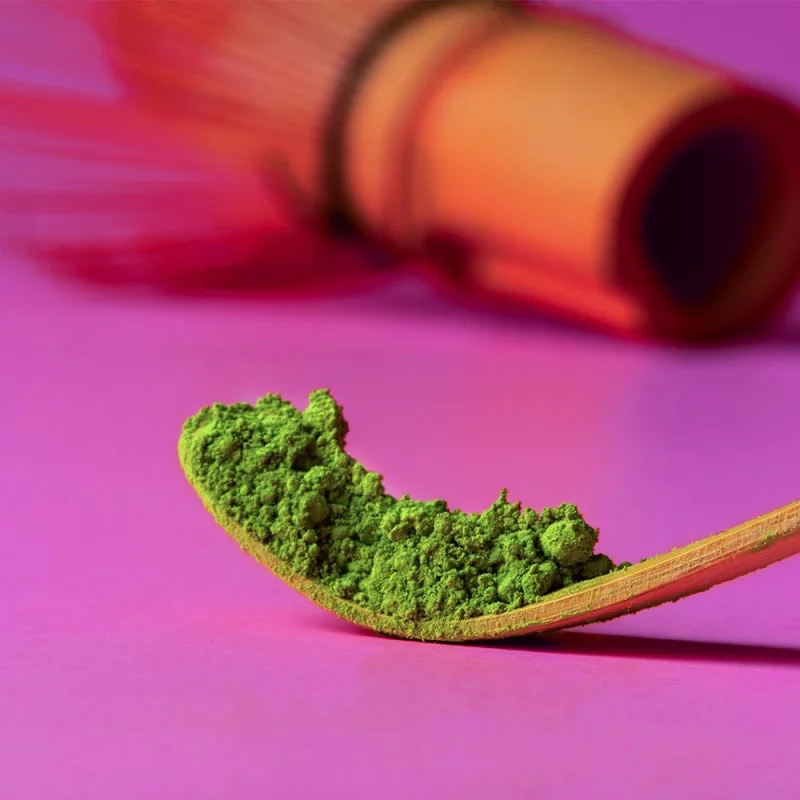
Tip a small amount into the palm of your hand: the powder should be a vivid jade green, almost fluorescent. A dull or yellowish hue betrays an inferior matcha, or one that has been poorly stored.
Shizuku displays this vibrant color characteristic of leaves shaded for several weeks before harvest, a traditional Japanese technique that concentrates chlorophyll and softens the tannins.
The grinding is done slowly, on a traditional granite millstone, preserving aromatic integrity and producing that impalpably fine texture. One hour of milling yields barely thirty grams: this artisan's work explains the nobility of the result.
To explore other expressions of this precious powder, take a look at our vanilla matcha, a more indulgent take on Japanese tradition.
Preparing matcha is a brief but precise ritual. A few practiced gestures are all it takes to transform this fine powder into a smooth, frothy drink of rare elegance. Here is the traditional method, faithful to the spirit of the Japanese tea ceremony.
Use 1 to 2 grams of powder per cup, roughly a heaped half-teaspoon, or ideally the amount held by a chashaku (traditional bamboo scoop). For usucha (thin matcha), stay at 1 gram. For koicha (thick matcha), increase to 4 grams with less water.
Heat the water to between 70 and 80°C, never boiling. Water that is too hot damages the delicate aromas and draws out bitterness. If you don't have a temperature-controlled kettle, bring the water to a boil then let it rest for 3 to 4 minutes before use.
Sift the powder into your bowl (chawan) to avoid clumps. Add around 70 ml of water, then whisk vigorously with a chasen, the bamboo whisk carved into a hundred fine tines. Use a rapid W or M motion, never circular, for 15 to 20 seconds.
A fine, dense, airy foam should cover the surface. This is the sign of a successful emulsion and a quality matcha. Drink immediately, in small sips, savoring the lingering finish.
You can use a small electric milk frother, a handheld frother, or even a tightly sealed shaker. The foam will be slightly less refined, but the aroma remains intact. For more ideas, we have a dedicated article on alternative matcha preparation techniques.
Shizuku lends itself beautifully to a latte: first prepare a concentrated base with 50 ml of water, then top with hot, frothy plant-based milk. For ready-to-enjoy flavored versions, try our strawberry matcha selection or our vanilla matcha latte.
For a summer iced version, whisk the powder in a little cold water, then add ice cubes and chilled water. The umami turns crystalline, the freshness bracing.
Recognizing a genuine ceremonial matcha comes down to a few simple markers. Color first: a vibrant jade green, never dull. Then the scent: vegetal, mellow, faintly marine, with no roasted or dusty notes.
The texture of the powder should be impalpably fine, almost talc-like. If the grind feels grainy, it is a culinary grade, ideal for baking but not suited to usucha. Finally, a certified Japanese origin and an organic label are reliable signs of quality.
For a comprehensive overview of the leading references, we have published a detailed comparison. You can also read our complete matcha guide to understand the grades, growing regions, and uses.
Matcha offers a different kind of energy from coffee: smoother, longer-lasting, without the spike or the crash. The preparation ritual itself becomes a moment of pause, almost meditative, in contrast to the urgency of a morning filter coffee.
If you are weighing up these three drinks, our article on matcha, maté, and coffee explores the sensory, energetic, and ritual differences of each.
Matcha is a powder that is highly sensitive to light, moisture, and oxygen. Keep it in its original airtight tin, away from light, in a cool, dry place, ideally between 5 and 15°C.
To preserve the vibrancy of the color and the fineness of the aroma, some enthusiasts store their tin in the refrigerator. In that case, take it out 30 minutes before use to avoid condensation, which is damaging to the powder. Once opened, ideally consume within a month.
How much does ceremonial matcha cost?
The price of a ceremonial matcha varies according to grade, origin, and the yield of the milling process. For an authentic Japanese matcha, expect to pay roughly between €30 and €80 per 30 g. The cost reflects the rarity of the grade, the slow stone-mill grinding, and the labor-intensive shading of the leaves before harvest.
How do you prepare ceremonial matcha?
Sift 1 to 2 g of powder into a bowl, add 70 ml of water at 70–80°C, then whisk vigorously with a chasen for 15 to 20 seconds using a W motion. A fine, airy foam should form. Drink immediately, in small sips.
What are the benefits of matcha?
Matcha is cherished for its calming preparation ritual and its unique sensory profile. This vibrant powder offers a complete tasting experience, ideal for carving out a moment of pleasure and focused pause during the day.
Where does ceremonial matcha come from?
Matcha has its roots in Japan, where it has been cultivated for centuries in regions such as Uji, Nishio, and Kagoshima. To explore this fascinating history further, you can read the origins of matcha in our dedicated article.
How do you choose a good matcha?
Look for a certified organic Japanese matcha with a vibrant jade green color, an impalpably fine grind, and a fresh vegetal scent free of any roasted notes. A ceremonial grade guarantees the absence of bitterness. To compare the leading references, browse our matcha selection, curated by our team.

Japanese elegance, white and blue ceramic, perfect for matcha

The sweetness of vanilla meets the richness of matcha

Black and red ceramic bowl, wabi-sabi spirit

The perfect matcha for your lattes and culinary recipes
French House
Independent since 2016.
Fast delivery
Home delivery or click & collect.
Made with heart
In the south of France.
Customer service
A real voice at the end of the line,
Monday to Friday: 04 22 91 35 75.
Sharing, passing it on: our teas, our tips, the occasional unexpected idea, and little attentions just for you. Pure pleasure, ready to steep.