Matcha at Leclerc: is supermarket matcha worth buying?

Walk into an E.Leclerc supermarket looking for matcha, and you'll find a shelf that has changed considerably over the past few years. This Japanese green powder, once the preserve of specialist tea shops, has gone mainstream, and French supermarkets are now stocking a surprisingly broad range. Somewhere between Japanese tradition and everyday accessibility, it's worth taking a closer look at what's on offer.
The essentials in 30 seconds
- A varied range: Several formats and brands available, organic and conventional
- Competitive pricing: Typically 30 to 50% less than specialist retailers
- Decent quality: Well suited to everyday drinking and first-time buyers
- Variable availability: Stock can be inconsistent depending on the store
- Practical formats: From single-serve sticks to 500g tubs for regular drinkers
What's actually on the matcha shelf at Leclerc?
The range has grown significantly in recent years. You'll mostly find organic Japanese green tea powder in various sizes: 100g, 150g, 200g, 250g, and even 500g for heavier drinkers. There are also gentler blends ideal for beginners, as well as instant stick formats for convenience on the go.
What stands out straight away is the breadth of choice. Some products are clearly aimed at newcomers, with softened blends that ease you in gently, while others target more seasoned drinkers looking for something closer to a traditional green tea powder. Prices generally range from around €15 to €35 depending on the size and grade, which is quite reasonable.
Most references are organically certified, reflecting growing consumer demand for more natural products. The supermarket leans into this trend, highlighting Japanese origin and organic credentials across its green tea range.
A note from Thés & Traditions: we work directly with Japanese growers on ceremonial cultivars such as our Shizuku Bio (€16.90 for 30g). It's a different approach to supermarket shopping, one for those seeking full traceability and a ceremonial grade suited to traditional whisking.
Quality that works well for everyday use
Let's be straightforward: the matcha you find in supermarkets doesn't compete with the finest Japanese ceremonial grades sold in dedicated tea houses. But that's not the point. These products are designed to bring a centuries-old drink to a wide audience and make it part of everyday life.
For daily use, whether in a latte, a smoothie or baking, the quality is perfectly decent. The green colour is there, the characteristic bitterness too, and the powder dissolves well in liquid. Tea enthusiasts may find less aromatic complexity, but for discovering matcha or building it into a routine, it does the job admirably.
One genuine advantage is freshness. Unlike some specialist retailers where packets can sit for months, supermarket turnover is generally faster, meaning you're more likely to get a fresher product.
If you'd like to step up a notch without stretching your budget, our Matcha Aura Bio at €14.90 is designed for the everyday latte (fine texture, jade colour), and our Shizuku Ceremonial Bio at €16.90 is for the days when you really want to taste the full aromatic depth of Japanese matcha, whisked the traditional way.
Price and value: where the supermarket wins
This is probably where supermarket matcha makes its strongest case. With prices often 30 to 50% lower than specialist shops, it makes matcha genuinely accessible at any budget. A 100g tin of organic green tea powder typically comes in at around €15 to €20, compared to €25 to €35 elsewhere.
That pricing makes it easy to try without committing too much, to drink regularly without it becoming an expense, or to use generously in cooking. For families wanting to weave matcha into their daily routine, it's a compelling argument.
Do keep an eye out for seasonal promotions: this retailer runs regular deals on its organic range, and occasionally the savings are genuinely worthwhile.
To put things in perspective: supermarket matcha at €18 per 100g works out at €0.18/g, but it's typically a culinary grade (perfect for baking or smoothies). Our Shizuku Bio Ceremonial at €16.90 for 30g comes to €0.56/g, but it's a grade designed for whisking and pure tasting, where every gram really does count. These are two different uses rather than two direct competitors.
Formats for every need
One of the real strengths of this offer is the variety of formats. Beginners can start with a small 100g pack or instant sticks, ideal for testing the waters without overcommitting. Regular drinkers will appreciate the 250g or 500g options, which offer better value per gram.
The instant sticks deserve a special mention. Practical at the office or when travelling, they let you prepare a quick latte with no special equipment. The taste is less authentic than a traditional powder, but the convenience is hard to argue with.
Some stores even stock beginner kits with a stainless steel straw and filter, aimed at those curious about cold-brew tea, which is very much on trend right now. These accessories add something to the experience and bring it a little closer to Japanese tradition.
For flavoured options, we also offer a trio of Vanilla Matcha Latte, Strawberry Matcha Latte and Chocolate & Hazelnut Matcha Latte at €18.90 each, with more character than instant sticks. And for the full ritual, our Hayase Matcha Gift Set at €48.90 includes the bowl and bamboo whisk.
Availability and smart buying tips
Availability can vary between stores and seasons. With matcha now very popular, some references do go out of stock temporarily, especially the most sought-after sizes. It's worth checking the health and beauty or organic aisle too, where these products are sometimes listed separately.
When buying, always check the best-before date and choose the most recent stock. Matcha keeps better stored cool and away from light, so make sure you store it properly once home.
If you're new to it, start with a smaller format or a blended preparation. Pure green tea powder can come as a surprise if you're not used to the bitterness. It's worth easing in gradually to fully appreciate this thousand-year-old drink.
A complementary approach at Thés & Traditions
Supermarkets are unbeatable for making matcha part of everyday life. If at some point you'd like to explore a ceremonial grade for whisking, or expand your flavour palette, our French family tea house ships from its workshop in Bouc-Bel-Air, Provence:
- For the morning latte: Matcha Aura Bio at €14.90
- For ceremonial whisking: Matcha Shizuku Bio at €16.90
- To give as a gift or start the full ritual: Hayase Gift Set at €48.90 with bowl and whisk
Frequently asked questions
- Good question, and yes: most references clearly state Japanese origin on the packaging. The retailer sources from certified producers, even if they aren't necessarily the most prestigious. That's a meaningful quality and authenticity indicator.
- Absolutely. For cakes, macarons or ice cream, the quality is perfectly suited. The bitterness pairs well with sweetness, and the green colour holds beautifully after baking. It's actually an ideal starting point.
- Sometimes, yes. The health and beauty aisle tends to focus on wellness products with associated health claims, while the food aisle concentrates on flavour and culinary use. Both can coexist in the same store.
- A good powder should be a vivid green, fine and uniform in texture, and dissolve easily in warm water. If it looks yellowish or clumps, that's a less promising sign. Freshness matters more than almost anything else.
- For health, it's a clear plus. For taste, the difference is subtle. Organic certification above all guarantees an absence of pesticides, which matters for regular drinkers. It's a worthwhile investment in the long run.
Tempted to try it?
Our selection related to this article, loose leaf and organic.
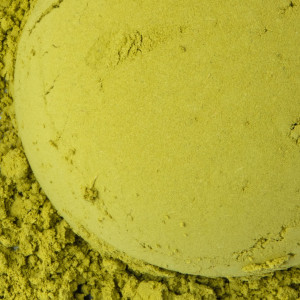
Matcha Aura Organic
Matcha Aura Organic is a finely milled green tea powder crafted for the perfect organic matcha latte.
€14.90Discover
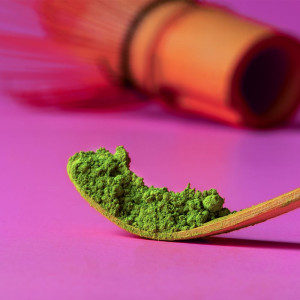
Shizuku Organic Ceremonial Japanese Matcha
Shizuku organic ceremonial Japanese matcha is a vibrant green powder, finely stone-ground, with silky umami notes and a delicat…
€16.90Discover
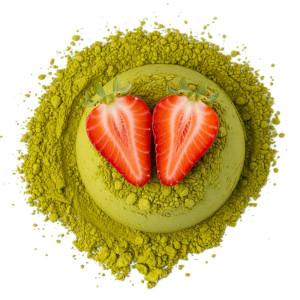
Strawberry Matcha Latte
Strawberry matcha latte, also loved as a strawberry matcha or matcha with strawberry, brings together the gentle vegetal depth …
€18.90Discover