



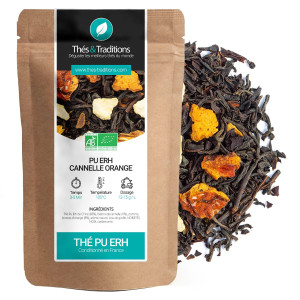
Low-Caffeine Pu-erh Tea with Christmas Spice
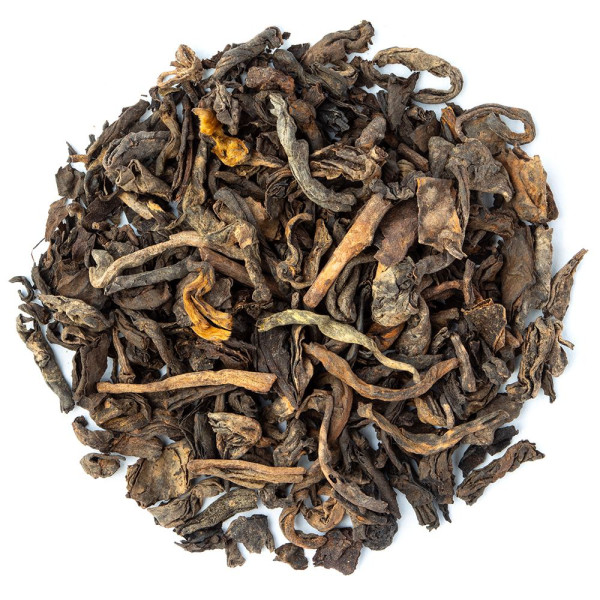
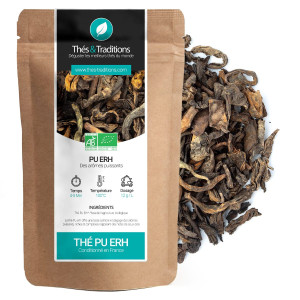
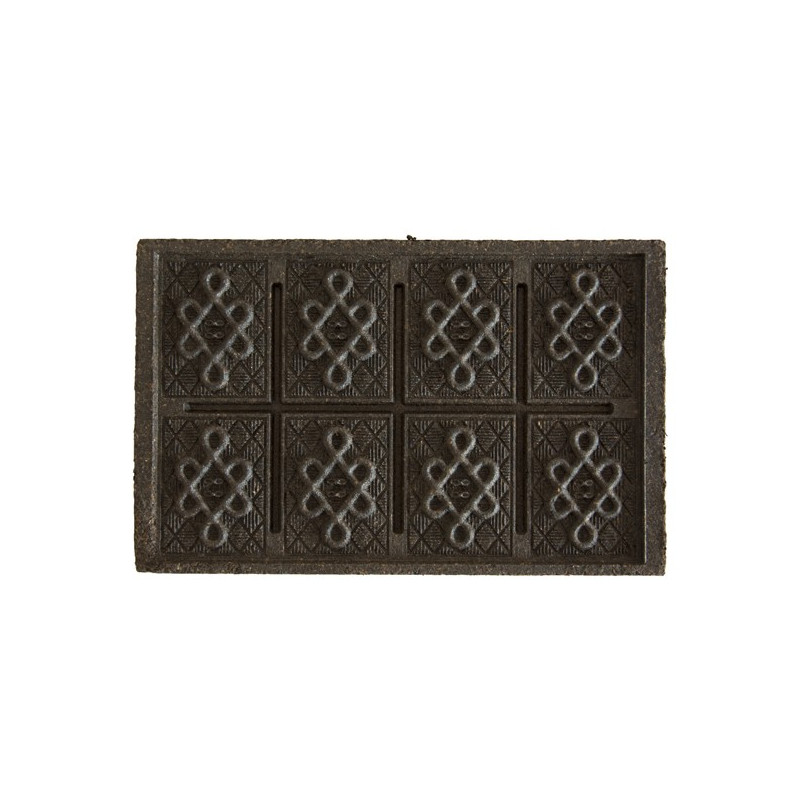
Our organic Pu-erh brick, a sheng cha from Yunnan, is a traditional Chinese pu-erh compressed into a 500 g block. Whole leaves of Camellia sinensis from certified organic farming, ready to age and reveal deep, woody notes over time. A brick tea worthy of any collection, or simply your daily cup.
Preparation Instructions
Steeping time
2.5 min
Brewing temperature
95°C
Time of day
All day long
Dosage
10g / L
Composition
List of ingredients:
Organic Pu-erh sheng cha from Yunnan (China). 100% Camellia sinensis leaves, compressed into a 500 g brick.
Learn more
At a glance: organic Pu-erh sheng cha brick from Yunnan, 500 g of compressed leaves to brew at 95°C, 2.5 min, 10 g/L. A raw Chinese tea made for aging, with deep woody notes.
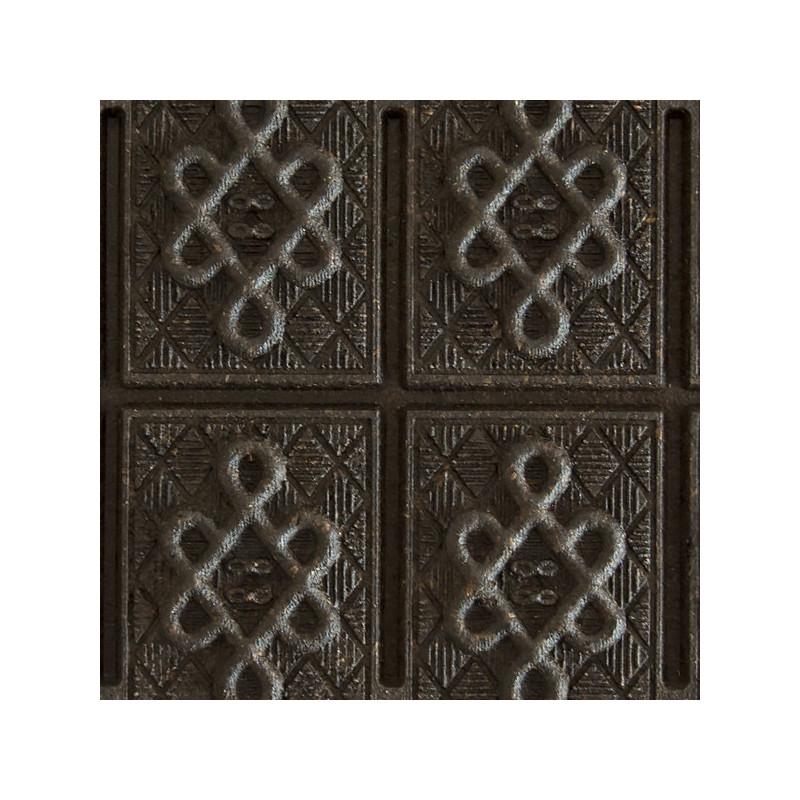
This tea brick embodies a Chinese tradition spanning several centuries. Compressed by hand, it once served as currency along the caravan routes from Yunnan to Tibet and Mongolia.
Thés & Traditions selected this organic Pu-erh range sheng cha for its varietal purity: 100% Camellia sinensis leaves, with no blending and no added flavoring. A raw, living tea, built to age gracefully. This is a collector's brick, crafted for lovers of teas that improve with time.
Sheng cha, or raw Pu-erh, sets itself apart from its shu counterpart through slow, natural fermentation. Where shu is post-fermented over a matter of months, sheng ages quietly, sometimes over several decades.
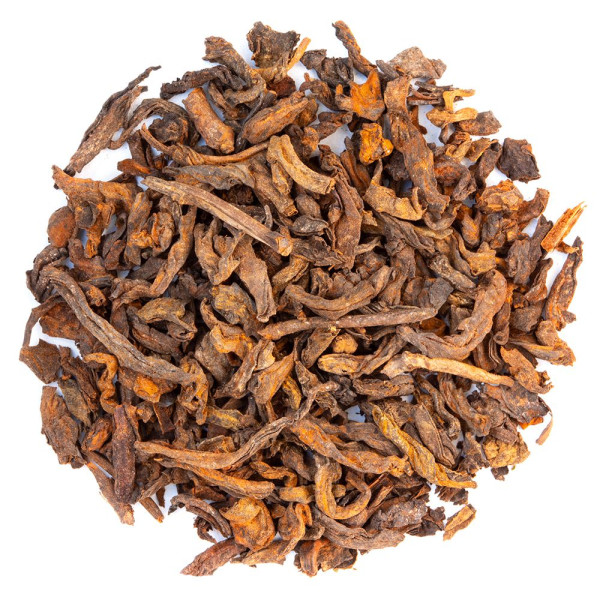
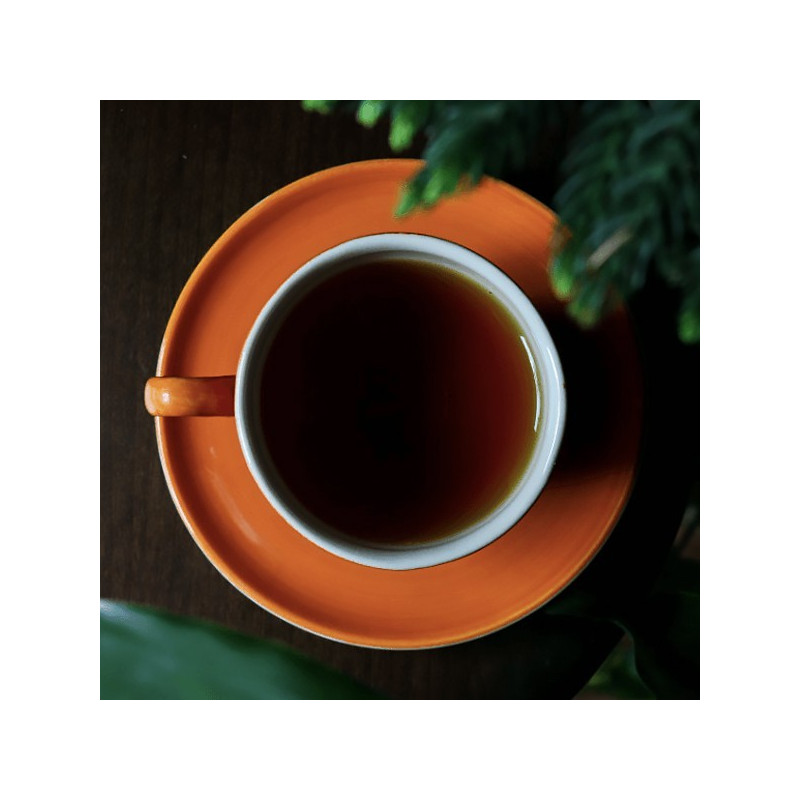
In the cup, the first infusions yield a golden liquor with amber glints. The top notes evoke fresh hay, cut grass, a hint of something vegetal and almost floral. A surprising freshness for a Yunnan tea.
As the tasting unfolds, deeper aromas emerge: damp wood, bark, forest floor after rain. A gentle astringency speaks to the tea's youth, something that will soften patiently over the years.
On the finish, a lasting woodiness captures the character of Yunnan. With time, these compressed leaves will develop notes of leather, light tobacco, and dried fruit. That is precisely the appeal of a brick made for aging: it improves, much like a great vintage.
To explore further, take a look at our loose-leaf natural Pu-erh or read our article on Pu-erh and red tea to better understand the nuances between these two families.
Preparation begins with breaking off a portion. Using a Pu-erh knife or awl, carefully separate a section of the brick, following the natural lay of the leaves. Allow approximately 10 g per liter of water.
Temperature: 95°C. Water that is almost boiling, never at a rolling boil, so it respects the compressed leaves and gives them time to open slowly.
Steeping time: 2.5 minutes for a classic first infusion in a teapot. The leaves of this sheng cha hold up beautifully through multiple successive infusions: steep 3 to 5 times, each cup revealing a different facet of the tea.
A quick 10-second rinse before the first proper infusion is recommended. It wakes the leaves, removes fine particles, and releases the first aromas. A ritual step inherited from the gongfu cha tradition.
For a more immersive experience, the gongfu method in a gaiwan brings out the best in this style of tea: small quantities, short repeated infusions, and careful attention to every aromatic nuance. Enjoy this Pu-erh as part of your own tasting ritual, alone or shared.
Pu-erh is one of the rare teas that genuinely improves with age. Unlike green teas, which oxidize and lose their freshness, sheng cha continues its slow maturation within the compressed brick.
Store your brick in a dry place, away from direct light and strong odors, at a stable room temperature. Avoid airtight metal containers: the tea needs to breathe gently in order to age properly.
An untreated cardboard box, a kraft paper bag, or a porous ceramic jar all work beautifully. Moderate humidity (60–70%) will encourage the aromatic evolution of your brick as the seasons pass.
For those who want to deepen their knowledge, Pu-erh and its fascinating world await.
What is a Pu-erh tea brick?
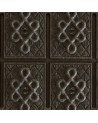
A Pu-erh tea brick is a traditional Chinese format in which Camellia sinensis leaves are compressed into a rectangular block. Inherited from the caravan trade routes, this shape makes it easier to store, transport, and age the tea over many years, or even decades.
How do you brew a Pu-erh tea brick?
Break off approximately 10 g of leaves per liter of water using a Pu-erh knife. Rinse for 10 seconds at 95°C, then steep for 2.5 minutes. The leaves can be re-infused 3 to 5 times, each cup revealing a different dimension of the tea.
What is the difference between sheng and shu Pu-erh?
Sheng cha is a raw Pu-erh, fermented slowly and naturally, improving over the years. Shu (or shou) is artificially post-fermented over a few months, delivering a darker, earthier profile right from the start. Our brick is a sheng made for aging.
Where can I buy an organic Pu-erh brick?
Thés & Traditions sources this sheng cha directly from organic producers in Yunnan. This 500 g brick is packaged in our own workshop and crafted for lovers of authentic Chinese teas, whether to age or to enjoy every day.
How long can a Pu-erh brick be kept?
A well-stored sheng cha brick can age for 10, 20, even 50 years. The longer it matures under the right conditions, the greater the depth, roundness, and complexity it develops, much like a great aged wine.