Green Tea and Weight: What to Know

In brief: No green tea will make you lose weight on its own. The varieties most concentrated in catechins and EGCG (matcha, good-quality Sencha, Gyokuro) have a modest but documented effect on thermogenesis, best incorporated into a programme that combines nutrition, physical activity and sleep. Aim for 3 to 4 cups a day, unsweetened, between meals to preserve iron absorption.
Green tea appears on almost every "slimming drink" list you'll find online. The reality is more nuanced. No herbal infusion will cause weight loss on its own. That said, certain green tea varieties contain active compounds whose metabolic effects have been studied, particularly the catechin EGCG (epigallocatechin gallate). This guide compares the main varieties, their concentration of active compounds, and explains how to incorporate them into a coherent routine.
Three suggestions to get started: our Japanese organic Sencha (fresh, vegetal, balanced), our Chinese organic Gunpowder (full-bodied, rich in catechins), and our organic Yangtze green tea (Sencha, ginger, citrus) for an invigorating cleanse.
Green tea and weight loss: what the studies say
The effect of green tea on energy expenditure has been examined in several meta-analyses. The meta-analysis by Hursel et al. published in the American Journal of Clinical Nutrition reports a modest 4% increase in energy expenditure over 24 hours among regular catechin consumers, equivalent to an extra 60 to 100 kcal burned per day for an average adult. This effect is consistent, but it does not create a caloric deficit on its own.
The EFSA has evaluated several health claims relating to green tea catechins. No "weight loss" claim has received full validation. The agency does, however, acknowledge that catechins may play a role in protecting blood lipids against oxidative stress, provided at least 250 mg per day is consumed.
In practical terms, green tea can support a weight management programme, but cannot replace one. Its main role is that of a ritual companion: it hydrates, brings mindfulness to a break in the day, fills the psychological space of a sugary snack, and delivers a small dose of active compounds.
Which green tea variety to choose
Not all green teas are equal when it comes to concentration of active compounds. Here are the main varieties, grouped by profile:
Japanese green teas: richness in catechins
Japanese green teas are generally more concentrated in EGCG than their Chinese counterparts, thanks to the steaming process that preserves polyphenols.
- Sencha: the most widely consumed Japanese green tea, balancing vegetal freshness with body. Good catechin content, easy to enjoy every day.
- Gyokuro: shade-grown for the last three weeks before harvest, which increases L-theanine and softens bitterness. Highly refined, rarer and more expensive.
- Bancha: harvested after the Sencha flush, from more mature leaves. Lower in caffeine, gentler on the palate, ideal for those sensitive to caffeine. Note: catechin content is slightly lower than spring Sencha.
Chinese green teas: varied profiles
Chinese green teas are pan-fired rather than steamed (with some exceptions), giving them nuttier, more roasted notes and a distinct character.
- Gunpowder: leaves rolled into pellets, producing a bold, powerful infusion. Very tannic profile, rich in catechins.
- Long Jing (Dragon Well): a classic from Zhejiang province, flat and pan-fired, with a delicate profile.
- Chun Mee: fine leaves, fruity profile with a slight astringency.
Matcha: the most concentrated form
Matcha is in a category of its own. Unlike other green teas where leaves are steeped and discarded, matcha is a powder consumed in its entirety. You absorb the full spectrum of active compounds from the leaf, making it the most concentrated source of catechins and EGCG per cup.
Several comparative studies, including an analysis published in the Journal of Chromatography A, have measured that the EGCG content of a cup of matcha can reach 137 mg, approximately 3 times more than a cup of regular green tea. The trade-off: caffeine levels are also higher, so moderation is key. Our matcha guide covers the different grades and traditional preparation in detail.
How to incorporate green tea into a weight management programme
Green tea alone is not enough. For it to play a meaningful supporting role, a few simple principles apply:
- 3 to 4 cups a day, spread throughout the day, ideally between meals.
- Unsweetened, or with only a small amount of honey. A squeeze of lemon is compatible and may improve catechin absorption.
- Between meals: wait 30 to 60 minutes after eating to avoid interfering with non-haem iron absorption.
- Stop after 4 pm if you are sensitive to caffeine. Our guide on the best time to drink green tea covers this in detail.
- As a replacement, not an addition: swap sugary drinks for your infusion rather than adding it on top.
- Over the long term: effects are observed after several weeks of regular consumption, not within a few days.
Above all, keep in mind that diet remains the primary lever. A balanced nutritional programme, adequate sleep and regular physical activity are the true drivers of weight loss. Green tea is a companion, never a shortcut.
Precautions and contraindications
Green tea is generally well tolerated, but certain situations call for caution:
- Pregnancy and breastfeeding: limit to 1 to 2 cups per day. Caffeine crosses the placenta and passes into breast milk.
- Iron-deficiency anaemia: avoid tea during meals rich in plant-based iron.
- Sleep disturbances: stop after 2 pm if you are sensitive to caffeine.
- Liver conditions: ANSES issued a warning in 2018 regarding cases of liver toxicity linked to concentrated green tea extracts (dietary supplements), not to regular infusions. Stick to brewed tea if you have a sensitive liver.
- Anticoagulant or antihypertensive treatment: inform your doctor of your consumption so adjustments can be made if necessary.
Disclaimer: the information in this article is for educational purposes only and does not replace medical advice. No herbal infusion can cause weight loss without lifestyle changes. If you have a medical condition, are pregnant, breastfeeding or taking medication, consult your doctor before starting any weight loss programme or significantly increasing your tea consumption.
Sources: Hursel R. et al., American Journal of Clinical Nutrition (PMID:19597519) · Goto T. et al., Journal of Chromatography A on matcha catechins (PMID:14518774) · EFSA, opinion on green tea catechins (2018) · ANSES, opinion on green tea-based dietary supplements (2018).
Written by
Julien Huot, founder of Thés & Traditions. Tea selector since 2016, trained in tasting and passionate about sharing the cultures of tea and botanical infusions.
Published 20 February 2019 · Updated 21 May 2026
Frequently asked questions
- No tea is effective on its own. Those highest in EGCG are matcha (a powder consumed whole), Japanese Sencha and shade-grown Gyokuro. The metabolic effect remains modest and must be part of a broader programme.
- 3 to 4 cups for a documented effect on catechins, up to 5 cups for a healthy adult. Beyond that, some people experience restlessness, sleep disturbances or gastric irritation.
- Matcha delivers 2 to 3 times the EGCG concentration per cup. The effect on energy expenditure is therefore proportionally greater, but remains modest over the course of a day. No matcha replaces a balanced diet.
- Yes, as long as you keep to 3 to 4 cups, between meals, unsweetened. The benefit builds over several weeks of consistent consumption, not in just a few days.
Going further
To deepen your approach, explore our guide to brewing green tea well, discover the studied benefits of green tea, or browse our complete green tea dossier. To understand how it compares to other families, see our green tea vs. black tea comparison. And to put it all into practice, explore our range of organic green teas.
Tempted to try it?
Our selection related to this article, loose leaf and organic.
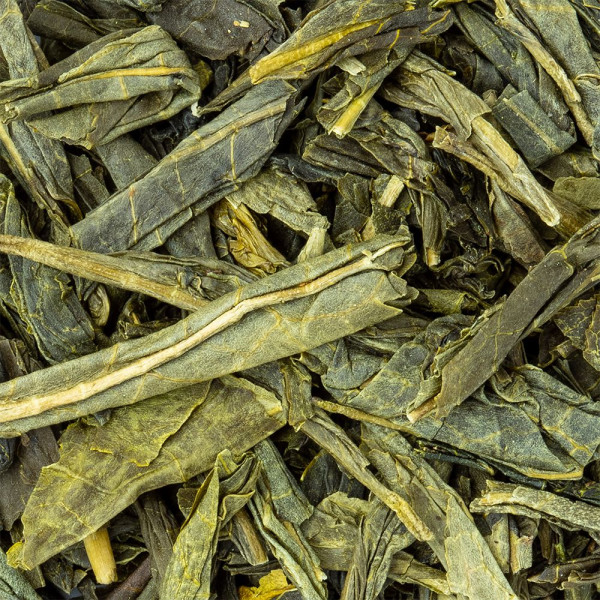
Sencha Green Tea
Organic Sencha is a timeless staple in China and Japan, where it is enjoyed daily.
€6.50Discover
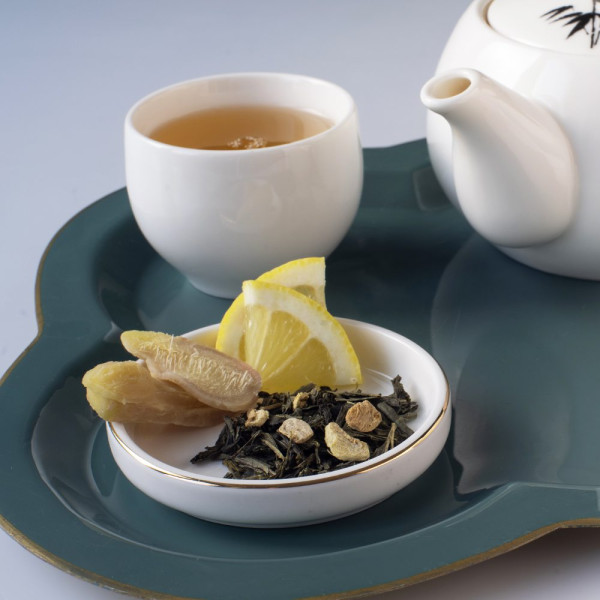
Yangtze Green Tea
Organic Yangtze green tea brings together a delicate Sencha with the brightness of lemon and the warmth of ginger.
€7.90Discover
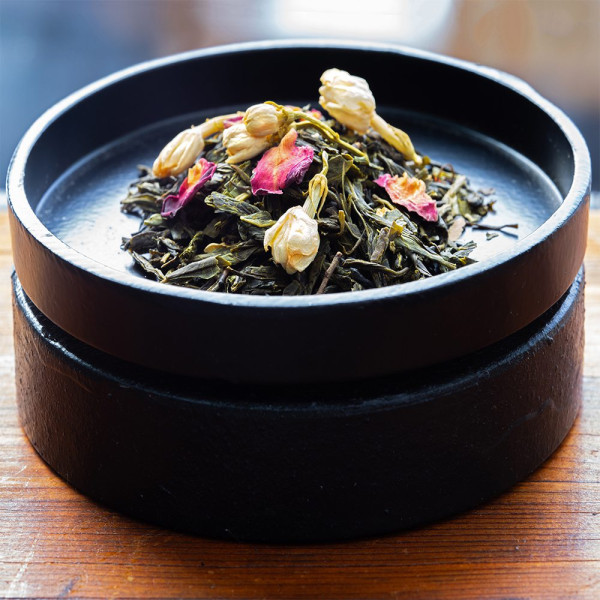
Tokyo Nights Green Tea
Tokyo Nights Green Tea: a floral, indulgent blend of Sencha, Chun Mee and jasmine green tea, lifted by rose petals and notes of…
€7.90Discover