Rooibos During Pregnancy: Your Wellness Companion for Nine

When you're expecting, every little daily ritual takes on a whole new meaning. If you're a lover of warm drinks, you've probably wondered what to sip in place of your usual tea. Good news: rooibos is the perfect answer. This red infusion from South Africa is about to become your closest companion for these nine precious months.
The essentials in 30 seconds
- Zero caffeine: rooibos contains no stimulants whatsoever, naturally
- Full of goodness: iron, antioxidants and essential minerals for you and your baby
- Delicious taste: soft, gently sweet notes that comfort at any time of day
- Drink freely: up to 3-4 cups a day with no worries
- Versatile: plain or flavoured, hot or iced, however you like it
Why is rooibos so recommended for expecting mothers?
Unlike traditional tea, which contains caffeine, rooibos comes from a South African shrub called Aspalathus linearis. This unique plant produces no stimulating substances at all, making it a drink perfectly suited to pregnancy.
Pregnant women have specific nutritional needs, and this is where rooibos really comes into its own. Naturally rich in iron, it helps prevent the anaemia that's common during pregnancy. Its antioxidants protect your cells and your baby's, while its calcium and magnesium content supports healthy bone development.
But what expecting mothers truly love is its comforting taste. Those round, gently sweet notes soothe the minor discomforts of pregnancy and offer a genuine moment of calm. No more frustration at having to give up your beloved tea ritual.
The real benefits of rooibos during pregnancy
Beyond the absence of caffeine, rooibos brings genuine health benefits during this very special time. Its nutritional profile makes it a valuable ally as your body goes through so many changes.
Fighting fatigue: Its iron content helps maintain healthy haemoglobin levels. Many pregnant women develop iron deficiency, and every little bit helps. A cup of rooibos won't replace a supplement if one is needed, but it does contribute to your daily intake.
Easing digestive discomfort: The anti-inflammatory properties of rooibos can help relieve heartburn and nausea. Some expecting mothers find that a warm cup in the morning helps ease them gently into the day.
Encouraging relaxation: Caffeine-free by nature, rooibos won't interfere with your sleep. On the contrary, the ritual of preparing a cup and the warmth it brings create a welcome pause in the whirlwind of pregnancy.
The antioxidants in this red infusion also protect against oxidative stress, which is particularly important during pregnancy when the body is working so hard.
How to choose and brew your rooibos
Not all rooibos is equal, and during pregnancy, quality matters even more. Always opt for an organic rooibos to avoid pesticide residues. Plain varieties offer the purest nutritional profile, though flavoured blends can add a welcome touch of indulgence.
Brewing it couldn't be simpler. Pour hot (not boiling) water over your rooibos and leave it to steep for 5 to 8 minutes. The longer you steep it, the deeper the flavours, without any bitterness. That's one of rooibos's great advantages: it's almost impossible to get wrong.
As for how much, feel free to enjoy it. Unlike traditional tea, there's no strict limit. Most specialists agree on a maximum of 3 to 4 cups a day, though that's more a matter of general moderation than any real contraindication.
A small brewing tip: iced rooibos is wonderful in summer. Brew a concentrated infusion, let it cool, then add a few ice cubes. With a slice of lemon or a few fresh mint leaves, you have a perfectly refreshing drink for warm days.
Plain or flavoured rooibos: which to choose during pregnancy?
This question comes up often, and the answer really depends on your tastes and what you can tolerate. Plain rooibos is the safest choice: pure, additive-free, it gives you all the plant's benefits with no surprises.
That said, flavoured varieties can be a great option for a little variety. Fruit blends (apple, orange, berries) bring extra vitamins and comforting flavours. Combinations with gentle spices like cinnamon or vanilla create indulgent moments without any guilt.
Do take care with blends that include medicinal herbs. Certain plants, even natural ones, may not be recommended during pregnancy. If in doubt, ask your midwife or doctor for advice. Classic blends like rooibos-vanilla or rooibos-orange are generally perfectly fine.
A special mention for green rooibos, which is less oxidised than the traditional red. It has a fresher, slightly grassy taste and retains even more antioxidants. A wonderful choice for those who enjoy subtle, delicate flavours.
When and how to make rooibos part of your routine
One of rooibos's great charms is its versatility. Unlike coffee, which you avoid in the evening, or green tea, which is better saved for the afternoon, rooibos fits comfortably into any moment of the day.
In the morning, it makes a perfect replacement for your usual coffee. Its comforting flavour helps you ease into the day gently, without the energy spike and subsequent crash that caffeine brings. Many expecting mothers appreciate this softer start to the morning.
In the afternoon, a cup of rooibos pairs beautifully with a snack. Its gentle sweetness goes well with biscuits or dried fruit, creating a small, guilt-free treat.
In the evening, this may be where rooibos truly shines. Its naturally soothing character makes it the ideal drink before bed. Where traditional tea might disturb your sleep, rooibos encourages relaxation and can even improve the quality of your rest.
During the minor discomforts of pregnancy, warm rooibos can help ease morning nausea. Some women find that drinking a cup as soon as they wake, before even getting up, helps to settle the stomach.
FAQ: your questions about rooibos during pregnancy
Absolutely. Rooibos has no contraindications during pregnancy, even in the very first weeks. In fact, early pregnancy is often the ideal moment to make the switch if you were used to tea or coffee. Its complete absence of caffeine makes it a safe choice from the moment that test comes back positive.
For many expecting mothers, yes. Rooibos offers the satisfaction of something hot and flavourful, without the drawbacks of caffeine. The taste is different, of course, but most women adapt quickly and many end up genuinely preferring it. The key is to try a few varieties and find the one that suits you best.
Rooibos is remarkably accommodating. Unlike traditional tea, which is best avoided with meals (as it can hinder iron absorption), rooibos can be enjoyed at any time. Some women prefer not to drink large amounts just before bed, though this is purely to avoid nighttime trips to the bathroom rather than any health concern.
It's very rare, but in certain specific cases (particular allergies, interactions with medications), your doctor might suggest limiting or avoiding rooibos. If you have a high-risk pregnancy or are on a specific treatment, do bring it up at your appointments. In the vast majority of cases, rooibos is not only permitted but actively encouraged.
During pregnancy, choosing organic becomes even more important. Organic rooibos guarantees the absence of pesticides and chemical additives that could be passed on to your baby. It's a small investment for complete peace of mind, and organic rooibos often has a more authentic, richer flavour too.
Want to keep the experience going ? Discover our organic rooibos infusions and find the one that suits you.
Tempted to try it?
Our selection related to this article, loose leaf and organic.

Rooibos Blue Downs
Organic Blue Downs Rooibos brings together red rooibos with mango, orange and apricot, lifted by petals of rose, cornflower and…
€8.80Discover

Rooibos Earl Grey
Organic Rooibos Earl Grey brings together the warm, woody roundness of rooibos with the bright, fragrant lift of natural bergamot.
€9.70Discover
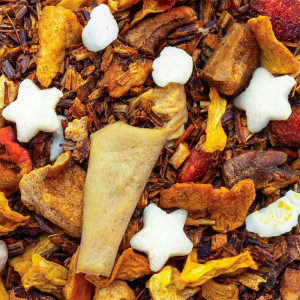
Rooibos Enchanted Night
The Enchanted Night Rooibos is a warming autumn infusion, caffeine-free, where pumpkin meets apple, pomegranate, walnut and cin…
€8.00Discover