Rooibos and Urinary Tract Infections: What You Should Know

When the topic of rooibos and urinary tract infections comes up, one question surfaces time and again: can this deep-red infusion from South Africa actually help? At Thés & Traditions, we hear this from many of our customers who are mindful of their urinary health. Rooibos does have some genuinely interesting properties, but this is a subject that deserves a thoughtful, balanced approach.
The essentials at a glance
- Rooibos is not a medical treatment for urinary tract infections
- Caffeine-free, it won't irritate the bladder the way tea or coffee can
- Rich in antioxidants and naturally caffeine-free, it is first and foremost a gentle hydrating drink
- Moderate consumption is the golden rule: 2 to 3 cups a day at most
- Always consult a healthcare professional if you have a urinary tract infection
Why does rooibos attract attention for urinary health?
This striking red infusion from the Cederberg mountains of South Africa has several characteristics that explain the interest it generates. Unlike traditional teas, rooibos contains no theine or caffeine, the substances that can irritate the bladder and worsen the symptoms of cystitis.
It is precisely this absence of stimulants that makes it a welcome choice for those prone to recurring urinary tract infections. Where a cup of black tea might heighten discomfort, rooibos offers a moment of gentle warmth with no risk of added irritation.
Its natural compounds, particularly aspalathine and quercetin, give it well-documented antioxidant properties. That said, rooibos does not act on a urinary tract infection or on the bacteria that cause it: it is no substitute for medical advice or appropriate treatment.
The limits of rooibos when it comes to urinary tract infections
To be clear: rooibos is not a natural antibiotic. A urinary tract infection, whether a straightforward case of cystitis or something more serious, requires proper medical care. The bacteria responsible, most commonly Escherichia coli, will not yield to an infusion alone, however delicious it may be.
Some people believe they can "flush" the urinary tract by drinking large quantities of rooibos. This approach can actually be counterproductive. While increased fluid intake may help dilute and eliminate bacteria, excessive consumption can put strain on the kidneys and disrupt the body's electrolyte balance.
Rooibos also contains naturally occurring oxalates, compounds that, in excess, may contribute to kidney stone formation in those who are predisposed. This is precisely why moderation is our guiding principle.
How to incorporate rooibos into a daily hydration routine
While rooibos neither treats nor prevents urinary tract infections, it can be part of a gentle daily hydration routine. Rich in antioxidants and naturally caffeine-free, it is a comforting drink that makes no claim to act on the urinary tract.
The hydration it provides is also genuinely beneficial. Drinking enough fluid helps dilute urine and encourages the natural elimination of bacteria before they can take hold. A warm cup of rooibos in the morning and another in the afternoon strikes a rhythm that supports the body without overloading it.
For these moments of well-being, we particularly recommend plain rooibos or one lightly scented with vanilla. Avoid heavily spiced blends, which may irritate sensitive mucous membranes.
The ideal brew for maximum benefit
To get the most from your rooibos, a few simple steps make all the difference. Use water that is just below boiling (85-90°C) rather than fully boiling, which can damage the more delicate compounds. Steep for 5 to 7 minutes to draw out the antioxidants without any bitterness.
One teaspoon of rooibos per 250 ml of water is the ideal ratio. The leaves can also be used for a second infusion: lighter, but just as enjoyable.
Special precautions and contraindications
Although rooibos is generally very well tolerated, a few precautions are worth bearing in mind, particularly in the context of urinary health. Pregnant women can enjoy it safely, but in moderation, as certain phytoestrogenic compounds could theoretically affect hormonal balance.
Anyone taking anticoagulant medication should exercise caution. Interactions are rare, but the antioxidants in rooibos could potentially affect the efficacy of certain drugs. Medical advice is recommended in such cases.
If you are prone to recurring kidney stones, take care as well. The oxalate content in rooibos, though moderate, may contribute to stone formation in sensitive individuals. In this context, limit yourself to one cup a day and make sure your fluid intake is varied.
When to seek medical advice without delay
Certain warning signs should never be ignored. If you experience persistent burning during urination, lower back pain, fever, or blood in the urine, see a healthcare professional promptly. Rooibos can be a soothing companion during and after recovery, but it will never replace proper medical treatment.
Complementary alternatives to rooibos
As part of a broader approach to urinary comfort, rooibos can pair well with other plants traditionally enjoyed as infusions. Heather, for example, has long been used in this way, as has hibiscus, prized for its tangy freshness and beautiful color. These pairings are about flavor and enjoyment, with no therapeutic intent.
At Thés & Traditions, we occasionally offer carefully crafted blends that bring rooibos together with these complementary botanicals. These combinations deliver a richer flavor profile while respecting the delicate balance that urinary well-being requires.
It's also worth remembering the importance of everyday habits: staying well hydrated, maintaining good personal hygiene, wearing comfortable clothing. Rooibos fits naturally into this holistic approach, without claiming to solve everything on its own.
Our house recommendation
After years of experience and conversations with our customers, we have come to see that rooibos has a genuine role to play in a preventive and comfort-focused routine. It doesn't cure, but it offers gentle, reliable support for those looking for a soothing alternative to irritating drinks.
Our suggestion? Make rooibos part of your daily routine as a moment of quiet well-being, without expecting therapeutic miracles. Enjoy it for what it truly is: a generous, comforting infusion that is kind to your body.
And above all, never hesitate to consult a healthcare professional at the first signs of a urinary tract infection. Rooibos will be there to accompany you during and after treatment, a steadfast companion in your everyday well-being.
Frequently asked questions about rooibos and urinary tract infections
Yes, you can. Being caffeine-free, rooibos is unlikely to irritate the bladder further, unlike tea or coffee. It is not a treatment, however, and does not replace the care prescribed by your doctor. Stick to 2-3 cups a day and make sure your overall fluid intake is varied.
No. There is no scientific evidence that rooibos prevents urinary tract infections or their recurrence. It is first and foremost a gentle, caffeine-free hydrating drink that can accompany a healthy lifestyle. Preventing recurrences is a matter for medical follow-up and appropriate measures.
We recommend a maximum of 2 to 3 cups per day. Beyond that, you risk an excessive intake of oxalates, which may encourage kidney stone formation in sensitive individuals. Moderation is the key to enjoying rooibos safely and beneficially.
Direct interactions are rare, but the antioxidants in rooibos could theoretically affect the absorption of certain medications. As a precaution, leave at least 2 hours between taking rooibos and your antibiotics, and let your doctor know about your consumption.
Rooibos can be given to children from around 6 months of age, but in small amounts. For urinary health concerns in children, a medical consultation should always come first. Rooibos can then be offered alongside treatment as a gentle, non-irritating drink to support hydration.
Why not give it a try ? Explore our organic rooibos and let yourself be tempted.
Tempted to try it?
Our selection related to this article, loose leaf and organic.
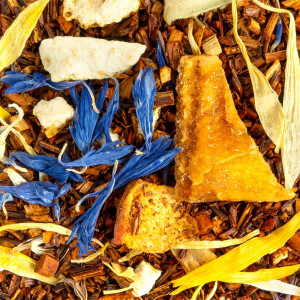
Rooibos Blue Downs
Organic Blue Downs Rooibos brings together red rooibos with mango, orange and apricot, lifted by petals of rose, cornflower and…
€8.80Discover

Rooibos Earl Grey
Organic Rooibos Earl Grey brings together the warm, woody roundness of rooibos with the bright, fragrant lift of natural bergamot.
€9.70Discover

Rooibos Enchanted Night
The Enchanted Night Rooibos is a warming autumn infusion, caffeine-free, where pumpkin meets apple, pomegranate, walnut and cin…
€8.00Discover