Does Rooibos Really Stain Your Teeth? The Truth About This

You're enjoying your daily cup of rooibos and wondering whether this gorgeous red herbal infusion might dull the brightness of your smile. It's a question that comes up often among fans of this South African drink. Contrary to popular belief, rooibos has some very distinctive properties that make it an unexpected ally for your teeth. Here's why this naturally gentle infusion deserves a place in your wellness routine.
The essentials in 30 seconds
- Rooibos barely stains teeth at all, thanks to its very low tannin content
- It contains natural fluoride that strengthens tooth enamel
- Caffeine-free and theine-free, it can be enjoyed at any time of day without worry
- Its red colour comes from antioxidants, not harsh pigments
- A perfect alternative to black tea and coffee for keeping teeth white
Why does rooibos go easy on your teeth?
The answer lies in its unique composition. Unlike classic black tea, which contains high levels of tannins (the compounds responsible for staining enamel), rooibos contains only a negligible amount. Tannins are the real culprits behind the yellowing seen in heavy tea and coffee drinkers.
Rooibos gets its beautiful copper colour from flavonoids and natural antioxidants, which simply don't have the same ability to bond to tooth enamel. Think of it like the difference between a permanent dye and a temporary food colouring: one clings on for good, the other rinses away without a trace.
This makes rooibos a drink of choice for anyone who wants to preserve the natural whiteness of their teeth while still enjoying something warm, flavourful and comforting.
The fluoride in rooibos: an unexpected bonus for your teeth
Here's something most people don't know: rooibos naturally contains fluoride. This South African red herbal infusion therefore offers a double benefit for your oral health. Not only does it leave your teeth unstained, it actively helps to strengthen them.
The fluoride in rooibos bonds to tooth enamel as you drink, forming a protective barrier against the acid attacks caused by bacteria. It's like giving your teeth a small natural shield with every sip. This protection is particularly valuable for preventing cavities and keeping your teeth strong over time.
Unlike artificial fluoride supplements, the fluoride in rooibos fits naturally into your daily routine. One to three cups a day is enough to benefit from this protective effect, with no risk of overconsumption.
How rooibos compares to other hot drinks
To put rooibos's advantages into perspective, here's how it stacks up against its usual "rivals":
| Drink | Tannin content | Staining risk | Fluoride contribution | Recommended intake |
|---|---|---|---|---|
| Black tea | High | High | Low | Moderate |
| Coffee | Medium | High | Negligible | Limited |
| Green tea | Moderate | Medium | Low | Moderate |
| Rooibos | Very low | Minimal | Natural | Unrestricted |
This comparison makes it clear why dentists so often recommend rooibos to patients who care about protecting their smile. This red herbal infusion combines genuine taste pleasure with respect for tooth enamel, a rare balance in the world of hot drinks.
Simple habits for getting the most out of rooibos
Even though rooibos poses very little risk to your teeth, a few straightforward habits can help you make the most of its benefits. First, avoid adding too much sugar or honey: these sweeteners feed the bacteria that cause cavities. Rooibos has a naturally subtle sweetness that stands perfectly well on its own.
Next, let your rooibos steep for five to seven minutes to draw out the maximum amount of antioxidants and natural fluoride. Unlike classic tea, a longer infusion brings no bitterness whatsoever, only more goodness for your health.
Finally, if you drink other potentially staining beverages during the day, alternate them with rooibos. This rotation gives your teeth time to "recover" between exposures to harsher tannins.
Real experiences, real results
Marie, a tea enthusiast of fifteen years, shares her experience: "Since I switched my evening black tea to rooibos, my dentist has noticed a real improvement in the condition of my teeth. No more stains, and best of all, I can drink as much as I like without any guilt!"
Dr. Laurent, a dental surgeon, agrees: "I routinely recommend rooibos to patients who can't do without a warm drink. It's the ideal alternative for anyone who wants to look after their teeth without giving up the pleasure of a delicious cup."
These real-life experiences perfectly illustrate the value of rooibos as part of a natural, enjoyable approach to dental health.
Beyond your teeth: the other benefits of rooibos
While we've focused on dental health, rooibos has plenty more to offer. Rich in antioxidants, it helps combat cellular ageing. Caffeine-free, it supports restful sleep when enjoyed in the evening.
Its anti-inflammatory properties soothe digestive discomfort, while its mineral content (calcium, iron, zinc) provides gentle daily support for the body. A cup of rooibos becomes a true moment of all-round wellbeing, not just a sensory pleasure.
This holistic approach to wellness is entirely in keeping with the philosophy of Thés & Traditions: treating every infusion as a quiet pause that nourishes both body and mind.
Frequently asked questions about rooibos and teeth
Absolutely. Rooibos offers a rich, satisfying taste experience, with the added advantage of being suitable at any time of day, with no impact on your teeth or your sleep. Its natural sweetness and gently vanilla-tinged notes win over even the most hesitant drinkers.
Unlike classic tea, rooibos contains neither theine nor caffeine, so you can enjoy it as freely as you like. Three to four cups a day is a pleasant average that lets you make the most of everything it has to offer.
Perfectly so. The absence of caffeine and the presence of natural fluoride make it an excellent drink for younger ones. In South Africa, it has long been a tradition to give rooibos to children from a very early age.
There's no need to, unlike with black tea or coffee. Rooibos leaves very little residue on the teeth. A simple glass of water at the end of a meal is more than enough to maintain good oral hygiene.
Organic rooibos guarantees the absence of pesticides and chemical treatments, which is always preferable from a general health perspective. In terms of dental health specifically, the difference is minimal, but choosing organic fits naturally into a coherent approach to wellbeing.
Build your own ritual : browse all our South African rooibos, loose-leaf or in tea bags.
Tempted to try it?
Our selection related to this article, loose leaf and organic.
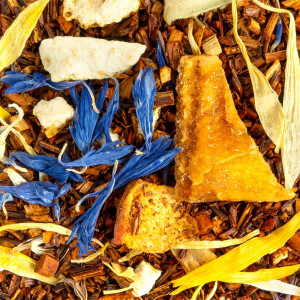
Rooibos Blue Downs
Organic Blue Downs Rooibos brings together red rooibos with mango, orange and apricot, lifted by petals of rose, cornflower and…
€8.80Discover
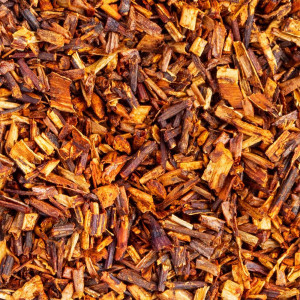
Rooibos Earl Grey
Organic Rooibos Earl Grey brings together the warm, woody roundness of rooibos with the bright, fragrant lift of natural bergamot.
€9.70Discover
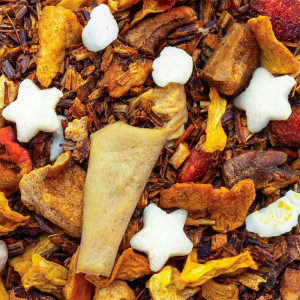
Rooibos Enchanted Night
The Enchanted Night Rooibos is a warming autumn infusion, caffeine-free, where pumpkin meets apple, pomegranate, walnut and cin…
€8.00Discover