 Green Tea




LOVE PICK
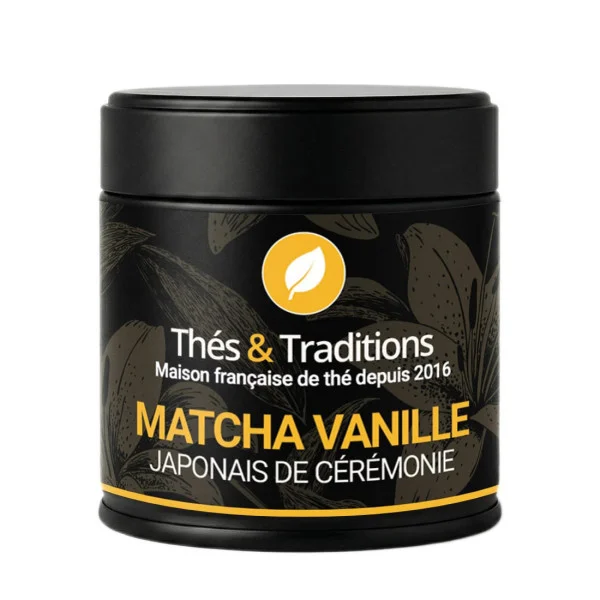
Matcha Shizuku Vanilla
The perfect harmony between Japanese tradition and gentle sweetness
 Main Note:
Peach, Strawberry, Raspberry
Main Note:
Peach, Strawberry, Raspberry
Our organic Jinjiang green tea brings together Sencha and Darjeeling OP with indulgent notes of strawberry, raspberry and peach. A fruity, vibrant and approachable blend, perfect for sipping throughout the day whenever you need a moment of pure gentleness.
our expertise


In our workshop in Provence, each blend is handcrafted with passion by our team.
Real pieces of dried fruit, whole plants and carefully selected teas of origin.
Carefully crafted to create unforgettable tasting moments. A signature taste, an authentic experience.
At a glance: Organic Jinjiang green tea, a blend of Sencha, Darjeeling OP and White Silver Needle with notes of strawberry, raspberry and peach. Brew at 70-80°C for 2-3 min, 12-15 g/L.
The Jinjiang green tea is one of our most vibrant and indulgent creations. It brings together in a single cup the vegetal freshness of Sencha, the refined woodiness of Darjeeling and the silky softness of White Silver Needle, lifted by bursts of red fruit and a gentle peach finish.
This is a green tea we created for those who love bright, aromatic infusions with an almost sunny quality. A blend that works just as well warm, curled up in an armchair, as it does iced on a sun-drenched terrace. An invitation to simple pleasure, from the very first sip.
Julien Huot, our founder, composed this blend as a bridge between the precision of a great green classic and the indulgence of a summer dessert. The result: a fruity, luminous tea that is irresistibly easy to love. To explore the category further, visit our guide to green tea.
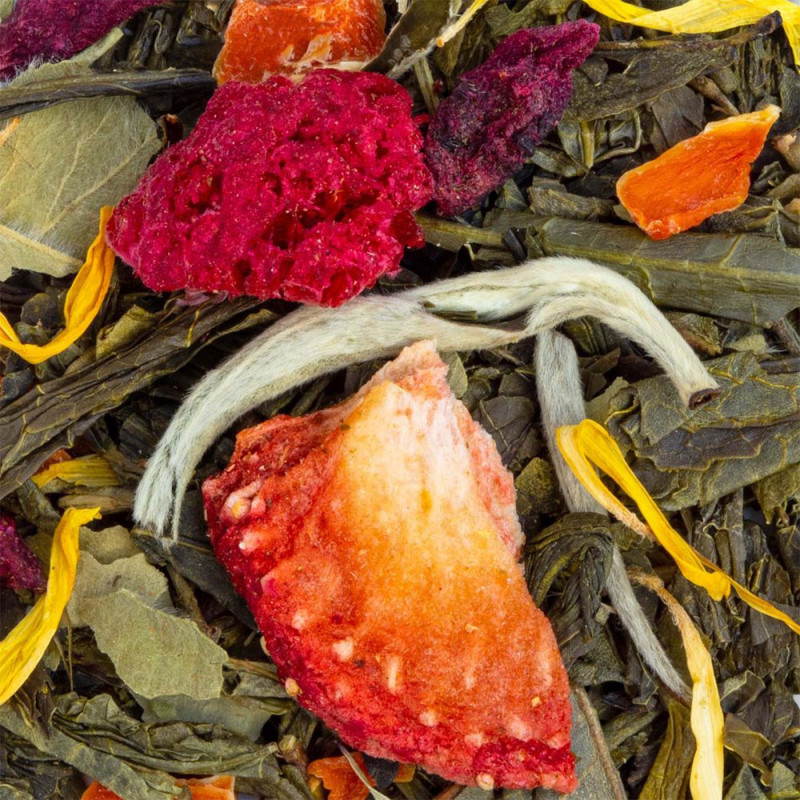
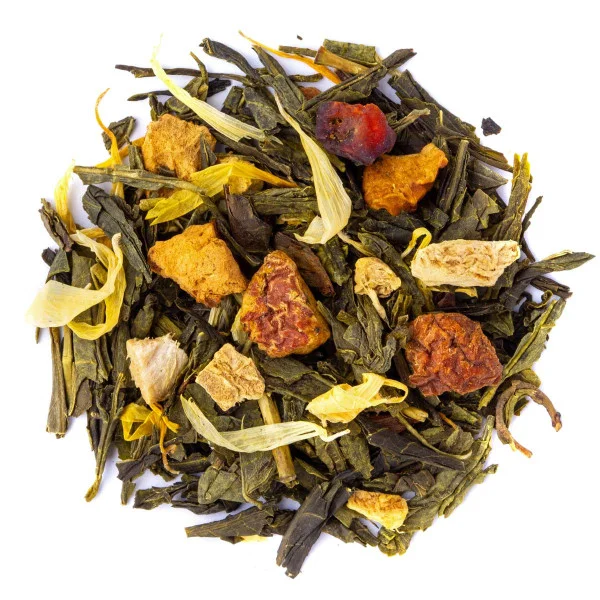
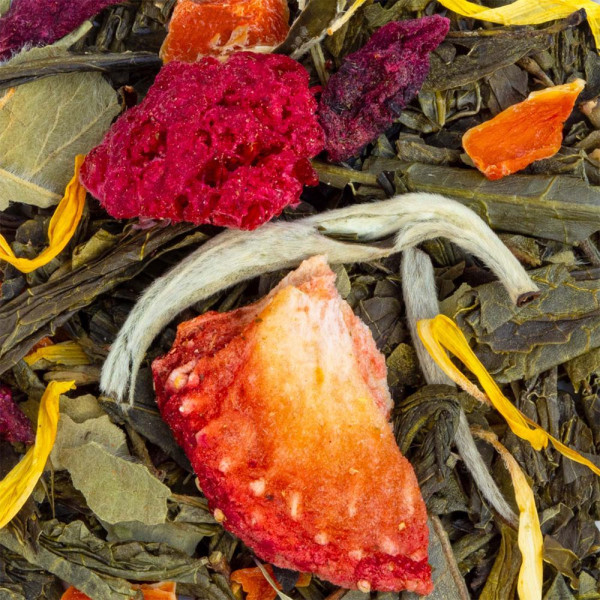
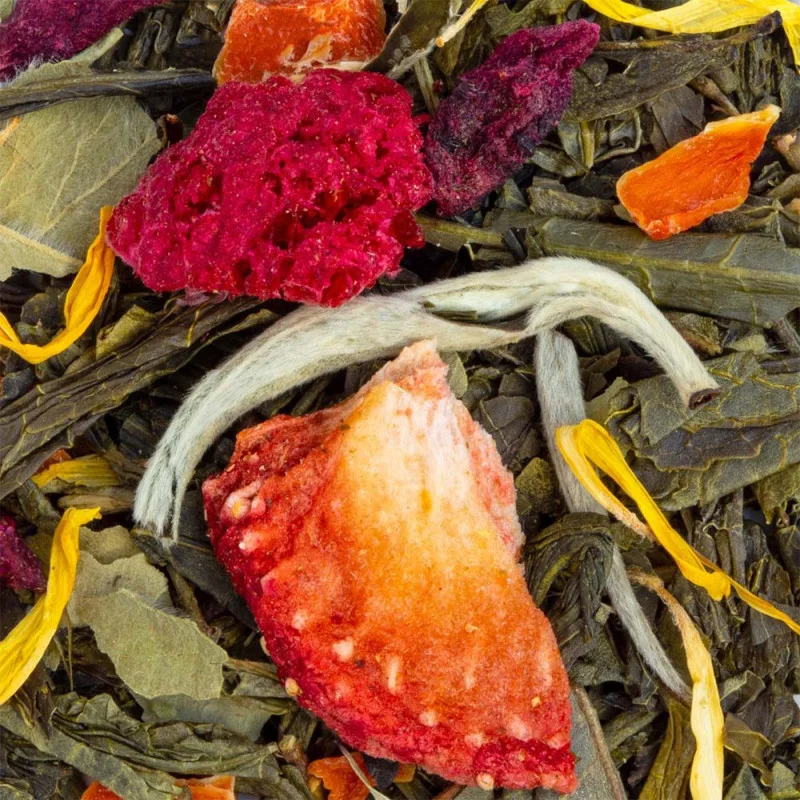
The moment you open the bag, the scent is immediate: a clear rush of ripe strawberry, followed by a sharper raspberry note and a velvety breath of yellow peach. The deep-green Sencha leaf mingles with orange marigold petals, flashes of red beetroot and small pieces of dried carrot that seem almost to glow.
In the cup, the liquor takes on a golden, lightly amber hue, the signature of a pairing between a bright Sencha and a more copper-toned Darjeeling OP. The quiet presence of White Silver Needle, that great white tea of silver buds, lends a cottony roundness that smooths the whole.
The opening is boldly fruity. Strawberry leads, ripe and sweet, as if picked at the end of June. Raspberry follows almost immediately, sharper and livelier, bringing a little flash of brightness that wakes the palate from the very first sip.
Then comes the peach, full and juicy, laying a veil of sweetness over the red fruits. At this point, the vegetal backbone of the Sencha comes through: a fine, almost briny herbaceous note that keeps the blend from tipping into confectionery territory. Beetroot and carrot add a subtle earthy roundness, never overpowering.
The finish is long, silky and lightly floral, thanks to the marigold and lady's mantle flowers. The Darjeeling OP leaves a quiet woody trace, while the White Silver Needle extends the sweet roundness all the way to the last sip. A soothing close, never astringent.
If you enjoy this fruity, colourful style, you will likely love the redcurrant version of its cousin Jiangkou, or the festive Sencha Christmas green tea. Browse our selection of fruity green teas to continue the aromatic journey.
Brewing a green tea calls for a little care: it is what reveals the full delicacy of the blend. For the Jinjiang, we recommend a gentle infusion at low temperature, which preserves the freshness of the fruit and the finesse of the Sencha.
Choose a low-mineral, soft water. A gentle spring water or filtered water will bring out the fruity aromas of the blend far better. Avoid heavily chlorinated tap water, which can harden the vegetal notes and mask the peach. Water quality has a direct impact on the final balance in the cup.
Aim for 70 to 80°C. Above that, the Sencha turns bitter and the raspberry loses its brightness. If you do not have a variable-temperature kettle, bring the water to a boil then leave it to rest, uncovered, for 3 to 4 minutes before pouring. That pause is enough to bring the temperature down into the right range.
Use 12 to 15 grams of leaves per litre, roughly one heaped tablespoon for a 50 cl teapot. If you are brewing in a mug, a well-rounded teaspoon is enough for 200 ml. Feel free to adjust slightly: a little more leaf for a fruitier cup, a little less for something lighter and more delicate.
2 to 3 minutes is all you need. Beyond that, the tannins from the Darjeeling take over and the fruity balance fades. Taste at 2 minutes: if the cup still feels a little shy, steep for one minute more. This is a forgiving blend that tolerates small variations, but it shows its best side within those two bounds.
A glass or fine porcelain teapot is ideal: it lets you admire the golden colour of the liquor and preserves the purity of the aromas. A large stainless-steel filter or infuser basket allows the leaves to unfurl fully. Avoid small tea balls, which restrict the expression of both fruit and petals.
Jinjiang is wonderful as a cold brew. Add 15 g of leaves to one litre of cold water, place in the refrigerator for 6 to 8 hours, then strain. The result is a refreshing drink, low in caffeine, with very pure notes of strawberry and raspberry. Perfect for summer afternoons, served as it is or with a few fresh mint leaves.
Like all green teas, Jinjiang is sensitive to light, moisture and strong odours. Keep it in its original packaging or in an opaque, airtight tin, away from heat. Avoid the cupboard above the oven, the refrigerator (where condensation forms with every change in temperature) and anything near spices or coffee.
In good conditions, the blend holds its full aromatic freshness for 18 to 24 months after opening. You will notice that the strawberry and raspberry stay bright longer if the tin is sealed carefully after each use. A small habit that makes a real difference.
How do I brew Jinjiang green tea?
Steep 12 to 15 g of leaves per litre in water at 70-80°C for 2 to 3 minutes. Use a low-mineral water and a teapot that gives the leaves room to open. Taste at 2 minutes and adjust to suit your preference for a more or less fruity cup.
What are the benefits of Jinjiang green tea?
Jinjiang is above all a tea for pleasure, crafted for the enjoyment of tasting. Its fruity profile and gentle character make it an ideal companion for moments of quiet. To explore the category from a wellness angle, see our guide When to drink green tea.
Where can I buy Jinjiang green tea?
Our organic Jinjiang is available directly from our online shop, packaged in small batches in our workshop to preserve its freshness. You can also browse our other fruity green teas to vary the pleasure with the seasons.
What is the origin of Jinjiang green tea?
Jinjiang is a signature blend from our house, built around a Sencha and a Darjeeling OP elevated by a great white tea, the White Silver Needle. It is an in-house creation designed to bring together the best of several tea traditions in a single cup.
What are the characteristics of Jinjiang green tea?
It is an organic green tea, fruity and bright, with dominant notes of strawberry, raspberry and peach, supported by a Sencha vegetal backbone and the rounded softness of white tea. Golden liquor, silky finish, very low astringency. Also worth trying: our Yankou green tea for a woodier alternative. For a comparison of uses, see green tea and a healthy lifestyle.

The perfect harmony between Japanese tradition and gentle sweetness

A delightful blend of almonds and vanilla: pure bliss

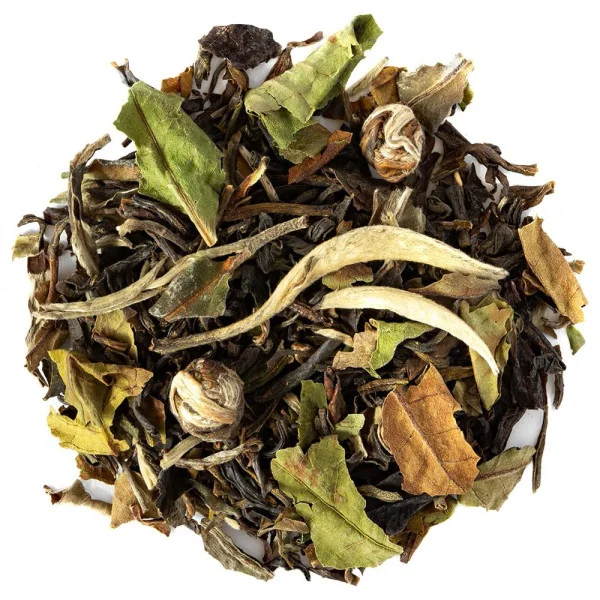
Exceptional jasmine tea with particularly floral notes

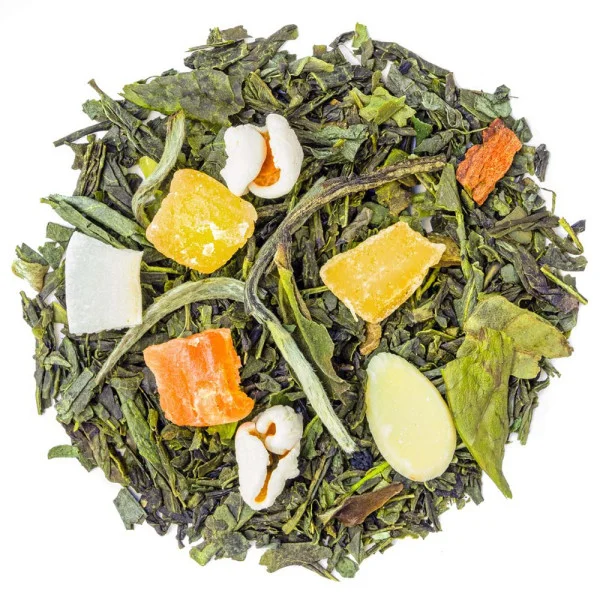
A fruity and indulgent green tea with roasted almond notes
French House
Independent since 2016.
Fast delivery
Home delivery or click & collect.
Made with heart
In the south of France.
Customer service
A real voice at the end of the line,
Monday to Friday: 04 22 91 35 75.
Sharing, passing it on: our teas, our tips, the occasional unexpected idea, and little attentions just for you. Pure pleasure, ready to steep.