How to Grow a Tea Plant at Home
A tea lover with a green thumb? Why not combine your passions and grow tea in your own garden? You could enjoy an annual harvest and craft your very own teas at home. The Camellia sinensis shrub also brings its own quiet beauty: dense, glossy foliage and delicate flowers to brighten any outdoor space. To help it thrive for years to come, a few key conditions matter: partial sun, acidic soil, regular watering, and winter protection.
Origins and Growing Requirements of Camellia Sinensis
The tea plant, or Camellia sinensis, is an evergreen tree that can grow up to 10 metres tall. Each year, beautiful white and yellow flowers adorn the shrub from October through December.
Where Tea Plants Grow Naturally
Tea plants grow naturally across several Asian countries, but they are most at home in the mountains of China. There, they benefit from acidic, year-round moist soil with good drainage. The climate is mild in both summer and winter, with generous rainfall.
Growing Tea in France
In France, Brittany and the Atlantic coast offer the most suitable conditions for growing tea. To cultivate your own at home, these are the essentials:
- temperatures around 20 °C, with no frost;
- acidic soil, such as heather soil;
- frequent but not excessive watering;
- moderate light, away from direct sun;
- a sheltered, wind-protected spot.
Seeds or Starter Plant?

To start growing your own tea, you will need either seeds or a young plant of Camellia sinensis. Seeds are easy to find online, but germinating them and getting the planting right can be a slow, painstaking process. For a better chance of harvesting tea leaves in your first year, buy a young plant or a mature tree from a nursery.
Planting Your Shrub the Right Way
A successful tea garden starts with a careful planting. Here are a few tips for getting your shrubs in the ground.
Pot or Garden Bed?
If you have an ideal spot in your garden that meets the plant's needs, go ahead and plant directly in the ground. If you have just acquired young plants and winters in your area tend to be harsh, start them in pots. This gives you much more control over their environment for the first few years. Once mature, you can transplant them into the garden where they will truly flourish.
When to Plant
Plant when temperatures are mild and rainfall is regular. In France, this means spring or autumn. A summer planting can work too, but pay close attention to sun exposure and watering. Avoid planting in winter: young plants cannot establish roots when the ground is frozen.
How to Plant Your Tea Plant
Start by digging a hole twice the size of the root ball. Prepare a blend of garden soil, heather compost (unless your soil is already acidic), and a fertile shrub potting mix. Plant your tea shrub, then focus on ongoing care while you wait for the first harvest. If growing in pots, remember to repot your plants as they grow.
Year-Round Plant Care

With the right care, tea plants are remarkably resilient, disease-resistant, and long-lived. Follow these guidelines to enjoy a harvest every year.
Watering and Water Quality
Growing healthy tea means watering your plant consistently. The roots need constant moisture, especially in the first year. As soon as the surface of the soil dries out, water at the base of the plant and up to about a metre around it to reach the roots. Rainwater is ideal. If you use tap water, let it sit for 24 hours before watering: tea plants are sensitive to limestone and chlorine.
Summer and Winter Care
The plant does not cope well with a dry summer or intense direct sun. In those conditions, watering becomes even more important. Misting the leaves and mulching around the base can also help retain moisture. In colder regions, bring potted tea plants indoors for winter. For plants in the ground, a frost fleece offers good protection. If snow settles on the branches, shake it off gently: the weight and cold can damage the leaves.
Refreshing the Soil in Spring
Come spring, it is worth adding fresh compost or top-dressing around your plant. Feed it with an acidic potting mix or a natural fertiliser. This can also be done in autumn.
Harvesting the Leaves in Spring
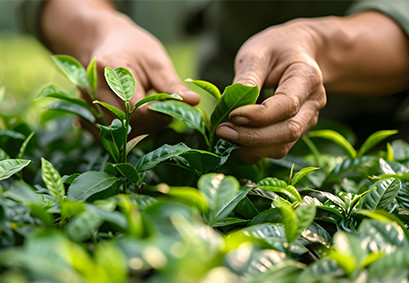
One of the great pleasures of growing your own tea is harvesting leaves that are entirely free from pesticides. Your yield will be modest, but you can harvest at least once a year. The best time to pick is late spring, in June. For the finest flavour, it is best to pick the bud along with one or two young leaves.
Making Your Own Tea After the Harvest
Between picking and tea time, there is one essential step: drying the leaves and buds. You can spread your harvest in the sun for 24 hours, or gently toast them in the oven at 90 °C for a few minutes, with the door slightly ajar. The result is a beautifully floral green tea infusion. If you prefer to make a quality black tea, wither the leaves and allow them to ferment between two drying stages. Growing your own tea also opens the door to creating homemade blended teas. Once the leaves are ready, add fruits, spices, flowers, or herbs. Seal everything in an airtight container for a few days and let the tea slowly absorb the flavours around it.
Also worth discovering
-
Understanding Tea Grades: A Guide to Quality and Classification
The world of tea uses specific terms to classify leaf quality: whole, broken, or ground. Each grade influences…
Read -

Caffeine in Tea: Everything You Need to Know Before Your Next Cup
Caffeine in tea is one of the questions we hear most often, and it makes perfect sense. Between theine, caffeine,…
Read