Is Rooibos (Redbush) Tea Good for Your Kidneys?

Looking for a drink that supports your kidneys while giving you a moment of genuine calm? Rooibos might be just the red infusion you've been waiting for. This naturally caffeine-free South African herbal infusion holds some fascinating properties for kidney health. From its detoxifying qualities to its unique profile, here's why this so-called "red tea" deserves a place in your wellness routine.
Key takeaways
- Rooibos is naturally low in oxalates, unlike black tea
- Its gentle diuretic properties encourage the elimination of toxins
- Caffeine-free, it can be enjoyed at any time without placing extra strain on the kidneys
- Rich in antioxidants, it helps protect kidney cells from oxidative stress
- Moderate consumption (3 to 4 cups a day) is recommended
Why is rooibos different for your kidneys?
Despite being nicknamed "red tea," rooibos is not tea at all. That distinction matters when it comes to your kidneys. Derived from the Aspalathus linearis shrub, which grows exclusively in the Cederberg mountains of South Africa, this infusion has a truly unique chemical profile.
The key point? Its very low oxalate content. While black tea contains between 50 and 100 mg of oxalates per 100 ml, rooibos contains fewer than 2 mg. This is no small difference, given that oxalates can contribute to kidney stone formation in those who are predisposed.
This characteristic makes rooibos an excellent alternative for anyone who needs to monitor their oxalate intake. You can enjoy your infusion without the concern that often accompanies a cup of traditional tea.
The detoxifying properties of rooibos: how does it work?
Rooibos works as a quiet but effective ally for your kidneys. Its detoxifying properties rest on several complementary mechanisms, each worth exploring.
A natural, gentle diuretic effect
Unlike powerful diuretics, rooibos gently stimulates kidney function. This mild action encourages the elimination of metabolic waste and excess fluid without disrupting electrolyte balance, making it particularly valuable for maintaining optimal kidney function day to day.
This natural diuretic quality also helps reduce water retention, which can ease the feeling of heavy legs and support better overall circulation.
Protective antioxidants for kidney cells
Rooibos contains unique antioxidants, most notably aspalathin and quercetin. These compounds act as a shield against oxidative stress, the process that damages cells over time. For the kidneys, organs that work continuously to filter the blood, this protection is especially valuable.
Studies suggest these antioxidants may help preserve kidney function by neutralising free radicals. This isn't a medical treatment, of course, but rather a natural form of support within a balanced lifestyle.
Rooibos and kidney stones: a natural prevention?
Kidney stones are a concern for many people. If you've experienced that kind of pain before, you know how important prevention is. Rooibos has some notable advantages here.
Its very low oxalate content makes it a sound choice for those at risk of calcium oxalate stones, the most common type. Unlike black tea, green tea, or even spinach, rooibos does not add to your dietary oxalate intake.
What's more, its mild diuretic effect helps maintain a healthy urine volume. Diluted urine reduces the concentration of substances that can crystallise and form stones, a natural and effective preventive mechanism.
A word of caution, though: if you have a history of kidney stones, it's essential to speak with your doctor. Rooibos can be a useful complement, but it is never a substitute for appropriate medical care.
How to bring rooibos into your detox routine
Now that you know the benefits of rooibos for your kidneys, here's how to weave it thoughtfully into your daily life. The key is consistency and moderation.
The right amount for your kidneys
To enjoy the detoxifying properties of rooibos without overdoing it, aim for 3 to 4 cups a day. This amount optimises your intake of protective antioxidants while maintaining a gentle, steady diuretic effect.
Spread your cups throughout the day: one in the morning to ease into the day, one mid-morning, one in the afternoon, and perhaps one in the evening. Being caffeine-free gives you that flexibility without affecting your sleep.
The ideal preparation
To draw out the full benefits, steep your rooibos for 5 to 7 minutes in water at 95°C. Unlike tea, it never turns bitter, even with a longer steep. Feel free to adjust according to your taste.
A connoisseur's tip: brew a large teapot in the morning and sip your rooibos throughout the day, warm or at room temperature. Its properties remain fully intact, and you'll maintain steady hydration, which is exactly what your kidneys need.
Precautions and contraindications to be aware of
While rooibos is generally very well tolerated, a few precautions are worth noting, especially if you already have kidney-related conditions.
If you live with chronic kidney disease, speak with your nephrologist before increasing your rooibos intake. Even though this infusion is gentle, any change in your fluid intake should be discussed with your medical team.
For those on diuretic medication, combining it with rooibos could potentially amplify the diuretic effect. Again, medical advice is recommended so adjustments can be made if needed.
Finally, as with any drink, moderation is the golden rule. Excessive consumption of any liquid can place a burden on the kidneys, even a beneficial infusion like rooibos.
Rooibos vs other herbal infusions: which is best for your kidneys?
How does rooibos compare to other infusions considered good for the kidneys? It's a fair question.
Against nettle tea, well known for its diuretic properties, rooibos offers a gentler action that's easier to sustain daily. Nettle can be more potent, but rooibos allows for regular consumption without the risk of irritation.
Compared to green tea, often praised for its antioxidants, rooibos has the advantage of containing neither caffeine nor oxalates. For evening drinking or for those sensitive to stimulants, that's a significant plus.
Dandelion tea, another classic in renal detox, has a more pronounced diuretic effect. Rooibos, by contrast, strikes a perfect balance between effectiveness and gentleness, making it ideal for sustained daily use.
FAQ
Rooibos offers meaningful advantages for kidney stone prevention thanks to its very low oxalate content (fewer than 2 mg per 100 ml, compared to 50 to 100 mg in black tea). Its mild diuretic effect also helps maintain a healthy urine volume, reducing the concentration of substances that can crystallise. That said, it is not a substitute for medical follow-up if you have a history of kidney stones.
To benefit from the detoxifying properties of rooibos, 3 to 4 cups a day is the optimal amount. This allows you to maximise your intake of protective antioxidants while maintaining a gentle diuretic effect. Spread your cups throughout the day for a steady, lasting benefit.
Rooibos is generally very well tolerated, even by those with mild kidney issues. However, if you have chronic kidney disease or are taking diuretic medication, speak with your doctor before increasing your intake. Any change to your fluid routine should be validated by your medical team.
Rooibos and green tea have different profiles. Green tea contains more antioxidants but also caffeine and oxalates. Rooibos offers a gentler detoxifying action with neither caffeine nor oxalates, making it better suited for sustained daily consumption and especially appealing in the evening or for those sensitive to stimulants.
Absolutely. One of rooibos's greatest strengths is its complete absence of caffeine. You can enjoy a cup in the evening without any risk of disturbing your sleep. It's actually a great choice as part of a detox routine, since your kidneys continue their filtration work through the night.
Organic rooibos has the advantage of being grown without pesticides or chemical fertilisers, which reduces the toxic load your kidneys have to filter. While conventional rooibos is still beneficial, choosing organic optimises the detoxifying benefits by limiting exposure to potentially harmful substances.
There's no need to give up black tea entirely, but alternating with rooibos is an excellent strategy. It helps lower your overall oxalate intake while keeping the pleasure of a warm cup. A balanced approach: black tea in the morning, rooibos in the afternoon and evening.
Rooibos supports your kidneys' natural detoxification functions through its gentle diuretic effect and protective antioxidants. It helps maintain a healthy urine volume and shields kidney cells from oxidative stress. That said, it doesn't "detoxify" in the strict sense: your kidneys do the work. Rooibos simply supports them in carrying out their natural function.
Want to keep the experience going ? Discover our organic rooibos and find the one that suits you.
Tempted to try it?
Our selection related to this article, loose leaf and organic.
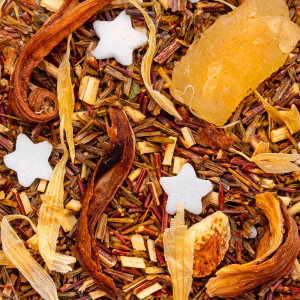
Lemon Meringue Rooibos
Lemon meringue tart rooibos brings a real patisserie to your cup: green rooibos, lemon peel, candied pineapple, white hibiscus …
€8.70Discover
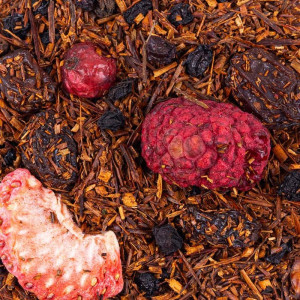
Wild Berry Rooibos
Organic wild berry rooibos makes for an indulgent, caffeine-free infusion where raspberry, strawberry, blackcurrant and elderbe…
€7.90Discover
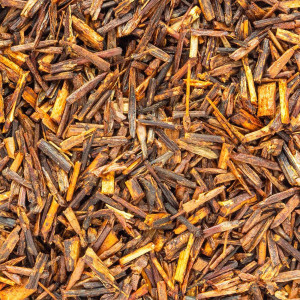
Natural Rooibos
Organic natural Rooibos from South Africa offers a caffeine-free infusion that is smooth and naturally indulgent.
€6.90Discover