Rooibos in the Evening: Benefits and Tips for Restful Nights

You're looking for a warm, comforting drink to wind down your day, but worried that caffeine might disrupt your sleep? It's a concern many tea lovers share, and it's what leads them to discover rooibos, a remarkable infusion from South Africa that has transformed evening routines around the world.
Naturally caffeine-free and rich in soothing properties, rooibos has earned its place as the perfect companion for your nighttime moments of calm. Here's why this golden-red infusion deserves a spot in your evening ritual.
The essentials at a glance
- Naturally zero caffeine: unlike decaffeinated tea, rooibos contains absolutely no caffeine traces
- Relaxing properties: rich in calming minerals such as magnesium
- Easier digestion: helps settle the stomach after dinner
- Hydration without night waking: non-diuretic, so it won't interrupt your sleep
- For the whole family: suitable for children, pregnant and breastfeeding women
Why rooibos will never disturb your sleep
The fundamental difference between traditional tea and rooibos lies in their botanical origins. Tea comes from the Camellia sinensis plant, while rooibos is derived from a South African shrub in the legume family, Aspalathus linearis.
This distinction matters: it explains why drinking rooibos in the evening carries absolutely no risk of keeping you awake. Unlike green, black, or white teas, which naturally contain caffeine, rooibos is structurally free of it.
Even so-called decaffeinated teas retain residual traces of caffeine after processing. Rooibos offers complete purity: no stimulant to engage your nervous system or raise your heart rate.
A naturally calming composition
Beyond its caffeine-free nature, rooibos has a low tannin content. Tannins are the compounds responsible for bitterness when tea steeps too long. This quality gives rooibos a natural smoothness on the palate and supports iron absorption in the body.
This unique composition makes rooibos a particularly gentle drink, ideal for your moments of relaxation with no unwanted effects on your system.
The benefits of rooibos for a restorative night's sleep
Enjoying a cup of rooibos in the evening is about much more than avoiding caffeine. This infusion is full of properties that naturally encourage relaxation and prepare your body for rest.
A blend of relaxing minerals
Rooibos naturally contains magnesium, calcium, and potassium, three minerals essential for muscular and nervous relaxation. These elements help your body release the tension that builds up throughout the day.
Its antioxidants, particularly aspalathin and quercetin, help reduce oxidative stress and promote a calm state conducive to falling asleep. Think of it as giving your body a quiet, gentle pause after a full day.
A digestive ally for peaceful nights
Drinking rooibos after dinner helps soothe the digestive system. Its mild anti-inflammatory properties ease any light gastric discomfort that might otherwise delay sleep.
Unlike black tea, which can have a diuretic effect, rooibos keeps you hydrated without prompting unwanted wake-ups during the night, so your sleep stays deep and restorative.
How to prepare your evening rooibos perfectly
A few simple steps are all it takes to bring out the full aromatic richness of your rooibos before bed.
The ideal temperature
Use water between 90 and 100°C. Unlike green tea, which is sensitive to excessive heat, rooibos handles boiling water beautifully. This high temperature fully extracts its honeyed aromas and precious minerals.
The optimal steeping time
Steep your rooibos for 5 to 7 minutes for a complete extraction. And here's the good news: even if you leave it a little longer, it won't turn bitter. This forgiving nature makes it the perfect drink for unhurried, relaxed evenings.
Plain or flavoured: the choice is yours
Plain rooibos reveals soft, lightly sweet notes, ideal for a pure and simple cup. To enhance its relaxing effects, look for blends enriched with chamomile, verbena, or orange blossom.
Some rooibos blends pair vanilla and honey for an even more indulgent experience, turning your evening pause into a true moment of pleasure.
The best time to enjoy your rooibos
To make the most of your infusion, drink your rooibos about an hour before bed. This timing allows your body to absorb its relaxing properties while avoiding a nighttime wake-up for natural needs.
Build a soothing ritual around it: prepare your rooibos quietly, sip it slowly, and step away from screens. This mindful pause signals to your body that it's time to slow down and ease into rest.
A drink for the whole family, without restriction
One of rooibos's greatest strengths is how well it suits everyone. Children, pregnant women, breastfeeding mothers: all can enjoy it freely, with no contraindications. This universality makes it an ideal drink for sharing a moment of calm together.
Common questions about evening rooibos
Can you drink rooibos every evening?
Absolutely. Its caffeine-free nature and mineral richness make rooibos perfectly suited to daily enjoyment. You can even have several cups in one evening with no risk to your sleep whatsoever.
Does rooibos really help you fall asleep?
While it isn't a sleep aid, rooibos supports relaxation through its calming minerals and complete absence of stimulants. Its soothing effect, combined with the comforting ritual of a warm drink, creates the right conditions for a natural, gentle sleep.
How much rooibos should you drink in the evening?
One to two cups is usually enough to enjoy its benefits. Listen to your body: some people prefer one generous mug, others enjoy several smaller cups spread across the evening.
Can rooibos fully replace evening tea?
For tea lovers looking to avoid caffeine in the evening, rooibos is an excellent alternative. Its rich aromas and velvety texture offer a deeply satisfying experience, different from traditional tea but just as enjoyable.
Are there any contraindications for rooibos?
Rooibos is remarkably well tolerated. The only people who should exercise caution are those with a known allergy to legumes. If you're unsure, start with a small amount to test your tolerance.
Build your own ritual : browse our rooibos collection, loose-leaf or in tea bags.
Tempted to try it?
Our selection related to this article, loose leaf and organic.

Wild Berry Rooibos
Organic wild berry rooibos makes for an indulgent, caffeine-free infusion where raspberry, strawberry, blackcurrant and elderbe…
€7.90Discover
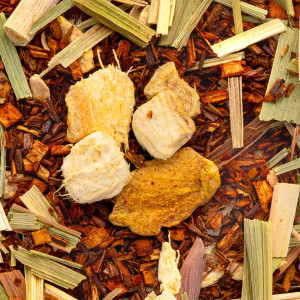
Ginger Lemon Rooibos
Organic ginger lemon rooibos brings together the warm, woody roundness of rooibos with the heat of ginger and the bright zest o…
€8.00Discover

Rooibos Piña Colada
Organic Rooibos Piña Colada whisks you away to a sunny, fruity infusion where pineapple and coconut dance together on a natural…
€8.80Discover
Also explore the guide — ROOIBOS
-
 Rooibos & Blood Pressure: Benefits and Precautions
Discover
Rooibos & Blood Pressure: Benefits and Precautions
Discover
-
 Rooibos: Benefits, Risks and Contraindications to Know
Discover
Rooibos: Benefits, Risks and Contraindications to Know
Discover
-
 How to Pronounce Rooibos Correctly
Discover
How to Pronounce Rooibos Correctly
Discover
-
 Rooibos herbal infusion: benefits, varieties & wellness
Discover
Rooibos herbal infusion: benefits, varieties & wellness
Discover
-
 Best Rooibos: Buying Guide and Top Picks
Iced Rooibos: the perfect recipe for a refreshing herbal
Discover
Best Rooibos: Buying Guide and Top Picks
Iced Rooibos: the perfect recipe for a refreshing herbal
Discover