
LOVE PICK
Parisian Garden
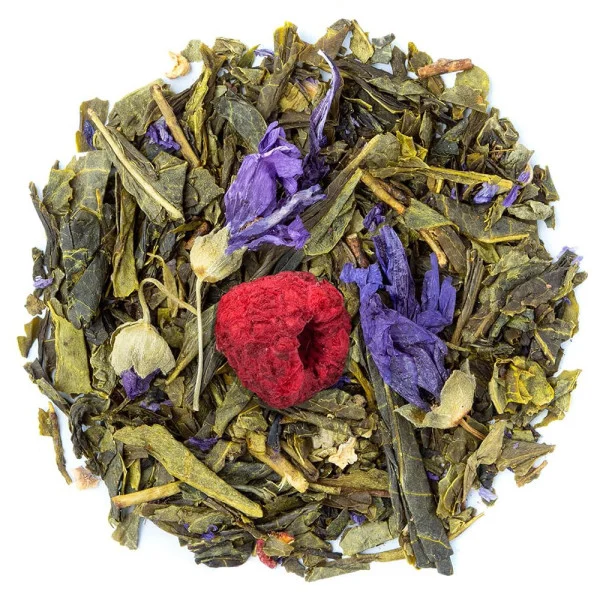
Romantic tea with sweet raspberries and violet
 Main Note:
Strawberry, Rhubarb
Main Note:
Strawberry, Rhubarb
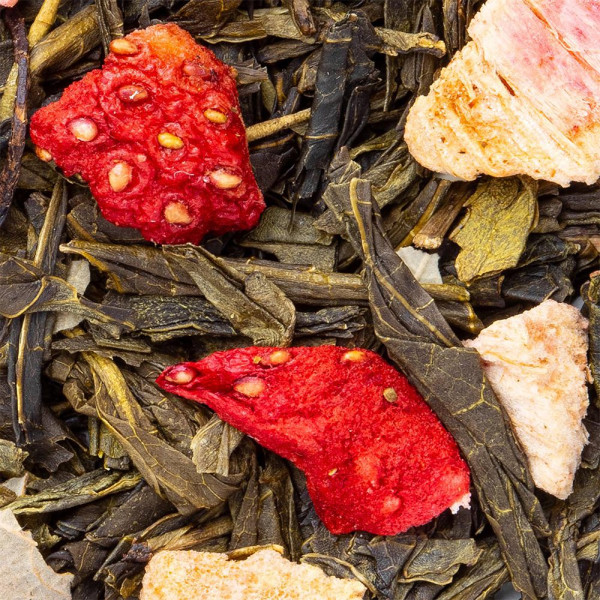
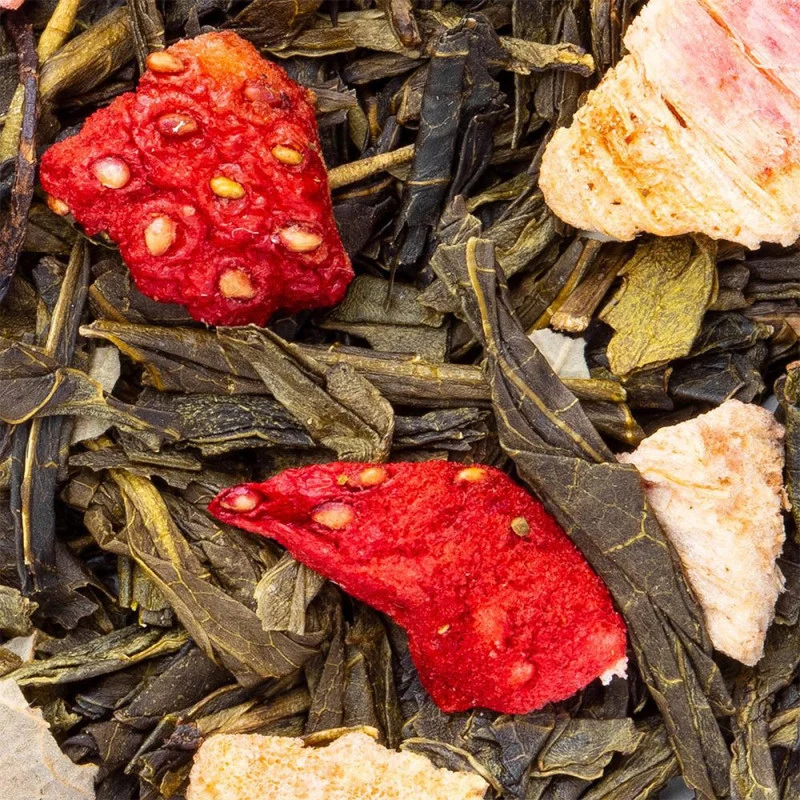
Our strawberry rhubarb green tea brings together a delicate Sencha with the sweetness of strawberry and the bright, tangy snap of rhubarb. A fruity, indulgent infusion, perfect for easing into your mornings or stretching out a quiet afternoon.
our expertise


In our workshop in Provence, each blend is handcrafted with passion by our team.
Real pieces of dried fruit, whole plants and carefully selected teas of origin.
Carefully crafted to create unforgettable tasting moments. A signature taste, an authentic experience.
In a nutshell: a strawberry rhubarb green tea built on a tender Sencha, lifted by pieces of strawberry and rhubarb. Brew at 70-80°C for 2 to 3 minutes, using 12 to 15 g per litre.
Some cups bring childhood memories rushing back: Sunday rhubarb tart, strawberries picked fresh from the garden, a pitcher of cold infusion left on the table on a summer afternoon. Our strawberry rhubarb green tea plays that same nostalgic tune with delicacy, never tipping into confectionery territory.
We chose a Sencha with real character, vegetal enough to carry the fruit, gentle enough to let it shine. The meeting happens in the cup, in a clear and luminous liquor threaded with fresh, tangy notes.
This blend naturally finds its place among our most-loved green teas, alongside more floral or mineral signatures. For a deeper dive, our guide to green tea traces the history and major families of this fascinating category. Explore our selection of fruity green teas to continue the flavour journey.
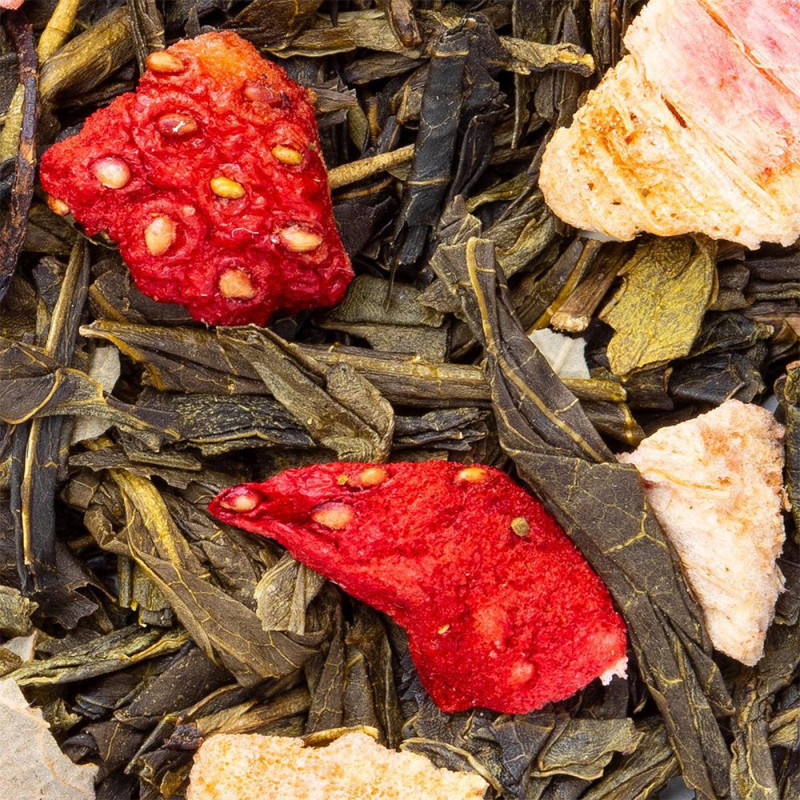
This blend rests on just four ingredients: a China Sencha, blackberry leaves, pieces of strawberry and shards of rhubarb, all tied together by a natural aroma that extends the freshness of the fruit. This simplicity is intentional: a few well-chosen components always outperform a crowded recipe.
Up front, strawberry arrives with an immediate sweetness, almost pastry-like, evoking homemade jam and seasonal desserts. It's the first thing that greets the palate.
At the heart, rhubarb brings its bright tartness, that honest little tingle that balances the fruity roundness and keeps the cup from turning cloying. The dried pieces release their character slowly, with each passing second of steeping.
In the background, the Sencha unfolds its vegetal note, lightly herbaceous, almost briny, supported by blackberry leaves that add a supple, silky structure. Together, they make for a tasting that is fruity, lively and refreshing.
The liquor takes on a luminous yellow-green hue, dotted with the rosy fragments of the fruit. The scent, whether you're opening the tin or lifting the cup, is frank, inviting and instantly recognisable. If this fruity register appeals to you, try our Japanese cherry selection, with its petals and cherry notes, which extends the flavour palette in a different direction.
A great green tea comes down to three things: water temperature, dosage and steeping time. A flavoured Sencha like this one calls for a little precision, but nothing complicated.
The water: heat it to between 70 and 80°C. Too hot, and it will scorch the leaves, drawing out an unpleasant bitterness. Soft, low-mineral water is best for preserving the blend's delicate aromas.
The dosage: use 12 to 15 g per litre, roughly one heaped teaspoon per 250 ml cup. The strawberry and rhubarb pieces take up volume, so don't be shy with the measure.
Steeping time: steep for 2 to 3 minutes to taste. Two minutes gives a fruity, lighter cup; three minutes brings out a more vegetal, full-bodied character. Beyond that, the Sencha tightens and bitterness creeps in.
Iced version: this blend lends itself beautifully to cold brewing. Add 10 g of leaves to one litre of cold water, leave to steep for 2 hours in the refrigerator, then strain. The result is a wonderfully refreshing drink for warm days, best served over ice with a slice of lime and a few fresh mint leaves.
In the morning, this infusion pairs perfectly with toast and jam. In the afternoon, it's a natural match for cheesecake, a red-fruit fondant or a simple madeleine. For more pairing ideas, When to drink green tea offers suggestions for every moment of the day. Try our Earl Grey Sencha green tea for another take on a flavoured Sencha.
To keep this fruity blend at its freshest, store your leaves in an airtight tin, away from light, heat and strong odours. Dried fruit pieces absorb surrounding aromas quickly, so keep them well away from spices.
Our blend is packed in our workshop to reach you in the best possible condition. Enjoyed within twelve months of opening, it reveals its full aromatic palette. After that, the fruity notes gradually fade, with no safety concern, but a less vibrant cup.
How do I brew strawberry rhubarb green tea?
Heat your water to between 70 and 80°C, use 12 to 15 g of leaves per litre and steep for 2 to 3 minutes. Strain and enjoy. For an iced version, use 10 g per litre of cold water and leave to rest for 2 hours in the refrigerator.
What does strawberry rhubarb green tea taste like?
The blend opens with a soft, fruity strawberry note, moves into a tangy core carried by rhubarb, and finishes with the fresh, vegetal character of China Sencha. Blackberry leaves add a supple, silky structure throughout.
How should I enjoy strawberry rhubarb green tea?
Plain is best, allowing the aromas to come through fully. As a pairing, it works beautifully with fruity pastries, creamy desserts and viennoiseries. Served iced, it becomes a perfect warm-weather drink to share at afternoon tea.
What type of cup works best?
A fine porcelain cup or a clear glass shows off the luminous yellow-green liquor to its best advantage. Avoid metal containers, which can interfere with the Sencha's delicate aromas. A glass teapot also lets you watch the fruit pieces dance as they steep.
Can this blend be enjoyed throughout the day?
Best suited to the morning and daytime, it makes a lovely companion at breakfast and afternoon breaks. As Sencha contains caffeine, it's worth avoiding it in the evening if you're sensitive to it. Explore our other red fruit teas for more fruity options at any time of day.

Romantic tea with sweet raspberries and violet


Velvety Japanese specialty, roasted, with toasted aromas

French House
Independent since 2016.
Fast delivery
Home delivery or click & collect.
Made with heart
In the south of France.
Customer service
A real voice at the end of the line,
Monday to Friday: 04 22 91 35 75.
Sharing, passing it on: our teas, our tips, the occasional unexpected idea, and little attentions just for you. Pure pleasure, ready to steep.