
Peach Caramel
Indulgent green tea that melts on your palate
 Main Note:
Cherry Blossom
Main Note:
Cherry Blossom
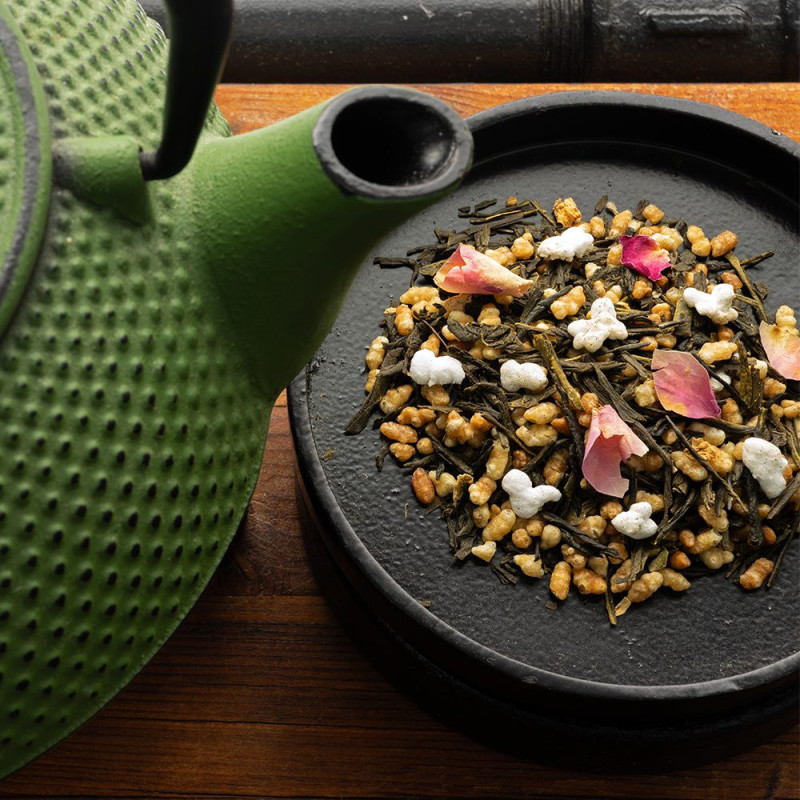
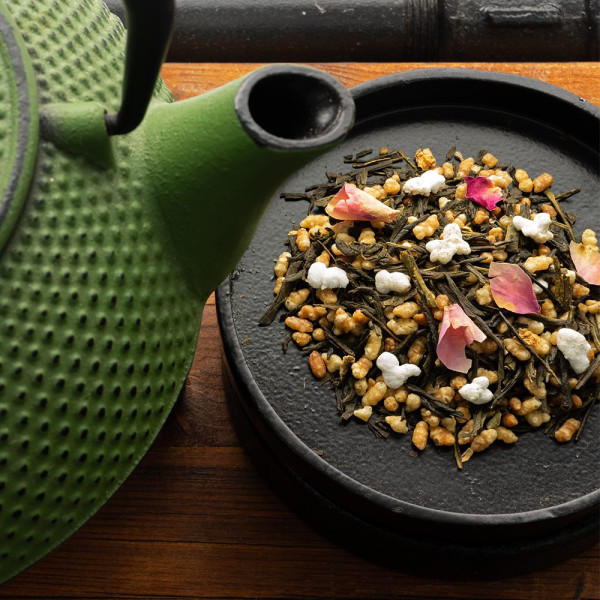
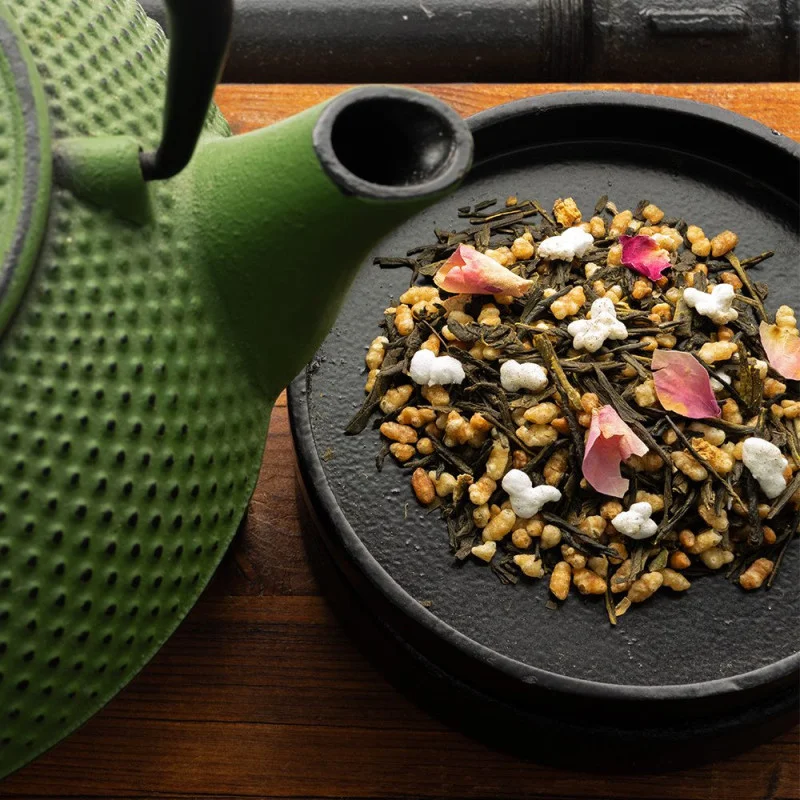
Our Fleurs du Japon green tea brings together a Miyazaki Genmaicha from Japan with rose petals and a hint of spirulina. This blend evokes the delicate charm of a sakura tea, with cherry blossom floral notes beautifully lifted by toasted rice. A refined Japanese green tea, lovely at any hour of the day.
our expertise


In our workshop in Provence, each blend is handcrafted with passion by our team.
Real pieces of dried fruit, whole plants and carefully selected teas of origin.
Carefully crafted to create unforgettable tasting moments. A signature taste, an authentic experience.
At a glance: Our Fleurs du Japon green tea combines a Miyazaki Genmaicha from Japan with rose petals and a touch of spirulina. Brew at 80-90°C for 1-2 minutes, 12-15 g/L.
Inspired by hanami, this blend evokes the cherry blossom season and the understated elegance of a sakura tea. Our house has crafted a floral and toasty recipe, where the puffed rice of the Genmaicha meets the roundness of rose petals.
Selected by Julien Huot as part of our work on view all our green teas, this Japanese tea offers a poetic reading of the Japanese spring. Explore our other Japanese green teas to continue the journey.
The base of the blend, Miyazaki Genmaicha, comes from Miyazaki Prefecture in southern Japan. This traditional Japanese green tea combines bancha leaves with toasted brown rice, puffed and roasted. The result: a warm, lightly cereal-like character that is instantly recognizable.
On the top note, you catch the toasted rice, almost popcorn-like, opening the tasting with warmth. This gives way to the heart note, floral and delicate, carried by rose petals and a natural aroma evoking cherry blossom.
The base note is vegetal and mineral: finely dosed spirulina adds depth and a deep green colour to the infusion. The whole remains balanced, with no bitterness and a soft, lingering finish.
This composition recalls the spirit of sakurayu, a traditional Japanese infusion made from pickled cherry blossoms, served on special occasions. Our version is sweet and floral, salt-free, designed as a refined everyday tea.
If you enjoy floral scented green teas, you may also love our Imperial Jasmine green tea, more enveloping, or our Chun Hao Jasmine green tea, lighter and more airy.
Preparation makes all the difference. Too hot, and the water scorches the leaves, bringing out bitterness. Too cool, and it won't draw out the floral and toasty aromas. Here are the parameters recommended by our house.
The water: use a low-mineral water, filtered if possible. Bring it to a near-boil, then let the temperature drop to around 80-90°C. This is the ideal window for a flavoured Genmaicha.
The dose: use 12 to 15 g per litre, roughly a heaped tablespoon for a 300-400 ml teapot. The puffed rice takes up volume, so don't be too sparing.
The time: steep for 1 to 2 minutes. One minute for a delicate, floral cup; two minutes for a more toasty, full-bodied expression. Beyond that, the tea may turn astringent.
Accessories: a Japanese cast iron teapot, a clay kyusu, or simply a glass teapot all work beautifully. Warm the vessel with a little hot water before brewing. You can also serve this blend in a pretty cup or a matcha bowl for a more contemplative moment.
The leaves hold up well to a second infusion: add 30 seconds to the original steeping time to reveal new, more vegetal facets.
Store your tea in an airtight, opaque container, away from light, moisture and strong odours. A Japanese washi tea caddy is ideal for preserving the delicate floral aromas. Avoid the refrigerator. For the best experience, consume within twelve months of opening.
What is sakura tea?
Sakura tea traditionally refers to a Japanese infusion made from pickled cherry blossoms (sakura blossom). Our Fleurs du Japon offers a modern take: a Miyazaki Genmaicha green tea scented with rose petals and a natural aroma evoking cherry blossom.
How do you brew sakura tea?
Heat the water to 80-90°C, use 12 to 15 g per litre, and steep for 1 to 2 minutes. Water that is too hot will make the tea bitter and mask the delicate floral notes of the blend.
What does sakura tea taste like?
Our blend offers a floral and toasty profile. You'll find the warmth of puffed rice, the softness of rose petals, the delicate signature of cherry blossom and a vegetal touch from the spirulina. The whole is smooth and well-rounded, with no bitterness.
Where can I buy sakura tea?
Our house offers this Japanese green tea directly on the Thés & Traditions website. You can also visit our guide to green tea to help you choose among our selection.
When is the best time to enjoy this Japanese green tea?
This tea suits any time of day. When to drink green tea is really a matter of the moment: try it mid-morning to awaken the senses, or in the late afternoon for a sensory pause.

Indulgent green tea that melts on your palate

The perfect harmony between Japanese tradition and gentle sweetness

detox green tea premium blend pomegranate mint

French House
Independent since 2016.
Fast delivery
Home delivery or click & collect.
Made with heart
In the south of France.
Customer service
A real voice at the end of the line,
Monday to Friday: 04 22 91 35 75.
Sharing, passing it on: our teas, our tips, the occasional unexpected idea, and little attentions just for you. Pure pleasure, ready to steep.