

10 kitchen ingredients to sweeten your tea without white sugar
You simply cannot drink your tea plain. The problem is that sweetening your tea with white sugar can take a toll on your health over time. Processed and heated, white sugar contains nothing but sucrose and loses every trace of its nutrients along the way. You are far better off turning to the benefits of honey, mint or lemon. In this article, we share 10 ways to soften the taste of your tea.
1. Honey and its naturally soothing sweetness
Sweetening tea with honey is a long-standing habit. A natural, unprocessed product, honey has a sweetening power around 30% greater than ordinary sugar. A small spoonful in your infusion will therefore deliver the same softening effect as table sugar. That said, honey still contains glucose and fructose, so moderation matters. To sweeten your teas and herbal infusions, choose an organic honey, ideally French. Honeys from further afield can sometimes be cut with water or glucose syrup.
2. A splash of milk in your cup
Another way to soften your tea is to pour a cloud of milk into the infusion. This is a classic gesture with black tea, at breakfast or at tea time. The lactose in milk takes over the sweetening role of white sugar. Be mindful, though: milk contains fat, and drinking too much of it can also have its downsides.
3. Less white sugar, more unrefined sugars
You can begin cutting back on table sugar by swapping it for whole cane sugar. The deeper aroma of unrefined sugar means you naturally use less of it. Known as rapadura or muscovado, unrefined sugars retain their vitamins, minerals and fibre. Nutritionally, they are a slight step up from white sugar. That said, they still raise blood glucose and can contribute to weight gain, so the same cautions apply.
4. Agave syrup for a gentler sweetness
Agave syrup comes from a Mexican plant. It has a high sweetening power, which means a little goes a long way in your cup. Another plus: its neutral taste does not interfere with the character of your tea. However, its high fructose content can encourage fat storage. Contrary to popular belief, agave syrup does not actually prevent blood sugar spikes.
5. Sweetening your drinks with maple syrup
A true icon of Canadian cuisine, maple syrup softens the taste of a hot drink beautifully. Like honey, it has a pronounced flavour, so a modest amount is enough to do the job. The downside: adding maple syrup to your infusion does trigger blood sugar spikes. Enjoy it in moderation.
6. Softening your teas with organic coconut sugar
Coconut sugar is made from the sap of coconut flowers, gently heated until it turns into a brown sugar. Like unrefined cane sugar, coconut sugar keeps its micronutrients. The effects on your cup and your wellbeing are very similar. No coconut sugar at home? You will find it in organic food shops.
7. Stevia: a sweetener with a hint of liquorice
Stevia powder is a natural sweetener extracted from the leaves of an Amazonian plant. It contains no calories and is 40 to 300 times sweeter than sucrose. These qualities make stevia a tempting candidate for sweetening tea while keeping an eye on your weight. The catch is that regular use of processed sweeteners is increasingly questioned. Over time, sweeteners may contribute to insulin resistance or a lingering craving for sweetness.
8. Xylitol: a low-calorie sweetener
Xylitol is a natural intense sweetener produced from birch. Thanks to its properties, it lets you sweeten your tea without raising blood sugar. Its health benefits and risks are broadly the same as those of other sweeteners like stevia.
9. Lifting the flavour of your teas with kitchen spices
By now you have understood: sweetening your tea is not the ideal habit. Cutting down on sugar and sweeteners really matters, especially since you can round out the flavour of your drink with other ingredients already in your kitchen. Adding spices to the teapot perfumes and lifts your tea. Some pair particularly well with vanilla or cinnamon.
10. Adding fruit, or choosing a flavoured tea
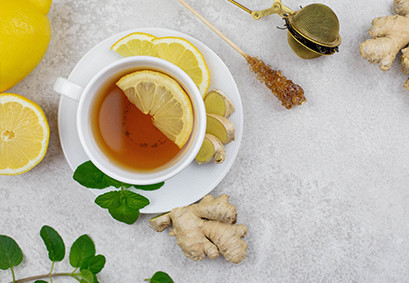
Adding fruit or plants is another lovely way to wean yourself off sweetening your tea. Bring depth to your infusion with mint leaves, a strip of lemon zest or a few pieces of dried fruit. Mint refreshes, lemon brightens, fruit perfumes the cup. You can also reach straight for a tin of flavoured tea. There is no miracle replacement for white sugar. The best solution is still to stop sweetening your tea altogether. To ease yourself into it, start with a softer tea, such as white tea. Explore different herbal infusions too, especially rooibos, which has a far less astringent character. Little by little, you will find yourself enjoying a green or black tea without sugar and without calories.
Also worth discovering
-
10 Homemade Ginger Infusion Ideas to Try at Home
Explore a range of original ginger infusion recipes that make the most of this remarkable root. Learn how to brew a…
Read