

How to Grow a Tea Plant at Home
A tea lover with a green thumb? Why not blend your two passions and grow your own tea right in your garden? You'll enjoy an annual harvest to prepare teas of your own making. What's more, the Camellia Sinensis shrub offers dense foliage and beautiful blossoms that bring elegance to any outdoor space. To help it thrive for many years, you'll need to respect its growing conditions: gentle sun exposure, acidic soil, regular watering and winter protection.
Origins and growing requirements of Camellia Sinensis
The tea plant, or Camellia Sinensis, is an evergreen tree that can reach up to 10 metres in height. Each year, lovely white and yellow flowers adorn the shrub from October to December.
Where tea plants grow naturally
Tea plants grow naturally in several parts of Asia, but most notably in the mountains of China. There, they enjoy acidic, year-round moist soil with excellent drainage. The climate is mild in both summer and winter, with generous rainfall.
Growing tea in France
In France, Brittany and the Atlantic coast are particularly well-suited regions for growing tea. To cultivate tea at home, you'll need to respect these conditions:
- temperatures around 20°C, avoiding frost;
- acidic soil, ideally heather-based;
- frequent but moderate watering;
- gentle sunlight, never direct;
- a spot sheltered from the wind.
Seeds or young tea plants?
To begin your tea garden, you'll need either Camellia Sinensis seeds or young plants. Seeds are easy enough to find online. However, getting them to germinate and successfully take root is a long and demanding process. To be sure of enjoying tea leaves from the very first year, buy a young plant or a mature tree from a nursery.
Planting your shrub the right way
Growing tea well begins with careful planting. Here are a few tips for putting your shrubs into the ground.
In a pot or directly in the garden?
If you have an ideal spot in your garden that meets the plant's needs, feel free to plant it straight into the ground. If you've recently bought young plants and winters tend to be harsh in your region, start with pots. This way, you can manage their environment more carefully for the first few years. Once they reach maturity, you can transfer them to your garden, where they will truly flourish.
When to plant your tea shrub
You should plant your tea shrub when temperatures are mild and rainfall is frequent. In France, these conditions align with spring and autumn. Summer planting is possible too, but you'll need to watch out for sun exposure and water needs. On the other hand, never plant in winter. Young plants cannot take root when frost sets in.
How to plant your tea shrub
Begin by digging a hole twice the size of the root ball. Prepare a blend of garden soil, heather soil (unless your soil is already acidic) and fertile shrub compost. Plant your tea shrub, then begin regular care while awaiting the next harvest. If you're growing tea in pots, remember to repot your plants as they grow.
Caring for the plant year after year
With proper care, tea plants are robust, disease-resistant and remarkably long-lived. Follow these tips to enjoy a tea harvest every year.
Watering and water quality
To grow tea well, you need to water the plant regularly. Tea plant roots need constant moisture, especially during the first year. As soon as the soil surface dries out, water at the base of the plant and up to a metre around it, to fully hydrate the roots. Rainwater is ideal. Alternatively, let tap water rest for 24 hours before using it. Tea plants don't appreciate limescale or chlorine.
Caring for your plant in winter and summer
The tree and its leaves don't tolerate dry summers or scorching sun well. In these conditions, watering becomes even more essential. Don't hesitate to mist the leaves and mulch the base of the plant to retain moisture. In the event of a harsh winter, bring your potted tea plants indoors. For shrubs planted in the ground, use a protective frost cover. If it snows, shake the tree gently and regularly. Snow can be aggressive on its evergreen leaves.
Quality soil for spring
In spring, it's important to refresh your plant with new soil. Nourish it with compost designed for acidic soils or a natural fertiliser. You can also do this in autumn.
Harvesting the leaves in spring
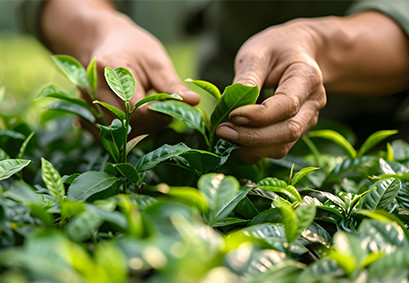
The greatest reward of growing your own tea is harvesting pesticide-free tea leaves. Your yield will be modest, but you'll be able to harvest leaves at least once a year. The ideal time for picking is late spring, typically in June. For the best flavour, it's preferable to pick the bud along with one or two young leaves.
Preparing homemade teas after the harvest
Between harvest and tea time, there's one essential step: drying the leaves and their buds. You can leave your harvest in the sun for 24 hours, or gently roast them in the oven at 90°C for a few minutes, with the door slightly ajar. You'll then be able to enjoy the floral notes of a homemade green tea infusion. If you'd like to prepare a quality black tea, you'll need to wither the leaves and let them ferment between two drying stages. Growing tea also lets you create your own flavoured blends at home. Once the leaves are ready, add fruits, spices, flowers or herbs. Seal everything in an airtight container for a few days and let the tea absorb the flavour of each ingredient.
Also worth discovering
-
Understanding Tea Grades: A Guide to Quality and Classification
The world of tea is filled with specific terms that classify leaf quality: whole, broken, crushed. These grades shape…
Read