Caffeine-Free Green Tea: Decaf, Myths, Alternatives

A caffeine-free green tea is a decaffeinated green tea, from which most of the caffeine has been removed while keeping the aroma: a tiny trace always remains. For a truly caffeine-free drink, it is better to turn to rooibos or herbal infusions, which are naturally caffeine-free. The well-known home decaffeination, for its part, only removes part of the caffeine.
What are the benefits of a caffeine-free tea?
The first appeal is comfort: you enjoy a warm, flavourful drink without the stimulating effect of caffeine. That is precious in the evening, for sensitive people, or simply when you want to extend the pleasure of tea without disturbing sleep.
A decaffeinated green tea keeps a good part of its aromatic profile and remains naturally rich in tea compounds, including antioxidants. We stay factual here: this is a matter of composition, not a health promise. The benefit lies above all in the peace of mind of a cup you can savour at any hour.
It is also a lovely way to extend the tea ritual without guilt. Where a classic cup at the end of the day might bother some, a caffeine-free tea lets you keep the gesture, the aroma and the comforting warmth, while respecting your sleep rhythm. For many, it is less a deprivation than a new pleasure to explore.
How to prepare a caffeine-free tea (home decaffeination)?
The method often cited is to discard the first infusion: you pour hot water over the leaves, wait 30 to 60 seconds, then throw away that first liquor before re-steeping. The idea is that caffeine, being very soluble, partly leaves in this first water.
The home decaffeination myth
Let us be honest: this technique only removes a fraction of the caffeine, often far less than people think. Studies show that a short first infusion takes out only a limited share, while you also lose interesting aromas and compounds along the way. Home decaffeination therefore stays partial. If you are after a truly caffeine-free cup in the evening, rather choose a quality decaf tea (treated by a controlled process) or a real caffeine-free alternative.
On an industrial scale, decaffeination is carried out by controlled processes (water, supercritical CO2) which remove most of the caffeine while preserving aromas as well as possible. The result is far more reliable than a home manipulation, even if a residual trace always remains. This is the kind of tea to look for if you want a genuine, lower-caffeine green tea without giving up cup quality.
What is the difference between green tea and rooibos?
This is a key distinction. Green tea comes from the tea plant (Camellia sinensis) and naturally contains caffeine. Rooibos comes from a South African shrub (Aspalathus linearis): it is not a tea in the botanical sense, and it contains no caffeine. That is why it is often recommended as an evening alternative.
- Green tea: Camellia sinensis, contains caffeine, brewed at 70-80 °C.
- Rooibos: Aspalathus linearis, caffeine-free, handles hotter water and long infusions without bitterness.
- Taste: green tea is vegetal and fine; rooibos is round, sweet, slightly woody.
Which teas are caffeine-free?
Strictly speaking, no tea from the tea plant is entirely caffeine-free: these are always decaffeinated versions with a residual trace. The truly caffeine-free drinks are infusions that do not come from the tea plant:
- Rooibos and green rooibos.
- Herbal infusions: verbena, chamomile, mint, lime blossom, flavoured rooibos.
- Fruit infusions.
Conversely, maté and tea (green, black, white, oolong) contain caffeine. Always look for the decaffeinated label if you want a lighter green tea.
Rooibos has another major advantage: it lends itself to gorgeous indulgent pairings (vanilla, citrus, spices), making it a warm, comforting drink for the evening. Herbal infusions, for their part, offer an almost infinite palette, from soothing verbena to fresh mint. So you need not choose between pleasure and the absence of caffeine: the two coexist very well.
Why choose a caffeine-free tea?
The reasons are many and all legitimate: protecting your sleep, enjoying tea in the evening, supporting people sensitive to caffeine, or simply varying the pleasures through the day. During pregnancy or breastfeeding, or with any health question, it is wise to ask your doctor about your caffeine intake: a caffeine-free alternative can then be a reassuring option.
When to drink a caffeine-free tea?
The most natural moment is the end of the day and the evening, when you want a warm ritual without risking a delayed bedtime. But a decaf tea or a rooibos is also lovely in the afternoon, at teatime, or any time you prefer to skip the stimulating effect. It is a gentle way to keep the tea gesture from morning to night.
Frequently asked questions
No. A decaffeinated tea keeps a residual trace of caffeine, very low but not nil. For zero caffeine, choose a rooibos or a herbal infusion.
Only partly. Discarding the first infusion removes a fraction of the caffeine, not all of it, and costs you some aroma. It is not a real decaffeination.
Not really: rooibos is rounder, sweeter and woodier, where green tea is vegetal and fresh. It is a lovely alternative with its own character.
Why not taste it ? Discover our loose leaf organic green tea and let yourself be tempted.
Tempted to try it?
Our selection related to this article, loose leaf and organic.
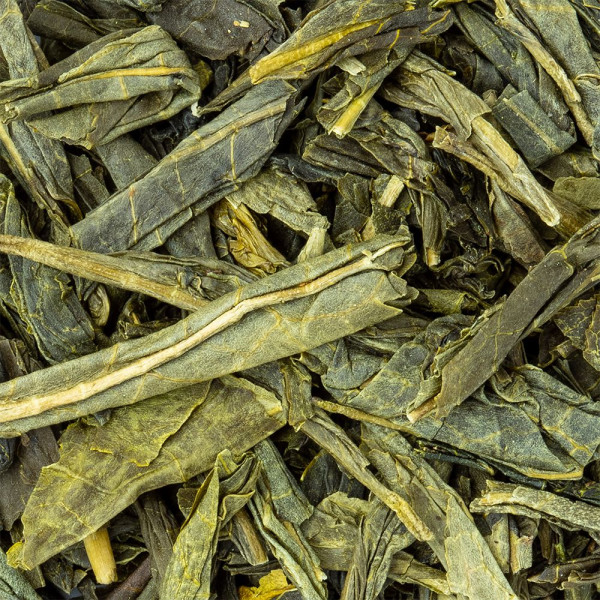
Sencha Green Tea
Organic Sencha is a timeless staple in China and Japan, where it is enjoyed daily.
€6.50Discover
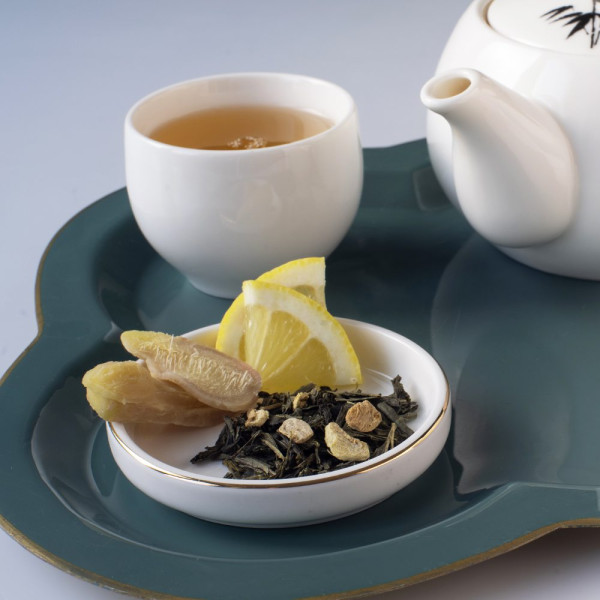
Yangtze Green Tea
Organic Yangtze green tea brings together a delicate Sencha with the brightness of lemon and the warmth of ginger.
€7.90Discover
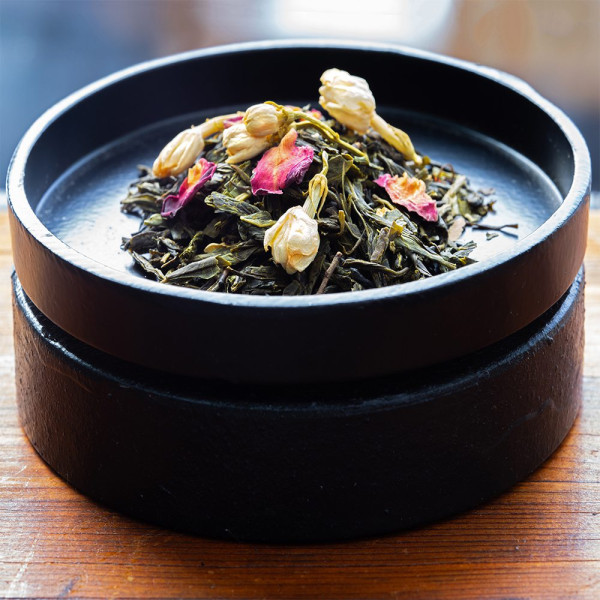
Tokyo Nights Green Tea
Tokyo Nights Green Tea: a floral, indulgent blend of Sencha, Chun Mee and jasmine green tea, lifted by rose petals and notes of…
€7.90Discover