 Oolong Tea

Organic LOVE PICK
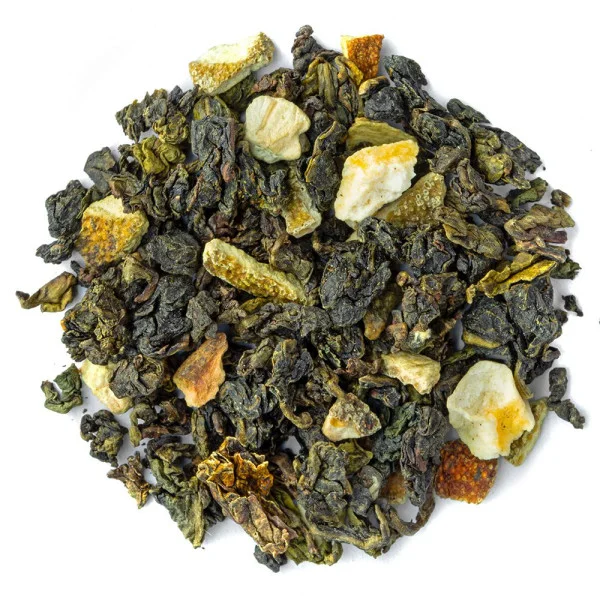
Oolong Orange
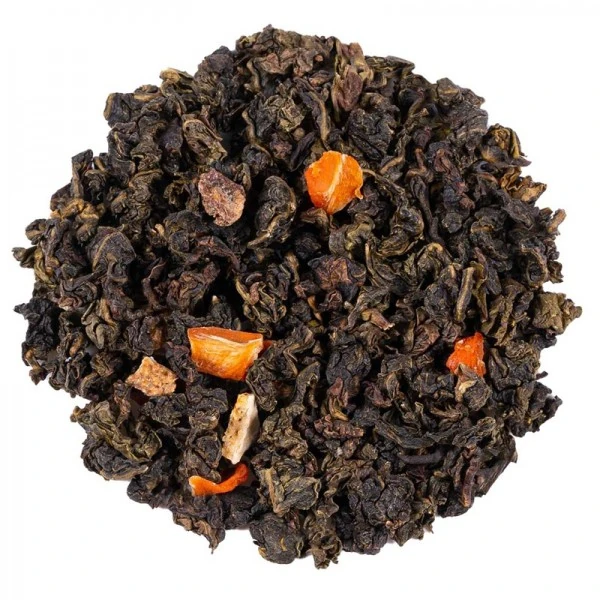
Oolong Tea scented with orange and scattered with orange peel
 Main Note:
Pure
Main Note:
Pure
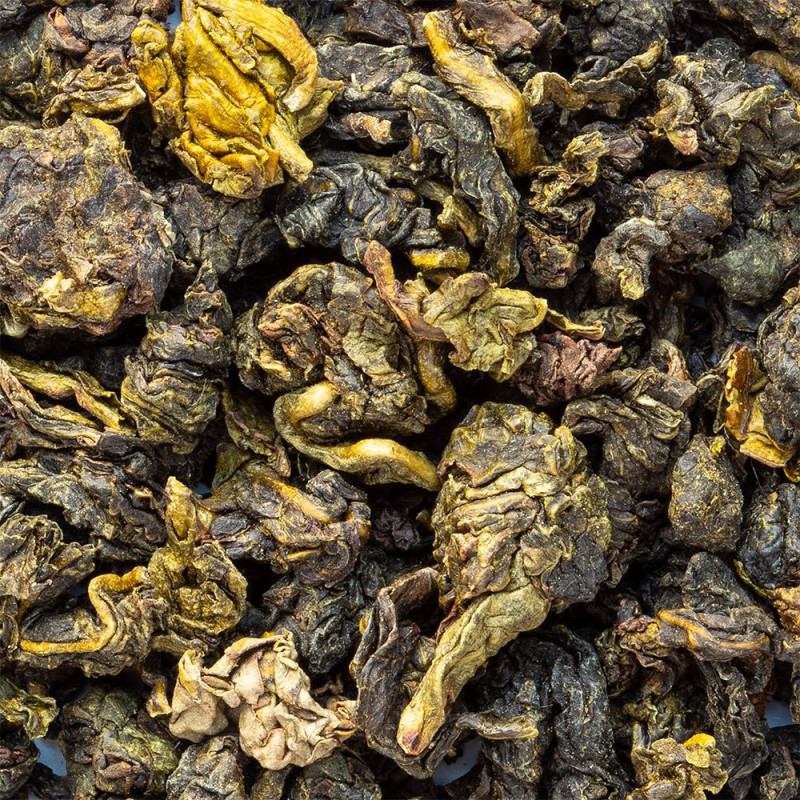
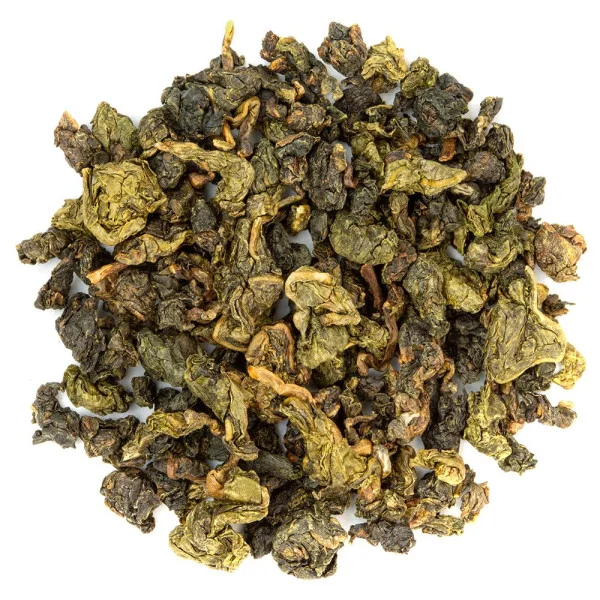
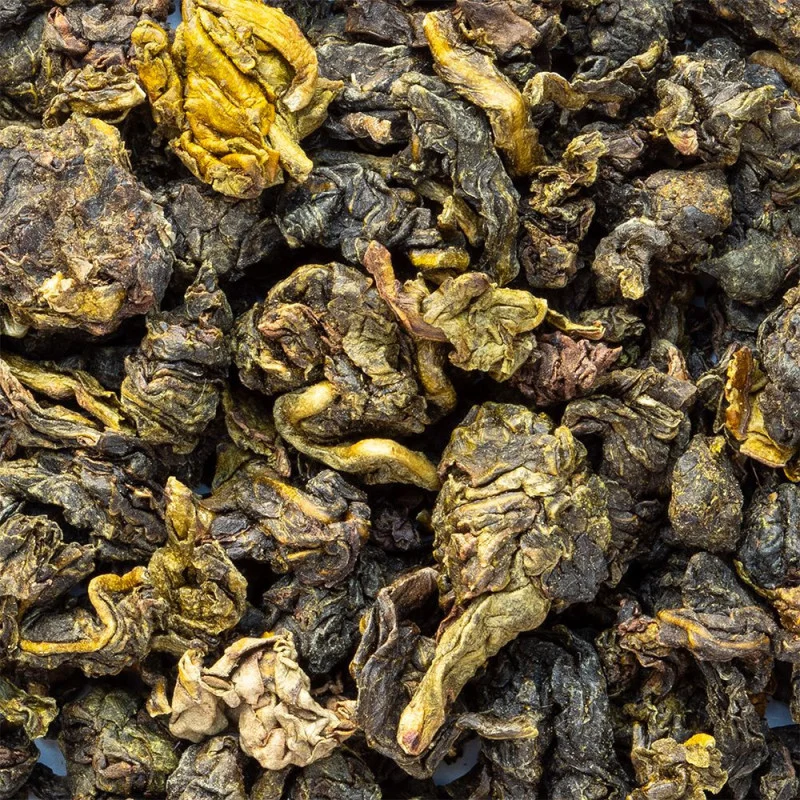
Our organic Oolong Tie Guan Yin, also spelled tieguanyin, is a semi-oxidized oolong tea of rare elegance. Its dark green pearled leaves unfurl into a golden infusion with floral notes, a velvety roundness, and a gently roasted finish. A timeless classic to enjoy any time of day.
our expertise


In our workshop in Provence, each blend is handcrafted with passion by our team.
Real pieces of dried fruit, whole plants and carefully selected teas of origin.
Carefully crafted to create unforgettable tasting moments. A signature taste, an authentic experience.
At a glance: organic Oolong Tie Guan Yin, semi-oxidised, floral and buttery notes, lightly roasted finish. Brewing: 12 g/L, water at 80 °C, 2 to 3 minutes.
Tie Guan Yin, sometimes written Tieguanyin or Ti Guan Yin, is one of the most celebrated oolongs in the world. Its name evokes Guan Yin, the bodhisattva of compassion, and lends this tea an almost legendary aura.
For our selection, we chose an organic version with leaves rolled into small, deep-green pearls. Once they meet the warm water, they slowly unfurl and release a floral, faintly milky fragrance that invites you to slow down.
This tea is part of our semi-oxidised oolong family. Our semi-fermented oolongs will take you through a range of profiles, from the most floral to the most roasted.
Tie Guan Yin belongs to the broad oolong family: semi-oxidised teas that sit between green and black tea. Traditionally lightly oxidised, it has a tender, green, floral character, far removed from dark, roasted oolongs.
On the nose, the infusion opens with white flower notes, almost lilac and orchid, with a whisper of fresh butter. The first sip is smooth and round, surprisingly velvety for a drink with no dairy whatsoever.
In the mid-palate, fresh vegetal nuances emerge: cut grass, young shoots, a mineral hint reminiscent of wet stone. The liquor stays clear, a pale golden yellow, and flows across the palate without any noticeable bitterness.
The finish, more subtle, hints at a light roast and a lingering sweetness. This long, persistent cup is one of Tie Guan Yin's most distinctive signatures, and a key reason for its enduring reputation.
To understand what sets the different styles apart and explore the richness of this tea family, read our guide to oolong tea. You'll find helpful reference points on terminology and styles.
Explore our other oolongs to continue the journey: our orange oolong brings a bright citrus note, while our almond and chocolate oolong offers a richer, more indulgent experience.
Brewing this tea is a small ritual in itself. The rolled pearls need room to open fully: choose a generous teapot or a wide infusion cup. Avoid tight, cramped tea infusers that would prevent the leaves from blooming.
Water: use a soft, low-mineral water, freshly drawn and heated to 80 °C. Water that is too hot will lock in the floral aromas and introduce unwanted bitterness.
Dosage: use 12 grams of leaves per litre of water, or about 2 grams for a 160 ml cup. This quantity gives the pearls room to open without overpowering the liquor.
Brewing time: steep for 2 to 3 minutes for a balanced first cup. Taste at 2 minutes, then adjust to your preference. A shorter infusion brings out the floral freshness; a longer one deepens the buttery roundness.
Like most great oolongs, this tea lends itself beautifully to multiple steepings. The same leaves can be brewed three to four times, each infusion revealing a different facet: floral first, then more vegetal, then gently woody.
For more guidance on technique and equipment, visit our guide how to brew oolong tea. There you'll find Julien Huot's advice on adjusting water, dosage and time to suit the moment.
This Tie Guan Yin is equally lovely in the morning or the afternoon. Its floral delicacy makes it the perfect companion for a contemplative pause, alone or shared. Try your Oolong Tie Guan Yin as part of an end-of-day ritual, brewed gongfu cha style, to make the most of its multiple infusions.
To preserve all the subtlety of this semi-oxidised tea, keep the leaves in their original airtight tin, away from light, moisture and strong odours. A stable room temperature is all that's needed; refrigeration is not necessary.
Close the tin carefully after each use. The rolled pearls hold up well over time, but their floral bouquet fades with air exposure. For the fullest aromatic experience, enjoy within twelve months of opening.
What is Tie Guan Yin?
Tie Guan Yin is a semi-oxidised oolong tea, recognised by its leaves rolled into small, deep-green pearls. Its name pays tribute to the goddess Guan Yin. It is distinguished by a floral, buttery and velvety profile, with a lightly roasted finish.
How do you brew Tie Guan Yin?
Use 12 g of leaves per litre of water, or about 2 g for 160 ml. Heat the water to 80 °C and steep for 2 to 3 minutes. The leaves hold up to three or four successive infusions, each one revealing a different aromatic facet.
What are the benefits of Tie Guan Yin?
Above all, this is a tea of pure pleasure, to be savoured for its floral delicacy and velvety roundness. Its brewing ritual invites a sensory pause, conducive to quiet focus or the warmth of a shared gongfu cha moment.
Where can I buy Tie Guan Yin?
You'll find it in our selection of organic oolong teas. To compare profiles and find the one that suits you best, browse our guide everything you need to know about oolong tea, our dedicated guide to this tea family.
What is the origin of Tie Guan Yin?
Tie Guan Yin takes its name from an ancient legend connected to the goddess Guan Yin, bodhisattva of compassion. Our organic version is packaged in our workshop, selected for its lightly oxidised floral profile, faithful to the delicate spirit of this great appellation.

Oolong Tea scented with orange and scattered with orange peel


Rare oolong with intermediate oxidation, sourced from Java, Indonesia

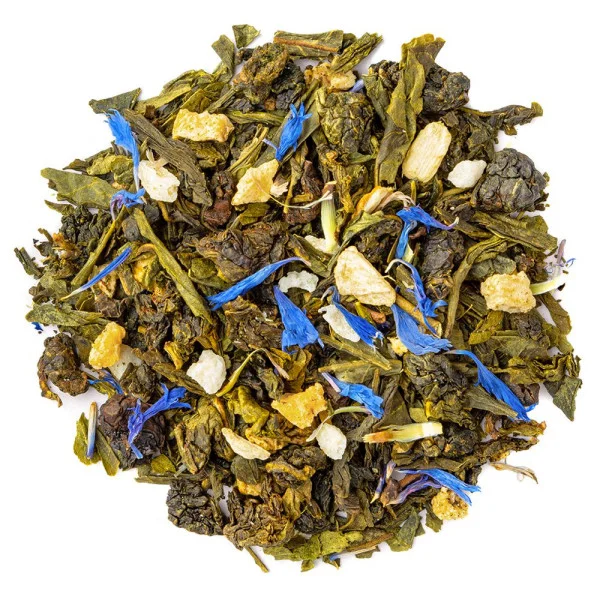
Oolong and Green Tea Blend: smooth, fruity and spiced
French House
Independent since 2016.
Fast delivery
Home delivery or click & collect.
Made with heart
In the south of France.
Customer service
A real voice at the end of the line,
Monday to Friday: 04 22 91 35 75.
Sharing, passing it on: our teas, our tips, the occasional unexpected idea, and little attentions just for you. Pure pleasure, ready to steep.