

French house since 2016
2,000+ reviews verified customers
Fast delivery
A question? +33 (0)4 22 91 35 75
Metal Tea Caddy
Imagine opening your metal tea caddy and finding every flavour perfectly intact, just as fresh as the day you first opened it. In the world of tea, proper storage is a true art that every passionate enthusiast should master. Moisture, light, air and unwanted odours are the real enemies of your precious loose-leaf teas.
This is exactly where a metal caddy becomes your greatest ally, offering lasting protection for your favourite infusions. With an airtight seal and crafted from a particularly durable material, it creates the perfect conditions to keep your loose-leaf teas in flawless condition.
27 products




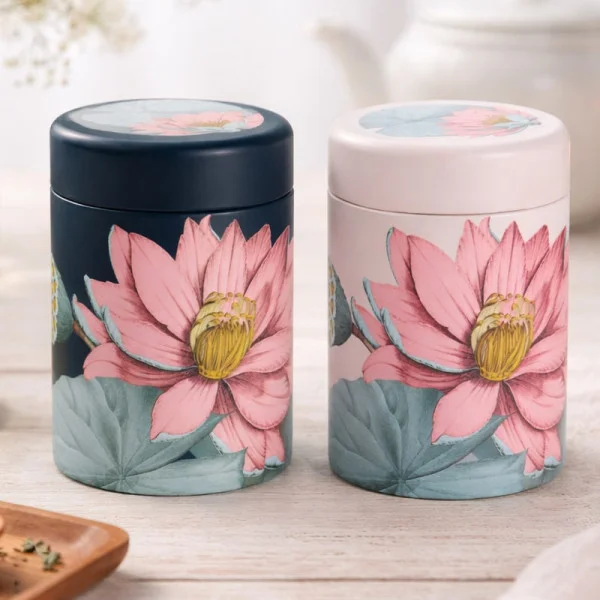

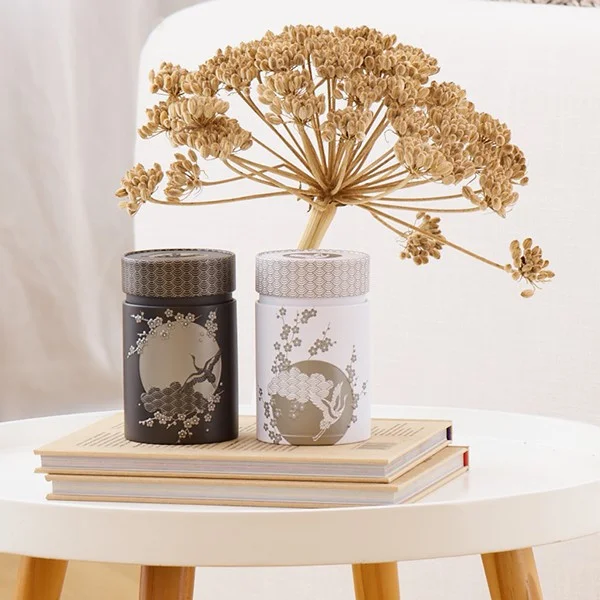

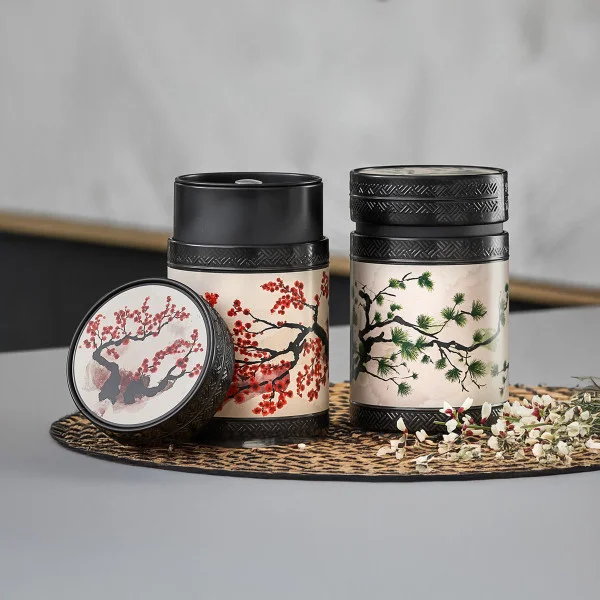


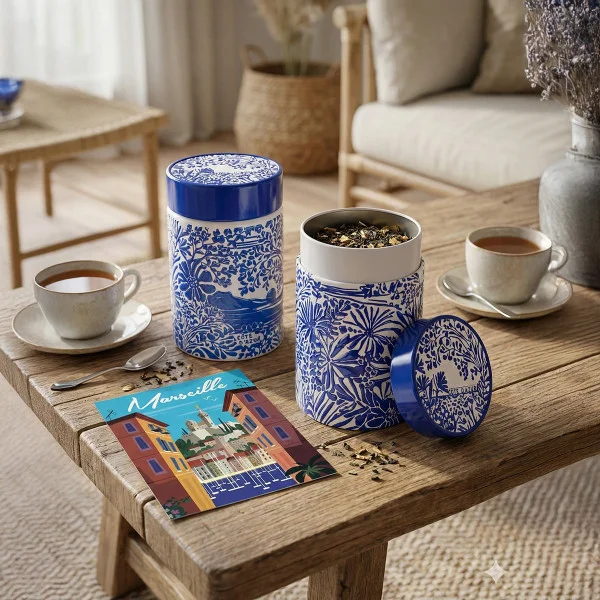

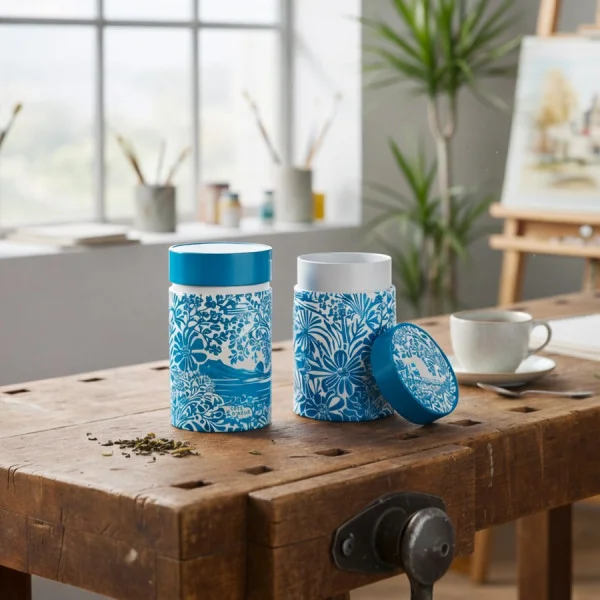

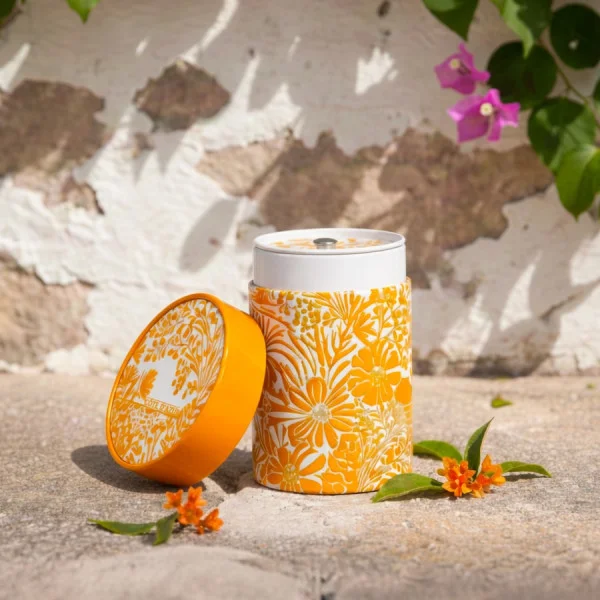

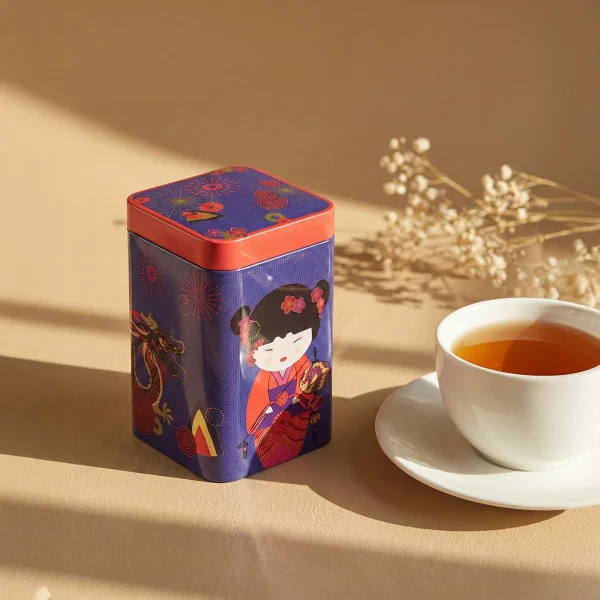

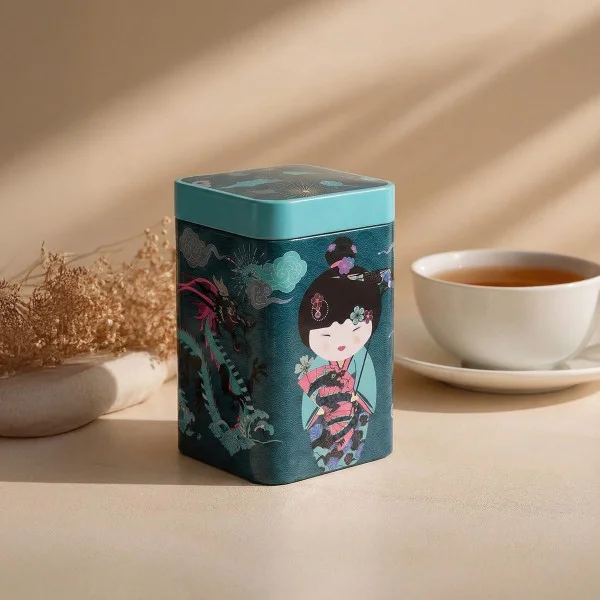

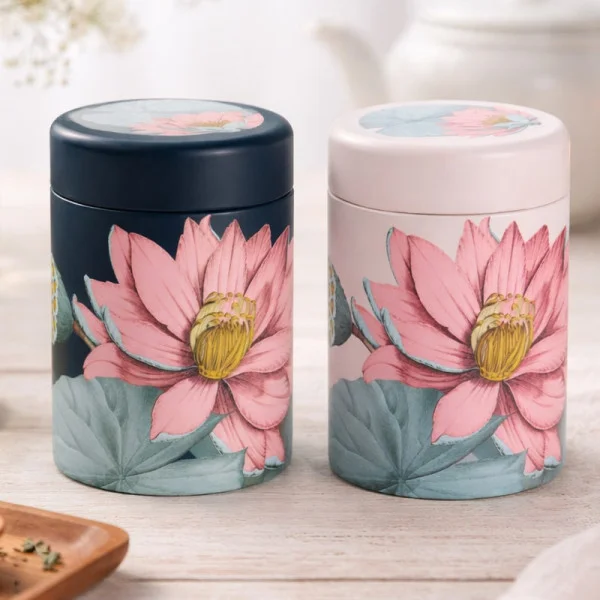

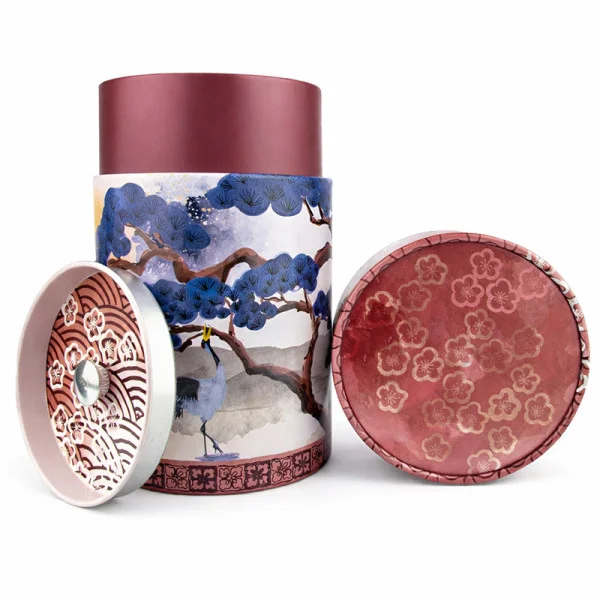

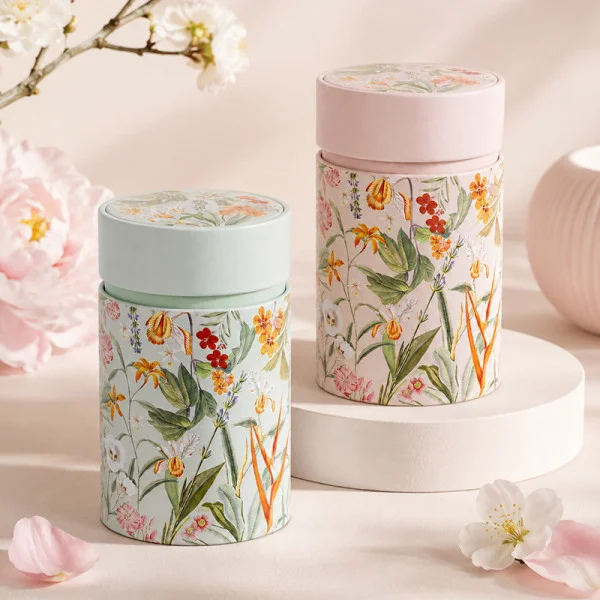

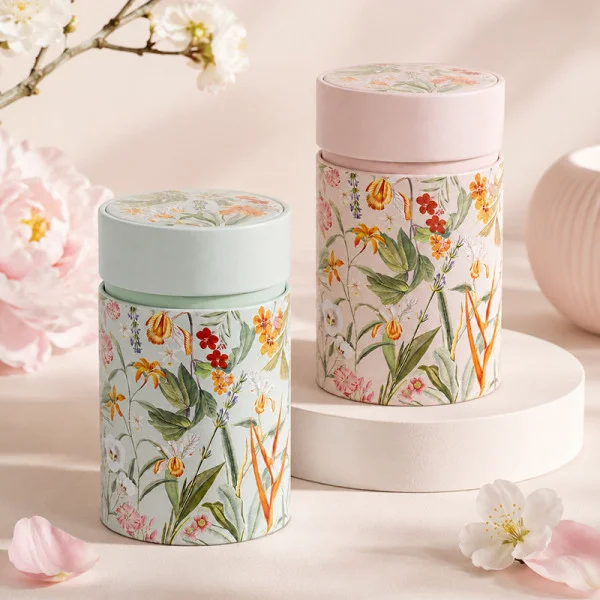

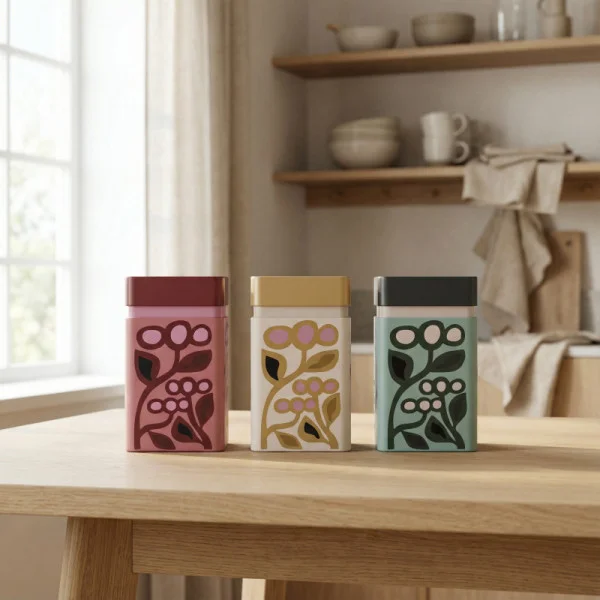

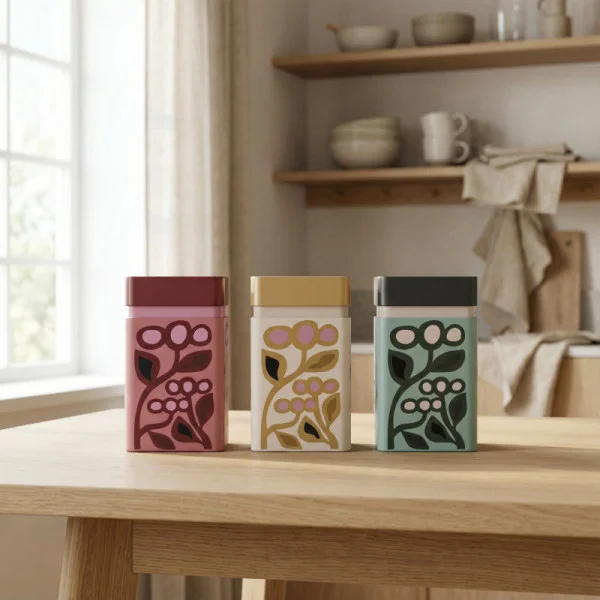
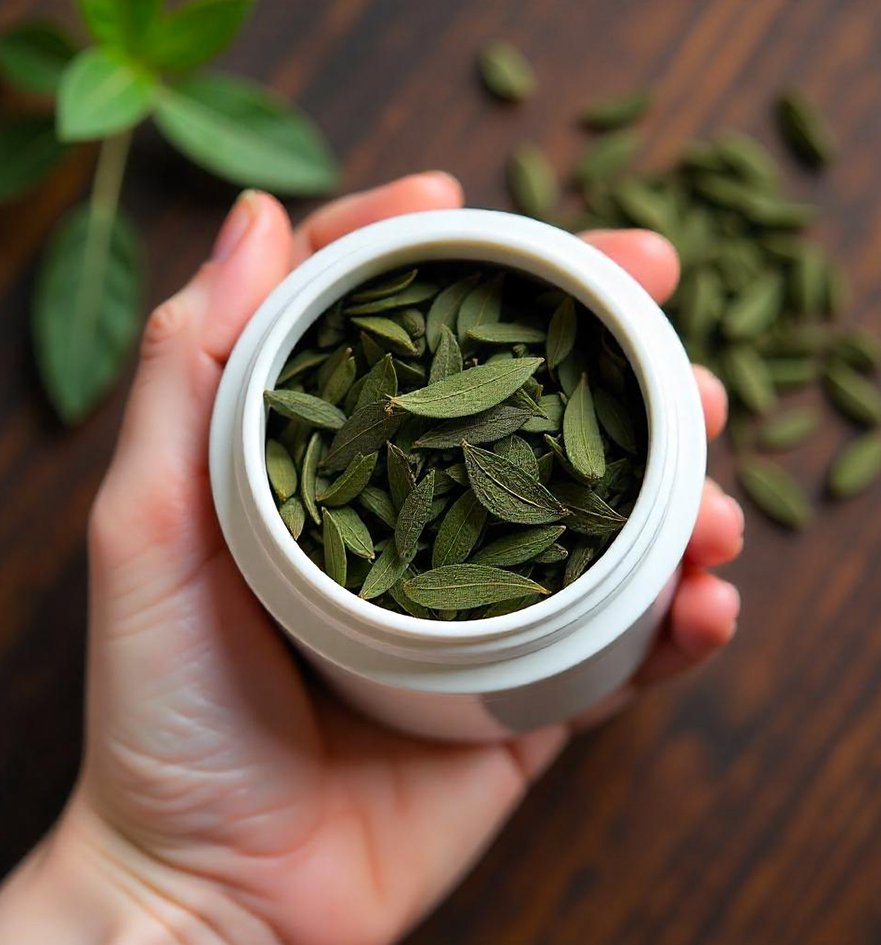
What Is a Metal Tea Caddy? Definition, History and Materials
The metal tea caddy has its roots in traditional craftsmanship, shaped in particular by age-old Japanese techniques. These containers were originally designed to protect precious infusions during long trade journeys. Today, the main materials used include food-grade tinplate, stainless steel, and occasionally pewter for the most refined creations.
Japanese Craftsmanship and Its Influence on the Tea Caddy
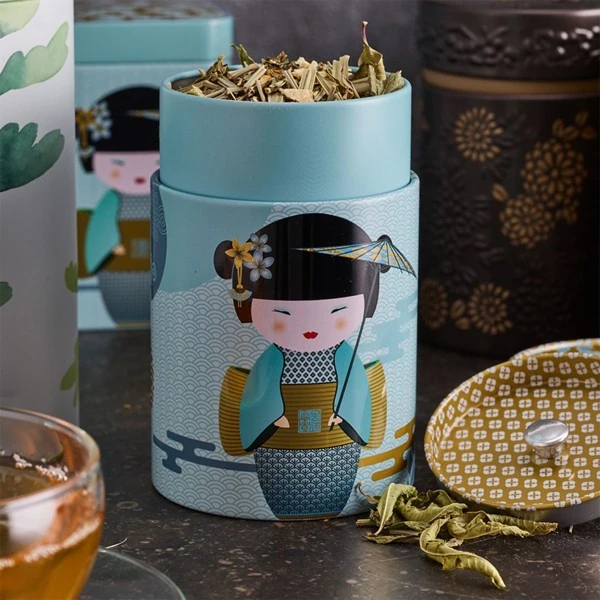
Japanese influence remains especially strong in this world. Traditional techniques often incorporate Washi paper, a delicate material that adorns many handcrafted caddies. This artisanal approach stands apart from mass production, offering one-of-a-kind pieces with a character all their own — exactly what discerning tea lovers seek.
How to Choose a Metal Tea Caddy: the Essential Criteria
Several factors come into play when choosing the perfect caddy. Material is the most important: look for stainless steel or BPA-free food-grade tinplate for ideal storage. An airtight lid offers maximum protection against moisture and air.
The right size depends on how much tea you go through: a 100g capacity suits occasional tastings, 250g works well for everyday use, and 1kg is ideal for dedicated tea drinkers. Round, square or cylindrical designs fit neatly into any kitchen setting.
Types of Metal Tea Caddies
The metal tea caddy is the professional standard for storing tea. Opaque metal blocks 100% of light and absorbs no odours. Here are the main families you will find in our catalogue.
Double-lid tinplate: the classic
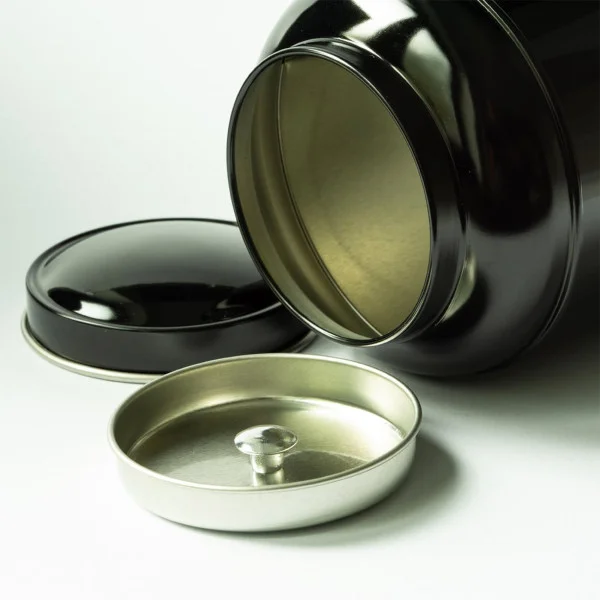
Tinplate (food-grade tinned steel) remains the essential standard. The double-lid system features an inner lid that fits snugly against the rim of the cylinder by friction, creating a perfect seal, and a decorative outer lid. This is the system used by the great tea houses since the 19th century. All our cylindrical metal tins are built on this principle.
Cylindrical tea caddy: the optimal shape
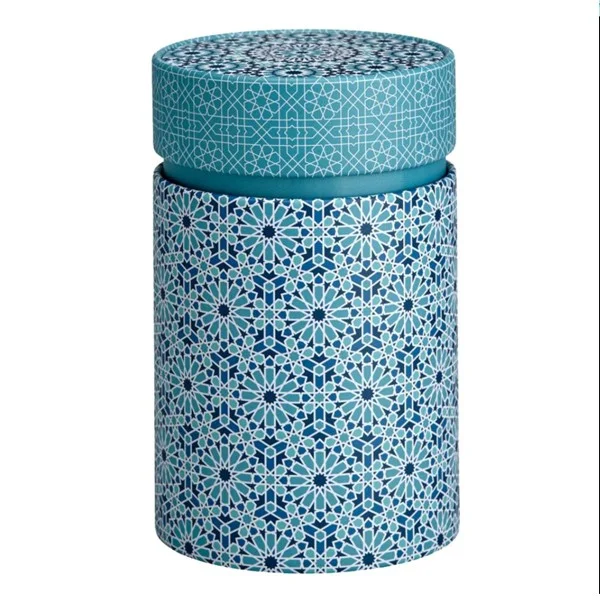
The cylindrical tea caddy is the most effective shape for storage. The rounded form eliminates dead corners where tea might accumulate. Standard dimensions run from 10 to 15 cm in height and 6 to 8 cm in diameter, with a capacity of 100 to 200 g of leaves depending on the density of the tea.
Square or rectangular metal tin
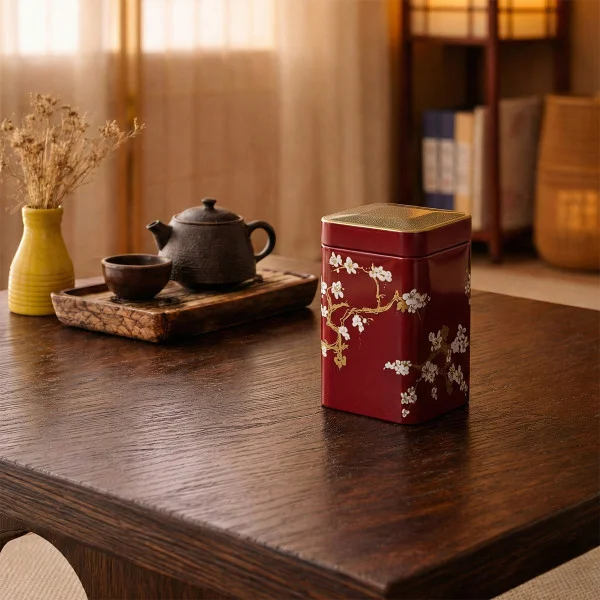
Square or rectangular metal tins make the most of shelf space. They offer the same storage performance as cylindrical caddies, with the added benefit of sitting neatly side by side. Ideal for collectors who keep several tins.
Matte black metal and brushed aluminium
For modern interiors, matte black metal tins (kuro-tetsubin inspired) or brushed aluminium bring a clean, contemporary aesthetic to the tea caddy. No surface decoration, just the material in its purest form. The metal is generally thicker for a premium finish.
Tinplate and washi paper: the Japanese version
A tinplate caddy dressed in handcrafted washi paper is technically a metal tin beneath its paper outer layer. The same storage performance, a unique aesthetic. Browse our dedicated section: Japanese tea caddy.
What Are the Benefits of Metal Tea Caddies?
Metal tea caddies offer remarkable durability compared to other storage solutions. Their primary strength lies in protecting your tea from light, moisture and unwanted odours.
These reusable containers are a genuinely eco-conscious choice for your home. Whether vintage or modern in style, they bring a decorative touch to your tea corner. From classic matte black to refined silver, there is a finish to suit every interior.
Stackable designs make the most of cupboard space, and their everyday elegance turns a simple storage habit into a small, satisfying ritual.
Our Thés & Traditions Selection of Metal Tea Caddies
18 models of metal tea caddies, chosen for their quality and design. Julien Huot, founder of Thés & Traditions, personally selects each piece from our European and Japanese partners: food-safe tinplate, airtight double lids, carefully finished details. The Thés & Traditions tea caddy collection is held to these standards without exception.
Our range includes: classic cylindrical caddies in matte black metal, brushed aluminium square caddies, metal tea caddies dressed in washi paper (see also our dedicated Japanese category), and limited-edition coloured metal designs. Luxury tea storage at an accessible price.
How to Choose Your Metal Tea Caddy
Capacity: matching your consumption
The right capacity depends on how much tea you drink. 100g suits a daily tea drinker (roughly one month's supply for one person). 150g to 200g works well for two people or enthusiastic amateurs. Go beyond 250g only if you drink that tea every single day: keeping leaves too long reduces their freshness. Our standard capacity range runs from 100g to 150g.
Key dimensions to know
For a cylindrical metal tea caddy: height typically 10 to 15 cm, diameter 6 to 8 cm. As a rough guide, the usable volume is approximately 1.2× the weight in grams for standard loose-leaf tea (200ml holds around 100g of leaves). Always check the dimensions against your shelf space before ordering.
Airtightness: the number one criterion
Whatever design you choose, always check the seal. A simple test: add a small amount of water, close both lids firmly, then hold the caddy upside down over a sink for a few seconds. Not a single drop should escape. Any leakage means the seal is not truly airtight, and your tea's aromas will gradually suffer.
Recycling or Repurposing an Old Tea Caddy
Metal tea caddies are built to last and easy to pass on or repurpose. For recycling: if the caddy is plain metal with no paper wrapping, it can go into your standard metal recycling stream. For a creative reuse: turn it into a pencil pot, a brush holder or a pin jar. A pretty empty washi caddy also makes a charming gift idea when filled with artisan chocolates or small cosmetic treats.
Frequently Asked Questions
How do I choose a metal tea caddy?
Three criteria: 1) Capacity to match your consumption (100g for daily use, 150–200g for enthusiasts, 250g+ for intensive use). 2) Airtightness (water-drop test, double lid required). 3) Design to suit your kitchen (understated, washi-decorated, modern pattern). If in doubt, the classic cylindrical tinplate caddy in 150g is a timeless safe choice.
Where can I buy a metal tea caddy?
Look for specialist online retailers who source directly and certify their tinplate as food-safe. Avoid pieces sold purely as decorative items with no food-safety guarantee (there is a real risk of metal migration into your tea). Every tea caddy sold by Thés & Traditions specifies the interior material and confirms food-contact compliance.
What are the benefits of metal tea caddies?
Four key benefits: 1) Maximum tea protection (100% light-blocking, airtight seal, odour-neutral). 2) Longevity (lasts decades with minimal care). 3) Versatility (suits all teas: green, black, herbal infusions). 4) Aesthetics (as decorative as it is functional). Metal has been the professional standard in tea houses for 150 years.
What are the standard dimensions of metal tea caddies?
Most common sizes: 10×6 cm (100g), 12×7 cm (150g), 14×8 cm (200g). Less common: 20×10 cm for 500g (collectors). These are almost always cylindrical. Square caddies have an equivalent footprint.
What capacity does a metal tea caddy hold?
From 50g (mini travel format) to 500g (collector's size). The mainstream standard is 100g, perfect for one person's daily consumption over about a month. Above 200g, it is better to use one caddy per type of tea rather than one large mixed caddy (aromas will transfer between varieties).
How do I recycle a metal tea caddy?
Empty, clean, and disassembled where possible (separate any washi paper covering from the metal base). Pure metal goes into your local metal recycling stream (yellow bin in most areas). Better still: repurpose it as a storage pot or a DIY project for as long as it keeps its seal.
Which teas can be stored in a metal caddy?
All of them: green tea, black tea, oolong, white tea, Pu-erh, Rooibos, herbal and fruit infusions. One important rule: use one caddy per type to prevent aroma transfer. An Earl Grey scented with bergamot stored in a tin that once held smoky Lapsang Souchong will carry unwanted notes for months.
Browse our selection of metal tea caddies above and find the one that will become part of your daily ritual.
How to Store Tea in a Metal Caddy: Expert Tips
Storing tea in a metal caddy calls for a few simple but essential tips. Make sure your container is completely dry before first use.
Keeping your infusions in a cool spot, away from direct light, helps preserve their flavours at their best. The sealing system on our airtight tins effectively guards against air and moisture.
Our expert advice: never store different types of tea together in the same container, as this protects the purity of each tea's aromas. When done right, this storage method keeps your infusions at their finest quality for months.
what our customers say
You say it better than we ever could.
10,0/10
12 verified reviews
Loading reviews…

French House
Independent since 2016.
Fast delivery
Home delivery or click & collect.
Made with heart
In the south of France.
Customer service
A real voice at the end of the line,
Monday to Friday: 04 22 91 35 75.
letter from the house
Don't miss
Don't miss
a single drop.
Sharing, passing it on: our teas, our tips, the occasional unexpected idea, and little attentions just for you. Pure pleasure, ready to steep.