French house since 2016
2,000+ reviews verified customers
Fast delivery
A question? +33 (0)4 22 91 35 75
 Korean Tea
 Main Note:
Pure
Main Note:
Pure
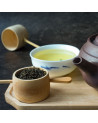
Our South Korea Green OP organic green tea is a rare Korean green tea, hand-rolled and delicately roasted. This Korean green tea yields a clear, fresh and refined infusion, a pleasure to enjoy at any time of day. A true gem, best brewed at 70-80°C for 2-3 minutes.
our expertise
Brewing guide

Steeping time2-3 min

Brewing temperature70-80°C

Time of dayAll day long

Dosage12-15g / L

Tea almost perfect
Packaged in France
In our workshop in Provence, each blend is handcrafted with passion by our team.
Exceptional Ingredients
Real pieces of dried fruit, whole plants and carefully selected teas of origin.
A Unique & Generous Taste
Carefully crafted to create unforgettable tasting moments. A signature taste, an authentic experience.
Learn more...
At a glance: Korean green tea South Korea Green OP, organic, hand-rolled leaves with fresh, vegetal notes. Brewing: 70-80°C, 2-3 min, 12-15 g/L. Enjoyable throughout the day.
The South Korea Green OP belongs to that rare category of teas that deserve a special place in any teapot. Grown in South Korea, this Korean green tea stands out for its rarity and the refinement of its artisanal craft. Each leaf is hand-rolled, lightly roasted and rubbed several times to unlock its full aromatic potential.
Still relatively little known in the West, South Korean tea culture holds its own alongside its Asian neighbors. Jeju Island and the gardens of the country's southern regions have been producing leaves of remarkable quality for centuries. Explore our Korean tea selection and let yourself be surprised by this quiet but refined tradition.
The aromatic profile of South Korea Green OP
In the cup, this tea reveals a clear, golden, luminous liquor. The opening notes bring a delicate vegetal freshness, almost herbaceous, reminiscent of young, dew-covered shoots in the early morning.
The mid-palate then opens into rounder aromas, with a gentle nuttiness born from a carefully controlled roasting process. It is this dual movement, fresh on the attack and then more enveloping through the middle of the mouth, that defines the character of this South Korean tea.
On the finish, the palate discovers a subtle sweetness, with no bitterness and a refined, lingering aftertaste. Having been worked nine times, the leaf releases its aromas gradually, infusion after infusion. Each cup becomes a different exploration.
This well-balanced profile sets it clearly apart from the more powerful or more intensely vegetal green teas found elsewhere in Asia. If you enjoy exploring subtle nuances, our Woojeon Green offers another, even more delicate, take on South Korean tea. Browse our green teas to continue your sensory journey.
How to brew South Korea Green OP
The brewing process entirely shapes how this tea expresses itself. Water that is too hot will overwhelm its delicacy; too long an infusion will flatten its profile. Here are the parameters recommended by our house.
- Water: filtered or low-mineral water, heated to 70-80°C (158-176°F). Avoid boiling water, which would scorch the leaves.
- Quantity: 12 to 15 g per liter, roughly one heaped teaspoon per cup.
- Steeping time: 2 to 3 minutes, adjusted to your preferred strength.
- Accessories: a porcelain or glass teapot to watch the leaves unfurl, and a wide-mesh infuser to let the water circulate freely.
The hand-rolled leaves hold up beautifully across multiple infusions. Each steeping reveals a different facet of the tea, moving from more vegetal to softer, mellower notes. This is a tea that rewards patience and invites a daily ritual.
To compare profiles and refine your palate, our guide to Hojicha, Genmaicha and Gyokuro opens an interesting window onto other styles of green tea. To explore the particularities of this broad family further, also read our article on the antioxidant properties of green tea. Savor this Korean tea as part of your morning ritual or as an afternoon pause.
Storage
Store this tea in its original tin or in an airtight container, away from light, moisture, strong odors and heat sources. Consumed within 12 to 18 months of opening, it delivers the best of its aromatic potential. Packaged with care in our workshop by the team of Julien Huot, founder of the house.
Frequently asked questions
What are the benefits of Korean green tea?
Korean green tea is first and foremost a tea of pleasure, appreciated for its vegetal freshness and its balance in the cup. Its smoothness and lack of bitterness make it an ideal drink to accompany any break in the day, from morning through to early evening.
How do I brew Korean green tea?
Heat low-mineral water to between 70 and 80°C, use 12 to 15 grams per liter and steep for 2 to 3 minutes. The leaves hold up well across several successive infusions, each one revealing a different nuance of the tea.
Where does Korean green tea come from?
Our South Korea Green OP is grown in South Korea, in the gardens of the country's southern regions. Tea cultivation there is ancient and understated, carried forward by producers committed to demanding hand-crafted work, particularly on Jeju Island and in the southern areas of the country.
What types of Korean green tea are there?
Several grades exist, defined by the harvest and the handling of the leaves, including Woojeon (the first spring harvest), Sejak and Jungjak. Green OP designates a grade of whole, rolled leaves, particularly valued for its consistent aromatic character.
How do I choose a good Korean green tea?
Look for an organic tea with whole, rolled, lustrous leaves and a clearly identified origin. The freshness of the vintage and the standards of the selecting house matter just as much as the grade printed on the label.
Our customers' reviews They share their experience
Loading reviews...

French House
Independent since 2016.
Fast delivery
Home delivery or click & collect.
Made with heart
In the south of France.
Customer service
A real voice at the end of the line,
Monday to Friday: 04 22 91 35 75.
letter from the house
Don't miss
Don't miss
a single drop.
Sharing, passing it on: our teas, our tips, the occasional unexpected idea, and little attentions just for you. Pure pleasure, ready to steep.