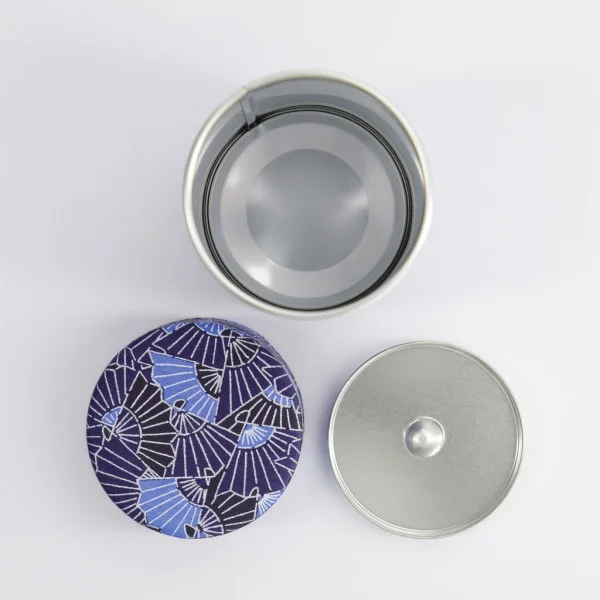
Hana Washi Box
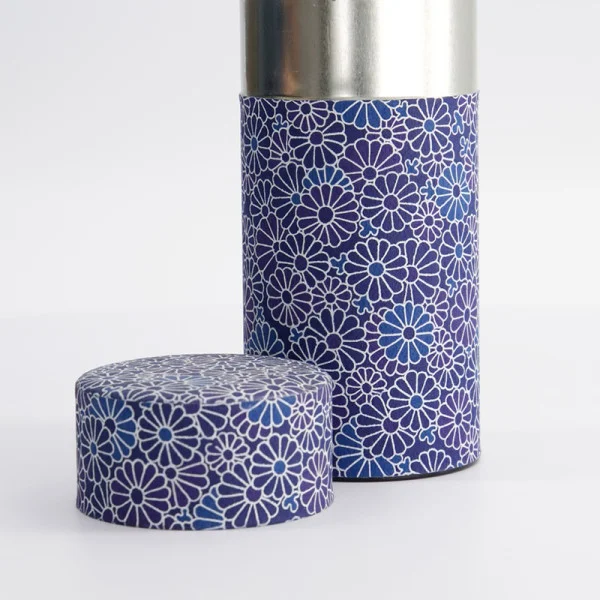
Japanese washi box with blue flower motifs
Looking to preserve the flavour and freshness of your favourite teas? Discover the artistry of Japanese tea caddies, each one a beautiful object crafted in Japan. Hand-made and decorated with traditional washi patterns, or shaped from cherrywood and white metal, they embody beauty, elegance and quiet refinement. Every Japanese caddy is designed to keep tea at its best: airtight lids, double-walled construction, available in a range of sizes, all thoughtfully conceived to protect aroma and flavour. A functional object, a centrepiece for the kitchen, a perfect gift or a tribute to the art of tea, the Japanese caddy suits every enthusiast. Cylindrical or square, daruma motifs, floral designs, patchwork or yosegi marquetry: each style tells a story, from centuries-old tradition to contemporary design. Browse our collection, choose from our varied selection, and let Japanese elegance and craftsmanship find their place in your home, whether for yourself or someone you love.
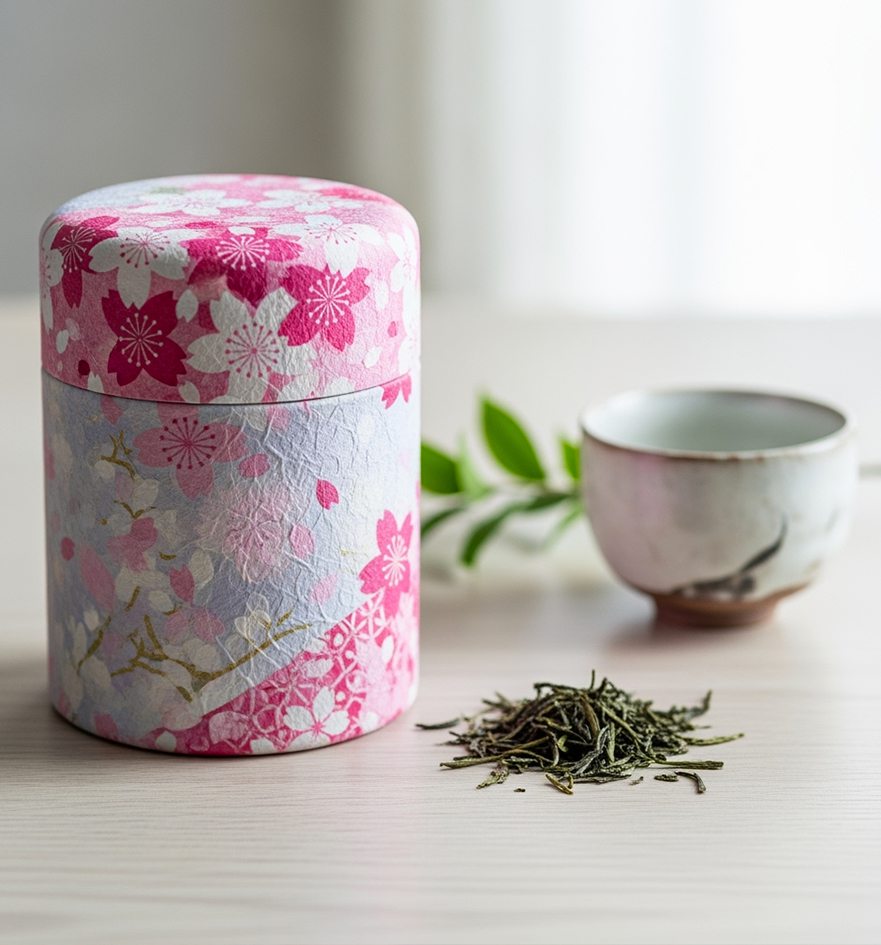
The Japanese tea caddy is a craft object in its own right. Each style tells the story of a technique, a region, and a tradition. Here are the main styles you will find in our selection.
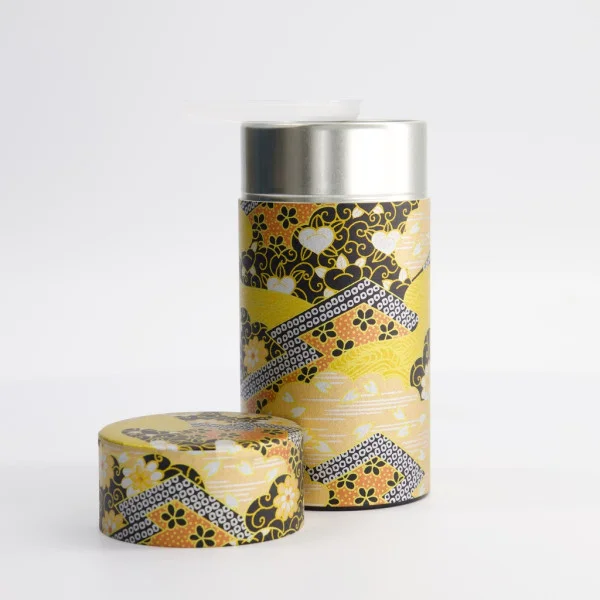
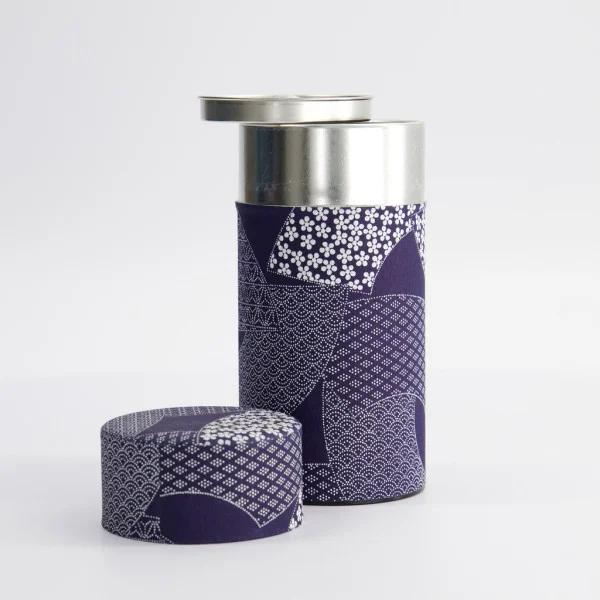
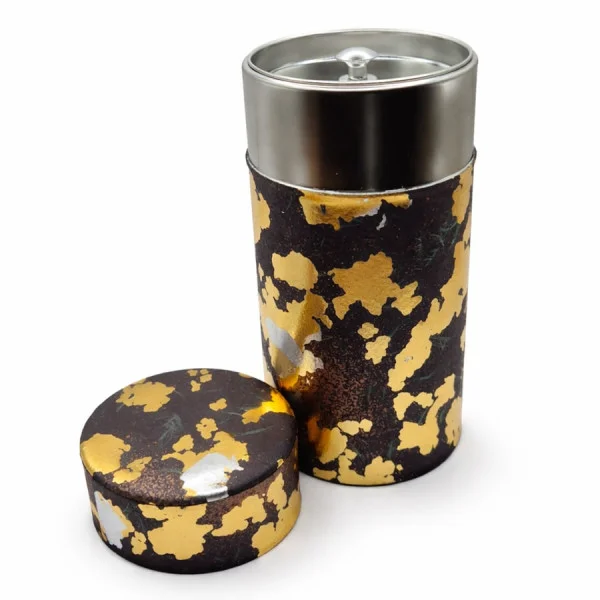
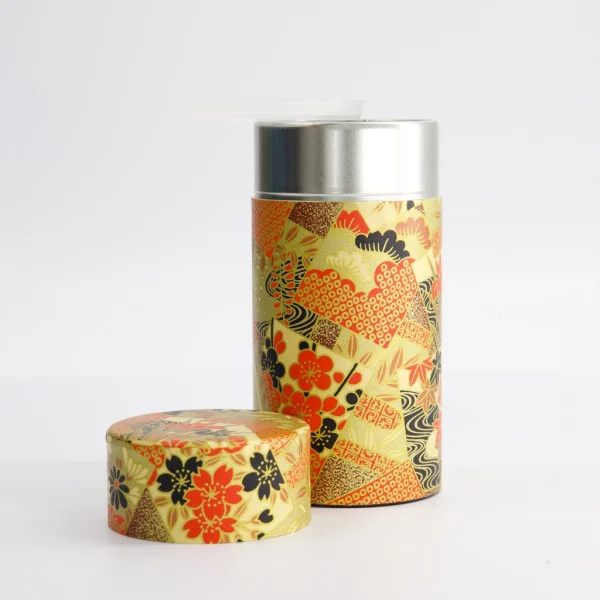
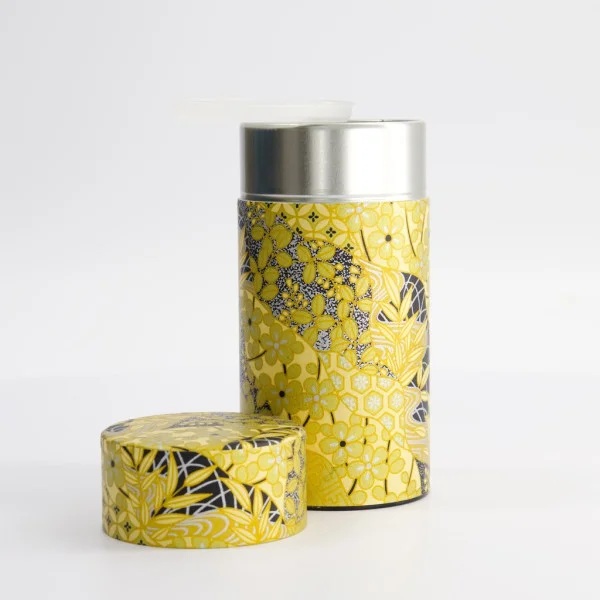
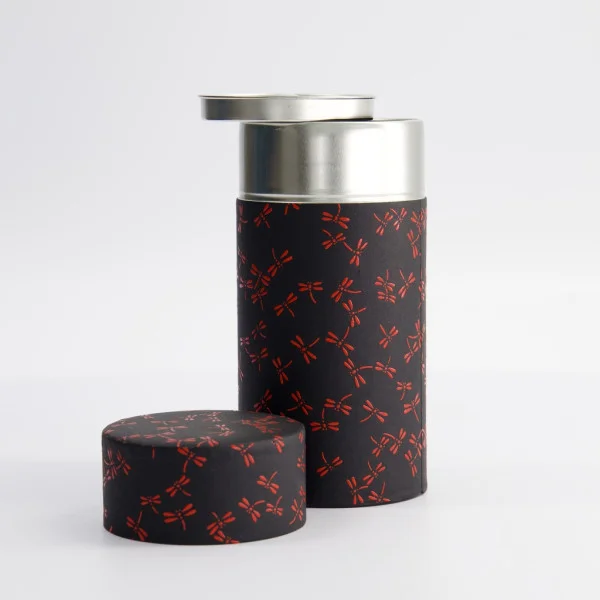
The washi tea caddy is perhaps the most recognizable of all. It is built around a tinplate cylinder with a double-lid system (an inner airtight lid and a decorative outer lid), wrapped in hand-decorated traditional washi paper. The traditional motifs range from florals and geometric patterns to animals and landscape scenes.
For a more minimalist Japanese aesthetic, metal tea caddies (brushed aluminum, matte black, kuro-tetsubin) offer the same preservation qualities as washi caddies, without the paper wrapping. A natural fit for those who want Japanese craftsmanship in a contemporary kitchen.
Wooden tea caddies (cherry, paulownia, hinoki) bring a natural warmth to the ritual. Treated with an inner metal liner, they preserve tea just as effectively as pure metal. Wood develops a beautiful patina over time and remains a timeless expression of Japanese design.
Rarer and more precious, ceramic tea caddies (raku, shino, oribe) are one-of-a-kind artisan pieces. They share the same aesthetic spirit as ceremonial tea bowls. Heavier and more delicate, they are best suited to a permanent spot in the kitchen.
Beyond the material, the motif tells its own story. The daruma (a smiling good-luck figure), yosegi (the traditional marquetry of Hakone), floral patterns (cherry blossom, hydrangea, chrysanthemum), and decorated caddies featuring geisha scenes or woodblock print landscapes: each motif carries its own symbolism.
Traditional tea caddies come in several precious materials:
Washi paper caddies: Covered in Japanese paper with refined patterns, these breathable containers are perfectly suited to delicate loose-leaf tea. The washi technique, crafted from mulberry fibres, brings together elegance and practicality.
Metal caddies: Tin models offer an ideal airtight seal for storage. Fitted with a double lid, they preserve aroma and freshness under perfect conditions.
Wooden chazutsu: Hand-carved from cherry wood or bamboo, these cylindrical or square caddies embody the finest traditions of Japanese craftsmanship.
Himitsu-bako: These Japanese puzzle boxes feature an ingenious locking mechanism.
Proper tea storage calls for a little care and attention. Japanese caddies excel at this task, thanks to their airtight construction:
To store your tea effectively, keep your caddy in a cool, dry spot in your kitchen, away from any heat source.
Choosing the right Japanese tea caddy comes down to a few key criteria. Here are the questions worth asking yourself.
The size of the caddy should match your consumption habits. 100g works well for everyday tea, for one person over roughly a month. 150g to 200g suits two people or more dedicated tea drinkers. Beyond that, you risk storing leaves for too long, and freshness begins to fade. It is always better to have one caddy per type of tea than to mix everything into one large container.
Patterns and colours are a matter of personal taste and how you want to set the scene. If the caddy is for your kitchen, look for a design that complements your décor. If it is a gift, consider a motif with meaning: a daruma for good luck, cherry blossom for spring, daffodil for renewal.
Whatever your aesthetic preference, always check that the caddy has a proper airtight system (double lid). A beautiful tin without a proper seal is purely decorative, and will not provide the optimal storage your teas deserve.
Contemporary Japanese craftsmanship is reimagining the tea caddy. Alongside traditional motifs (classic washi, daruma), a new wave of artisans is offering modern designs: minimalist aesthetics, bold colours, pop geometry. The world of Japanese tea caddies has never been more creative.
Current tea caddy trends include a return to darker tones (kuro, deep brown) for modern interiors, nature-inspired motifs (forests, mountains), and collaborations with contemporary illustrators. Japanese cultural influences are blending into international designs while preserving centuries-old craft techniques.
What types of Japanese tea caddies are there?
Four main families: washi (decorative paper over a metal cylinder), pure metal (aluminium, tinplate, matte black), wood (cherry, paulownia, hinoki with a metal liner), and ceramic (raku, shino, rarer). Each has its own aesthetic qualities and storage characteristics.
How do I store tea in a Japanese caddy?
Place the leaves inside the cylinder, press the inner lid down firmly (it seals by friction), then set the outer decorative lid in place. Keep the caddy somewhere dry, away from direct light and heat sources. Never store it next to spices or strong-smelling ingredients: even when closed, particularly pungent aromas can transfer into the leaves over time.
What materials are Japanese tea caddies made from?
Food-grade tinplate for the inner cylinder (the airtight layer), handcrafted washi paper for the outer decoration (on washi caddies), wood (cherry, paulownia, hinoki) for natural styles, and occasionally ceramic. All our models use food-safe, high-quality materials.
Where can I buy Japanese tea caddies?
Look for specialist online shops that source directly from Japan. Check for the mention of genuine "washi paper" on decorated models (not European paper imitating the look), and confirm the inner material (food-grade tinplate or aluminium). Our Thés & Traditions tea caddy collection meets all of these standards.
What are the benefits of Japanese tea caddies?
Three main advantages: optimal storage (double airtight lid system), refined design (as decorative as it is functional), and longevity (a Japanese tea caddy can last decades with minimal care). They also make the ideal gift for tea lovers: practical and meaningful in equal measure.
How do I choose a Japanese tea caddy?
Think about three key considerations: 1) size based on how much tea you drink (100–200g), 2) material to suit your interior (decorative washi, understated metal, natural wood), 3) motif to match your symbolism (daruma for luck, sakura for spring, zen landscape for calm). When in doubt, classic washi is a timeless choice.
Which teas can be stored in a Japanese caddy?
Any tea works: Japanese green tea, Indian or Chinese black tea, Oolong, white tea, Pu-erh, herbal infusions. That said, use ONE caddy per TYPE to avoid aroma transfer (a Lapsang Souchong stored in a tin that once held jasmine tea will carry lingering notes you did not ask for).
What are the current trends in Japanese tea caddies?
A return to dark tones for modern interiors, nature-inspired motifs (forests, mountains), and collaborations between traditional artisans and contemporary illustrators. Limited-edition caddies pairing a unique design with a specific tea are also having a moment.
Browse our selection of Japanese tea caddies above and find the one that will become part of your daily ritual.
Proper tea storage is essential to keeping your leaves fresh. The Japanese tea caddy is designed to shield tea from four key threats: light, moisture, air, and outside odors. This is precisely what Japanese craftspeople have perfected since tea first arrived in Japan in the 9th century.
All our airtight tea caddies share the same principle: a friction-fit inner metal lid that seals tightly against the rim of the cylinder, with a decorative outer lid on top. This double-seal system keeps ambient air out and blocks light completely, as the opaque metal allows no light through whatsoever.
The metal body and washi paper lining (adhered directly to the metal) provide reliable protection against moisture. The delicate aromas of the tea are preserved far longer than they would be in an open plastic pouch. Our recommendation: clean your caddy dry only, with a soft cloth. Never use water, which can leave traces of residual moisture inside.
29 models of Japanese tea caddies available in our catalogue. Hana, Pinku Hana, Kyoto, Nami, Komorebi, Sekai, Ryokucha, Fuka, Michi: each Japanese caddy features a unique pattern, crafted by Japanese artisans. Available in several sizes to suit your needs (100g, 150g, 200g of tea).
Julien Huot, founder of Thés & Traditions, personally selects each model directly from our Japanese partners in the Kyoto and Tokyo regions. The Japanese tea caddy is something we feel strongly about: it represents a living artisanal heritage well worth celebrating and supporting.
Our premium materials: food-grade tinplate for the cylinder, hand-decorated washi paper for the outer sleeve, food-safe rubber seal for the lid. Elegance and tradition in every piece.

French House
Independent since 2016.
Fast delivery
Home delivery or click & collect.
Made with heart
In the south of France.
Customer service
A real voice at the end of the line,
Monday to Friday: 04 22 91 35 75.
Sharing, passing it on: our teas, our tips, the occasional unexpected idea, and little attentions just for you. Pure pleasure, ready to steep.