 Rooibos




LOVE PICK
Lemon Meringue
A Rooibos with two distinct flavours depending on steeping time
 Main Note:
Cranberry, Ginger
Main Note:
Cranberry, Ginger
Our organic cranberry ginger rooibos brings together the gentle roundness of rooibos, the brightness of ginger and the tangy edge of cranberry. A caffeine-free infusion, both reviving and easy-drinking at any hour, enjoyed just as well hot as iced. A fruity cup to savour morning, afternoon or evening.
our expertise


In our workshop in Provence, each blend is handcrafted with passion by our team.
Real pieces of dried fruit, whole plants and carefully selected teas of origin.
Carefully crafted to create unforgettable tasting moments. A signature taste, an authentic experience.
In a nutshell: our organic cranberry ginger Rooibos is a fruity, invigorating herbal infusion, naturally caffeine-free. Preparation: 15–20 g/L at 100°C, 7 to 10 minutes. Perfect any time of day, morning through evening.
Picture a warm cup releasing the bright, tangy scent of cranberry, with the spiced warmth of fresh ginger lingering just behind. Rooibos brings its naturally smooth, woody roundness to soften the whole blend. A caffeine-free drink you can enjoy from morning to night.
This blend is part of our organic red tea collection, chosen for its ability to combine indulgent flavor with everyday well-being. You might also enjoy our lemon ginger Rooibos for a zestier, more energizing take.
The infusion pours a luminous amber, almost golden in the cup. From the very first moment, the natural cranberry aroma opens up with its characteristic fruity brightness, lightly tart and immediately recognizable.
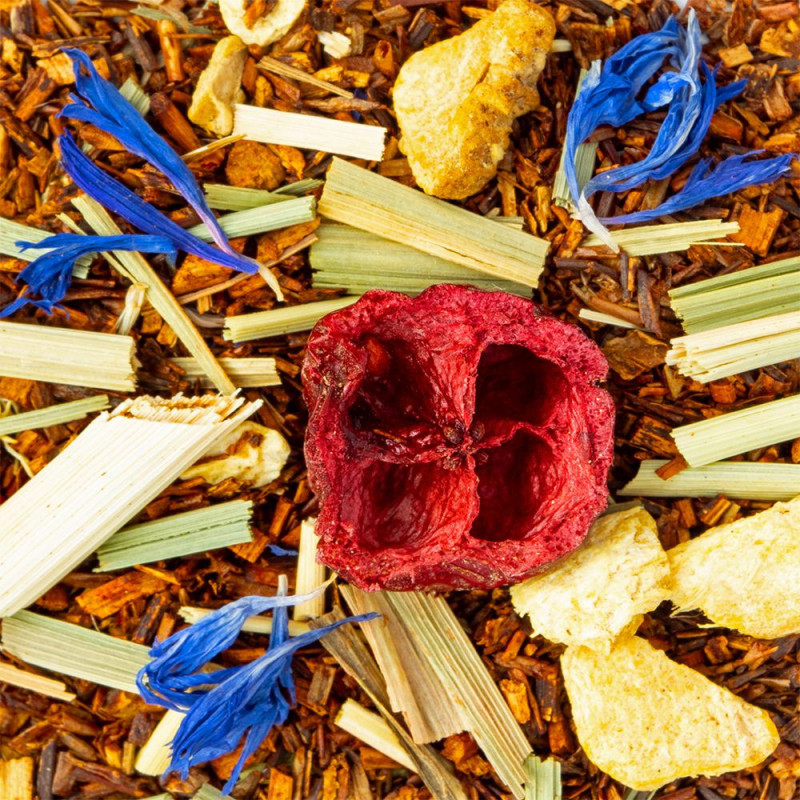
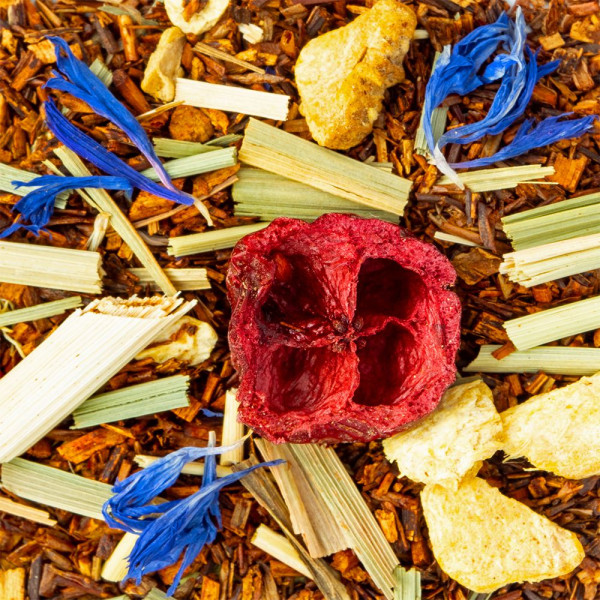
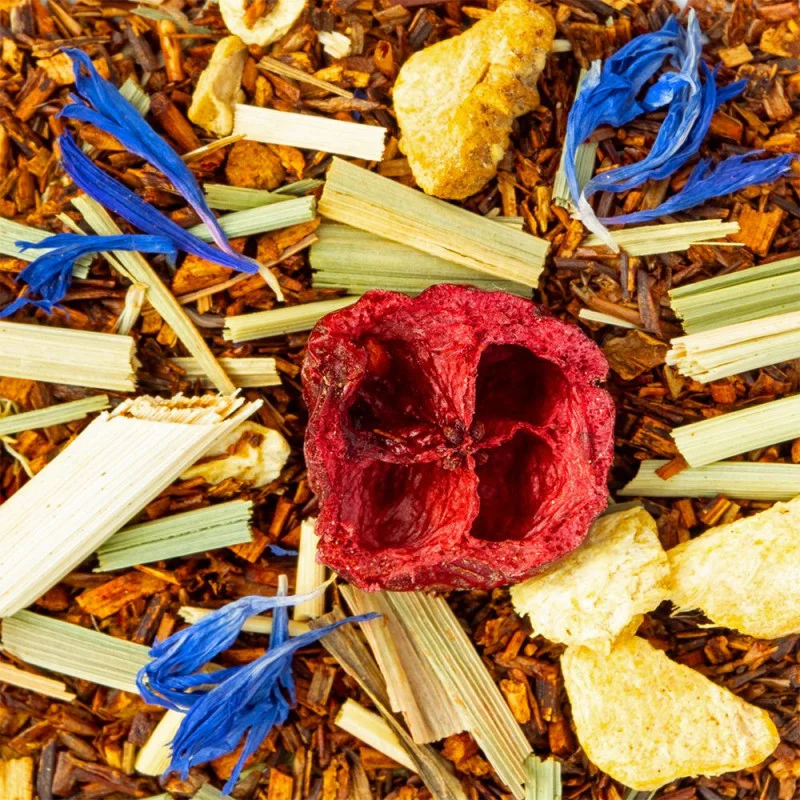
Next comes the heart of the cup: organic ginger, present at 9% in pieces, releases a subtle, warming spice. Nothing harsh, nothing overpowering, just that invigorating edge that wakes up the palate. Lemongrass adds a herbal freshness that balances the roundness beautifully.
In the background, Rooibos unfolds its gently sweet, woody softness. Real cranberry pieces (2%) reinforce the fruity authenticity, while cornflower petals bring a delicate visual touch to this generous blend. Well-balanced throughout, never sharp.
With no caffeine whatsoever, this herbal infusion is an ideal companion from morning to night. Enjoy it at breakfast as an alternative to coffee, during an afternoon break, or in the evening without any worry about disrupted sleep. Its natural mellowness also appeals to those who find tannin-rich teas too assertive.
Served hot, it warms the cooler days beautifully. Brewed cold over ice with a slice of lemon, it becomes a refreshing summer drink. Browse our other caffeine-free infusions to keep things varied.
A great cup comes down to four simple things: water quality, quantity, temperature, and steeping time. Here are our recommendations for this blend.
Unlike traditional tea, Rooibos never turns bitter, even with a longer steep. Feel free to leave the leaves in the pot. A fine-mesh filter or a wide enough tea infuser will allow the ginger and cranberry pieces to open up fully.
For a refreshing cold drink, brew as usual then leave to cool before refrigerating. Serve in a tall glass over ice, with a slice of fresh lemon or a sprig of mint. A naturally indulgent alternative to sodas. Try our iced infusions for your summer breaks.
Rooibos is traditionally valued for its natural antioxidant content. According to the EFSA, polyphenols found in many infused plants contribute to protecting cells against oxidative stress. Rooibos contains aspalathin, a flavonoid unique to this plant.
Ginger has traditionally been used to support digestive comfort. Studies referenced on PubMed point to its role in easing feelings of heaviness after meals. It is also appreciated for its gently invigorating properties.
Cranberry, a fruit recognized for its richness in phenolic compounds, rounds out the profile. The ANSES notes that a varied diet rich in fruits and plants supports daily balance. This infusion fits naturally into a broader approach to everyday well-being.
Julien Huot, founder of Thés & Traditions, personally selects each batch from producers committed to organic farming. To learn more, read our guide Everything you need to know about Rooibos and our article on the origins of Rooibos. Make it part of your daily ritual.
Keep your Rooibos in its original tin or in an airtight, opaque container, away from light, moisture, and strong odors. A kitchen cupboard away from heat sources works perfectly. Packaged in our own workshop, it retains its full aromatic freshness for 24 months.
What are the benefits of lemon ginger Rooibos?
This combination brings together the natural antioxidants of Rooibos, the digestive properties traditionally attributed to ginger, and the phenolic compounds found in cranberry or lemon. A caffeine-free infusion, pleasant and well-suited to daily enjoyment as part of a balanced diet.
How do I brew lemon ginger Rooibos?
Use 15 to 20 g per liter of water at a full boil (100°C) and steep for 7 to 10 minutes. Rooibos develops no bitterness, so feel free to steep a little longer without concern. Strain and enjoy hot, or leave to cool for an iced version.
Where can I buy organic lemon ginger Rooibos?
Thés & Traditions offers a selection of certified organic Rooibos blends, including this cranberry ginger blend and our lemon ginger Rooibos. Each variety is personally selected by Julien Huot from committed producers and packaged in our own workshop.
What are the effects of ginger and lemon?
Ginger is traditionally used to support digestive comfort and add an invigorating note. Lemon, rich in vitamin C according to ANSES, contributes to everyday vitality. Together, they make for an energizing drink that works especially well in the morning or mid-afternoon.
How should I enjoy lemon ginger Rooibos?
Any time you like, since it is naturally caffeine-free. In the morning as a coffee alternative, in the afternoon for a flavorful break, or in the evening for a moment of quiet relaxation. Also wonderful served iced in summer, with a slice of fresh lemon and a few ice cubes.
Information based on recommendations from the EFSA, ANSES, and studies referenced on PubMed. To go further: what is Rooibos and our complete guide to the traditional properties of this remarkable plant.

A Rooibos with two distinct flavours depending on steeping time

Escape to the lands of Africa with this delightful Rooibos


Indulgent Rooibos with Maple Syrup and Chocolate flavour
French House
Independent since 2016.
Fast delivery
Home delivery or click & collect.
Made with heart
In the south of France.
Customer service
A real voice at the end of the line,
Monday to Friday: 04 22 91 35 75.
Sharing, passing it on: our teas, our tips, the occasional unexpected idea, and little attentions just for you. Pure pleasure, ready to steep.