At a glance: Woojeon Green tea is a rare, organic single-origin from South Korea, with silky vegetal notes. Steep at 70-80°C for 1.5 to 2 minutes, using 12 to 15 g per litre.
Among the quieter treasures of the tea world, Woojeon holds a place all its own. Grown from the very first shoots of the Korean spring, this tea embodies a centuries-old tradition that remains largely unknown to tea lovers outside its homeland.
We selected this organic Korean green tea for its remarkable delicacy and its incomparable fresh, vegetal character. Every leaf reflects the patient craft of South Korean growers, heirs to a refined and discreet tea culture that is still a well-kept secret on the European market.
The word "Woojeon" translates literally as "before the rain," a reference to the harvest window, just before the spring rains arrive in the south of the peninsula. This early picking gives the leaves an exceptional tenderness, and the cup a gentleness that connoisseurs recognise from the very first sip. If you'd like to explore further, our Korean tea collection opens up a wider world of discovery. Browse our Korean green teas to experience the full depth of this quiet terroir.
The aromatic profile of Woojeon Green
This tea unfolds an aromatic palette of rare finesse, where each note seems perfectly measured. As you open the bag, the leaves release a fresh, herbaceous, faintly marine fragrance, evoking a dew-damp garden at dawn.
On the first sip, the infusion offers clean vegetal notes: freshly cut grass, young spinach, tender spring shoots. This initial impression, lively without being sharp, is the hallmark of an authentic Woojeon green tea, hand-picked from the youngest buds.
The heart of the cup then opens into rounder, softer notes: fresh almond, gentle chestnut, sometimes a whisper of sweet pea. This mid-palate richness sets Woojeon apart, with a character that is simultaneously creamy and understated, quite distinct from a Matcha or an Oolong, each of which plays on very different registers.
The finish is long and silky, with no astringency or bitterness. It is this smooth, lingering signature that makes Woojeon Green a Woojeon tea sought out by discerning tea lovers around the world, from a sommelier's palate to the counter of a specialist coffee shop.
The liquor is a pale, almost golden yellow, crystal-clear in the cup. This delicate visual already hints at the finesse to come, a world away from the more rustic green teas one typically encounters. Enjoy it as a tea in its own right, or compare it with our South Korea Green OP to discover two distinct expressions of the same terroir.
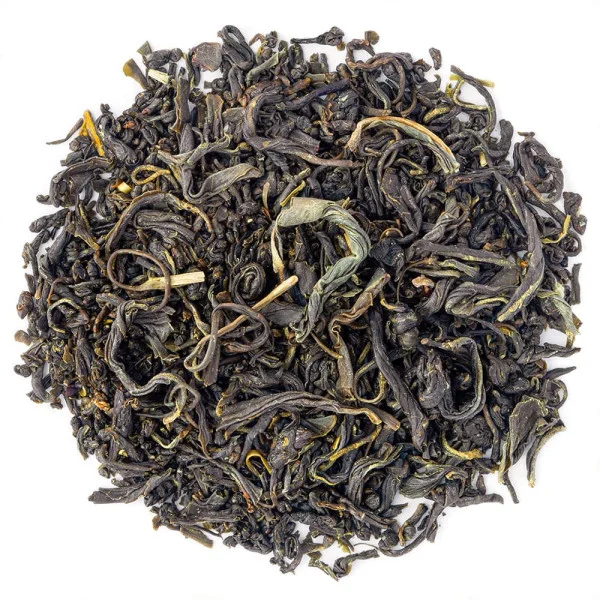
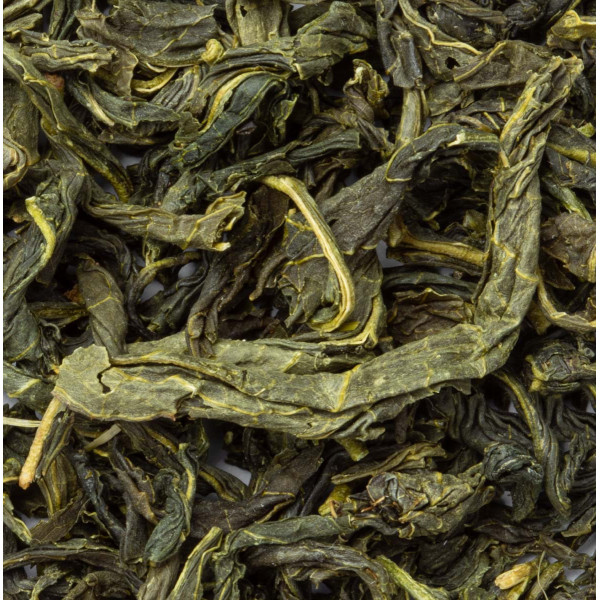
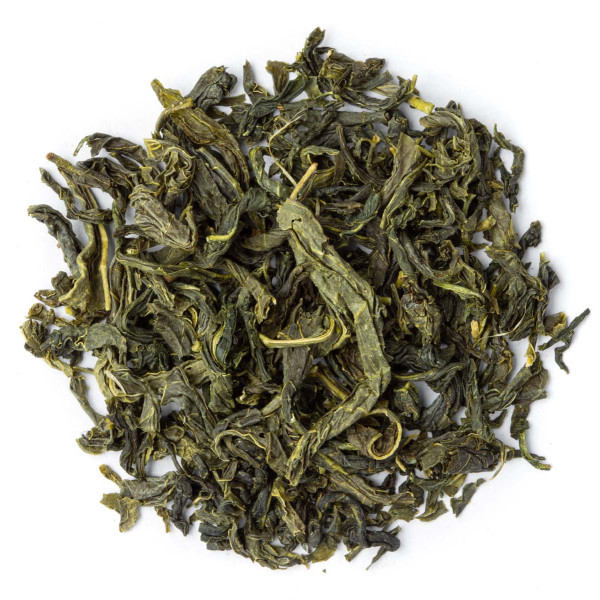
This tea, packaged in our own workshop, preserves its whole leaves in a tender, slightly blue-tinged green. The fine, silky buds, sometimes dusted with a light down, speak to the quality of the hand-sorting carried out at harvest. It is this level of care that sets a great single-origin apart from an everyday tea.
Compared to a Matcha, whose powdered form creates a thick texture and an intense jade colour, Woojeon Green plays on transparency and lightness. Compared to an Oolong, whose partial oxidation brings fruit and depth, it stays resolutely on the vegetal, springlike register. This is a tea that rewards patience, one to sip slowly, in a spirit that has nothing to do with a simple evening herbal infusion.
How to brew Woojeon Green tea
Brewing this delicate tea calls for a little attention. Like all fine green teas, Woojeon Green reveals itself fully when its infusion parameters are respected. Water that is too hot, or an infusion left too long, would mask its subtlety, or worse, tip it into bitterness.
Which water? We recommend a low-mineral, lightly chlorinated water, brought to 70-80°C. If you don't have a temperature-controlled kettle, simply let boiled water rest for four to five minutes before using it. It's a small step that makes a real difference with a tea this delicate.
How much to use? Measure out 12 to 15 g of leaves per litre of water, roughly a heaped teaspoon for a 200 ml cup. Woojeon Green handles a generous dose well, as long as you keep an eye on steeping time. Under-dosing, on the other hand, will give you a flat, underwhelming cup.
How long to steep? 1.5 to 2 minutes is all you need. Beyond that, the tea risks releasing too much bitterness. Time the first infusion carefully when you begin: you'll quickly find your own preferred balance.
Which accessories? A porcelain or light stoneware teapot works beautifully, giving the leaves enough room to open fully. A fine-mesh filter resting on the cup works just as well. Avoid tight-fitting tea balls, which restrict the aromatic development of whole buds.
A connoisseur's tip: this tea handles multiple infusions with ease. A second steep, slightly longer (2 to 3 minutes) on the same leaves, reveals new facets of the tea, often sweeter and rounder. A third infusion is perfectly possible when the quality of the Woojeon is there, as it is with ours. To explore the wider world of great East Asian green teas, take a look at our Hojicha, Genmaicha and Gyokuro selection.
Woojeon Green also lends itself beautifully to cold brewing, a method that has grown in popularity in recent years. Use 8 to 10 g per litre, and leave the leaves to steep in the refrigerator for six to eight hours. The result is remarkably smooth, free of any bitterness, and ideal for warm summer days. Enjoy this chilled infusion at any hour.
Storing your Woojeon Green
Like all exceptional green teas, Woojeon Green is sensitive to light, moisture, air and surrounding aromas. Store it in its original tin or in an airtight, opaque container, away from direct light and heat sources.
Avoid the refrigerator: residual moisture there quickly damages the leaves. A cool, dry shelf, away from spices and coffee, is more than sufficient. Stored correctly, this tea will hold its aromatic freshness for twelve to eighteen months after opening, though we recommend enjoying it within six months to make the most of its delicacy.
Frequently asked questions
What makes Korean green tea special?
Korean green tea is prized for its delicate aromatic profile and the fineness of its leaves. It belongs to a tradition of slow, mindful tasting, suited to quiet moments of pleasure. Above all, it is a tea to savour for its sensory qualities.
How do I brew Korean green tea?
Steep 12 to 15 g of leaves per litre of low-mineral water at 70-80°C for 1.5 to 2 minutes. Water that is too hot will make the cup bitter. Woojeon Green supports two to three successive steeps, each one revealing a different side of the tea.
Where can I buy Korean green tea?
Korean green teas remain a niche product outside their home country, found mainly through specialist houses. Our selection focuses on organic single-origins from small South Korean growers, ensuring traceability, freshness and aromatic integrity.
What varieties of Korean green tea are there?
The main Korean designations are distinguished by harvest date: Woojeon (before the spring rain, the earliest and most delicate), Sejak (young shoots), Jungjak (a later harvest) and Daejak (a summer harvest, more robust). Woojeon is considered the finest grade.
What does Korean green tea taste like?
Korean green tea develops a vegetal, silky profile: fresh herbs, young shoots, tender almond, chestnut, sometimes a faint marine note. The finish is long, gentle and low in astringency. It is a tea of great finesse, far removed from the roasted or toasted notes found in other styles.