Pu-erh Tea & Digestion: Why, When and How?

Whether at afternoon tea or breakfast, Chinese teas are widely celebrated for their health properties, and their effects on digestion have been the subject of many studies. Yet not all organic tea infusions are the same. So when should you drink Pu-erh tea to make the most of its digestive qualities? This dark tea from Yunnan has a long history of post-meal use in southern China, and contemporary science is beginning to explain why.
Organic Pu-erh: health benefits rooted in tradition
All tea infusions hydrate, thanks to their high water content. But fermented tea from Yunnan offers something more. Pu-erh tea, whether in cake or tuocha form, is traditionally enjoyed after a hearty meal. A Pu-erh tea cake is especially well suited to brewing at the end of a meal. In the Cantonese region and Hong Kong, Pu-erh has traditionally accompanied dim sum and rich meals for over a thousand years. Today, this habit has spread across Southeast Asia.
Pu-erh black tea: a moderate caffeine content
Grown on the same mountain trees in Yunnan as organic oolong tea, Pu-erh has a relatively modest caffeine level (around 60 mg per cup). That means drinking this Chinese tea is unlikely to disturb your sleep. It can be enjoyed in the late afternoon, evening, or even after a late dinner. For comparison: a shot of espresso contains 100 to 200 mg of caffeine, a classic black tea 40 to 70 mg, and a green tea 15 to 30 mg.
The Pu-erh cake: a tea that stands the test of time
Most teas lose quality over time. Pu-erh cakes are different: compressed into their distinctive shape, Pu-erh retains both its flavour and its properties, making it enjoyable year-round. The great tea houses keep certain cakes for decades, letting them develop slowly in dedicated cellars. It is one of the very few teas whose aromatic value actually increases with age.
In brief. Organic Pu-erh is a post-fermented tea from Yunnan whose microbial fermentation produces specific molecules (notably theabrownins) that give it its distinctive woody, earthy profile. It is best enjoyed 20 to 30 minutes after a rich meal, brewed short and hot.
Why is Pu-erh drunk after meals?
The secret of Pu-erh lies in its post-fermentation process. Over weeks or even years, the Yunnan tea leaves are transformed by micro-organisms (notably Aspergillus niger), which convert green polyphenols into brown compounds known as theabrownins. These molecules give the natural Pu-erh infusion its characteristic copper hue and its distinctive woody character.
In the Chinese tradition, Pu-erh has always been linked to the after-meal moment. Here is what characterises this infusion:
- A warm, lightly sweetened infusion, traditionally served at the end of a rich meal.
- Polyphenols and organic acids formed during traditional fermentation, which shape its aromas.
- Deep woody, earthy notes that make it a comforting cup, enjoyed alongside a relaxed moment.
Pu-erh is above all about a moment of pleasure and relaxation. Pu-erh is no substitute for medical treatment. Anyone on medical treatment or with chronic digestive issues should consult their doctor before making it a daily habit.
The active compounds in Pu-erh
The post-fermentation of Pu-erh by micro-organisms gives it a distinctive molecular profile that researchers are still exploring (notably Kuo et al., 2005, Journal of Agricultural and Food Chemistry). This unique character is partly why, in China, Pu-erh is traditionally served after a rich meal: it is enjoyed for the relaxed moment and sense of lightness it accompanies. No health claim is authorised for Pu-erh, however, which remains a pleasure drink.
Pu-erh notably contains:
- Theabrownins, responsible for the infusion's copper colour
- Partially transformed galloyl-catechins
- Organic acids (gallic acid, caffeic acid) formed during fermentation
- Residual antioxidant polyphenols (5 to 15% depending on the tea's age)
- Moderate caffeine combined with L-theanine
This unique composition sets Pu-erh apart: neither quite a black tea nor a green tea, its post-fermentation gives it a molecular profile that science is still actively exploring.
When to drink Pu-erh for better digestion?
Timing has a direct influence on how you feel. Here are the most effective windows:
| Moment | Intended effect | Tip |
|---|---|---|
| 20 to 30 minutes after a rich meal | After a rich, hearty meal | Short infusion (3 min), water at 95°C, no sugar. |
| Mid-afternoon | Gentle digestive comfort | The mini tuo cha is ideal for a single-serve brew. |
| Evening (in moderation) | Settle late digestion | Fine for most, thanks to its moderate caffeine. Avoid if caffeine-sensitive. |
| On an empty stomach in the morning | Best avoided | Too stimulating for an empty stomach. |
For regular post-meal use, the traditional gongfu cha method is the most respectful of the aromas and allows for several successive infusions. Use 5 to 8 g per 100 ml of water, for 4 to 6 short steeps.
Pu-erh sheng or pu-erh shou: which is better for digestion?
Both styles have their digestive strengths. Shou Pu-erh (cooked, accelerated fermentation) is more rounded and contains more theabrownins, with a softer, earthier and gentler flavour that is traditionally enjoyed after a meal. It is the classic choice for newcomers to Pu-erh.
Sheng Pu-erh (raw, slow fermentation) is more stimulating and more complex, favoured by connoisseurs. Its digestive effect is subtler, but its aromatic potential deepens beautifully over the years. A vintage sheng aged 10 to 15 years reaches an incomparable smoothness.
Which meals pair well with Pu-erh?
Pu-erh shines after rich, fatty meals. Here are some perfect pairings:
- Cantonese dim sum: the historic pairing, rooted in over 1,000 years of tradition.
- Peking duck, caramelised pork, duck breast: Pu-erh cuts through the richness beautifully.
- A board of aged cheeses: shou Pu-erh is a superb match for strong cheeses.
- Charcuterie, terrines, foie gras: the high fat content is balanced by the theabrownins.
- Dark chocolate pastries: the tannins of the chocolate echo the earthy, woody notes of Pu-erh.
- Festive meals (Christmas, New Year): ideal for easing digestion after a generous spread.
Pu-erh vs other digestive teas: a comparison
Pu-erh is not the only tea known for its digestive properties. Here is how it compares:
- Pu-erh tea: the deepest and woodiest, traditionally served after rich meals.
- Oolong tea: moderate, gentler effect. Floral and creamy notes.
- Green tea (Sencha, Matcha): broad antioxidant effect, less specifically digestive.
- Classic black tea: average digestive effect, more tannic.
- White tea: very delicate, less digestive but well tolerated by everyone.
- Rooibos (red tea): caffeine-free and digestive, a great choice for the evening.
When to avoid Pu-erh?
A few situations where it is worth moderating or avoiding Pu-erh:
- Pregnancy and breastfeeding: limit to 1 to 2 cups per day due to caffeine content
- Iron-deficiency anaemia: avoid drinking with meals (tannins can limit iron absorption)
- Anticoagulant medication: seek advice from your doctor
- Acid reflux: opt for a shou Pu-erh rather than a young sheng
- Caffeine sensitivity: avoid after 4 pm
Your questions about Pu-erh and digestion
How many cups of Pu-erh a day for digestion?
Two to three cups is plenty: one after lunch, one after dinner, and optionally one in the mid-afternoon. Beyond that, the diuretic effect of tea may become more noticeable.
Does Pu-erh help with weight loss?
No, it is not a fat burner. It supports comfortable digestion, which may ease the discomfort that follows a heavy meal, but it is not a substitute for a balanced diet and regular physical activity.
Sheng or shou Pu-erh for digestion?
Both work, but shou (cooked, accelerated fermentation) is gentler on the stomach and has a more marked digestive effect. Sheng (raw, slow fermentation) is more stimulating and woody.
Should Pu-erh be drunk hot or cold?
Hot, it fully reveals its woody aromas: this is the most popular way to enjoy it. A warm infusion is still pleasant, but less expressive.
How quickly does Pu-erh act on digestion?
Pu-erh is savoured slowly after the meal, during a relaxed moment: it is usually enjoyed 20 to 45 minutes after eating. There is no rush.
Can Pu-erh be drunk every day for digestion?
Yes, 2 to 3 cups a day is fine for a healthy adult. For long-term use, consider alternating with other teas (oolong, green tea) to vary your intake of active compounds.
Explore our range of organic Pu-erh teas from Yunnan: raw sheng, cooked shou, cakes, bricks and mini tuo cha. Direct sourcing, certified organic farming.
Tempted to try it?
Our selection related to this article, loose leaf and organic.
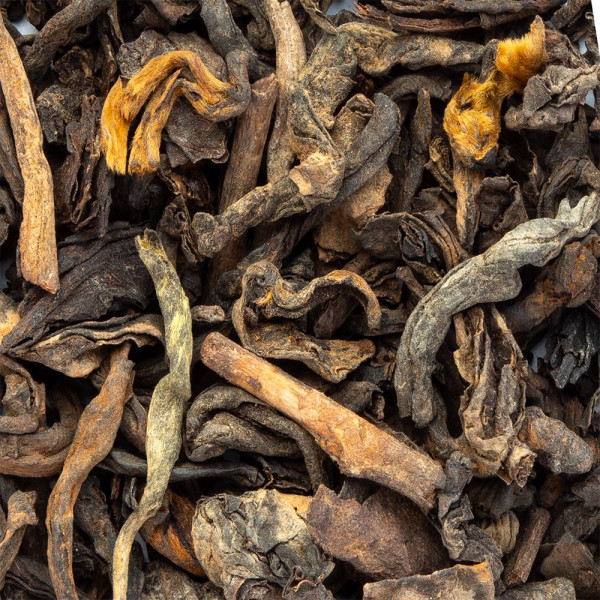
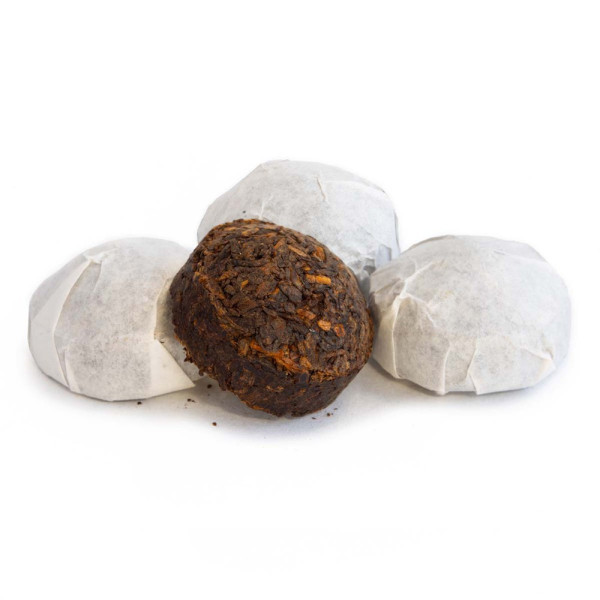
Pu-erh Mini Tuo Cha
The Pu-erh Mini Tuo Cha is a post-fermented tea from Yunnan, compressed into small individual nests of around 5 g each.
€6.00Discover
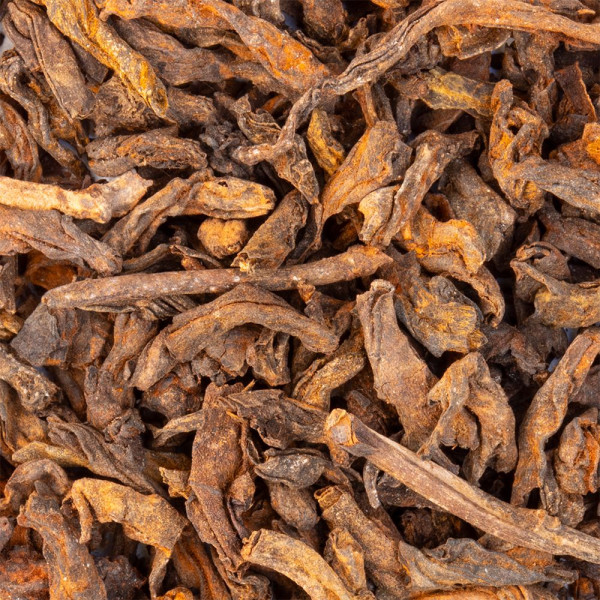
Pu Erh Menghai 5 Years
The Pu Erh Menghai 5 Years is a Chinese post-fermented grand cru, aged for five years to unveil its deep notes of dark chocolat…
€11.90Discover