 Green Tea




Organic
 Main Note:
Wild Berries
Main Note:
Wild Berries
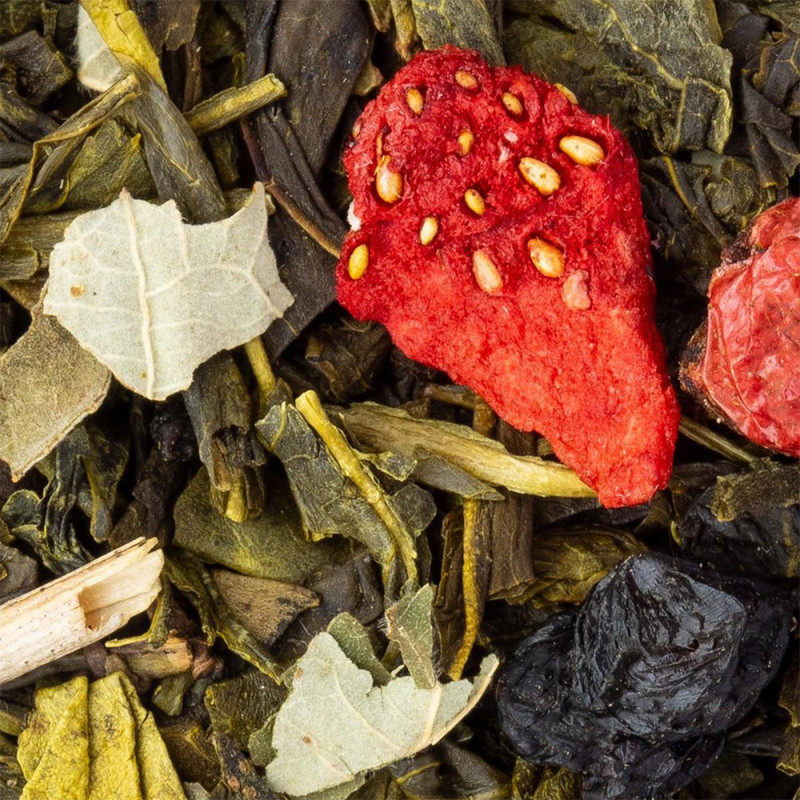
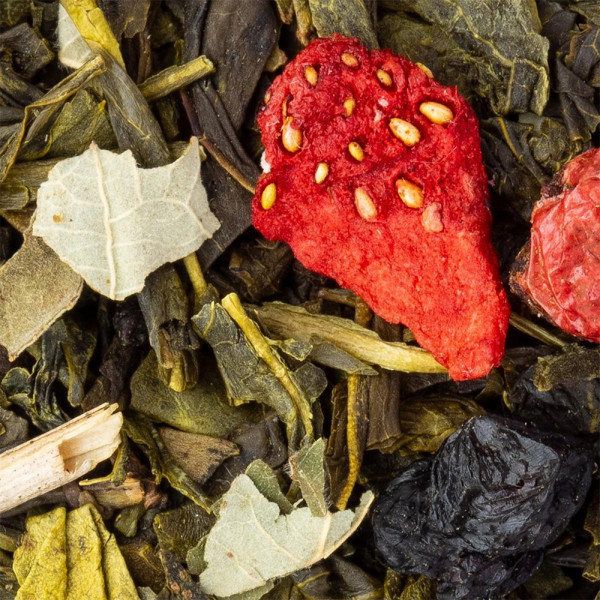
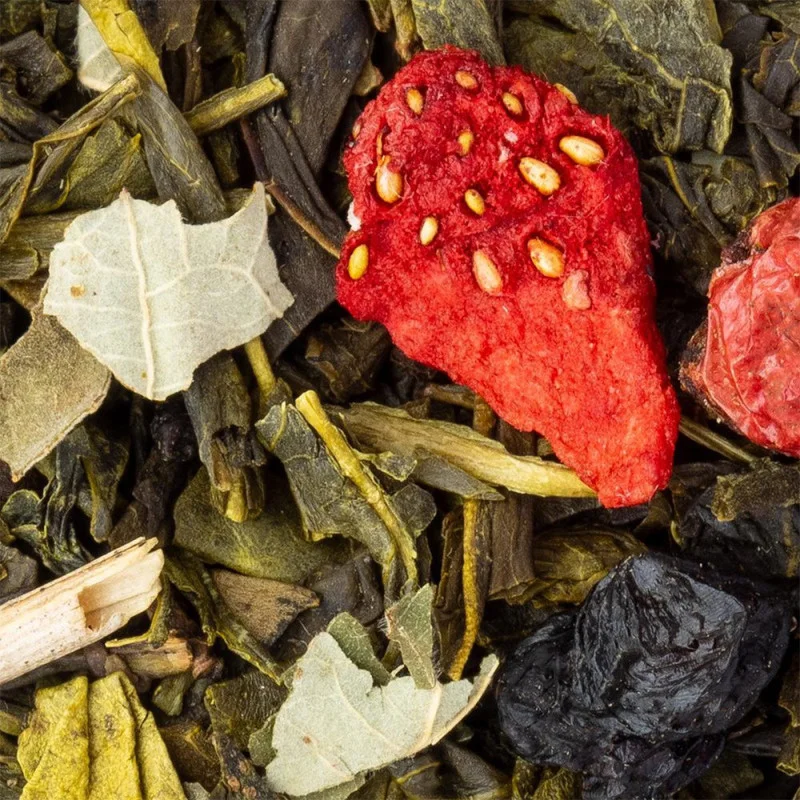
Our organic wild berry green tea brings together a delicate Sencha and a generous blend of strawberry, blackberry, elderberry and redcurrant. A bright, fruity infusion, perfect for those who love a fruity green tea with red berry notes, wonderful served hot or cold.
our expertise


In our workshop in Provence, each blend is handcrafted with passion by our team.
Real pieces of dried fruit, whole plants and carefully selected teas of origin.
Carefully crafted to create unforgettable tasting moments. A signature taste, an authentic experience.
At a glance: an organic Sencha green tea blended with wild berries (strawberry, blackberry, elderberry, redcurrant). Brew at 70-80°C for 2 to 3 minutes, using 12 to 15 g/L. Fruity, fresh and lightly tart. Enjoyable all day long, hot or iced.
Some cups carry a familiar feeling: the thrill of foraging along a woodland path. Our wild berry green tea brings that memory back to life, evoking a walk at the edge of the forest, gathering red summer fruits and dark autumn berries.
To build this blend, we started with one of our finest organic green teas, a Sencha chosen for its rounded, grassy character and natural brightness. Around that base, we assembled a true harvest of flavor: strawberry, blackberry, elderberry, redcurrant, blackberry leaves, and two natural flavorings (strawberry and blackcurrant) that extend the aromatic experience.
The result is a lively, indulgent tea that never tips into sweetness. It speaks to lovers of fruity flavors and regular Sencha drinkers alike, offering a joyful variation on a classic. Explore our selection of red berry teas to keep the woodland walk going.
This blend can be summed up in a single word: foraging. The moment you open the pouch, the first impression is of a wicker basket brimming with red and black berries, set on a garden table in August.
On the nose, you catch the warmth of slowly simmering jam, the scent of a blackberry crushed between fingers, the sweetness of strawberries soaked in sunshine. Nothing cloying: the whole is bright, almost crystalline, lifted by the underlying freshness of the Sencha.
Strawberry leads the way, round and sun-warmed, amplified by the natural flavoring that draws out its juicy sweetness. Redcurrant adds a sharp, almost crystalline tartness that wakes everything up and defines the wild berry character of the blend.
This opening recalls the bright red of seasonal baskets, that moment when you taste the first small fruits, still warm from the sun. It's a frank, joyful start with no hint of candy.
Beneath the fruit, the Sencha unfolds its herbaceous, fresh, lightly briny quality. This green base never overwhelms the berries: it frames them, like a leaf beneath the fruit, giving the cup a rounded, very digestible structure.
Sencha (which describes a production style rather than a single origin) is chosen here for its tender, supple profile and its ability to carry aromas without dominating them. That quality makes all the difference: the tea remains expressive, elegant and never astringent.
On the finish, blackberry unrolls its velvety, almost jammy depth. Elderberry, more restrained, adds a woody, faintly spiced note that recalls autumn hedgerows. The natural blackcurrant flavoring ties it all together with a dark, elegant, lingering fruitiness.
This balance makes our creation a new classic among fruity green tea lovers, poised between green freshness and seasonal preserve. For a different profile, try our Japanese cherry green tea, which is more floral and tart.
A flavored Sencha calls for care and precision. Water that is too hot scorches the leaves and kills the fruit's brightness; water that is too cool extracts very little. Here are our guidelines for bringing out every fruit note in the blend.
Technique matters as much as measurement: pour the water along the side of the pot, let the leaves open up, then strain precisely when the time is up. A cup left steeping three minutes too long will lose its fruity balance in favor of a more vegetal note.
This blend is wonderfully suited to cold brewing. Use 15 g of leaves per liter of cold water, leave to steep in the fridge for 4 to 6 hours, then strain. The result is a crystalline drink full of juicy berry flavor, perfect for warm afternoons.
You can also serve it at room temperature with a few fresh raspberries and a sprig of mint: a simple idea that turns a carafe into a moment of real pleasure. Try this iced green tea and discover Sencha in a whole new light.
Its moderate caffeine level and fruity profile make it a versatile companion: morning, an indulgent afternoon break or the end of a light meal. For more on the best times to drink green tea, see our guide When to drink green tea.
Beyond the pleasure of drinking it, green tea is one of the most studied beverages in the world for its rich content of polyphenols, particularly catechins. Our blend preserves those qualities while adding the botanical richness of berries and their leaves.
Sencha leaves naturally contain EGCG, a catechin studied for its antioxidant properties. The EFSA has evaluated numerous claims related to tea polyphenols, with strict guidelines governing their use in Europe.
Elderberries and blackberries contribute anthocyanins, the pigments responsible for the deep red and violet hues of wild fruits. According to research referenced by the ANSES, these compounds support a balanced, plant-rich diet.
With its moderate caffeine content and no added sugar whatsoever, this tea contributes naturally to daily hydration. It fits a work break or a quiet reading moment equally well, without over-stimulating.
To go deeper on the subject, explore our guide to green tea, where we cover composition, traditions and tasting tips. You can also read about choosing the right green tea for your goals.
Julien Huot, founder of Thés & Traditions, personally selects every ingredient in our blends to ensure a true, balanced flavor and consistent organic quality. Try this wild berry green tea and bring a little more fruit and life to your daily cup.
Store your tea in an airtight tin, away from light, moisture and strong odors. An opaque metal caddy is ideal: it protects the volatile fruit aromas and preserves the brightness of the Sencha for several months.
Avoid the refrigerator (moisture, odor transfer) and transparent containers placed near a window. Stored correctly, this blend will hold its full fruity character until the date printed on the pouch. Packed in our workshop, it reaches you at peak aromatic freshness.
Which wild berries are edible?
Many hedgerow and woodland berries are edible: blackberry, raspberry, blueberry (genus Vaccinium), lingonberry, elderberry (cooked), redcurrant, rosehip, sloe, and arbutus berry. Only consume them if identification is certain, pick them when fully ripe, and avoid areas near roads or treated crops.
How do you identify wild berries?
Identification relies on the whole plant: leaf shape, color, growth habit (shrub, bramble, climber) and fruiting season. An illustrated field guide or a reliable botanical app is essential. When in doubt, never consume: some ornamental berries are toxic.
What are the benefits of wild berries?
Rich in anthocyanins, vitamin C and fiber, wild berries are popular ingredients in varied plant-based diets. Elderberry, blueberry and lingonberry are studied for their antioxidant content. They fit well into a balanced diet, whether eaten fresh, as preserves or in an infusion.
Where can you find wild berries?
Woodland edges, country hedgerows, footpath verges and sunny banks are their natural habitat, especially from July to October. Out of season or in urban areas, look for them in organic shops (frozen or dried) or enjoy them in blends like ours. Always respect nature: pick responsibly and never in a protected area.
Which wild berries are toxic?
Yew, holly, mistletoe, bittersweet nightshade, black bryony and deadly nightshade all produce highly toxic berries, some of them potentially fatal. Raw elderberries are also poorly tolerated and must be cooked. If accidental ingestion occurs, contact a poison control center immediately.
Our information on green tea polyphenols and berry compounds is drawn from official assessments published by the EFSA and ANSES, as well as peer-reviewed articles indexed on PubMed. For further reading, explore our Earl Grey Sencha green tea.



An extraordinary blend of Indian spices and Matcha

A fruity Japanese tea that unfolds gradually, growing more and more intense
French House
Independent since 2016.
Fast delivery
Home delivery or click & collect.
Made with heart
In the south of France.
Customer service
A real voice at the end of the line,
Monday to Friday: 04 22 91 35 75.
Sharing, passing it on: our teas, our tips, the occasional unexpected idea, and little attentions just for you. Pure pleasure, ready to steep.