
Conseils de préparation

Preparation Instructions

temps d'infusion

Steeping time
3-5 min

température d'infusion

Brewing temperature
100°C

Moment de la journée

Time of day
Morning & Daytime

Dosage

Dosage
12-15g / L

Generous Ingredients And Carefully Selected

Peach
Peach
Velvety softness with sun-kissed notes
Raspberry
Raspberry
A tangy and luscious red berry
Acerola
Acerola
A small, vibrant fruit bursting with rich, invigorating notes
Oolong
Oolong
Delicately complex semi-oxidized tea
Gunpowder
Gunpowder
Robust and invigorating Chinese green tea
Darjeeling 2nd Flush
Thé d'été d'Inde floral et muscat
Guwahati black tea with whole red fruit pieces and dried citrus, loose-leaf
Ingrédients biologiques

Composition

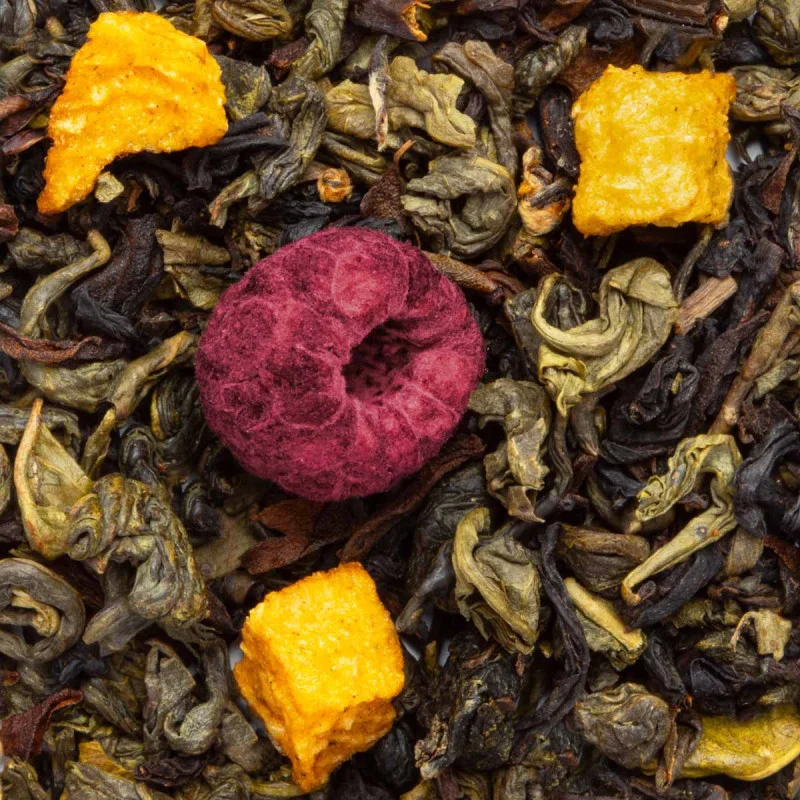
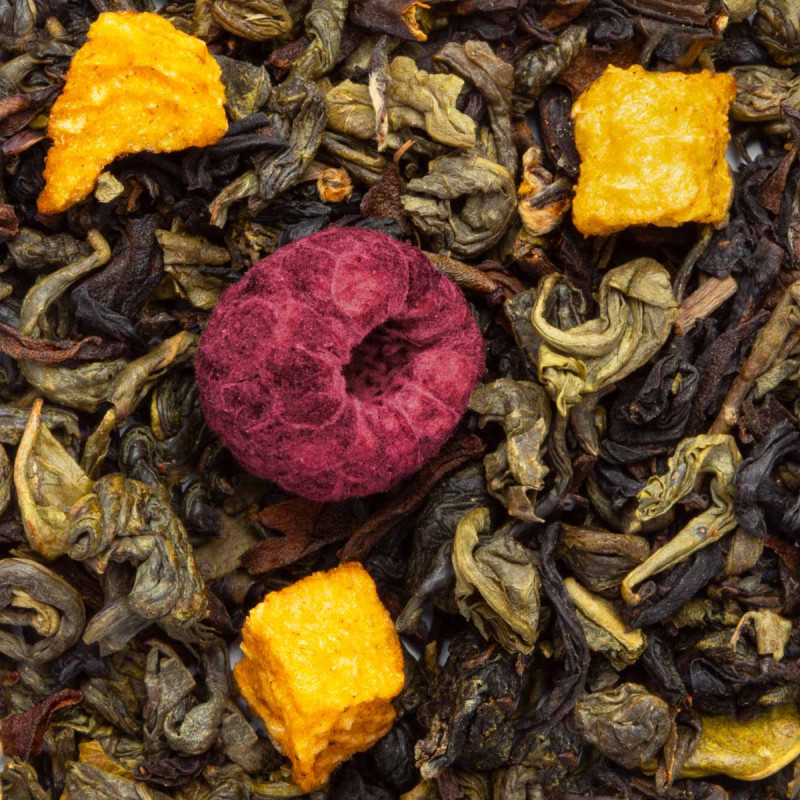
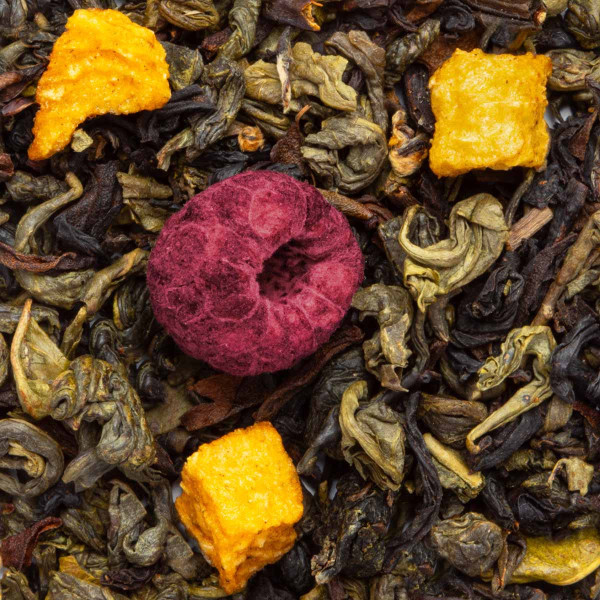
China Gunpowder green tea*, Darjeeling second flush black tea*, China Oolong*, raspberry*, natural raspberry flavouring, natural peach flavouring, peach*, acerola*. *Organically grown

Learn more...

At a glance: An elegant organic Guwahati black tea blending Darjeeling second flush, Gunpowder and Oolong with raspberry and peach. Brew at 100°C for 3 to 5 minutes, using 12 to 15 g per litre.

The Guwahati black tea is a signature creation from our house, conceived as a bridge between three great tea families. Its defining character: a Darjeeling second flush with delicate muscatel notes, a lively Gunpowder and a smooth Oolong, all woven together with indulgent fruit.

The result is a cup with amber reflections, at once fruity, gently tart and velvety. A blend that appeals equally to those who love a full-bodied cup and those who prefer something softer and more delicate.

This creation is certified organic and selected by Julien Huot, founder of Thés & Traditions, who partners with gardens committed to sustainable practices. Explore our black teas from Ceylon and Darjeeling to continue discovering this great tea family.

The aromatic profile of Guwahati black tea

This blend is built on a careful balance between leaves and fruit. Each ingredient plays its part precisely, without ever overpowering the others.

  • Organic Darjeeling second flush black tea: the aromatic backbone of the blend, it brings the characteristic muscatel notes of this harvest, a silky roundness and a beautifully lingering finish.
  • Organic Gunpowder: this pearl-rolled green tea imparts a lively, subtly vegetal note that gives structure to the cup and pulls the tasting toward freshness.
  • Organic Oolong: semi-oxidised, it serves as a bridge between black and green tea, with its floral aromas and characteristic mellow quality.
  • Organic whole raspberry and natural raspberry flavour: a tart, juicy, indulgent touch that brings the signature fruity character of this blend.
  • Organic peach and natural peach flavour: it softens the raspberry with a warm, ripe and velvety note, almost like a preserve.
  • Organic acerola: this small red berry, vivid and bright, heightens the fruity freshness and gives the cup its distinctive tart edge.

On the palate, the top notes open with raspberry and acerola, followed by a heart where peach mingles with the muscatel character of the Darjeeling. The finish, longer and more lingering, lets the Gunpowder and Oolong speak in a silky trail.

This is an infusion we love to serve in the morning for its fruity energy, or throughout the day as a companion for a quiet break. Also worth exploring: our fruity apricot black tea if you enjoy indulgent fruit-forward profiles, or the vanilla black tea for a softer, rounder alternative.

To compare tea families, visit our green tea vs. black tea guide, which sheds light on the differences in oxidation, aromatic profile and ideal drinking moments.

How to brew Guwahati black tea

Getting the best from this infusion comes down to a few simple steps. The blend welcomes fully boiling water thanks to its predominant black tea base, but remains sensitive to over-steeping.

Dosage: use 12 to 15 g of leaves per litre of water, roughly two heaped teaspoons for a generous 250 ml cup. Adjust to taste: a little less for a lighter, airier cup, a little more to intensify the fruitiness.

Temperature: bring the water to a full boil at 100°C. This temperature draws out the roundness of the Darjeeling and the depth of the fruit without dulling the fresh notes of the Gunpowder.

Steeping time: steep for 3 to 5 minutes. Three minutes yields a fruity, airy cup; five minutes gives a fuller character, where the leaves take the lead over the fruit. Beyond that, bitterness may start to mask the raspberry and peach.

Accessories: use a teapot with a wide filter or a generous infuser. Since the raspberry and peach are in whole pieces, they need room to fully release their aromas. Filtered, low-mineral water will bring out the clarity of the liquor beautifully.

This tea also works wonderfully iced: double the quantity, brew hot, then pour over ice. The fruity profile takes on a refreshing dimension, perfect for summer. Enjoy this blend alongside a fruity brunch or a sweet afternoon break.

To go further in choosing a fine tea, browse the black teas worth knowing, according to experts for a broader overview of the key references. You can also discover our Langminso black tea for a natural profile with no added fruit.

Storage

To preserve the full aromatic richness of this blend, store the leaves in an airtight container, away from light, moisture and strong odours. An opaque metal tin or ceramic caddy works perfectly.

Avoid the refrigerator, as condensation can form and alter the aromas. Once opened, enjoy the blend within 6 to 12 months to experience the raspberry and peach at their most expressive, as these notes are more volatile than the leaves alone. Carefully packed in our workshop.

Frequently asked questions

What is the best Assam black tea?
The best Assam black tea depends on your taste: some prefer a fine, silky FTGFOP1, others a bolder grade for the morning. Our house selects committed organic gardens and offers several complementary profiles to help you find your ideal cup.

How do you brew Assam black tea?
Assam black tea is traditionally brewed at 95–100°C for 3 to 5 minutes, using around 10 to 12 g of leaves per litre of water. A shorter steep gives a smooth, gentle cup; a longer steep produces a fuller, bolder character, ideal with a splash of milk.

What types of black tea are there?
Black tea comes in many profiles: fine and muscatel Darjeeling, bold and malty Assam, smooth and honeyed Yunnan, and flavoured blends with fruit or flowers. Each reflects a distinct terroir, leaf grade and drinking occasion.

Where can you buy Assam black tea?
Look for a specialist house that selects its gardens carefully, guarantees traceability and holds organic certification. Browse our dedicated black tea section to compare origins, leaf grades and aromatic profiles available loose-leaf.

What does Assam black tea taste like?
Assam black tea offers malty, woody and sometimes honeyed flavours with a pronounced roundness. Second flush harvests bring rounder, almost jam-like notes that pair beautifully with red fruits or warming spices. To explore further, learn more about black tea.

Black tea almost perfect

Packaged in France

In our workshop in Provence, each blend is handcrafted with passion by our team.

Exceptional Ingredients

Real pieces of dried fruit, whole plants and carefully selected teas of origin.

A Unique & Generous Taste

Carefully crafted to create unforgettable tasting moments. A signature taste, an authentic experience.

Our customers' reviews They share their experience

-

Basé sur - avis vérifiés

Reviews subject to verification

Loading reviews...

You'll like also

4 other products in the same category:
Thés & Traditions © 2026