its own success
Tropic Summer Teapot
With its exotic and refined design, it seamlessly blends aesthetics and functionality
28,90 €
AddAdded
Transparent, elegant and refreshingly modern, a glass teapot turns every brew into a visual experience. Watch the leaves unfurl, the colour deepen, the water slowly taking on its warm hue. Crafted from heat-resistant borosilicate glass, our glass teapots are completely flavour-neutral and suit every occasion, from the most delicate green tea to the most spectacular blooming teas.
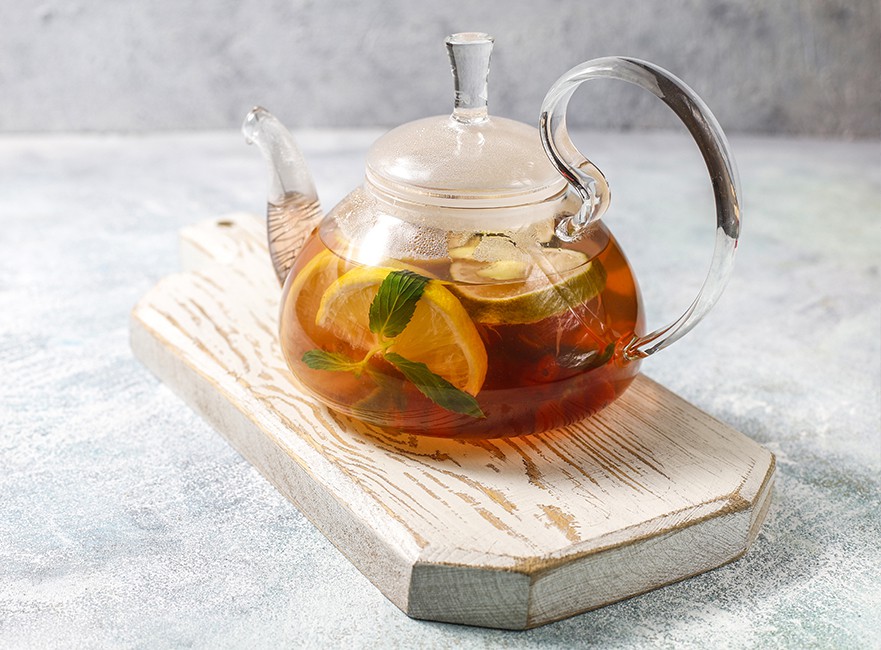
A glass teapot wins you over first with its transparency. Where cast iron or porcelain keep their secrets, glass lets you watch the infusion unfold: leaves slowly opening, petals blooming in a flowering tea, the liquor deepening in colour minute by minute. It is a true visual ritual, perfect for sharing a moment around the table.
Beyond aesthetics, glass has one particularly valuable quality: it is completely neutral. Unlike some materials, it holds no residual aromas or flavours and passes nothing unwanted to your drink. You can move from a full-bodied black tea to a floral herbal infusion without either influencing the other. A single glass teapot is all you need for every tasting.
Our teapots are made from borosilicate glass, the same material used in laboratory glassware. This technical glass handles the heat of boiling water without complaint and withstands temperature changes far better than ordinary glass. Robust and long-lasting, it stays crystal clear over the years, resisting both clouding and scratching. Most of our models come with a removable stainless steel filter that holds back the leaves and makes both serving and cleaning effortless.
A few simple criteria will help you find the ideal glass teapot for everyday use.
It all depends on how you use it. A smaller teapot works perfectly for a solo or shared tasting, while a larger capacity makes sense when entertaining or brewing for a crowd. Think about the number of cups you typically prepare: tea brewed in just the right quantity always tastes better.
To get the most from loose-leaf tea, look for a teapot fitted with a fine-mesh stainless steel filter that can be removed. It gives the leaves room to unfurl freely, catches even the finest particles, and lifts out cleanly when your brew is ready. If your teapot doesn't include one, a separate tea infuser works just as well.
Make sure the teapot is made from borosilicate glass rather than ordinary glass. Thicker and more resilient, it handles the heat of brewing water with ease and lasts considerably longer. It's what keeps a glass teapot looking beautiful cup after cup.
Using a glass teapot is beautifully straightforward. Add the recommended amount of tea to the filter, pour water at the right temperature for your tea, and leave it to brew for the suggested time before removing the filter. To protect the glass, avoid thermal shock: never pour boiling water into a teapot that has been in the fridge, and always let it come back to room temperature before filling. A gentle warm-up with lukewarm water is an easy habit that helps the teapot receive the infusion in the best conditions.
A glass teapot suits every type of tea, but it truly comes into its own with whole-leaf teas and flowering teas, whose slow, graceful opening it puts on full display. A pleasure for the eyes as much as for the palate.
What are the benefits of a glass teapot?
The transparency lets you watch the infusion unfold and admire blooming leaves or flowering teas as they open. Glass is also perfectly neutral: it retains no odor or flavor, suits every type of tea, and carries no taste from one infusion to the next.
What is borosilicate glass?
It is a technical glass, the same used in laboratory glassware. More resistant than ordinary glass, it withstands the heat of brewing water and handles temperature changes far better, giving you a durable teapot that keeps its clarity over time.
Can a glass teapot be used on the stovetop?
It depends on the model. Some borosilicate teapots can tolerate a very low flame, but many are designed only for brewing and serving. The safest approach is to heat water separately, then pour it into the teapot while avoiding any sudden temperature change. Always check the manufacturer's instructions.
How do you remove tea stains from a glass teapot?
Fill it with warm water and a splash of white vinegar, leave it to work for a few minutes, then gently scrub with a non-abrasive sponge and rinse. The glass will regain its original clarity.
At Thés & Traditions, we have brought together a range of glass teapots that combine transparency, elegance and everyday pleasure. The Flowtea Mandala teapot and the Flowtea Amami teapot charm with their contemporary lines and practical infuser. The Eucalyptus and Tropic Summer models bring a botanical, colourful touch to your table, while the Animals Léo teapot is sure to delight lovers of graphic designs.
Still weighing up your options? You may also enjoy our cast iron teapots, which retain heat for a long time, our porcelain teapots with their timeless charm, or browse our full range on the teapot page.
Caring for a glass teapot is straightforward and keeps it looking clear for years to come. After each use, empty the leaves and rinse the teapot and its infuser under fresh water. A simple rinse is usually all it takes; many models are also dishwasher-safe, though it is worth checking the manufacturer's instructions.
Over time, tea can leave a slight haze or stains on the inside. To remove them, fill the teapot with warm water and a splash of white vinegar, leave it to work for a few minutes, then gently scrub with a soft sponge before rinsing thoroughly. The glass will regain its full clarity. Avoid abrasive sponges, which could scratch the surface.

French House
Independent since 2016.
Fast delivery
Home delivery or click & collect.
Made with heart
In the south of France.
Customer service
A real voice at the end of the line,
Monday to Friday: 04 22 91 35 75.
Sharing, passing it on: our teas, our tips, the occasional unexpected idea, and little attentions just for you. Pure pleasure, ready to steep.