Ayurvedic Herbal Tea: an Ancient Tradition

In brief: Ayurvedic herbal tea is rooted in Ayurveda, a traditional Indian medicine over 3,000 years old and recognised by the WHO. It brings together spices, roots and plants according to principles of balance among three vital energies (Vata, Pitta, Kapha). A caffeine-free drink, it is prepared by decoction for 8 to 10 minutes. Use 1 teaspoon per 8 fl oz cup, 2 to 3 times a day.
Ayurvedic herbal tea is one of the most beautiful expressions of traditional Indian medicine. Far more than a simple flavoured infusion, it is a drink built around a logic of balance between flavours, spices and the body's energies. This page explains its principles, how to prepare it properly, and how to choose the blend that suits your dosha.
What is Ayurveda?
Ayurveda (from the Sanskrit ayur, life, and veda, knowledge) is the oldest traditional medicine of India. Practised for over 3,000 years, it is recognised by the World Health Organization as a traditional medicine system on a par with Chinese medicine. It rests on a holistic vision: balance between diet, lifestyle, plants and state of mind.
Ayurveda identifies three fundamental energies (the doshas) present in every person in varying proportions. Understanding your dominant dosha helps you choose the food, spices and plants best suited to your constitution.
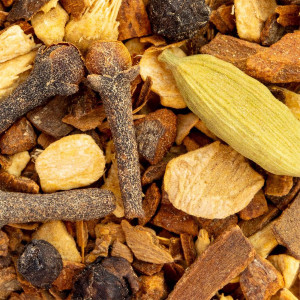
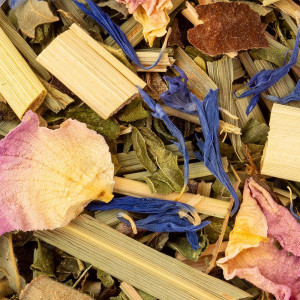
The three doshas and their corresponding herbal teas
Each dosha corresponds to physical and psychological characteristics, and to flavours or spices that the ayurvedic tradition associates with it.
Vata (air and ether)
Dominant Vata types: slender build, quick and creative mind, sometimes restless, often chilly, with a sensitive digestion. Vata herbal tea: warming and soothing spices (ginger, cardamom, Ceylon cinnamon, liquorice, fennel). Best enjoyed in the evening and during winter.
Pitta (fire and water)
Dominant Pitta types: athletic build, driven and energetic, sometimes prone to overheating and irritability, sensitive to heat. Pitta herbal tea: cooling and soothing plants (rose, coriander, fennel, liquorice, mint, hibiscus). Best enjoyed in the afternoon and during summer.
Kapha (water and earth)
Dominant Kapha types: robust build, calm and steady, sometimes slow to start in the morning, prone to retention and lethargy. Kapha herbal tea: stimulating and invigorating spices (ginger, black pepper, cinnamon, cloves, cardamom). Best enjoyed in the morning and during spring.
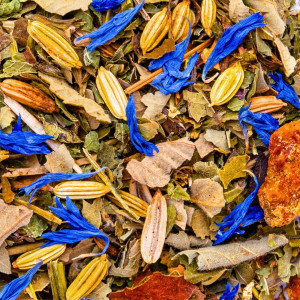
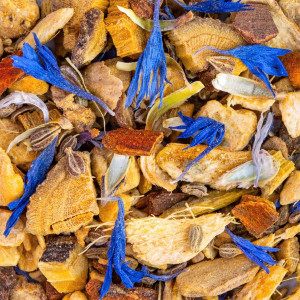
Ayurvedic spices and their traditional uses
Several spices and plants appear regularly in ayurvedic blends. Here are the most common ones, with their documented traditional uses:
- Ginger (Zingiber officinale): a spice traditionally valued for digestive comfort. See our ginger guide.
- Ceylon cinnamon (Cinnamomum verum): preferred over Chinese cinnamon for regular use. See our cinnamon guide.
- Cardamom (Elettaria cardamomum): aromatic, a traditional digestive support.
- Turmeric (Curcuma longa): a root studied for its curcuminoids; combine with black pepper to improve bioavailability.
- Cloves: rich in aromatic compounds, to be used in moderate amounts. See our clove guide.
- Liquorice (Glycyrrhiza glabra): naturally sweet, to be used with caution in cases of high blood pressure.
- Fennel, anise, black pepper, saffron, cumin, coriander: culinary spices with a wide range of traditional uses.
How to prepare an ayurvedic herbal tea
Ayurvedic herbal teas are traditionally prepared by decoction (a brief simmer) to fully release the compounds from spices and roots:
- Amount: 1 teaspoon (3 g) of the blend per 8 fl oz cup.
- Water: bring to a gentle simmer (203°F / 95°C).
- Time: 8 to 10 minutes, covered. For a stronger decoction, simmer gently for 3 minutes, then leave to steep for 7 minutes off the heat.
- Traditional variation: replace half the water with plant-based milk (traditional Indian chai-style recipe).
- Frequency: 2 to 3 cups a day, ideally at the times that correspond to your dosha.
Ayurvedic herbal tea and caffeine
Classic ayurvedic herbal teas are caffeine-free, unlike traditional Indian tea (which is black tea). They are therefore suitable at any time of day, including late afternoon and evening. They make a natural alternative to coffee and black tea for those looking to cut back on stimulants.
Note, however, that some modern ayurvedic recipes include chai, which contains black tea. Check the ingredients if you are sensitive to caffeine.
Precautions and contraindications
Ayurvedic spices are active botanicals that call for a degree of care:
- Pregnancy: Ayurvedic medicine offers recipes suited to pregnancy, but some strong spices (liquorice, rosemary, common sage) are not recommended. Consult your midwife before making any spice-based herbal tea a regular habit during pregnancy.
- Breastfeeding: some spices pass into breast milk. Opt for gentler blends.
- High blood pressure: avoid recipes high in liquorice, which can raise blood pressure at higher doses.
- Diabetes under treatment: cinnamon and ginger may have a mild hypoglycaemic effect. Let your doctor know about your consumption.
- Anticoagulant therapy: turmeric, ginger and cinnamon may interact with vitamin K antagonists. Medical advice is recommended.
- Gallstones: turmeric stimulates bile production and is contraindicated in cases of bile duct obstruction.
- Children under 6: strong spices (pepper, cloves, Chinese cinnamon) are not recommended.
Disclaimer: the information in this article is for educational purposes and presents the traditional principles of Ayurveda. It does not constitute a diagnosis, is not a substitute for medical advice, and makes no claim to treat or prevent any illness. For personalised guidance according to your dosha, consult a certified Ayurvedic practitioner.
Sources: World Health Organization, WHO Benchmarks for the Practice of Ayurveda (2010) · European Medicines Agency, Community herbal monographs (Zingiber officinale, Cinnamomum verum, Foeniculum vulgare, Curcuma longa) · ANSES, recommendations on plants in infusion and food supplements.
Written by
Julien Huot, founder of Thés & Traditions. Tea selector since 2016, trained in tasting, and passionate about sharing the cultures of tea and botanical infusions.
Published 24 March 2019 · Updated 21 May 2026
Frequently asked questions
- A herbal blend prepared according to the principles of Ayurveda, traditional Indian medicine. It combines spices, roots and plants to balance the three vital energies (Vata, Pitta, Kapha) according to your constitution.
- Vata: warming spices (ginger, cardamom). Pitta: cooling plants (rose, coriander, fennel). Kapha: stimulating spices (black pepper, ginger, cinnamon). Browse our selection of organic ayurvedic herbal teas for Vata, Pitta and Kapha.
- Classic ayurvedic herbal teas are caffeine-free. Only variations that include black tea (such as Indian chai) contain caffeine.
- It depends on the blend. Some recipes are suitable, while others include spices that are not recommended (liquorice at high doses, rosemary, common sage). Consult your midwife before making any spiced herbal tea a regular habit during pregnancy.
Go further
Ready to explore? Browse our full range of organic ayurvedic herbal teas (Vata, Pitta, Kapha, Chakra Chai, Inner Peace, Pure Ayurveda). To learn more about the key spices, visit our ginger guide, our cinnamon guide and our clove guide.
Tempted to try it?
Our selection related to this article, loose leaf and organic.
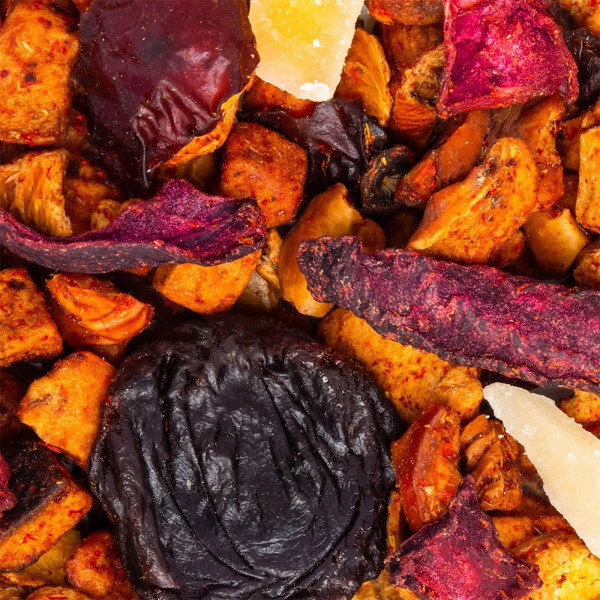
Cherry Cake Herbal Infusion
Cherry Cake herbal infusion, a truly indulgent cherry infusion, captures the warmth of a homemade pastry.
€6.90Discover

Almond Cloud Herbal Infusion
Almond Cloud herbal infusion is a tender, indulgent almond infusion that brings together roasted almond, apple and popcorn in a…
€7.20Discover
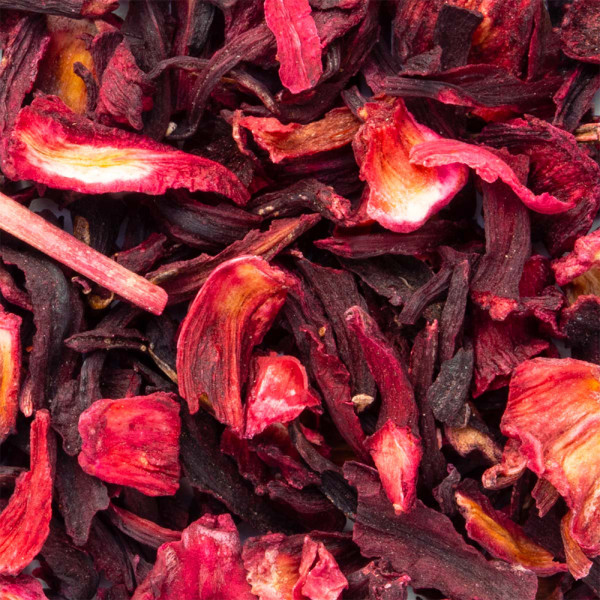
Hibiscus Flowers
Step into a swirl of deep crimson colour and captivating flavour with our hibiscus herbal infusion!
€5.90Discover