Herbal Teas for Sleep: Benefits and Best Plants

In brief: Several plants are traditionally enjoyed as an evening infusion to accompany a calming moment before bed: valerian, passionflower, lemon balm, lavender, hops, linden, chamomile. A cup 30 to 60 minutes before bed fits naturally into a soothing routine. No herbal infusion replaces proper care for chronic insomnia.
Quality sleep shapes your health, energy and mood the next day. An evening herbal infusion is one of the simplest ways to ease the transition into night. This guide covers the best-documented plants, separates what is genuinely effective from marketing claims, and explains how to build your own ritual.
Plants for the evening ritual
Several plants are traditionally associated with bedtime, and some have been reviewed by the EMA. Here are the best known:
- Valerian (Valeriana officinalis): one of the most studied plants for the evening moment, traditionally enjoyed as an infusion before bed. Several scientific works have looked into it, including a paper published in the American Journal of Medicine.
- Hops (Humulus lupulus, strobiles): a plant of traditional use, often combined with valerian in evening blends.
- Passionflower (Passiflora incarnata): a plant of traditional use, enjoyed in evening infusions to accompany a calm moment.
- Lavender (Lavandula angustifolia): a plant of traditional use, prized for its enveloping fragrance and soothing note.
- Lemon balm (Melissa officinalis): a plant of traditional use, gladly chosen for moments of relaxation, especially in the evening.
Other plants of traditional use round out this evening picture: linden, chamomile, lemon verbena, orange blossom.
Which plant for which evening moment
- To slow down before the night: valerian, lavender, passionflower.
- For a more enveloping infusion: valerian + hops.
- To ease a restless evening: lemon balm + passionflower + chamomile.
- After a late meal: lemon verbena + lemon balm + peppermint, for a moment of relaxation.
- For children's evenings: chamomile + linden + orange blossom, in age-appropriate doses.
How to prepare your evening herbal infusion
- Amount: 1 teaspoon (2 g) of dried herb per 250 ml cup. For a blend, 1 tablespoon per 500 ml.
- Water: bring to a gentle simmer (95 °C / 203 °F).
- Steeping time: 10 minutes, covering the cup throughout (essential oils are volatile).
- Timing: 30 to 60 minutes before bed. Not too late, to avoid waking during the night.
- Straining: use a fine-mesh strainer. Skip the sugar; a touch of honey works well if needed.
The ritual matters as much as the plant
Several studies have observed that part of the "evening herbal tea" effect comes from the ritual itself: slowing down, sitting still, feeling the warmth, breathing in the aroma. It signals to your body that the day is over. A few suggestions:
- Prepare the infusion unhurriedly, and be present in the gesture.
- Drink it without screens, with light reading or in silence.
- Pair it with a consistent routine: dim the lights, tidy the bedroom, set your alarm.
- Limit screen time for 30 minutes before bed.
The habits that genuinely improve sleep
Beyond the herbal infusion:
- Regular bedtime: same time every day, including weekends (within 30 minutes).
- No caffeine after 2 pm if you are sensitive to it.
- Physical activity during the day: at least 30 minutes, not within 3 hours of bedtime.
- A cool bedroom: 18 to 19 °C (64 to 66 °F) is the ideal temperature for sleep.
- Complete darkness: shutters, blackout curtains or a sleep mask if needed.
- A light evening meal: 2 to 3 hours before bed.
Precautions and contraindications
- Valerian and passionflower: avoid before driving or operating machinery, as they may cause prolonged drowsiness in sensitive individuals.
- Sedative medications or antidepressants: an additive effect is possible. Consult your doctor before adding a regular calming herbal infusion to your routine.
- Pregnancy and breastfeeding: valerian, hops and passionflower are not recommended. Prefer chamomile, linden and orange blossom in moderate amounts.
- Children: valerian and hops should be avoided under 12 years of age. Chamomile, linden and orange blossom are suitable from 12 months.
- Chronic insomnia: if sleep difficulties persist beyond 3 weeks, see a doctor. An herbal infusion is not enough on its own.
Disclaimer: the information in this article is for educational purposes only and does not replace medical advice. Chronic sleep disorders require a medical consultation.
Sources: European Medicines Agency, Community herbal monographs (Valeriana officinalis, Humulus lupulus, Passiflora incarnata, Lavandula angustifolia, Melissa officinalis) · Bent S. et al., American Journal of Medicine on valerian and sleep (PMID:17145239) · ANSES, recommendations on plants for infusion.
Written by
Julien Huot, founder of Thés & Traditions. Tea selector since 2016, trained in tasting and passionate about sharing the cultures of tea and botanical infusions.
Published 14 March 2019 · Updated 21 May 2026
Frequently asked questions
- Valerian is one of the most studied plants for bedtime. For a gentler approach, lemon balm + chamomile + linden is a well-loved, widely trusted combination.
- 30 to 60 minutes before bed. Not too late, to avoid waking during the night.
- Much of their appeal comes from the ritual itself: slowing down, savouring a warm drink, breathing in the aromas. The traditional use of these plants accompanies this moment of relaxation, without replacing good sleep habits.
- Chamomile, linden and orange blossom are generally considered safe in moderate amounts. Valerian, passionflower and hops are not recommended.
Go further
To explore more, browse our guide to anti-stress herbal infusions, our chamomile guide, our linden guide or our lemon verbena guide. Ready to get started? Browse our organic range.
Tempted to try it?
Our selection related to this article, loose leaf and organic.
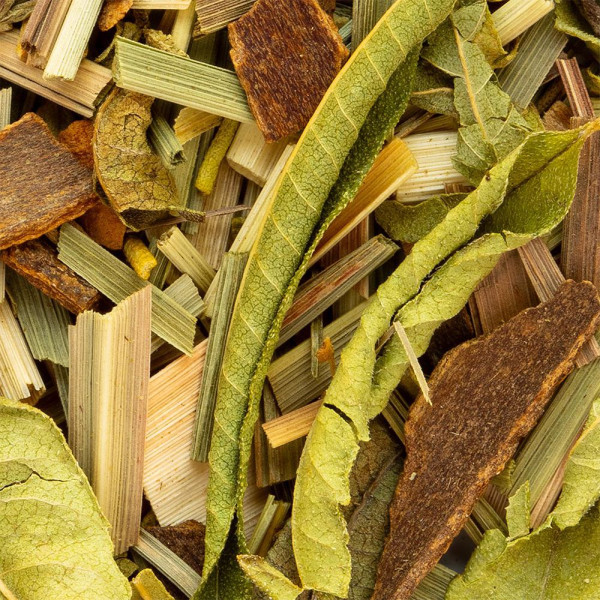
Stroll Through Provence Herbal Infusion
Organic Stroll Through Provence herbal infusion evokes a walk among fields of rosemary, thyme and lavender.
€7.90Discover
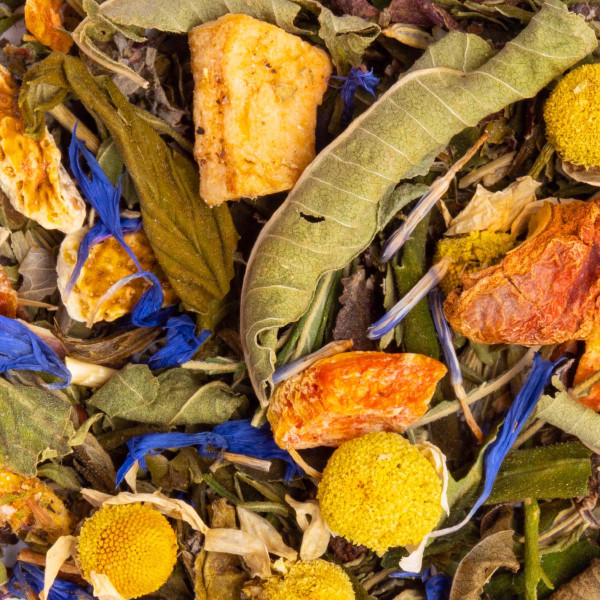
CBD Sleep Herbal Infusion
Organic CBD Sleep herbal infusion is a 16-ingredient blend built around hemp leaf: chamomile, lemon balm, verbena and lavender,…
€14.90Discover
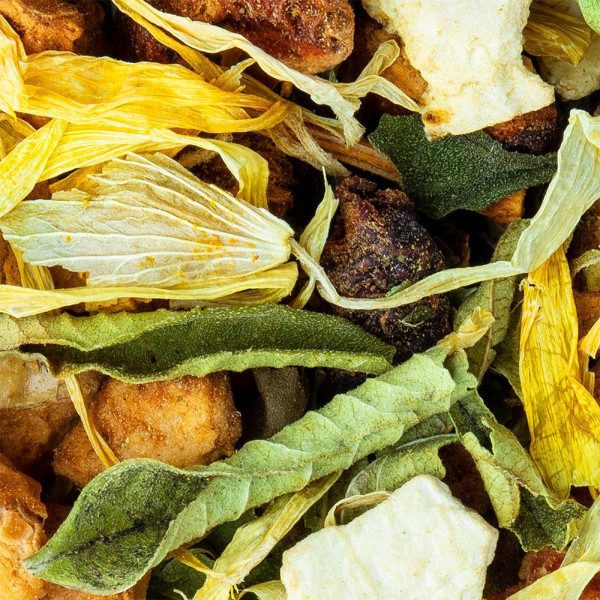
Evening Herbal Infusion
Organic evening herbal infusion brings together verbena and orange in a soft, comforting cup.
€8.90Discover