Matcha and pregnancy: is it safe to drink while pregnant?

Expecting a little one and wondering whether you can keep enjoying your daily matcha? It's a question many mums-to-be ask when they're not ready to give up their wellness ritual. With advice that sometimes seems to contradict itself and perfectly understandable concerns, it can be hard to know where you stand. The good news is: matcha can absolutely be part of your pregnancy, as long as you follow a few simple guidelines we'll walk you through here.
Key takeaways
- Matcha is not off-limits during pregnancy - moderate consumption is perfectly safe
- Keep to 1-2 servings a day to stay comfortably within the recommended 200 mg of caffeine
- Morning is the best time to avoid sleep disruption
- Hojicha is an excellent alternative with just 7-10 mg of caffeine
- Breastfeeding is also compatible with mindful matcha consumption
Matcha and pregnancy: what you really need to know
Despite what you may have heard, matcha is not dangerous during pregnancy. This Japanese green tea powder does contain caffeine - roughly 30 to 70 mg per serving depending on the dose - but that's still well below the amount in a standard cup of coffee, which can reach 200 mg.
During pregnancy, your body processes caffeine differently. It takes roughly 2 to 3 times longer to eliminate it, especially in the third trimester. Caffeine crosses the placental barrier and reaches your baby, whose system isn't yet mature enough to metabolise it efficiently.
The European Food Safety Authority (EFSA) and the World Health Organization both recommend keeping caffeine intake below 200 mg per day during pregnancy. This limit covers all sources combined: coffee, tea, chocolate, soft drinks, and of course matcha.
Iron absorption is another concern that often comes up. Here's some reassuring news: matcha has very little impact on the absorption of this essential mineral, especially if you drink it between main meals.
How much matcha is safe during pregnancy?
With 30 to 35 mg of caffeine per gram, the calculation is straightforward. You can enjoy 1 to 2 servings of matcha per day (1 to 2 grams each) and remain comfortably within the recommended 200 mg limit.
| Matcha dose | Caffeine content | Verdict |
|---|---|---|
| 1 gram (light serving) | 30-35 mg | ✅ Perfectly safe |
| 1.5 grams (standard serving) | 45-52 mg | ✅ Ideal to start with |
| 2 grams (generous serving) | 60-70 mg | ✅ Acceptable in moderation |
| 3 grams (very concentrated) | 90-105 mg | ⚠️ Best avoided or limited |
If you also drink coffee, adjust accordingly. For example: one cup of coffee (95 mg) plus one serving of matcha (50 mg) brings you to 145 mg, which is within acceptable limits. Two cups of coffee a day, however, leaves no room for matcha.
Our practical advice: enjoy your matcha in the morning or early afternoon, never in the evening. Space your servings 4 to 6 hours apart and drink plenty of water to support caffeine elimination.
Listen to your body. If you notice heart palpitations, restlessness or difficulty falling asleep after drinking matcha, reduce your intake. If you have any doubts, don't hesitate to speak with your doctor or midwife.
Matcha and breastfeeding: compatible or not?
You can continue enjoying matcha while breastfeeding. Around 1 to 1.5% of the caffeine you consume passes into your breast milk, with peak concentration occurring 1 to 2 hours after drinking.
The important thing to bear in mind is that your baby's metabolism is still immature. A newborn needs 80 to 100 hours to eliminate caffeine, compared to 4 to 5 hours for an adult. This gradually shortens: 14 to 20 hours at around 1-3 months, then 5 to 6 hours after 3 months.
The recommended limit stays the same as during pregnancy: 200 mg of caffeine per day. To minimise transfer to your baby, drink your matcha right after a feed rather than before.
Watch for these signs in your little one:
- Unusual restlessness or hyperactivity
- Sleep disturbances or difficulty settling
- Marked irritability
- More frequent crying than usual
If you notice these symptoms, reduce your matcha intake for 48 to 72 hours and observe how things change. Keep in mind that these signs can have other causes (teething, colic), so consult your paediatrician if they persist.
At what age can children have matcha?
Children are significantly more sensitive to caffeine than adults. Their lower body weight, developing nervous system and variable metabolism explain why adverse effects (sleep disturbances, restlessness, palpitations) can appear at much lower doses.
| Age group | Daily caffeine limit | Matcha recommended? |
|---|---|---|
| Under 4 years | Not recommended | ❌ Best avoided entirely |
| 4-6 years | ≤ 45 mg | ⚠️ Very occasional only |
| 7-9 years | ≤ 62.5 mg | ⚠️ Occasional, with supervision |
| 10-12 years | ≤ 85 mg | ✅ One serving possible |
| 13 and over | ≤ 2.5 mg/kg body weight | ✅ In moderation |
According to Health Canada guidelines, children can occasionally enjoy a serving of matcha from the age of 10-12, preferably in the morning and never after 2 pm. Avoid matcha entirely for children with sleep issues, anxiety or hyperactivity.
Hojicha: the perfect low-caffeine alternative
If you want to significantly reduce your caffeine intake or avoid it altogether, Hojicha is the ideal choice. This Japanese green tea is roasted at high temperature (200°C), a process that removes almost all of its caffeine while developing beautifully smooth notes of hazelnut, cacao and caramel.
To give you a clear sense of the difference: one serving of matcha contains 45 to 52 mg of caffeine, while Hojicha contains just 7 to 10 mg. You can enjoy several cups throughout the day, at any hour, with no concerns for you, your baby or your children.
Hojicha is perfectly suited to pregnant women, breastfeeding mothers, children, and anyone who is sensitive to caffeine or simply looking to cut back. Its naturally warm, comforting flavour makes it a genuinely pleasurable drink in its own right.
At Thés & Traditions, we carefully select our Hojicha to bring you an authentic, soothing experience that stays true to Japanese tradition while fitting beautifully into your everyday life.
Frequently asked questions about matcha during pregnancy
Not at all. You can enjoy 1 to 2 servings a day, as long as you keep your total caffeine intake from all sources within the 200 mg daily limit.
Yes, absolutely. Opt for morning consumption, ideally right after a feed, and keep an eye out for any signs of restlessness in your baby.
Matcha is a powdered green tea naturally high in caffeine (30-70 mg per serving). Hojicha, by contrast, is roasted, which dramatically reduces its caffeine content (7-10 mg) while giving it indulgent notes of hazelnut and caramel.
From around 10-12 years old, on a very occasional basis. For younger children, Hojicha is a far more suitable option.
A grande size contains approximately 80 mg of caffeine, which is within acceptable limits, but be sure to factor it into your total daily caffeine count.
To prepare your bowl, browse our matcha range, from ceremonial to latte.
Tempted to try it?
Our selection related to this article, loose leaf and organic.
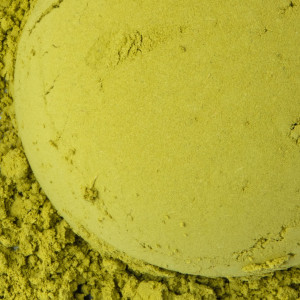
Matcha Aura Organic
Matcha Aura Organic is a finely milled green tea powder crafted for the perfect organic matcha latte.
€14.90Discover
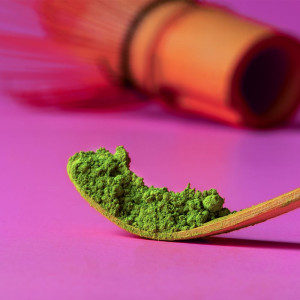
Shizuku Organic Ceremonial Japanese Matcha
Shizuku organic ceremonial Japanese matcha is a vibrant green powder, finely stone-ground, with silky umami notes and a delicat…
€16.90Discover
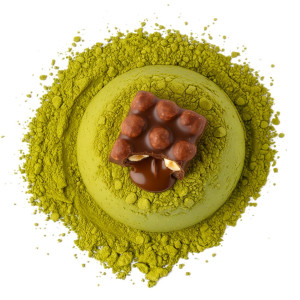
Chocolate Hazelnut Matcha Latte
Chocolate hazelnut matcha latte, also loved as a hazelnut milk matcha, brings together matcha green tea powder with warm, indul…
€18.90Discover