Matcha and caffeine: everything you need to know about its

In the world of Japanese teas, matcha holds a truly special place. This vivid green powder captivates as much for its colour as for its energising properties. But one question comes up time and again: how much caffeine does matcha actually contain? And how does this stimulant molecule act on our bodies? At Thés & Traditions, we're here to guide you through the fascinating world of this exceptional tea.
The key takeaways
- Matcha contains more caffeine than other green teas (30–35 mg per gram)
- The L-theanine in matcha softens the effects of caffeine
- The energy it provides is smoother and longer-lasting than coffee
- Ceremonial grade offers the best caffeine/L-theanine balance
- One to two cups a day is the optimal amount
Theine and caffeine: the same molecule, different effects
Let's start by clearing something up: theine and caffeine are exactly the same chemical molecule. This stimulant simply goes by different names depending on its source. In tea, it's called theine; in coffee, caffeine.
That said, the effects felt can differ considerably. This comes down to the unique molecular environment of each drink. Matcha, in particular, contains compounds that modulate how caffeine acts on the body.
The caffeine concentration in matcha varies according to its quality and origin. A first-grade ceremonial matcha typically contains between 30 and 35 milligrams of caffeine per gram of powder. For comparison, a cup of coffee contains around 95 milligrams, while a standard brewed green tea contains just 15 to 30 milligrams.
Why does matcha contain more caffeine?
Matcha's high caffeine content comes down to its unique cultivation process. Several weeks before harvest, the tea plants destined for matcha are covered with shade structures. This traditional Japanese technique, known as "tana", deprives the leaves of direct sunlight.
In response to this lack of light, the plant boosts its production of chlorophyll and caffeine to compensate. The leaves also develop higher concentrations of L-theanine, that most precious amino acid. This age-old method, passed down from generation to generation, also explains matcha's distinctive jade-green colour.
There's another key factor at play: unlike loose-leaf teas, which are steeped and then discarded, matcha is consumed in its entirety. We ingest all of the nutrients and stimulants contained in the leaf, with nothing lost.
L-theanine: the ally that changes everything
This is where matcha reveals its true magic. L-theanine, an amino acid naturally present in tea, acts as a modulator of caffeine's effects. It promotes a state of calm alertness, that distinctive feeling of serene focus.
In practice, L-theanine slows the absorption of caffeine into the bloodstream. Rather than a sharp energy spike followed by a crash, you get a gradual rise and sustained energy over several hours. It's this unique synergy that has made matcha the stimulant of choice for Zen monks during long meditation sessions.
Modern neuroscience confirms this ancient wisdom. L-theanine promotes the production of alpha waves in the brain, the same waves associated with a state of relaxed concentration. The result: heightened alertness without jitteriness or restlessness.
Matcha versus coffee: a stimulant showdown
Let's compare these two energising drinks. A cup of coffee delivers its caffeine quickly, often producing that familiar rush followed by an energy dip. Matcha, by contrast, offers a gentler and more sustained energy curve.
This difference is particularly interesting for those who are sensitive to stimulants. Many of our customers tell us they've rediscovered the pleasure of an energising drink without the downsides of coffee: palpitations, anxiety or disrupted sleep.
Matcha also has the advantage of its exceptional antioxidants. These catechins, and in particular EGCG, work alongside caffeine to deliver a broadly beneficial effect on the body. A cup of matcha offers far more than a simple energy boost.
What's the right amount to get the most from matcha?
Dosage deserves careful thought. For a traditional preparation, allow around 1 to 2 grams of matcha powder per cup. This provides between 30 and 70 milligrams of caffeine, roughly equivalent to a standard cup of green tea, but with all the benefits of L-theanine.
We generally recommend starting with one cup in the morning, then adjusting based on how you feel. Some people enjoy a second cup in the early afternoon, while others prefer to stick to a single morning serving.
Timing also matters. If you're sensitive to stimulants, avoid matcha later in the day. Even softened by L-theanine, its caffeine can make it harder to fall asleep for some people.
Choosing your matcha: why quality matters
Not all matchas are equal when it comes to caffeine and L-theanine content. A high-quality ceremonial matcha, grown in Japan's traditional regions such as Uji or Nishio, offers the best balance between these two compounds.
At Thés & Traditions, we source our matchas directly from producers who honour traditional methods. This approach ensures not only an exceptional flavour, but also an optimal concentration of beneficial active compounds.
Colour is an excellent guide: a quality matcha has a vivid jade-green hue, a sign of its richness in chlorophyll and L-theanine. Its texture, as fine as silk, reflects traditional stone-grinding.
Benefits beyond caffeine
While caffeine often takes centre stage, matcha has much more to offer. Its antioxidants, 137 times more concentrated than in a standard green tea, protect our cells from oxidative stress. This exceptional richness makes matcha a true elixir of wellbeing.
Chlorophyll, responsible for that striking colour, has well-recognised detoxifying properties. It helps the body eliminate accumulated toxins and heavy metals, a valuable asset in our modern environment.
Matcha also contains vitamins A, C and E, along with essential minerals. This outstanding nutritional profile makes it far more than just a drink: it's a genuine concentration of wellness.
Preparing matcha to make the most of its benefits
Preparation directly affects how caffeine and L-theanine are released. The water should never be boiling: a temperature of 70 to 80°C preserves matcha's delicate compounds. Water that is too hot will destroy some of the antioxidants and make the drink bitter.
The bamboo whisk, or chasen, plays a crucial role. Its "M"-shaped movements create that characteristic silky foam while gradually releasing the active compounds. This technique, refined over centuries of tradition, is more than aesthetic: it optimises the extraction of matcha's benefits.
Take the time to savour your matcha. This mindful pause, inherited from the Japanese tea ceremony, allows for better absorption of the caffeine and encourages that sought-after state of calm alertness.
Frequently asked questions about matcha and caffeine
A great question. Matcha does contain caffeine, but its effects are modulated by L-theanine. This unique combination provides a smoother, longer-lasting energy than coffee. That said, if you're sensitive to stimulants, we recommend avoiding it after 4 pm. Everyone's body responds differently, so pay attention to how you feel.
As with any caffeinated drink, moderation is key during pregnancy. Medical guidelines suggest limiting caffeine intake to 200 mg per day. A cup of matcha contains roughly 30–70 mg depending on the amount used. We strongly recommend consulting your doctor for personalised advice suited to your situation.
No, organic cultivation does not significantly affect caffeine content. That concentration depends more on the tea plant variety, growing conditions (particularly shading) and harvest timing. An organic ceremonial-grade matcha will contain just as much caffeine as a conventional matcha of the same grade.
L-theanine makes itself known through its effects: if your matcha gives you calm, focused energy without any jitteriness, that's a good sign. Visually, a matcha rich in L-theanine has an intense jade-green colour and a smooth, slightly sweet flavour with no pronounced bitterness. Japanese origin and ceremonial grade are also reliable indicators of high L-theanine content.
Like any caffeinated substance, matcha can create a mild physical dependency if consumed in excess. However, its moderate caffeine content and the modulating effect of L-theanine make this risk far lower than with coffee. One to two cups a day is a sensible amount that allows you to enjoy the benefits without any risk of dependence.
Worth knowing: instant matcha powders, often blended with sugar or flavourings, typically contain less actual matcha and therefore less caffeine and L-theanine. To get the full benefits of matcha, always choose a pure matcha, ideally ceremonial grade, with no additives.
Treat yourself to a true matcha moment with our ceremonial matcha.
Tempted to try it?
Our selection related to this article, loose leaf and organic.
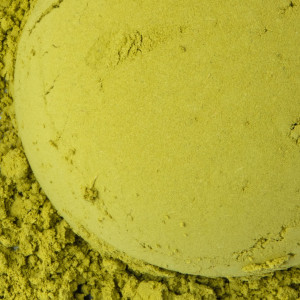
Matcha Aura Organic
Matcha Aura Organic is a finely milled green tea powder crafted for the perfect organic matcha latte.
€14.90Discover
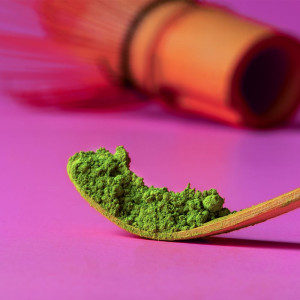
Shizuku Organic Ceremonial Japanese Matcha
Shizuku organic ceremonial Japanese matcha is a vibrant green powder, finely stone-ground, with silky umami notes and a delicat…
€16.90Discover
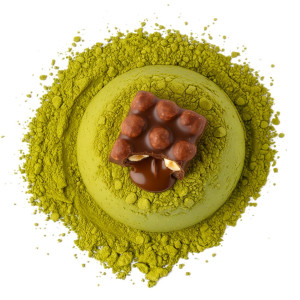
Chocolate Hazelnut Matcha Latte
Chocolate hazelnut matcha latte, also loved as a hazelnut milk matcha, brings together matcha green tea powder with warm, indul…
€18.90Discover