The Origin of Matcha: A Journey into Japanese Tradition

Behind the vibrant green powder that has taken our cafés and kitchens by storm lies a fascinating history spanning more than a thousand years. Matcha is far more than a modern trend: it is the living legacy of a tradition that has endured through the centuries, carrying within it the very soul of Japan. Let's explore together how this precious powder became so much more than a simple cup of tea.
Key Takeaways
- Matcha has its roots in China under the Song Dynasty, before flourishing in Japan
- Zen monks adopted it to accompany their meditation as early as the 12th century
- Sen no Rikyū codified the tea ceremony around 1580, elevating matcha into an art form in its own right
- Its unique production process, including the shading of tea plants, gives matcha its colour and remarkable qualities
- Each producing region (Japan, China, Korea) develops its own distinct flavour profile
Chinese Roots of a Thousand-Year Tradition
The story of matcha begins long before it arrived in Japan. It was in China, under the Song Dynasty (960–1279), that this revolutionary approach to processing tea was born. Chinese artisans developed an ingenious method: steaming tea leaves, drying them with care, then grinding them into a remarkably fine powder.
This innovation addressed very practical needs of the time. Powdered tea kept better than whole leaves and travelled far more reliably along trade routes. At this stage, however, consumption remained purely functional, without the spiritual dimension that would soon transform this simple drink.
Unlike traditional steeped teas, where the leaves are removed after brewing, this Chinese method allowed the whole leaf to be consumed. An approach that naturally concentrates the benefits of the plant and produces that distinctive texture we know today.
Arrival in Japan: When Tea Becomes Spirituality
The year 1191 marks a decisive turning point in the history of matcha. Zen Buddhist monk Myōan Eisai returned from his studies in China carrying far more than tea seeds: he brought with him a completely new vision of what drinking tea could mean.
Eisai did not simply introduce a new beverage to Japan. He laid the foundations of what would later be called "the way of tea" (chadō or sadō), transforming the preparation of a drink into a genuine spiritual practice. This practice celebrates beauty in imperfection and simplicity within complexity.
Zen monks quickly adopted this green powder to accompany their long meditation sessions. With good reason: matcha offers that unique combination of calming and energising effects, thanks to its richness in L-theanine and natural caffeine. A perfect balance for sustaining spiritual alertness without restlessness.
Gradually, this practice spread beyond the walls of monasteries. The imperial court elite, and later the samurai, embraced the tradition. During the Muromachi period (1336–1573), matcha became a true cultural phenomenon, creating spaces for exchange and social refinement.
Sen no Rikyū: The Man Who Transformed the Art of Tea
If one person were to embody the essence of matcha, it would undoubtedly be Sen no Rikyū (1522–1591). This legendary tea master completely transformed the ceremony during the Azuchi-Momoyama era, around 1580.
Rikyū codified not only the gestures and rituals, but above all the spirit that should animate every preparation. He championed four guiding principles: wa (harmony), kei (respect), sei (purity) and jaku (tranquillity). These values transformed the tasting of matcha into active meditation, a moment of deep connection with the present.
Under his influence, the tea ceremony became a total art form, weaving together architecture, gardening, calligraphy and philosophy. Matcha was no longer simply a drink: it became the heart of an aesthetic way of living, a pursuit of beauty through simplicity.
This period also marked a relative opening up of matcha. While preserving its sacred character, the tradition gradually reached a wider elite, laying the foundations for its future spread.
The Secrets of Production That Make All the Difference
Understanding the origin of matcha also means discovering the ancestral techniques that give it its exceptional qualities. Behind that brilliant green powder lies a process of fascinating complexity.
It begins with the shading of the tea plants, a practice developed specifically for matcha. Three weeks before harvest, the plants are covered with screens, blocking out 90% of sunlight. This technique prompts the plant to produce more chlorophyll and L-theanine, giving matcha its vibrant colour and its characteristic umami taste.
Harvesting is done exclusively by hand in spring, when the young shoots reach their peak quality. Only the most tender leaves are selected, in an approach that places quality firmly above quantity.
Next comes the crucial steaming stage, which immediately halts oxidation and preserves all the nutrients. The leaves are then dried and stripped of their stems and veins, leaving only the finest part: the tencha.
The final grinding on granite stone mills is the culmination of this process. This step, carried out with extraordinary patience, can take several hours to produce just a few dozen grams of powder. Yet it is precisely this patience that guarantees the incomparable fineness of authentic matcha.
Japanese, Chinese, Korean Matcha: Understanding the Differences
Today, matcha is produced in several countries across Asia, each developing its own characteristics. These differences are far from trivial: they reflect distinct terroirs, expertise and philosophies.
Japanese matcha remains the absolute benchmark, particularly from the regions of Uji, Nishio and Kagoshima. Its rigorous shading, traditional stone grinding and exacting leaf selection give it that jade-green colour and unmistakable umami taste. This is the matcha of ceremony, the one that carries the spiritual heritage of the tradition.
Chinese matcha, produced mainly in Zhejiang and Fujian provinces, takes a more industrial approach. Shading is less systematic and grinding often mechanical. The result is a powder with a more grassy, sometimes slightly bitter flavour, which works well in modern preparations such as smoothies or baked goods.
Korean matcha, grown on the volcanic island of Jeju, benefits from an exceptional terroir of rich soils and sea mist. Smoother than Japanese, less bitter than Chinese, it offers an interesting balance for lovers of nuanced flavours.
From Temple to Coffee Shop: The Modern Evolution of an Ancient Tradition
While the tea ceremony remains deeply rooted in Japanese culture, matcha has adapted to contemporary tastes without losing its soul. This ability to evolve goes a long way toward explaining its global success today.
From matcha lattes to ice creams, chocolates and macarons, this precious powder now inspires creators around the world. Each adaptation honours the essence of the product while opening it to new audiences, building a bridge between tradition and modernity.
This evolution is not a betrayal of matcha's original spirit, but rather its natural continuation. Beyond the forms it takes, it is always this pursuit of quality, this attention to detail and this respect for the product that drives true enthusiasts.
At Thés & Traditions, we carry this heritage forward by selecting our matchas according to the most exacting standards, while making them accessible to today's lovers of fine tea. Because understanding the origin of matcha means appreciating every sip of this extraordinary drink all the more.
Frequently Asked Questions About the Origin of Matcha
A great question that deserves a thoughtful answer. Matcha does indeed have its technical roots in China under the Song Dynasty, where the method of grinding tea into powder was first developed. But it was in Japan that this technique evolved into a true art of living. Zen monks gave matcha its spiritual dimension, and masters such as Sen no Rikyū codified the ceremony that defines its reputation today. You could say that matcha was born in China, but found its soul in Japan.
Zen monks quickly recognised the unique value of matcha for their meditative practices. The drink offers a perfect balance of stimulation and calm, thanks to its combination of caffeine and L-theanine. Unlike coffee, which can create restlessness, matcha provides a clear, focused alertness, ideal for long meditation sessions. Beyond that, the preparation ritual itself becomes a form of active meditation, cultivating mindfulness and presence in the moment.
Traditional matcha was reserved exclusively for the tea ceremony and consumed pure, whisked with hot water. Its production was entirely artisanal, from stone-milling to the hand-selection of leaves. Today, matcha has diversified: ceremonial grades perpetuate the tradition, while culinary grades are suited to modern preparations. Production techniques have evolved to meet worldwide demand, while preserving the essential expertise that defines superior-quality matcha.
A genuine Japanese matcha is recognisable first by its colour: a brilliant jade green, never dull or yellowish. Its aroma should be fresh and vegetal, without excessive bitterness. On the palate, it reveals that characteristic umami flavour, smooth and deep. Check the geographic origin too: the regions of Uji, Nishio and Kagoshima are the most highly regarded. Finally, authentic matcha commands a certain price. Be wary of powders that are suspiciously cheap, as these are often blends or lower-quality products.
Absolutely. The tea ceremony (chanoyu or sadō) is very much alive in Japan and practised around the world. Many schools continue the teaching of Sen no Rikyū and his successors. In France, several Japanese cultural centres and certified tea masters offer introductory sessions and authentic ceremonies. It is a unique experience for truly understanding the spirit of matcha and its spiritual dimension. Even as a complete beginner, this practice will open up an entirely new perspective on this extraordinary drink.
Build your own ritual : browse all our organic matchas, to whisk or to cook with.
Tempted to try it?
Our selection related to this article, loose leaf and organic.
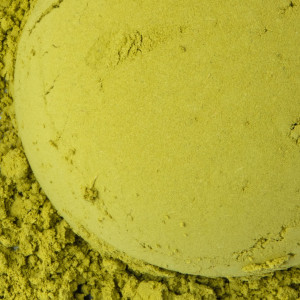
Matcha Aura Organic
Matcha Aura Organic is a finely milled green tea powder crafted for the perfect organic matcha latte.
€14.90Discover
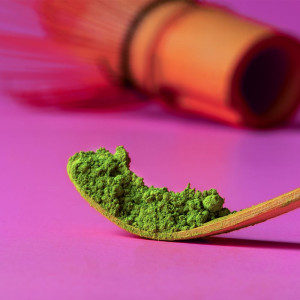
Shizuku Organic Ceremonial Japanese Matcha
Shizuku organic ceremonial Japanese matcha is a vibrant green powder, finely stone-ground, with silky umami notes and a delicat…
€16.90Discover
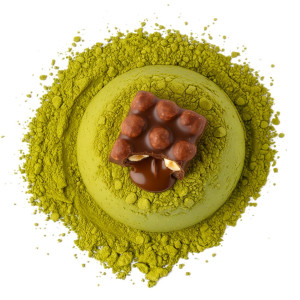
Chocolate Hazelnut Matcha Latte
Chocolate hazelnut matcha latte, also loved as a hazelnut milk matcha, brings together matcha green tea powder with warm, indul…
€18.90Discover