Matcha powder: how is this remarkable tea made?

Behind that impossibly fine green powder that tints our lattes and pastries lies a centuries-old Japanese craft. Matcha is far more than powdered tea: it is the result of a production process unlike any other in the world. From shade-grown cultivation to stone-mill grinding, each step reveals why this singular green tea powder captivates tea lovers and pastry chefs alike.
Key takeaways
- Matcha comes from tea leaves grown in the shade for 4 weeks before harvest
- Only the young shoots of Camellia sinensis are selected, in spring
- The production process transforms the leaves into "Tencha" before the final grinding
- Traditional stone-mill grinding yields just 30g per hour
- This ancestral method explains the exceptional quality and the price of authentic Japanese matcha
Shade growing: the secret behind the intense green colour
Everything begins in Japanese tea gardens, mainly in the Uji region near Kyoto. Unlike other green teas, the plants destined for matcha production undergo a very specific treatment. Four weeks before the spring harvest, growers cover the entire plantation with dark shade cloth.
This technique, known as "tana", blocks up to 90% of sunlight. Deprived of normal photosynthesis, the leaves respond by producing chlorophyll in abundance, straining to capture every last ray of light. It is this surge in chlorophyll that gives matcha its distinctive jade-green colour.
But that is only part of the story. Growing in the shade also changes the chemical composition of the leaves. They develop higher concentrations of L-theanine, the amino acid responsible for the umami flavour so prized in quality matcha. At the same time, tannin levels drop, softening the tea's natural bitterness.
The harvest: precision timing
Matcha is harvested just once a year, in spring, typically between April and May. Pickers select only the youngest, most tender shoots of Camellia sinensis: those first leaves, brimming with nutrients and aroma.
This hand harvest demands real expertise. Every leaf is assessed: too mature and it will add bitterness; too young and it will lack body. Only the perfect leaves, deep green and silky to the touch, are chosen for premium matcha.
As soon as picking is complete, the leaves are rushed to the processing facility. Time is of the essence: the longer the leaves wait, the greater the risk of oxidation, and with it, the loss of their prized sensory qualities.
Steaming: locking in freshness by halting oxidation
The first crucial step in processing is steaming. Fresh leaves are exposed to high-temperature steam for just a few minutes. This technique, rooted in Japanese tradition, immediately stops enzymatic oxidation in its tracks.
Unlike black tea, which ferments, or oolong, which is partially oxidised, matcha retains all of its fresh, vegetal character. Steaming also preserves the vivid green colour that defines Japanese green teas.
After steaming, the leaves are quickly dried at 180°C. This rapid drying prevents any degradation of active compounds while preparing the leaves for the steps ahead. At this stage, the result is what is called "Aracha", literally "rough tea".
Sorting and transformation into Tencha
The Aracha then undergoes meticulous sorting. All stems, veins and fine particles are carefully removed, leaving only the pure leaf flesh. This precision work, carried out by hand or with highly sophisticated machinery, guarantees the fineness of the finished product.
The sorted leaves are then uniformly cut to produce "Tencha". This intermediate step is critical: the pieces must be perfectly consistent in size to ensure even grinding in the final stage.
The Tencha is then graded according to several criteria: colour, aroma and the origin of the leaves. Tea masters create blends, combining different batches to achieve the desired flavour profile. Each producer guards their blending recipes closely, passing these closely held secrets from one generation to the next.
Stone-mill grinding: the ultimate art
This is the most spectacular and most delicate step: grinding Tencha into matcha powder. The finest producers still use granite stone mills today, an ancestral technique unchanged for centuries.
These millstones turn very slowly, at barely 60 revolutions per minute, to prevent any heat build-up that might damage the delicate aromas. The process is fascinatingly unhurried: a single stone mill produces just 30 grams of matcha powder per hour. This deliberate pace is one of the main reasons authentic Japanese matcha remains an exceptional product.
The fineness achieved is extraordinary: matcha particles measure less than 10 microns, roughly ten times finer than standard flour. This extreme fineness allows matcha to dissolve perfectly in water, creating its characteristic velvety texture.
Some modern producers use mechanical grinders to reduce costs, but those who know can always tell the difference. Stone-ground matcha retains an aromatic complexity and a smoothness on the palate that simply cannot be matched.
Understanding matcha grades
Not all matchas are created equal. Quality depends on many factors: the age of the leaves, the growing region, the grinding method, and of course the expertise of the producer.
Ceremonial grade represents the pinnacle of quality. Made exclusively from the first leaves of the harvest and stone-ground, it offers remarkable smoothness with pronounced umami notes. Its intense jade-green colour reflects its richness in chlorophyll.
Premium grade, slightly less refined, remains excellent for pure tasting. It combines first and second harvest leaves, striking a fine balance between smoothness and character.
Culinary grade, more affordable, is perfectly suited to baking and milk-based drinks. More bitter than the higher grades, it brings that sought-after vegetal note to sweet creations without stretching the budget.
Why this process makes matcha so special
This distinctive production method is what fundamentally sets matcha apart from other green teas. Unlike a classic infusion where the leaves are discarded, with matcha you consume the whole leaf in powdered form.
This means everything is concentrated: antioxidants, vitamins, minerals, all preserved and fully absorbed by the body. The L-theanine developed through shade growing delivers that sought-after sense of calm, focused energy.
The unique texture of matcha, that smooth, velvety foam created with a whisk, is a direct result of this extreme fineness. No other tea can replicate this particular sensory experience.
And this ancestral production method connects every cup to centuries of Japanese tradition. Drinking matcha means taking part in a timeless ritual, honouring a craft passed from master to apprentice since the twelfth century.
Frequently asked questions about matcha production
The price of authentic matcha reflects the complexity of how it is made. Shade growing reduces yields, hand harvesting is highly selective, and above all, stone-mill grinding produces just 30g per hour: each step requires a considerable investment of time and expertise. A ceremonial-grade matcha represents months of work for just a few grams of powder.
Technically, yes, but the result is noticeably different. A handful of producers in China and Korea are attempting it, but Japan's terroir, its specific climate and, above all, its centuries of accumulated craft give Japanese matcha a complexity all its own. Japan's mineral-rich volcanic soils also influence the final flavour in ways that are subtle but unmistakable.
A fine matcha has an intense jade-green colour, almost fluorescent in appearance. This hue comes from the chlorophyll that builds up during shade growing. A dull, yellowish or overly dark matcha points to either lower-quality leaves or a flawed production process. The powder should also be extremely fine, with no lumps.
Tencha is the intermediate stage before the finished matcha. It refers to the leaves after steaming and drying, with their stems removed, but not yet ground. Some enthusiasts brew Tencha as an infusion and appreciate its delicate aromas. But to obtain the fine powder that defines matcha, grinding is essential.
From the start of shade growing to the finished powder, the process spans several months. Four weeks of shading, then harvest, immediate transformation into Tencha, and finally grinding, which can take weeks depending on quantity. For 100g of premium stone-ground matcha, allow around 3 to 4 hours of grinding alone, not counting all the preparatory stages.
Why not give it a try ? Explore our ceremonial matcha and let yourself be tempted.
Tempted to try it?
Our selection related to this article, loose leaf and organic.
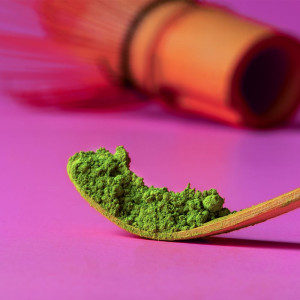
Shizuku Organic Ceremonial Japanese Matcha
Shizuku organic ceremonial Japanese matcha is a vibrant green powder, finely stone-ground, with silky umami notes and a delicat…
€16.90Discover
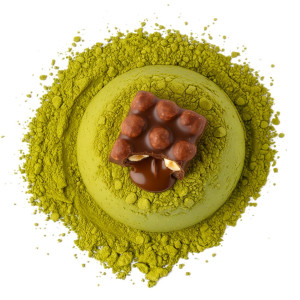
Chocolate Hazelnut Matcha Latte
Chocolate hazelnut matcha latte, also loved as a hazelnut milk matcha, brings together matcha green tea powder with warm, indul…
€18.90Discover
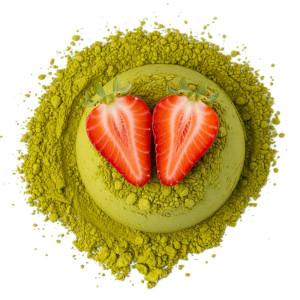
Strawberry Matcha Latte
Strawberry matcha latte, also loved as a strawberry matcha or matcha with strawberry, brings together the gentle vegetal depth …
€18.90Discover