Matcha Color: What It Says About Quality & Freshness

When you first look at that strikingly green powder sitting in its tin, it's natural to wonder what lies behind such a distinctive hue. The colour of matcha is far more than an aesthetic detail: it tells the full story of this exceptional tea, from the field to the finished product. At Thés & Traditions, we believe that understanding that colour is already a great step towards appreciating this Japanese treasure.
Key takeaways
- High-quality matcha displays a vivid jade green, a sign of high chlorophyll content
- The colour reflects growing conditions: shading, leaf youth and freshness
- Shades of green help distinguish the different grades of matcha
- A dull or yellowish colour often points to a lower-quality or poorly stored product
- Matcha's colour shifts depending on how it is prepared and used in cooking
Where does that intense green come from?
Matcha's distinctive hue begins with a growing process found nowhere else in the world. Three to four weeks before harvest, the tea bushes destined for matcha are covered with shade cloths or bamboo screens. This shading technique, known in Japan as "tana", blocks out up to 90% of sunlight from reaching the leaves.
Deprived of light, the plant responds in a fascinating way: it dramatically increases its chlorophyll production to capture every available ray. It is this exceptional concentration of chlorophyll that gives matcha its characteristic green colour. The longer and more carefully the shading is applied, the deeper and more vibrant that colour becomes.
At the same time, this technique alters the chemical composition of the leaves. Tannins, which are responsible for bitterness, decrease, while amino acids such as L-theanine develop. The result is a matcha that is both smoother and richer in umami flavour, with that coveted jade colour.
How to recognise quality matcha by its colour
The colour of matcha is a genuine quality indicator, almost as reliable as a fingerprint. A first-grade ceremonial matcha displays a deep jade green, almost fluorescent under certain lighting. That intensity speaks to careful cultivation and respectful processing.
Be wary, on the other hand, of matchas with dull tones or a yellowish cast. These shades often reveal a product that has lost its freshness, been poorly stored, or made from lower-grade leaves. A matcha veering towards brown has typically been exposed to light or moisture, which compromises both its flavour and its nutritional properties.
Here are the shades to look for:
- Vivid jade green: high-quality ceremonial matcha
- Bright green, slightly less intense: premium matcha, excellent for drinking
- Deeper green: culinary matcha, ideal for cooking and baking
- Dull or yellowish green: questionable quality, best avoided
The texture of the powder goes hand in hand with the colour: quality matcha has an extraordinarily fine, almost silky powder that feels like talc to the touch. That fineness contributes to the intensity of the colour by allowing light to reflect more evenly.
The different grades and their characteristic colours
Each grade of matcha has its own colour signature, a reflection of its intended use and quality. Ceremonial matcha, made for pure drinking, displays that unmistakable jade green. It is the holy grail for enthusiasts, the grade that reveals the full subtlety of this exceptional tea.
Premium matcha shows a slightly less intense colour, but no less appealing. Perfect for lattes and preparations where you want to preserve the authentic taste of matcha, it offers an excellent balance between quality and versatility.
Culinary matcha, with its deeper and less vibrant colour, should not be underestimated: it remains a quality product, specifically designed to hold its own in blends and during cooking. Its more robust colour allows it to maintain a visual presence even when mixed with other ingredients.
This colour gradient is no accident: it corresponds to different harvest moments and specific processing methods. The earliest leaves, the most tender and richest in chlorophyll, yield the brightest and most delicate matchas.
How colour changes during preparation
The magic of matcha does not stop at the powder: it truly reveals itself during preparation. When matcha is whisked with hot (but not boiling!) water, the colour transforms in a captivating way. A good matcha develops a creamy foam in a soft, tender green, the sign of a perfect emulsion.
This colour shift depends largely on water temperature. Water that is too hot, above 80°C, can dull the colour and push the matcha towards murkier tones. This is why Japanese tradition places such importance on temperature control: it preserves not only the flavour but also that beautiful, characteristic colour.
In culinary preparations, matcha's colour adds a visual touch that is instantly recognisable. Whether in a cake, an ice cream or a chocolate, that unique green hue immediately signals the presence of matcha. That said, be mindful of high-heat cooking, which can cause that lovely colour to fade.
In milk-based drinks, the interaction between matcha and milk creates particularly appealing tones. The green blends harmoniously with the white of the milk, producing those pastel shades so beloved in specialty cafés.
Storing matcha to preserve its colour
Preserving the colour of matcha means preserving its quality. This precious powder has three main enemies: light, air and moisture. Exposed to any of these, even the most beautiful jade green matcha can quickly lose its brilliance and shift towards less appealing tones.
Direct light is particularly damaging: it breaks down the chlorophyll responsible for that vibrant green. This is why we always recommend storing matcha in an opaque container, away from any light source. A cool, dry cupboard is the ideal environment.
Oxidation is another major challenge. Once the tin is opened, matcha comes into contact with oxygen, which can gradually alter its colour. To limit this, always seal the container carefully after each use and finish your matcha within a few months of opening.
Some enthusiasts even store their matcha in the refrigerator, in an airtight container. This can indeed extend its freshness, but be mindful of thermal shock when you take it out: let the matcha return to room temperature before opening to avoid condensation.
When colour signals a problem
Sometimes, the colour of matcha alerts us to potential issues. A matcha with uneven patches of colour may indicate a blend of different qualities, or poor storage. This visual inconsistency typically carries through to the flavour as well.
Brownish spots or paler patches are often a sign of moisture exposure. In such cases, the powder may have begun to clump or even to develop mould that is invisible to the naked eye. It is best not to consume a product showing these signs.
A uniformly dull colour, tending towards khaki or beige, generally points to matcha that is too old or has been poorly stored. Even if the product is still safe to consume, its flavour and nutritional qualities will be considerably diminished. The tasting experience will fall well short of what a truly fine matcha can offer.
Also be wary of matchas that appear an overly artificial or "neon" green: they may contain added colourants used to mask mediocre quality. A genuinely fine matcha has a natural colour, intense but never garish.
FAQ: everything you need to know about matcha colour
Several factors can explain this fading. Exposure to light, air or moisture gradually breaks down the chlorophyll responsible for the green colour. Inadequate storage or an ageing product are the most common culprits. To preserve the colour, keep your matcha in an airtight, opaque container in a cool, dry place.
Not at all. Colour depends on the grade of matcha. Culinary matcha naturally has a deeper colour than ceremonial matcha, without that reflecting poorly on its quality. What matters is the evenness of the colour and the absence of dull or yellowish tones. Each grade has its own characteristic colour suited to its intended use.
Colour is an excellent indicator, but it is not the whole picture. A quality matcha should also have a fine texture, a fresh and vegetal aroma, and of course a well-balanced flavour. Colour gives you a valuable first impression, but a complete assessment calls for all your senses. It is the combination of these qualities that reveals the true character of a matcha.
That is entirely normal. During preparation, the matcha combines with water and develops a foam that changes its visual appearance. Water temperature also plays a role: water that is too hot can dull the colour. Ideally, use water at 70-80°C to preserve that beautiful green and achieve a creamy, softly coloured foam.
Organic certification does not directly influence the colour of matcha. What matters is the quality of the leaves, the growing conditions (particularly the shading), and the freshness of the product. A quality organic matcha will display the same beautiful green as a conventional matcha of the same grade. The real difference lies in the environmentally respectful farming methods used.
To prepare your bowl, browse all our organic matchas, from ceremonial to latte.
Tempted to try it?
Our selection related to this article, loose leaf and organic.
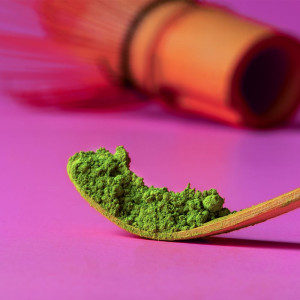
Shizuku Organic Ceremonial Japanese Matcha
Shizuku organic ceremonial Japanese matcha is a vibrant green powder, finely stone-ground, with silky umami notes and a delicat…
€16.90Discover
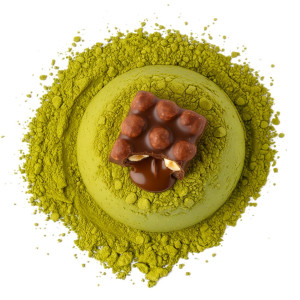
Chocolate Hazelnut Matcha Latte
Chocolate hazelnut matcha latte, also loved as a hazelnut milk matcha, brings together matcha green tea powder with warm, indul…
€18.90Discover
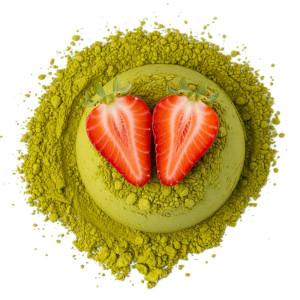
Strawberry Matcha Latte
Strawberry matcha latte, also loved as a strawberry matcha or matcha with strawberry, brings together the gentle vegetal depth …
€18.90Discover