Matcha kit: everything you need to get started

Curious about the art of Japanese matcha? This finely ground green tea, a true gem of Japanese tradition, deserves far more than a rushed preparation. To fully enjoy its delicate flavors and everything it has to offer, you need the right tools. That's exactly what a complete matcha kit gives you: everything essential, gathered in one set, to bring a little Japanese tea room into your own home.
Key takeaways
- A matcha kit brings together all the traditional tools needed for an authentic preparation
- The bamboo whisk (chasen) is the essential element for achieving that characteristic frothy texture
- The matcha bowl (chawan) provides the ideal space for whisking and drinking
- The bamboo scoop (chashaku) allows precise measuring of the powder
- Investing in a complete set ensures an experience that honors Japanese tradition
Why choose a matcha set rather than individual accessories?
When you're new to matcha, it can be tempting to buy tools one by one. But honestly, that's making things harder than they need to be. A well-designed matcha set helps you avoid beginner mistakes and ensures all your tools work harmoniously together.
First, there's the question of balance between elements. A traditional bamboo whisk, for instance, needs to be the right size for the bowl it's paired with. Too small, and you won't be able to build that smooth, velvety foam. Too large, and you risk splashing everywhere. In a quality matcha kit, these proportions are carefully considered to give you the best possible experience.
Then there's the budget. Buying separately often ends up costing more, not to mention the time spent tracking down each piece. With a matcha set, you'll generally get better value, and crucially, you won't forget anything.
And there's something genuinely lovely about unwrapping a complete set. It feels like receiving a gift. In fact, these kits make wonderful presents for introducing loved ones to this centuries-old tradition.
The essential tools in your matcha kit
The bamboo whisk: the soul of the preparation
The chasen, a bamboo whisk with dozens of fine tines, is truly the heart of any good matcha kit. Without it, achieving that characteristic frothy texture is simply impossible. Japanese artisans craft each one by hand, carefully carving every tine from a single piece of bamboo.
You'll often find whisks with 80 or 120 tines. The more tines, the finer and more even the foam. That said, a quality chasen does require a little care. After each use, rinse it gently under warm water and leave it to dry naturally. Never in the dishwasher.
The matcha bowl: far more than just a vessel
The chawan, the traditional matcha bowl, is no afterthought. Its wide, open shape allows the whisk to move freely, while its slightly textured walls help build the foam. Some prefer ceramic for its heat-retaining properties; others choose bamboo, lighter and equally authentic.
Size matters too: too small, and you won't have room to whisk properly. Too large, and you lose control. A good matcha bowl is generally between 11 and 13 cm in diameter.
The bamboo scoop: for a precise measure every time
The chashaku, a small curved bamboo scoop, lets you measure your matcha powder with precision. One level scoop is roughly 1 gram, the ideal amount for a single serving. Its shape isn't just aesthetic: the gentle curve makes it easy to lift fine powder without compacting it.
How to use your matcha kit
Preparing matcha follows a precise, almost meditative ritual. Begin by warming your bowl with a little hot water, then empty and dry it. This step heats the ceramic and prevents your matcha from cooling too quickly.
Next, sift your matcha powder to remove any clumps. Some kits include a small sifter; if yours doesn't, a fine-mesh strainer works well. Scoop one to two measures of chashaku into your bowl.
Add around 60 ml of water heated to 70-80°C (never boiling). Start by stirring gently to form a paste, then whisk briskly in a "M" or "W" motion with your chasen. In 15 to 20 seconds, you should have a beautiful green foam.
Types of matcha kits
Beginner kit: the essentials to get you started
For your first steps, look for a simple but complete matcha kit. It typically includes a ceramic bowl, an 80-tine whisk, a bamboo scoop, and sometimes a small sifter. These sets, often priced between 30 and 50 euros, offer excellent value for discovering this tradition.
Ceremony kit: for the dedicated enthusiast
If you'd like to come as close as possible to an authentic Japanese tea ceremony, look for a ceremony matcha kit. These sets include handcrafted pieces: a raku ceramic bowl, a hand-carved 120-tine whisk, a whisk holder, and sometimes even a small cleaning brush.
Modern kit: tradition meets everyday practicality
Some makers offer updated versions, with contemporary bowl designs or innovative materials. These matcha kits preserve the essence of tradition while adapting to modern lifestyles.
Caring for your matcha kit
Your bamboo tools need a little attention. The chasen whisk, in particular, is delicate. After each use, rinse it under warm water, gently spreading the tines. Leave it to dry upright, ideally on its stand if your kit includes one.
For the bowl, a simple rinse with warm water is usually enough. Avoid harsh detergents, which can affect the flavor of your matcha. If you use an unglazed ceramic bowl, it will develop a natural patina over time, only enhancing your preparations.
The chashaku scoop just needs a quick rinse and air dry. With these simple habits, your matcha kit will serve you well for years to come.
Where to find the right matcha kit?
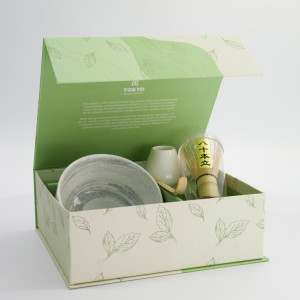 Matcha Hayase Gift Set€48.90
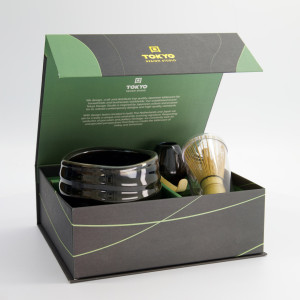 Matcha Kuro Gift Set€48.90
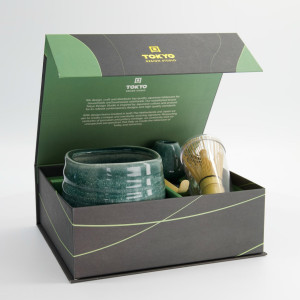 Nagomi Matcha Gift Set€48.90
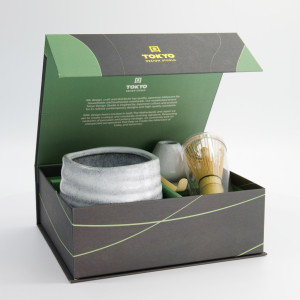 Matcha Yuki Gift Set€48.90
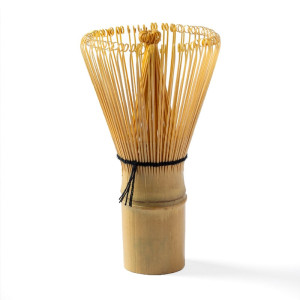 Matcha Tea Whisk€14.90
Specialist tea shops often carry a thoughtful selection of matcha kits. The advantage: you can see and feel the tools before you buy. Staff are usually passionate about their craft and can guide you based on your experience and preferences.
Online, the choice is wider, but quality varies. Stick to specialist retailers or trusted brands. Read descriptions carefully and take time to look at customer reviews. A very cheap matcha kit often means fragile tools that will let you down from the start.
Ready to begin your matcha journey?
Choosing a matcha kit is about more than buying tools: it's giving yourself a moment of calm each day, a pause in the rush. Whether you go for a simple set or a ceremony kit, the most important thing is to start. As a Japanese proverb says: "A journey of a thousand miles begins with a single step." Your first step into the world of matcha begins with choosing the right kit. So, which one speaks to you?
Frequently asked questions about matcha kits
More tines means finer, smoother foam. An 80-tine chasen is perfectly suited to beginners and delivers excellent results. The 120-tine version, more delicate to handle, is best suited to experienced enthusiasts seeking absolute perfection. For getting started, 80 tines is more than enough.
Technically yes, but you'll lose both efficiency and enjoyment. The traditional matcha bowl (chawan) has a purposeful shape: wide enough to allow free whisk movement, with walls that help build the foam. A standard bowl will give you decent results, but once you try a proper chawan, you'll really feel the difference.
A few things are telling: the bamboo whisk should be flexible yet resilient, with well-cut, even tines. The bowl should have good thickness and a careful finish. Avoid very cheap kits (under 20 euros), which tend to include fragile tools that will affect your experience. A solid entry-level kit generally costs between 30 and 60 euros.
Not necessarily. Many kits are sold without matcha, leaving you free to choose your powder based on your taste and budget. That's often preferable, as it lets you select a quality matcha that suits your preferences. Expect to pay between 15 and 30 euros for 30g of good ceremonial matcha.
With regular use, it's perfectly normal for a few tines to break or wear down. It's a sign you're using your chasen well. A quality whisk can last several years with proper care. When too many tines are damaged (more than 10 to 15%), it's time to replace it. Think of it as an ongoing investment in your daily ritual.
Ready to pick up the whisk? Explore our ceremonial matcha and find the one that's right for you.
Tempted to try it?
Our selection related to this article, loose leaf and organic.
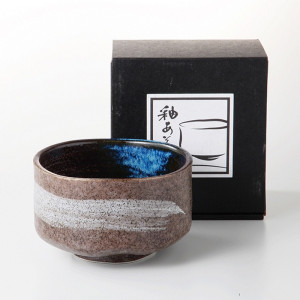
Matcha Bowl Brown Hagoromo
Elevate your tea ritual with the Hagoromo Brown Matcha Bowl.
€24.90Discover
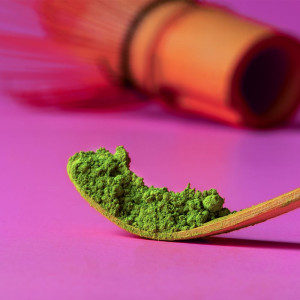
Shizuku Organic Ceremonial Japanese Matcha
Shizuku organic ceremonial Japanese matcha is a vibrant green powder, finely stone-ground, with silky umami notes and a delicat…
€16.90Discover