Yerba Mate: Complete Guide (Benefits, Preparation & More)
We often find ourselves torn between tea and coffee after a meal, but mate is steadily winning over more and more fans. So what exactly is this plant from South America? Organic mate is rich in caffeine and polyphenols and is brewed as an infusion, much like tea. It also offers numerous health benefits recognised by doctors and scientists alike.
What is mate?
What exactly is mate? It is a drink traditionally consumed across South America, primarily in Uruguay, Paraguay, Argentina and southern Brazil. Mate in Brazil was first used by the Guaraní indigenous people for its stimulating properties. Mate and guarana are indeed inseparable when tracing the history of this remarkable drink. Mate did not reach Europe until the 16th century, where Yerba Mate was immediately embraced in Spain, and the Jesuits soon began to cultivate it in earnest. Mate comes from the leaves of a tree. What does mate contain? This detox drink has the advantage of being calorie-free, while being rich in B vitamins, potassium, iron and zinc. Mate is enjoyed like tea: by steeping the leaves in hot water.
Guide contents
Choose your starting point in the guide

Mate and its health benefits
Mate is above all a stimulating drink. Its caffeine contributes to improved alertness and concentration (from 75 mg per serving, according to EFSA), making it a valued ally during the day. As with coffee or tea, it is best not to consume it in excess, or too late, to avoid disturbing sleep. The other effects sometimes attributed to mate stem mainly from tradition and ongoing research, without constituting proven benefits to date.
Mate is traditionally enjoyed as an intellectual and physical stimulant. Many virtues are attributed to it, notably for weight loss, but these effects are not proven: EFSA has not validated any weight-loss claim for caffeine. Mate nonetheless remains a sugar-free, calorie-free drink, a natural source of antioxidants (polyphenols), pleasant to include in a measured daily intake. In summer, it is also enjoyed iced.
What is green mate, and how do you prepare it?
Looking to enjoy mate for its beneficial effects and therapeutic properties? The preparation is straightforward, much like brewing tea. Simply steep mate leaves in hot water for a few minutes, which also draws out some of the caffeine. The taste is similar to an herbal infusion. It is advisable not to drink more than one or two cups per day. To find organic mate, look in health food shops, herbalists or specialist tea retailers.
What is mate: cultivation
Having covered what mate is, its benefits and how to enjoy it, let us take a moment to look at how it is grown. Mate thrives at ambient temperatures, but the soil must be sufficiently moist for optimal growth. The main mate-producing countries are Argentina, Brazil and Paraguay. In local culture, mate can be enjoyed at any time of day and is above all a symbol of sharing.
History and origins of mate
Mate (ilex paraguariensis) is native to South America. This plant grows wild in the humid subtropical regions of southern Brazil, Paraguay and north-eastern Argentina. Its first consumers were the Guaraní indigenous people, who had been using it for centuries for its stimulating and medicinal properties.
The history of mate in Europe begins in the 16th century with the arrival of Spanish conquistadors, followed by the Jesuits who structured its cultivation. Today, yerba mate has become a national symbol in Argentina, Uruguay and Paraguay, where its consumption surpasses that of coffee. Across Latin America, mate is a powerful social tradition: sharing the same gourd is a gesture of friendship and hospitality.
Green mate or roasted mate: what is the difference?
There are two main varieties of yerba mate:
- Green mate: leaves dried without roasting, preserving maximum antioxidants, with a slightly bitter, vegetal flavour. This is the most traditional form.
- Roasted mate: leaves oven-dried to soften the flavour and develop caramelised notes. More approachable for beginners, with slightly less caffeine.
Both versions share the same essential active compounds. The composition of mate remains similar across varieties: caffeine (mateine), theobromine, polyphenols, B and C vitamins, and minerals (iron, zinc, magnesium, potassium). The difference lies mainly in the aromatic profile and a slight variation in caffeine content depending on the production method.
Bombilla and gourd: traditional preparation
The traditional preparation of mate calls for two iconic accessories:
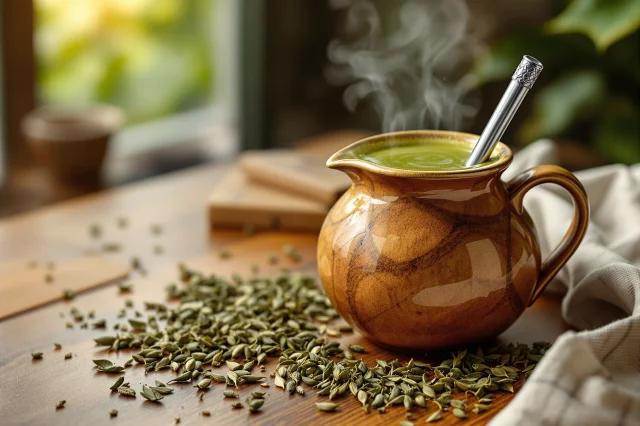
- The gourd (a hollowed-out calabash gourd): the traditional vessel that retains heat beautifully.
- The bombilla (a metal filtering straw with a filter at one end): allows you to drink the infusion without swallowing the leaves.
Steps to enjoy mate the South American way:
- Fill the gourd two-thirds full with yerba mate.
- Tilt the gourd and press the leaves to one side.
- Pour a little cold water over the pressed leaves (to hydrate them without "burning" them).
- Insert the bombilla into the moistened side.
- Pour hot water (70-80°C, never boiling!) over the leaves.
- Drink through the straw, then refill with hot water. The same load of leaves can yield 10 to 15 successive servings.
For a simpler everyday approach: brew yerba mate like a classic tea, using 1 teaspoon per 200 ml of hot water, steep for 3-5 minutes, strain and enjoy. A perfect morning energy boost without coffee.
Mate, green tea or coffee: which should you choose?
Mate sits between tea and coffee in terms of stimulation. A quick comparison:
- Coffee: high caffeine (80-120 mg/cup), fast and intense effect, can cause nervousness.
- Green tea: gentle caffeine (30-50 mg), soothing L-theanine, soft and sustained effect.
- Mate: moderate caffeine (40-80 mg), stimulating effect without a spike or sharp crash, powerful antioxidants.
Mate is an excellent alternative for those who find coffee too intense and tea not quite enough. Its moderate caffeine content combined with theobromine delivers a clean, lasting energy lift. It is also a 100% natural energy drink, with no added sugar, unlike commercial energy drinks.
Mate in practice: tips and pairings
A few tips to make the most of what yerba mate has to offer:
- When to drink it: ideal in the morning and before 4 pm to enjoy the stimulating effect without disrupting sleep.
- How to enjoy it: plain, or flavoured (lemon mate, mint mate, citrus mate are very popular in Argentina).
- Quantity: 1 to 3 cups per day depending on your caffeine tolerance. Mate allows for a more evenly spread caffeine intake throughout the day.
- Precautions: avoid during pregnancy (caffeine), with kidney insufficiency or uncontrolled hypertension. Seek medical advice if taking regular medication.
Mate can also be enjoyed as an iced infusion in summer. Brew as usual, chill in the fridge, add ice and a slice of lemon. Refreshing and delicious.
Our mate selection at Thés & Traditions
Explore our full range of organic mate in whole-leaf form, sourced from South American cooperatives practising certified organic farming. We also offer a mate discovery kit including a gourd and bombilla so you can enjoy the full traditional experience. For further reading, take a look at our related guides: how to prepare mate, when to drink mate and choosing your bombilla and gourd.
Frequently asked questions about mate
Does mate contain more caffeine than coffee?
No. Mate contains caffeine in moderate amounts (40-80 mg/cup), compared to 80-120 mg for coffee. However, its molecular structure and the presence of other alkaloids (theobromine) produce a gentler, more sustained effect.
Can you drink mate every day?
Yes, 1 to 3 cups per day is a reasonable intake. Taking occasional breaks (a weekend without mate, for example) is still recommended to avoid building a caffeine tolerance.
Does mate make you lose weight?
No weight-loss claim is recognised for mate or caffeine by the health authorities (EFSA). Mate is not a fat-burner: it is a sugar-free drink that can accompany a balanced diet, with no proven slimming effect.
Mate or yerba mate: is there a difference?
None at all. "Yerba mate" (Spanish) literally means "mate herb". Both terms refer to the same plant, ilex paraguariensis, and the drink made from it.
Is the taste of mate accessible for beginners?
Green mate has a vegetal, slightly bitter flavour that can be surprising at first. To ease in gently, opt for a roasted mate (caramelised notes) or a flavoured one (lemon, mint). Most people quickly grow fond of the traditional profile.
Mate accessories: gourd, bombilla, filtering straw
The traditional preparation of mate calls for a few iconic mate accessories. The gourd (a hollowed-out calabash) is the sacred vessel of the ritual, passed down from generation to generation. The bombilla (a metal straw with an integrated filter) allows you to drink the yerba mate without swallowing the leaves. For Western enthusiasts, a classic metal infuser or a teapot with a built-in filter works perfectly as a modern alternative.
Mate in South American culture
The Guaraní indigenous culture shaped the mate ritual. Mate, native to South America, has become an iconic social mate drink: sharing the same gourd is a sign of friendship and hospitality. Many enthusiasts and travellers have helped popularise its consumption in Europe. This ancestral drink holds major cultural significance from southern Brazil to Chile, through Uruguay, Argentina and Paraguay.
Mate and organic farming: our commitment
Our mate selection is sourced exclusively from certified organic farming. The mate leaves come from South American cooperatives committed to environmental responsibility and fair treatment of local producers. Each mate variety (green, roasted, flavoured) is sourced from our partners in Argentina, Brazil and Paraguay. Our full organic mate range includes plain, flavoured (orange, pomegranate, mango-guava) and energising blends.
Mate and physical activity
Appreciated by many athletes as an alternative to coffee, mate owes its interest to its caffeine, which contributes to alertness and concentration (according to EFSA, from 75 mg per serving). Other benefits sometimes claimed (recovery, etc.) are not proven: mate should be consumed in moderation, as part of a balanced lifestyle.
Explore our range of organic mate in loose-leaf form: green mate, traditional mate, fruity blends (orange, pomegranate, mango-guava). Certified organic, with delivery across mainland France.
Tempted to try it?
Our selection related to this article, loose leaf and organic.
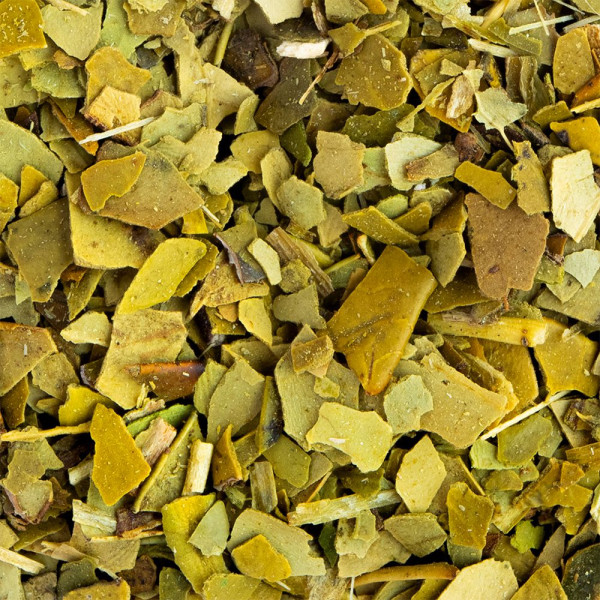
Green Yerba Mate
Organic loose-leaf green mate, also known as yerba mate, brews into a vibrant, herbaceous and invigorating infusion.
€6.50Discover
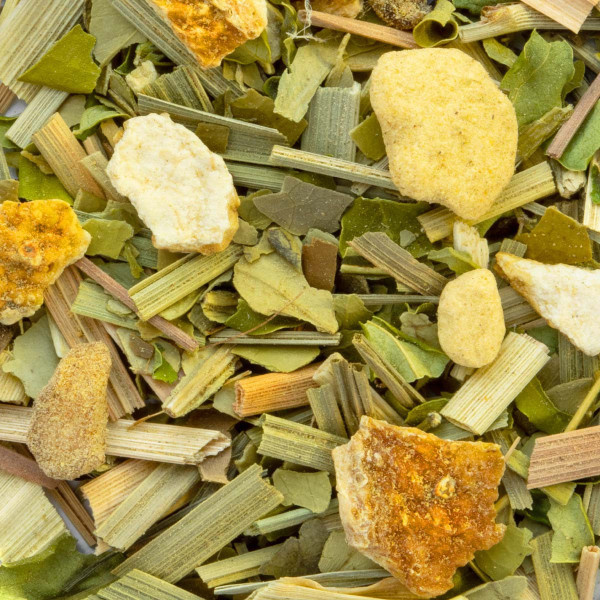
Energising Yerba Mate
Organic energising yerba mate blends yerba mate, guarana and maca into an invigorating blend with bright citrus and bergamot notes.
€8.90Discover
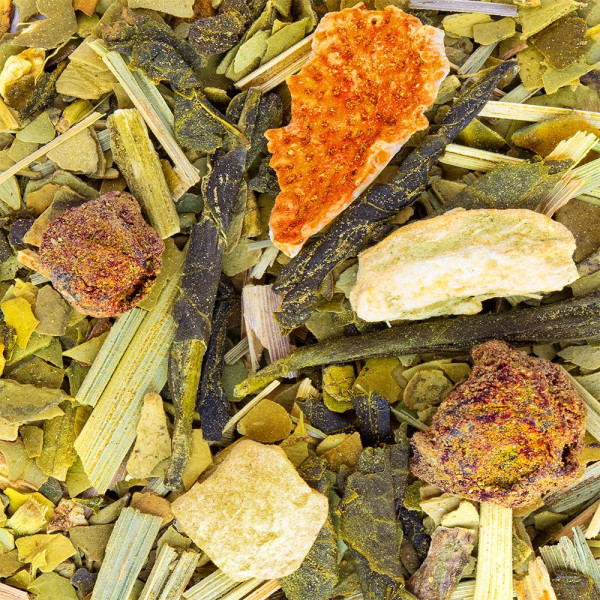
Maté Fruity Boost
Organic Maté Fruity Boost combines green maté, guarana and matcha with wild blueberry and lemon for a fruity, natural energy lift.
€9.90Discover