The History of Pu-erh Tea: China's Ancient Yunnan Infusion

Born in the mountains of Yunnan, China's dark tea has journeyed through the ages. From trade currency to gastronomic treasure, the cultivation and crafting of Pu-erh have remained rooted in tradition. An exploration of the origins of Pu-erh, also known as Yunnan tea.
What is the history of Yunnan's dark tea?
The story of Menghai black tea from Yunnan begins under the Tang dynasty, when it served as a trading commodity between Chinese and Tibetan merchants. It is thought that the tea leaves began to ferment during these long expeditions, and this natural process gave rise to the Chinese infusion we know today: a richly flavoured dark tea, pressed into the cakes still produced today.
What twists of fate shaped Pu-erh through the centuries?
Under the Ming dynasty, Pu-erh teas fell from imperial favour. Yet in the remote corners of Yunnan, in Menghai, the tradition of crafting organic tea cakes quietly endured. When the Qing dynasty came to power, Yunnan's dark tea was restored to a place of honour and officially named "Pu-erh tea." Menghai has remained its heartland of production ever since.
Where does the tea cake tradition come from?
Originally, Pu-erh travelled along the Ancient Tea Horse Road between Yunnan and Tibet, serving as the infusion of choice among nomadic peoples who traded it for other goods. Compressing the leaves into cakes made them far easier to store and carry. At the time, loose-leaf tea was the only form available, and pressing it into cakes allowed producers to package it simply for the long journey ahead.
How has the tea cake tradition evolved?
The Pu-erh cake has changed remarkably little over the centuries. Mao Cha is weighed and placed in a perforated vessel, where steam softens and loosens the leaves. The tea leaves are then wrapped in cloth and pressed under a stone (or other heavy weights). Once dried, the leaf cake is placed in a bamboo tong to develop its aromatic character. After fermentation, the cake is ready.
Where does Pu-erh, China's celebrated tea, come from?
Pu-erh is harvested from tea trees growing in the mountains of Yunnan. Most of these trees grow wild, yielding tea leaves of exceptional character. Traces of cultivated growth have also been found along the routes that wind through the Yunnan highlands.
There are two main types of Pu-erh:
- Sheng Cha, the raw or green Pu-erh;
- Shu Cha, the ripe or dark Pu-erh.
The leaves used in dark Pu-erh undergo a gentle fermentation during storage, giving this organic infusion deeper, more pronounced notes. Producers often craft it into a true luxury tea.
Is organic Pu-erh really a black tea from Yunnan?
Pu-erh is a dark tea from Menghai, in the Yunnan region. Both in China and in Europe, it is classified as a black tea due to the fermentation it undergoes during storage. Interestingly, what Europeans call "black tea" is referred to as "red tea" in China.
Which tea plant gives us Pu-erh?
Like oolong teas, Pu-erh teas come from the leaves of the Camellia sinensis plant. These tea trees grow freely in the mountain gardens of Yunnan, China. It is the largest leaves that are selected to form the cakes: first hand-picked from wild trees, then pressed into their distinctive shape by the producers.
Discover our range of organic Pu-erh teas from Yunnan: raw sheng, ripe shou, cakes, bricks and mini tuo cha. Direct sourcing, certified organic farming.
Tempted to try it?
Our selection related to this article, loose leaf and organic.
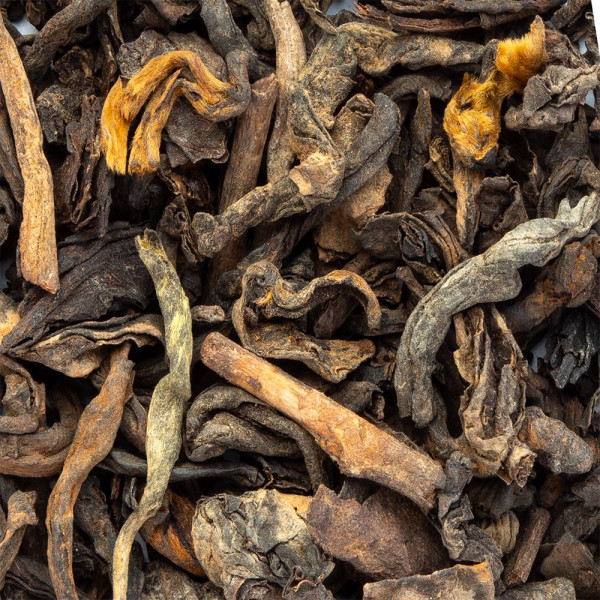
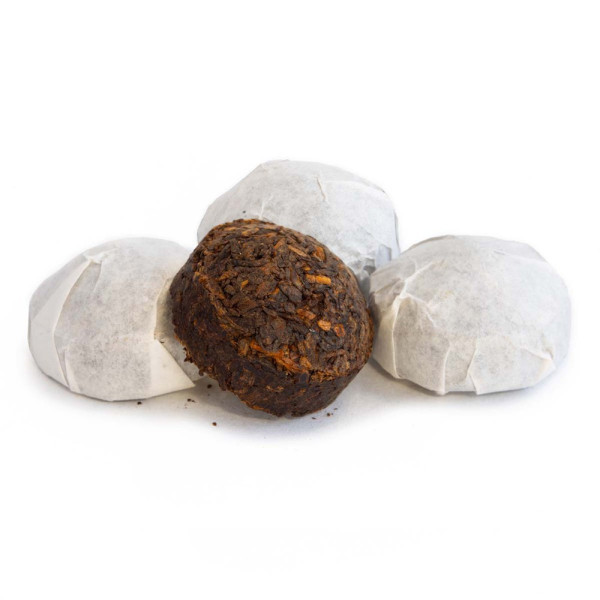
Pu-erh Mini Tuo Cha
The Pu-erh Mini Tuo Cha is a post-fermented tea from Yunnan, compressed into small individual nests of around 5 g each.
€6.00Discover
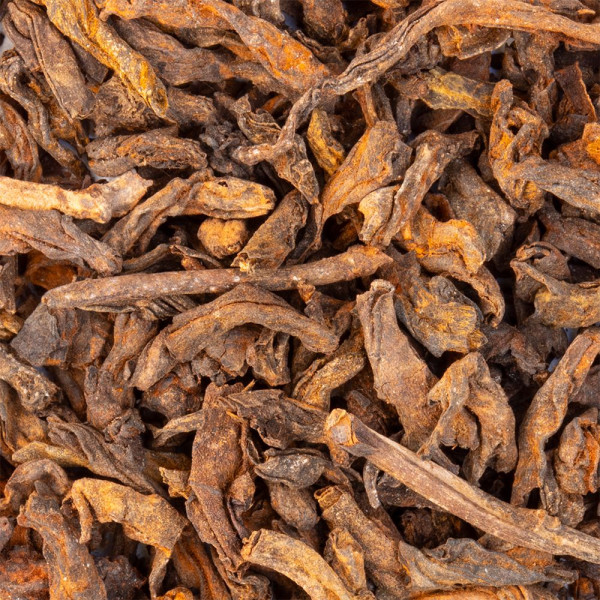
Pu Erh Menghai 5 Years
The Pu Erh Menghai 5 Years is a Chinese post-fermented grand cru, aged for five years to unveil its deep notes of dark chocolat…
€11.90Discover