Oolong Tea: Complete Guide (Varieties, Benefits, Brewing)
Organic oolong tea is a semi-oxidised tea born in China in the 17th century, in the Fujian province, later perfected over generations in Taiwan. Its name means "black dragon": in the cup, its rolled or twisted leaves unfurl a remarkably wide aromatic range, from a very vegetal blue tea close to green tea all the way to the roasted, woody notes of a near-black tea. Sitting at the midpoint, with a partial oxidation of 10 to 70%, oolong is a tea of character, deeply valued by fine tea lovers.
What is oolong tea?
Oolong tea (sometimes written wulong) is a semi-oxidised tea: the oxidation of the leaves, triggered by enzymes in the fresh leaf, is deliberately stopped before it runs its course. Depending on the level of oxidation, it is referred to as a blue tea or blue-green tea, as the colour of the steeped leaves ranges from jade to copper.
Oolong tea holds both the freshness of a green tea and the depth of a black tea. That duality is what makes it unique: a lightly oxidised oolong (10 to 30%) develops floral and milky notes, while a more heavily oxidised oolong (50 to 70%) reveals roasted, honeyed or woody character. This balance between green and black is unlike anything else in the world of tea.
- Oxidation: 10 to 70% (semi-oxidised)
- Family: blue teas / semi-fermented teas
- Main origins: China (Fujian, Guangdong) and Taiwan
- Other names: oolong, wulong, blue tea, blue-green tea, black dragon
- Caffeine: moderate, close to green tea for lightly oxidised oolongs
Flavours and aromatic profile of oolong tea
The flavour of an oolong tea depends on its level of oxidation, its terroir and the producer's skill. It draws on all the great aromatic families of tea: floral (orchid, gardenia), milky (cream, butter), honeyed, fruity (apricot, peach), roasted, woody, mineral. For a tea lover, oolong is arguably the richest playground of all: its taste evolves with every infusion.
History and origins of oolong tea
The origins of oolong tea lie in China, in the Fujian province, at the heart of the Wuyi Mountains. Legend has it that a farmer, startled by a black dragon while picking his tea leaves, left them to partially oxidise before roasting them. The result was so remarkable that the method took on its name: wulong, meaning black dragon.
The history of oolong takes root in the 17th century. By the 18th century, the technique had spread to southern China, then crossed the strait to Taiwan, where it would reach its peak in the 19th century. Taiwan, sometimes called the homeland of oolong, developed its own high-altitude terroirs (Dong Ding, Ali Shan, Li Shan, Shan Lin Xi) and its own cultivars, including the celebrated Jin Xuan, the variety behind Milky Oolong.
Today, oolong is also grown in Java, Nepal, Vietnam, Sri Lanka (Ceylon) and South Korea, but China and Taiwan remain the two great reference countries for tea lovers seeking exceptional oolong. Oolong tea production currently accounts for around 2% of global tea production.
How is oolong tea made?
The making of oolong tea is one of the most complex processes in the world of tea. It demands time, skilled hands and a precise reading of the leaf. The key stages of this craft are as follows:
- Hand-picking, typically three leaves and a bud, harvested when the leaf is mature but still supple.
- Sun withering: the leaves are spread on racks to lose some of their moisture.
- Tossing and tumbling: the leaves are gently agitated to bruise the edges, triggering enzymatic oxidation only along the leaf margins.
- Controlled partial oxidation: the tea master halts oxidation at the desired level (10% for a green oolong, up to 70% for a darker oolong).
- Heat fixation: a rapid pass in a wok or oven deactivates the enzymes and stabilises the leaf.
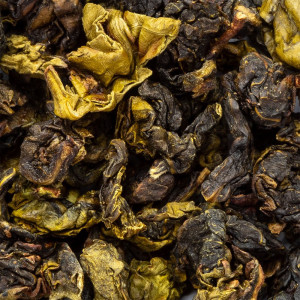
- Rolling: the leaves take on their characteristic shape, either tightly rolled pearls (Taiwanese oolongs) or twisted strips (Chinese oolongs).
- Final roasting, which develops the aromas and extends shelf life. A well-roasted oolong can be re-steeped many times over.
It is this mastery of the process that sets a great oolong apart. The same cultivar can yield radically different teas depending on the producer's hand and their interpretation of each stage. A quality semi-fermented tea always emerges from that rare combination of expertise and terroir.
The great varieties of oolong tea
There are dozens of oolong tea varieties, grouped into two main families: Chinese oolongs (Fujian, Guangdong) and Taiwanese oolongs. Here are the essential types of oolong that define the entire culture of blue tea.
Guide contents
Choose your starting point in the guide
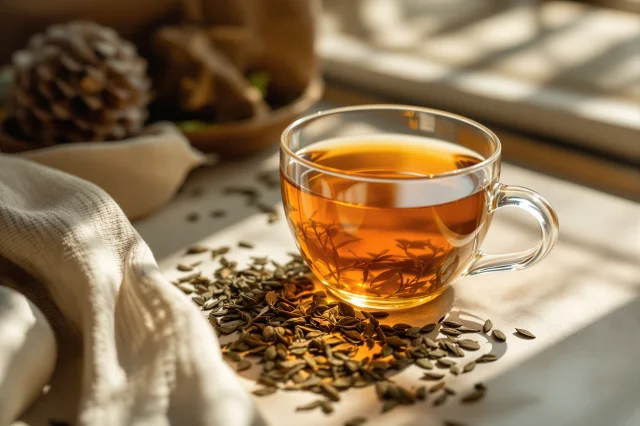
Tie Guan Yin ("Goddess of Mercy")
From the Anxi district in Fujian province, Tie Guan Yin is arguably the best-known Chinese oolong. Its pearl-rolled leaves are distinguished by a floral and milky profile, with an orchid heart. It is the tea of the Chinese spiritual path: its name literally means "iron goddess of mercy", a reference to the Buddhist goddess Guan Yin. The oldest tea trees of Anxi yield the finest lots.
Dong Ding ("Frozen Summit")
From the Dong Ding mountain in Taiwan, this is a classic Taiwanese oolong with medium oxidation (30 to 40%) and a well-judged roast. Notes of ripe fruit, dried fruit and a honeyed base: it is one of the great historic crus.
Milky Oolong (Jin Xuan)
Grown in Taiwan from the Jin Xuan cultivar (sometimes called Jin or TRES No.12), Milky Oolong owes its name to its naturally milky notes of fresh cream and butter. Very lightly oxidised (10 to 20%), it offers a smooth, rounded cup, ideal for discovering oolong. Explore our organic Milky Oolong.
Da Hong Pao ("Big Red Robe")
Da Hong Pao is a great rock oolong from the Wuyi Mountains in Fujian. More heavily roasted (50 to 70%), it delivers a mineral, deeply complex character. A timeless classic for the seasoned tea lover.
Dan Cong (Phoenix oolongs)
Dan Cong teas come from the Phoenix Mountains in the Chao'an district of Guangdong. Each old tree yields a distinct tea: apricot, orchid, gardenia, honey. These are among the most aromatic teas in the world.
Bao Zhong and Si Ji Chun (Taiwan)
Wen Shan Bao Zhong, from the Pinglin district in northern Taiwan, is one of the most floral of the lighter oolongs; Si Ji Chun ("Four Seasons Tea") is its most approachable expression: a fresh, easy-to-re-steep lowland cultivar.
Oolong tea benefits: what the science says
Like green and black tea, oolong tea is rich in polyphenols, antioxidant compounds that help protect cells against oxidative stress caused by free radicals. This property is studied extensively in research on catechins and theaflavins. Tea polyphenols may help neutralise some of the free radicals naturally produced by the body.
Caffeine, hydration and well-being
A lightly oxidised oolong contains roughly the same amount of caffeine as a green tea (15 to 30 mg per cup); a more heavily oxidised oolong contains slightly more. If you are sensitive to caffeine, it is best to opt for a lightly oxidised oolong later in the day.
Digestion and digestive qualities
Many Asian cultures have long associated oolong tea with gentle digestion after meals. Tea is traditionally served to round off rich, generous meals. The digestive qualities attributed to oolong resonate with this ritual: a naturally soothing tea that supports a sense of balance after eating.
Note: the benefits mentioned here are linked to the polyphenol content of tea. Tea is not a medicine and does not replace medical advice or a balanced diet.
How to brew oolong tea
Brewing oolong tea calls for a little more attention than green or black tea, as the same leaf can yield very different results depending on the method you choose.
Western method (the simplest approach)
- Dosage: 4 to 5 g of leaves per 300 ml of hot water
- Temperature: 85 to 95 °C depending on oxidation level
- Steeping time: 3 to 5 minutes, adjusted to taste
- Re-steeping: 2 to 3 times
Chinese Gong Fu Cha method
Gong Fu Cha is the traditional Chinese method of brewing tea. It uses a small teapot (100 to 150 ml), ideally Yixing clay for roasted oolongs, a generous amount of leaf (5 to 7 g) and very short steeps (20 to 45 seconds), extended gradually with each pour. A fine oolong can be steeped 6 to 10 times, revealing a new aromatic facet with each infusion. It is the ideal way to explore a great cru. A well-seasoned Yixing teapot elevates these teas beautifully.
Iced oolong tea
Oolong lends itself wonderfully to iced tea: cold brew for 6 to 8 hours in the refrigerator, using 8 g per litre, served as is or with fresh fruit. Floral oolongs (Bao Zhong, Milky Oolong) are particularly delightful as a summer iced tea.
Storing oolong tea and shelf life
A well-stored oolong retains its aromas for 12 to 24 months for green oolongs, and up to several years for roasted oolongs. A few simple rules:
- Airtight container, away from light, strong odours and moisture
- Room temperature (never in the refrigerator)
- Ideally stored in the original metal tin or ceramic container
Oolong, green tea and black tea: what are the differences?
All three teas come from the same plant, Camellia sinensis. The only thing that sets them apart is the degree of oxidation:
- Green tea: not oxidised (0%), fresh and vegetal
- Oolong tea: semi-oxidised (10 to 70%), aromatic and complex
- Black tea: fully oxidised (100%), full-bodied and deep
The same cultivar can, in the hands of different producers, yield a green tea, an oolong or a black tea. This versatility makes tea one of the richest beverages in the world.
Our selection of organic oolong teas
From our workshop in Simiane-Collongue, near Aix-en-Provence, we carefully select a focused aromatic range of organic oolong teas from our partner producers in China and Taiwan, from creamy Milky Oolong to floral Dan Cong. Explore our full range of organic oolong teas and our rare and exceptional teas.
Your questions about oolong tea
Does oolong tea contain a lot of caffeine?
A lightly oxidised oolong contains roughly the same amount of caffeine as a green tea (15 to 30 mg per cup). The more oxidised the oolong, the more caffeine it releases. For an evening cup, choose a Milky Oolong or a Bao Zhong.
Why is oolong tea called "blue tea"?
The name blue tea does not refer to the colour of the brew, but to the dark blue-green hue of the leaves after partial oxidation. The French translation of the Chinese qing cha ("blue-green tea") gave rise to the term "blue tea".
Can oolong tea be re-steeped?
Absolutely, and it is one of the great pleasures of this family of teas. A quality oolong can be re-steeped 3 to 5 times using the Western method, or 6 to 10 times with Gong Fu Cha, each infusion bringing out a new aromatic note.
What is the difference between oolong and wulong?
There is none. Oolong and wulong are two romanisations of the same Chinese character 烏龍, meaning "black dragon". Oolong is the historical form; wulong is the modern pinyin romanisation.
How do I choose my first oolong tea?
To start, we recommend a Milky Oolong or a Bao Zhong: smooth, rounded and approachable, they let you discover the aromatic signature of oolongs without any complexity. From there, you can explore a Dong Ding for its roasted character, then a Da Hong Pao for the depth of the rock oolongs.
How do I brew an oolong in a clay teapot?
Warm the teapot first, measure out 5 to 7 g of leaf, add hot water, discard the first infusion (the rinse), then follow with short successive steeps. This method brings out the very best of each oolong, especially roasted semi-fermented teas.
Tempted to try it?
Our selection related to this article, loose leaf and organic.
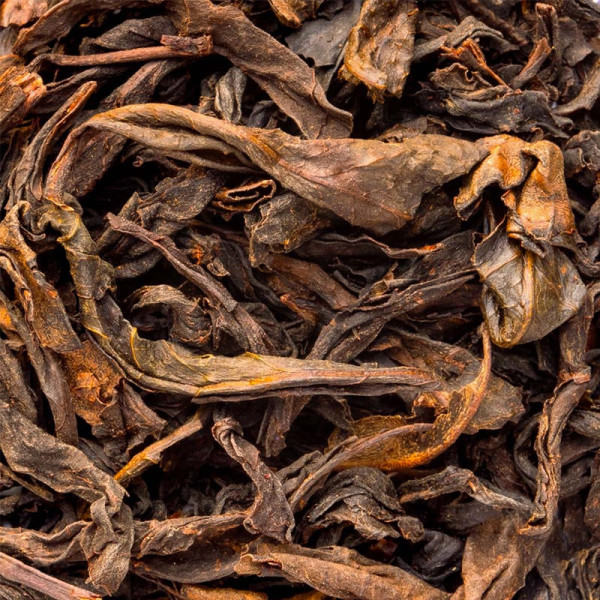
Oolong Shui Xian
Organic Shui Xian oolong is a Chinese tea of rare elegance, semi-oxidised and grown on the mineral-rich slopes of Fujian.
€7.40Discover
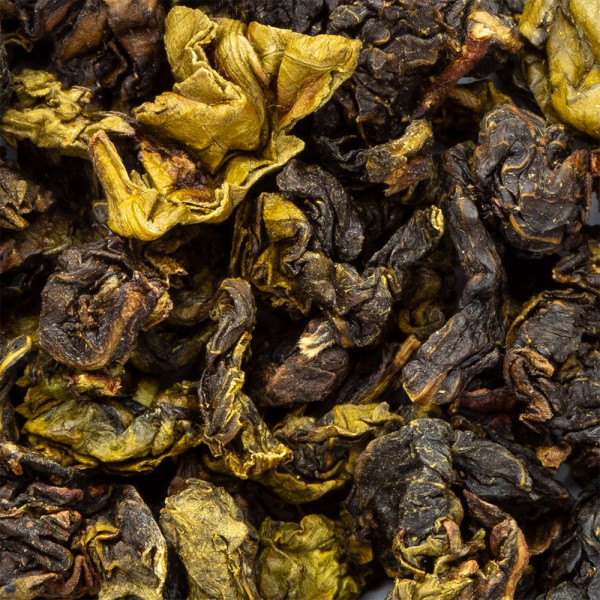
Milky Oolong
Milky Oolong from China reveals naturally milky, velvety notes — the hallmark of great semi-oxidised oolong teas.
€13.90Discover
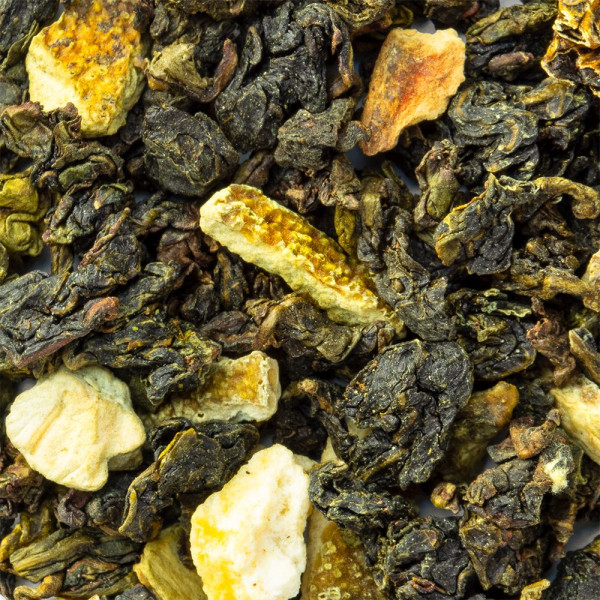
Orange Oolong
Organic orange oolong brings together a semi-oxidised oolong with orange peel and mango pieces.
€10.90Discover