Semi-fermented tea: oolong, between green and black tea

Blue tea sits between green and black tea. Depending on its origin, it will lean closer to one or the other, sharing their characteristics. A semi-fermented oolong tea can therefore be low in caffeine like a green tea, or full-bodied like a black tea, depending on how much oxidation it has undergone.
Tea fermentation: a codified process since 1880
Tea fermentation can take two distinct forms. Green and white teas are produced through desiccation: the Camellia sinensis leaf is simply dried. Black tea and fermented oolong tea, on the other hand, rely on an oxidation process. The tea fermentation process involves several stages that shape the tea's character, because all teas come from the same plant: Camellia sinensis. It is precisely the degree of fermentation or oxidation that determines whether a tea is classified as green, black, white, or oolong.
The tea fermentation process
- Tea leaves are hand-picked
- They are then withered
- Followed by desiccation or dehydration
- Then comes oxidation for black teas, oolongs and certain yellow teas
- Rolling the leaves is also done by hand
- The tea is then dried
- Finally, it is sorted or sifted
- Black teas and certain oolongs are fired or roasted
Fermented oolong tea: 4 levels of oxidation
When it comes to oolong fermentation, the degree of tea oxidation varies considerably. Fermented oolong tea first undergoes green tea fermentation, then an oxidation similar to black tea, with one key difference: the process is deliberately interrupted several times along the way. It is this distinctive technique that gives semi-fermented oolong its powerful aromas. While oolong fermentation is generally brief, it can be extended until the tea reaches 40 to 70% oxidation. The oxidation level of blue tea is classified into 4 tiers:
- Lightly oxidized oolongs (10 to 30%): closest to green tea, most often produced in China.
- Heavily oxidized oolongs (40 to 70%): closer to black tea, typically from Taiwan.
- Aged oolongs, produced through multiple roastings, are long-keeping teas that can be 20 to 25 years old. These Taiwanese teas are genuine rarities.
- Young multi-roasted oolongs are exclusive teas, crafted to resemble aged oolongs.
Oolong: the only tea that can be steeped multiple times.
The fermentation and oxidation of oolong gives it properties unlike any other tea. Prized as a long-keeping tea, oolong is also the only variety that can be steeped several times in succession.
Tempted to try it?
Our selection related to this article, loose leaf and organic.
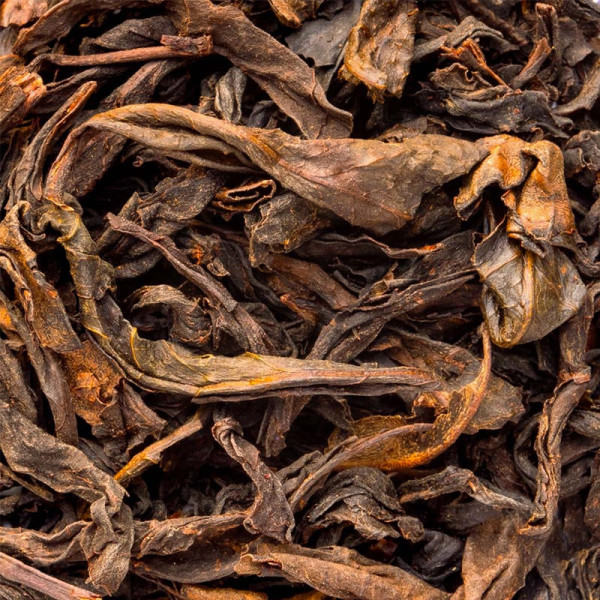
Oolong Shui Xian
Organic Shui Xian oolong is a Chinese tea of rare elegance, semi-oxidised and grown on the mineral-rich slopes of Fujian.
€7.40Discover
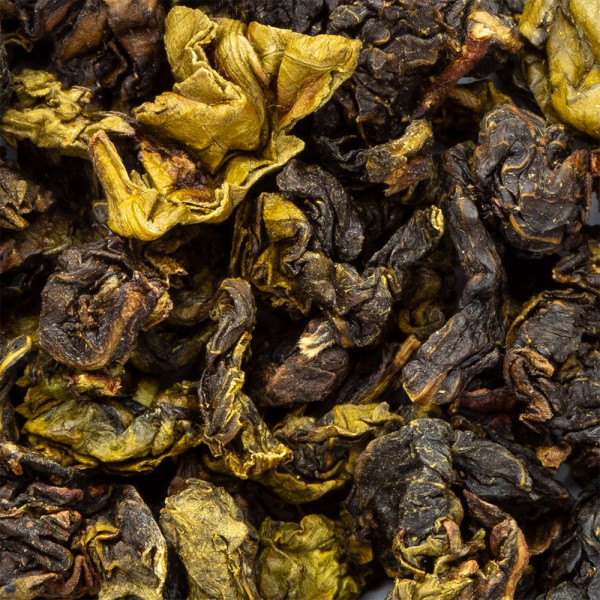
Milky Oolong
Milky Oolong from China reveals naturally milky, velvety notes — the hallmark of great semi-oxidised oolong teas.
€13.90Discover
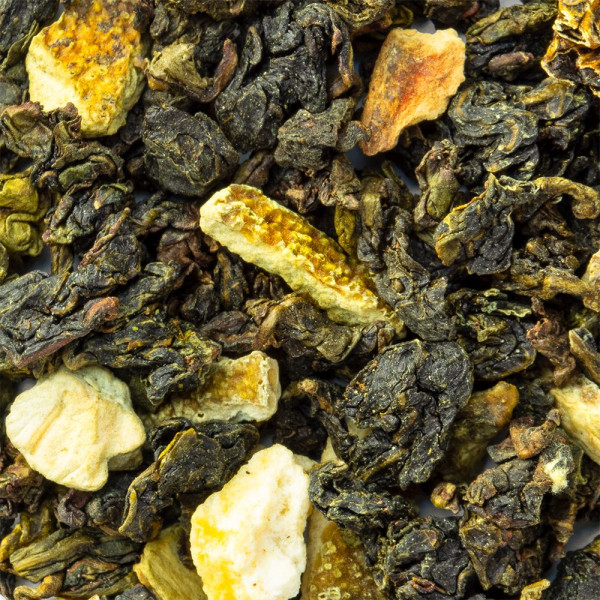
Orange Oolong
Organic orange oolong brings together a semi-oxidised oolong with orange peel and mango pieces.
€10.90Discover