Oolong Tea Definition: Meaning and Names Explained

Oolong tea (also written wulong, or known as blue tea) is a Chinese and Taiwanese semi-oxidized tea, with an oxidation level ranging from 10 to 70%. It sits between green tea (unoxidized) and black tea (fully oxidized), with an aromatic range spanning delicate floral notes to woody and roasted characters. Explore our selection of organic oolong teas from the finest gardens.
Oolong tea definition: a semi-oxidized tea between green and black
The definition of oolong comes down to one concept: partial oxidation. Blue tea is described as semi-fermented, placing it between green tea (unoxidized, fresh and vegetal) and black tea (fully oxidized, full-bodied). Like green tea, it is relatively low in caffeine; like black tea, it is rounded, with a flavor often described as nutty, honeyed or floral. Originally from China's Fujian province, it is now enjoyed across Asia. It is produced mainly in China and Taiwan, though oolong is considered by enthusiasts to be fundamentally a Chinese tea in origin.
Etymology: what does the word "oolong" mean?
The word oolong comes from the Chinese 烏龍 (wūlóng), which means "black dragon." Legend has it that a farmer during the Ming dynasty, startled by a black dragon while gathering his tea leaves, left them to partially oxidize before firing them. The exceptional result was named after the legendary apparition. Today, the names oolong, wulong and wu-long are used interchangeably.
Oolong tea, wulong tea or blue tea?
Oolong tea goes by several names, each worth understanding:
- Oolong: the historical English transcription of the Chinese 烏龍, the most widely used in the West
- Wulong or wu long: the modern pinyin transcription, equivalent in meaning
- Blue tea: named for the dark blue-green hue of the leaves after partial oxidation
- Blue-green tea: a variant of blue tea, directly translated from the Chinese qing cha
- Black dragon: the literal translation of the Chinese 烏龍
The name "blue tea" refers to the color of the leaf, not the color of the cup. You may also come across jasmine oolong tea, where the leaves are scented with jasmine blossom.
The blue-green tea variations
In essence, oolong is always a semi-oxidized tea, whether it comes from China or Taiwan. Its oxidation level can range from 10% (green oolong, close to green tea) to 70% (roasted oolong, closer to black tea), depending on the producer's expertise. This versatility makes it one of the richest tea families in the world: the leaves can be steeped 3 to 5 times using Western brewing methods, and up to 8 times using the Chinese gong fu cha method, revealing different facets with each infusion.
Origins and history of oolong tea
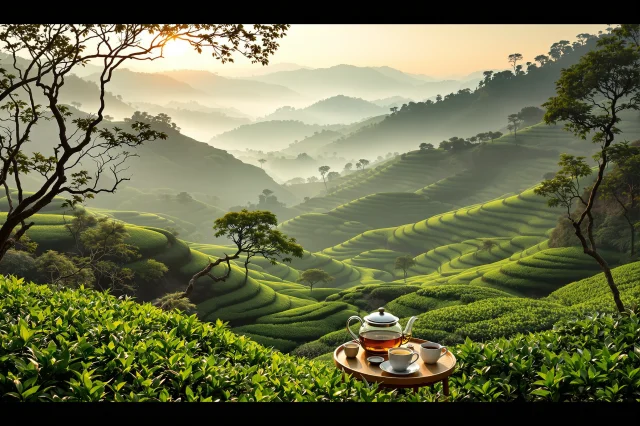
The history of oolong begins in the 17th century in Fujian province, on the slopes of the Wuyi Mountains. By the 19th century, the technique had crossed the strait to reach the island of Taiwan, where it flourished in high-altitude terroirs (Dong Ding, Ali Shan, Li Shan, Shan Lin Xi). Today, oolong is also grown in Vietnam, Nepal, Sri Lanka, Thailand and South Korea, but China and Taiwan remain the two benchmark origins for enthusiasts.
What types of oolong tea are there?
There are dozens of varieties, grouped into two main families: Chinese oolongs (Fujian, Guangdong) and Taiwanese oolongs. Here are the key types of oolong tea:
- Tie Guan Yin (Anxi, Fujian): rolled into pearls, floral and milky, the great Chinese classic
- Dong Ding (Taiwan): medium oxidation, honeyed notes and dried fruit
- Milky Oolong or Jin Xuan (Taiwan): lightly oxidized, naturally creamy
- Da Hong Pao (Wuyi, Fujian): heavily roasted, mineral and deep
- Dan Cong (Phoenix, Guangdong): aromatic, apricot or orchid
- Shui Xian: Wuyi rock oolong, distinctly mineral character
- Bao Zhong (Pinglin, Taiwan): very lightly oxidized, almost green
How is oolong tea made?
The production of oolong is among the most complex in the world. Here is the traditional process, in 7 steps:
- Harvesting: by hand, three leaves and a mature bud
- Solar withering to reduce moisture content
- Tumbling and tossing the leaves: triggering enzymatic oxidation along the edges
- Controlled partial oxidation (10 to 70%, depending on the desired profile)
- Heat fixation (wok or oven) to stop oxidation and stabilize the leaf
- Rolling: into compact pearls (Taiwan) or twisted leaves (China)
- Final roasting: to develop the aromas and extend shelf life
Each step requires a close reading of the leaf. The same tea plant cultivar can yield a lightly oxidized green oolong or a dark, roasted one, depending on the producer's technique and interpretation.
Difference between oolong tea and green tea
The difference lies solely in oxidation. Green tea is not oxidized at all (the process is halted immediately after harvesting by heat fixation). Oolong tea undergoes a partial, controlled and interrupted oxidation. This single distinction changes everything: leaf color, aromatic range, theaflavin content, shelf life, and caffeine profile. A lightly oxidized oolong (10–20%) resembles green tea; a heavily oxidized one (60–70%) approaches black tea.
Oolong tea vs. black tea: a further comparison
With black tea, oxidation is complete (100%), producing a full-bodied, structured tea, sometimes with malty or cocoa notes. Oolong, sitting in between, retains the freshness of green and the depth of black.
What are the benefits of oolong tea?
Like all teas from Camellia sinensis, oolong is rich in polyphenols and catechins, antioxidant compounds that help protect cells against oxidative stress. Its traditionally attributed properties vary across cultures and practices: it is associated with relaxing qualities linked to theanine, a digestive support effect, and a role in wellness rituals. For more information, visit our dedicated page Oolong Tea and Health. Tea is not a medicine and is not a substitute for medical advice or a balanced diet.
How to brew oolong tea
The classic method: 4 to 5 g of leaves per 300 ml of hot water at 85–95°C, steeped for 3 to 5 minutes. To brew oolong tea closer to tradition, try the Chinese gong fu cha method: a small teapot (100 ml), a generous dose (5 to 7 g), and short infusions (20 to 45 seconds), extended slightly with each successive steep. For iced oolong tea, steep 8 g per liter cold in the fridge for 6 to 8 hours. Find our full brewing advice in our oolong tea brewing guide.
How to choose a good oolong tea
To choose a quality oolong, look for:
- A certified organic oolong, grown using organic farming practices
- A natural aroma (fine oolongs are rarely flavored, except for traditional jasmine or osmanthus scenting)
- An identified cultivar (Jin Xuan, Tie Guan Yin, Da Hong Pao, etc.)
- A clear origin (Anxi, Wuyi, Dong Ding, Alishan, etc.)
- A pure oolong, neither blended nor artificially flavored
Your questions about oolong tea
What color is oolong tea?
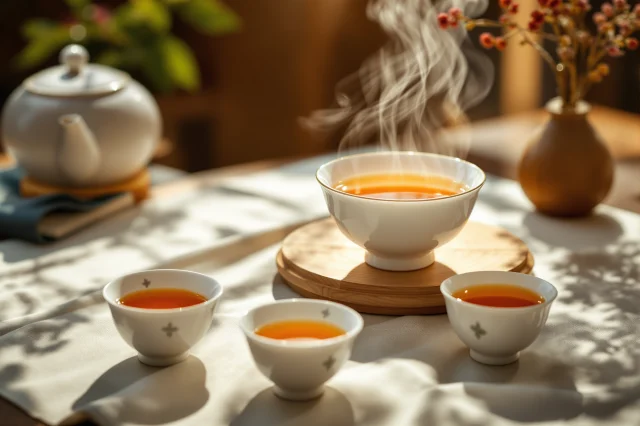
The color of the leaves ranges from jade to copper depending on the degree of oxidation. The liquor ranges from pale yellow (green oolongs) to deep amber (roasted oolongs).
Is oolong tea a fermented tea?
Technically, it undergoes enzymatic oxidation rather than microbial fermentation. The term "semi-fermented" is used by convention, particularly in French tea culture.
Can oolong tea be re-steeped?
Yes, that is one of its great qualities. 3 to 5 times using Western methods, 6 to 10 times with gong fu cha, with each infusion revealing a new aromatic dimension.
Does oolong tea contain a lot of caffeine?
The caffeine content varies with the oxidation level: a green oolong is close to a green tea (15–25 mg per cup), while a roasted oolong approaches black tea levels (30–50 mg per cup).
Where can I buy a good oolong tea?
From a specialist tea merchant who works with organic farming practices, ideally with direct sourcing from the producer. Our shop offers a full range of organic oolong teas as well as our rare and single-origin teas.
Tempted to try it?
Our selection related to this article, loose leaf and organic.
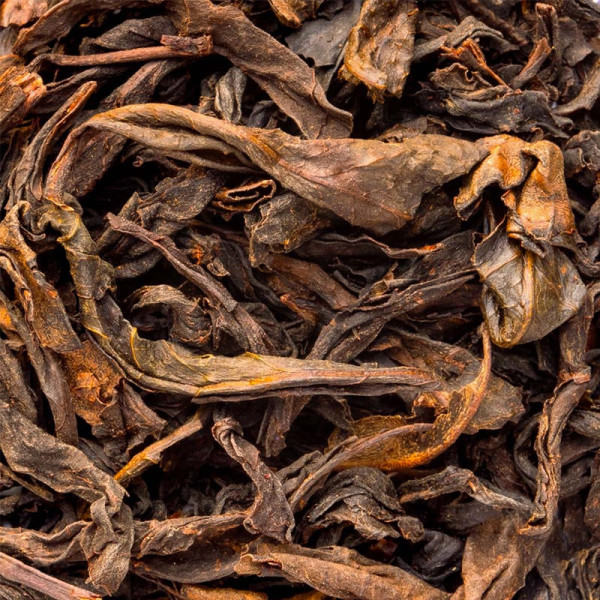
Oolong Shui Xian
Organic Shui Xian oolong is a Chinese tea of rare elegance, semi-oxidised and grown on the mineral-rich slopes of Fujian.
€7.40Discover
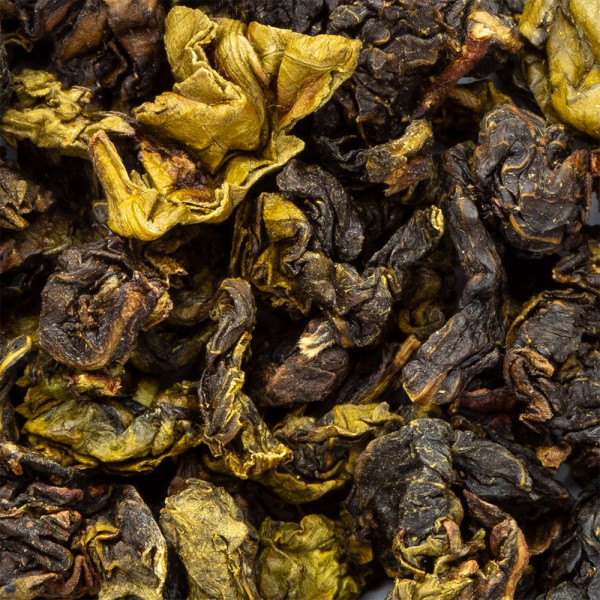
Milky Oolong
Milky Oolong from China reveals naturally milky, velvety notes — the hallmark of great semi-oxidised oolong teas.
€13.90Discover
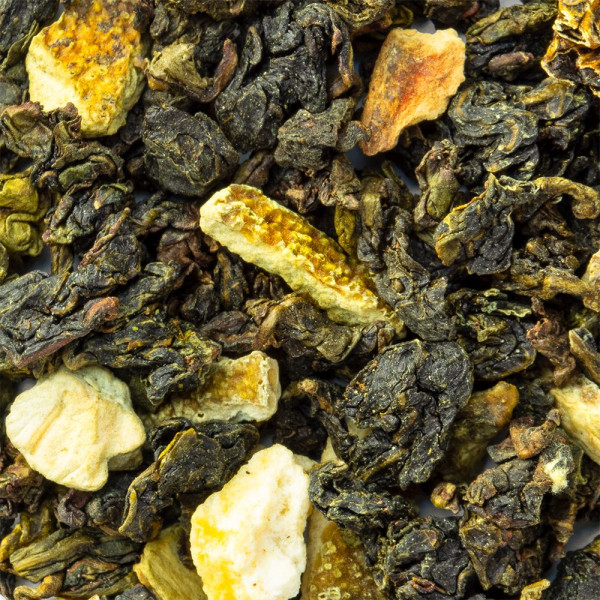
Orange Oolong
Organic orange oolong brings together a semi-oxidised oolong with orange peel and mango pieces.
€10.90Discover