

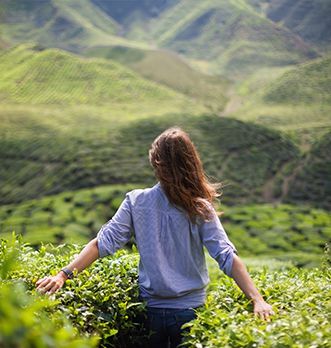
Green tea has its roots in China, where it has been enjoyed for nearly 5,000 years. Over the centuries, tea became a beloved drink in every corner of the world. Available in a remarkable range of varieties, it captivates both for its distinctive aromas and its many benefits. In this guide, you will find everything worth knowing about green tea, along with practical advice for making the most of its flavors and virtues.
Worth trying: our organic Bancha, gentle and low in caffeine, perfect for those who want a soothing green tea to sip throughout the day.
For an authentic Moroccan tea experience, try our organic Marrakech blend with nanah mint leaves: a true oriental ritual to recreate at home.
Green tea: a drink to enjoy freely
Green tea is the most consumed beverage in the world after water. Calorie-free yet rich in antioxidants, it offers a wealth of benefits for your wellbeing. A small pleasure you can truly indulge in without any guilt. All teas come from a single plant: the Camellia Sinensis. It is the drying and production process that then gives rise to different types of tea. Green tea is a specific variety that undergoes very brief oxidation, preserving a high proportion of its beneficial compounds. Lower in caffeine than its cousin black tea, it is a genuine powerhouse of antioxidants that help support your metabolism. A drink to enjoy at any time of day, as often as you like.
The different types of green tea
Within the green tea family, there are hundreds of varieties to explore. The vast majority come from China and Japan. To tell them apart, it helps to distinguish between two broad categories: Chinese green tea and Japanese green tea. Each is prepared and enjoyed in its own distinct way.
- Japanese tea: Japanese green tea is characterized by fermentation halted immediately after harvest. The leaves are steam-fixed, which preserves all of their most beneficial compounds. The two most widely enjoyed Japanese green teas are Sencha and Bancha. Sencha is prized for its excellent health properties and stands out for its subtle flavor with a pleasantly bitter edge. It is also the richest green tea in antioxidants. Bancha is equally popular and is notable for its high iron content; it turns a golden yellow when brewed and offers a lighter, more delicate taste. Finally, Matcha is hugely popular: ground into a fine powder, it is prepared in the traditional way using a bamboo whisk.
- Chinese tea: Chinese green tea is made by heating the leaves in a wok at a very high temperature, which completely halts the oxidation enzymes. Long Jing is one of the most celebrated Chinese green teas, known for its subtly sweet flavor and refreshing qualities. Gunpowder is another much-loved variety: the leaves are rolled into small pearls that unfurl in the cup, releasing a fresh, thirst-quenching taste.
When should you drink green tea?
Green tea is a pleasure to drink throughout the day, keeping you hydrated while treating your senses. That said, to get the most from its properties, timing matters. Green tea is not necessarily the best choice first thing in the morning if you need a real energy boost: its caffeine content is lower than black tea, so it will be less effective at waking you up. It comes into its own across the rest of the day. Before a meal, it can help take the edge off your appetite. After lunch, it is ideal for aiding digestion. One word of caution: avoid drinking it with food, as green tea can inhibit the body's absorption of iron. And while its caffeine level is lower than black tea, drinking green tea in the evening may still disturb your sleep. If you are sensitive to caffeine, avoid it in the late afternoon, or reduce its caffeine content by rinsing the leaves with a short first infusion that you then discard.
Which green tea is best for weight management?
Drinking tea can support weight loss as part of a balanced diet. It has a draining effect and helps curb hunger. Its antioxidants benefit fat distribution and lipid absorption. To make the most of these properties and maximize the fat-burning effect, Japanese green teas are your best ally. Their production method preserves the full range of benefits found in the tea leaf.
Why drink green tea?
This beverage has been cherished around the world for thousands of years. Drinking green tea brings warmth, comfort and a sense of togetherness, and its many health benefits are equally worth noting. Rich in antioxidants, it has a positive effect on your metabolism. A staple of detox routines, it contains no calories yet offers real advantages for your skin, your mind and your body.
How to prepare green tea
To enjoy a truly good cup, start by choosing a quality variety and then take care with the preparation. Ideally, opt for an organic loose-leaf green tea. Follow the instructions on the packet carefully: water temperature and steeping time are key, and getting them right makes all the difference to the flavor in your cup. Purists prefer their tea without sugar, but feel free to add a slice of lemon, a pinch of cinnamon or a little ginger to suit your taste.
What are the benefits of green tea?
The benefits of green tea are wide-ranging and best appreciated through daily enjoyment. It is primarily the antioxidants it contains that play a central role. Tea is known to help reduce the risk of cancer and cardiovascular disease. Its caffeine supports alertness and concentration, while its impact on weight management is also well documented.
Green tea vs. black tea: what's the difference?
Both green and black tea come from the same plant, but they differ in how they are processed. Green tea undergoes the shortest oxidation. As a result, it retains the majority of its antioxidants. Black tea, by contrast, is fully fermented. It keeps longer but offers a less concentrated profile of beneficial compounds, and it is also higher in caffeine. The two varieties also have distinctly different flavor profiles.
The origins of green tea
Green tea traces its origins back nearly 5,000 years to China. Many legends surround its discovery. The most famous features the divine emperor Shennong, who is said to have come across it by chance when a tea leaf fell into his cup. For a long time a luxury reserved for the few, its spread was slow and gradual. Little by little, tea crossed the borders of China, then of Asia, to become a drink embraced by cultures across the world.
Which green tea should you buy?
There is a vast range of green teas available to buy. To truly benefit from what they have to offer, choosing well is essential. Steer clear of supermarket tea bags and seek out a quality green tea instead. A good tea comes as whole leaves that swell and open when they meet hot water. Crushed, dusty leaves are a reliable sign of lesser quality.
Explore our range of organic green teas: Japanese Sencha, Gyokuro, Matcha, Bancha, Chinese Gunpowder, Long Jing and flavored blends (jasmine, mint, fruit). Certified organic, delivered across France.
The great green tea varieties: Japan, China, India and Sri Lanka
The world of organic green tea brings together hundreds of origins. Each variety has a signature shaped by its terroir, its harvest (buds or mature leaves), its fixing method and how it is processed.
Japanese varieties (Sencha, Gyokuro, Matcha, Bancha, Genmaicha)
Japan is celebrated for the refinement of its teas. Sencha accounts for around 80% of Japanese production: vegetal, marine, naturally umami. Gyokuro, the "precious dew", is a grand cru shade-grown for 20 days before harvest: its buds develop an exceptional depth of aroma. Matcha ceremony grade, ground to a fine powder, is used in the Japanese tea ceremony (chanoyu).
Bancha, made from mature leaves picked in the final harvest, is low in caffeine and ideal later in the day. Genmaicha blends Sencha with puffed rice, creating a warm, lightly toasted profile that makes it a wonderful introduction to green tea. Hojicha (roasted Sencha) rounds out the Japanese palette.
Chinese varieties (Longjing, Gunpowder, Mao Feng, Tai Ping Hou Kui)
China's tea culture stretches back to the Tang dynasty. Long Jing ("Dragon Well", Longjing), from Hangzhou, is recognized by its flat leaves shaped through hand-wokking. The Chinese method involves rapidly heating the leaves in a wok at high temperature. Gunpowder, with its leaves rolled into powder-like pellets, releases a fresh and thirst-quenching taste. Mao Feng ("Downy Peak") favors delicate buds. Tai Ping Hou Kui, the long flat-leaf tea from Anhui, offers a rare floral signature.
Flavored and scented green teas
For something different, flavored green tea is a wonderful entry point. Jasmine tea is a Chinese classic (Mo Li Hua). Mint green tea (Marrakech style) pairs Gunpowder with nanah mint. Other popular combinations include citrus (lemon, bergamot), flowers (rose, sakura), fruit (strawberry, peach) and spices (ginger). Our flavored range holds to the same organic standards as our pure-origin teas.
Green tea vs. white tea, oolong, black tea and rooibos
Understanding the difference between the main tea families helps you choose the right tea for the moment:
- White tea: barely wilted leaves and buds, delicate floral profile, very low in caffeine. Perfect for sensitive palates.
- Oolong (blue-green tea): partially oxidized leaves. A complex profile sitting between green and black, with fruity or roasted notes.
- Black tea: fully oxidized leaves. Fuller-bodied and higher in caffeine, ideal in the morning with or without milk.
- Rooibos (South African rooibos): a naturally caffeine-free red herbal infusion. A gentle alternative for children and evenings.
A discerning tea lover builds a varied collection across several families: green tea in the afternoon, white tea in the evening, black tea at breakfast, rooibos after dark.
Catechins, caffeine and nutritional properties
Green tea owes its properties to several active compounds: catechins (notably EGCG, epigallocatechin gallate), L-theanine (a relaxing amino acid), moderate caffeine, polyphenols, flavonoids, and vitamins C and E. A number of studies (Health Effects Review, Green Tea Cancer Risk meta-analysis) have explored its role in reducing certain risks (cancer, cardiovascular disease) and its mild diuretic effect. For digestion, it supports natural elimination. In terms of energy, the combination of caffeine and L-theanine delivers a gentle lift, free from the jitteriness associated with coffee.
A note of caution: catechins can reduce the absorption of dietary iron. Leave some time between green tea and iron-rich meals (red meat, lentils). Pregnant women are advised to limit their intake to 2 to 3 cups per day.
Our online shop: buying loose-leaf green tea
The Thés & Traditions online shop offers a smooth, professional buying experience:
- Free delivery from €49 in France (free Colissimo shipping)
- Secure payment by Visa, Mastercard or bank transfer
- Packaging: loose-leaf in opaque airtight tins, available in 100g or larger economy pouches
- French customer service available via the contact page
- Expert curation by our family house (organic commitment since 2016)
- Monthly newsletter with tasting tips and blog updates
To add a product to your basket: select your tea, choose your format, add to your green tea basket and complete your order with your preferred payment method. Full terms and conditions (T&Cs) and our privacy policy are available at the bottom of the page.
How to brew green tea properly (quick guide)
To brew a quality green tea: heat water to 70-80°C (never boiling), use 4-5 g of leaves per 300 ml, and steep for 2 to 3 minutes. Japanese teas prefer 70°C; Chinese teas can handle 80-85°C. The leaves can be re-steeped 2 to 3 times. For a cold brew, steep in cold water for 6 to 8 hours in the refrigerator.