White Tea: The Complete Guide to This Rare and Precious Tea
There is a wide variety of teas out there. The most familiar ones, easily found on the market, are black tea, green tea and rooibos. But have you had the chance to explore white tea? It is true that white tea is less well-known than the others: it is, in fact, a rare tea. And rarity, of course, comes with a higher price.
What is worth knowing is that all teas come from the same plant: the Camellia Sinensis. The rarity of white tea stems from its composition, made up almost entirely of closed buds, and from its harvest window, which lasts just 3 days a year, the very first days of spring.
White Tea: Unrivalled Delicacy
What sets white tea apart is the refinement of its flavour. Lightly and naturally sweet, delicate and floral, with a discreet fruitiness, white tea offers a truly captivating burst of flavour. It is deeply appreciated by discerning tea lovers. Low in caffeine and rich in polyphenols, white tea can be steeped for longer without releasing any bitterness. For true connoisseurs, white tea is not simply drunk, it is savoured. To bring out its full range of flavours, including its notes of peony and citrus, the Zhong is the ideal vessel. This traditional three-part teacup allows you to prepare tea directly in a personal cup rather than a teapot. Refreshing and thirst-quenching, white tea can be enjoyed throughout the day, whether as a warm infusion or a chilled iced tea.
Guide contents
Choose your starting point in the guide
The Different Types of White Tea
Contrary to popular belief, white tea does not come from a different variety of tea plant. All teas, regardless of their origin, are harvested from one and the same plant: the Camellia Sinensis. The differences between teas stem primarily from which part of the plant is selected, the processing applied after harvest, and the region where they are grown.
We can therefore distinguish 3 different types of white tea:
- The so-called "original" white tea is produced exclusively in China, in the Fujian province. Exceptionally rare, it is made up entirely of buds,
- The new white tea, also from Fujian, is made up of buds along with the two or three youngest leaves,
- The "classic" white tea, produced in other countries such as India, Sri Lanka, Japan, Thailand, Nepal and across Africa. Flavours can vary depending on climate and the location of the harvest.
What exactly is white tea?
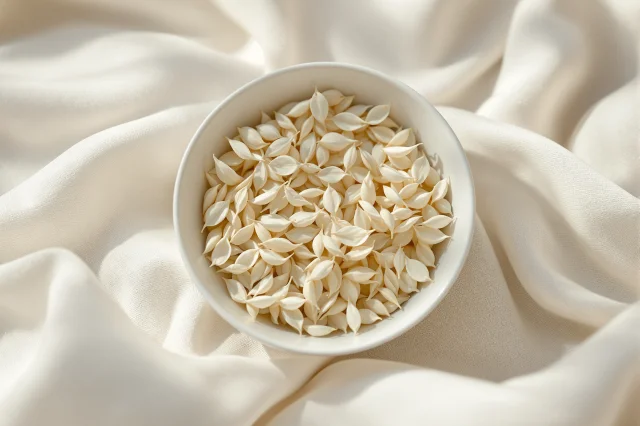
Originally from China, white tea comes from the Fujian region. The earliest white teas are believed to date back to the 6th century. It is closely related to green tea, as the leaves are harvested before they reach full maturity. White tea is made primarily of closed buds, long, downy and pale in colour, hand-picked during a very short window at the very start of spring.
White tea requires the fewest steps of any tea in its production process. Just 1 to 2 stages are needed before packaging:
- Withering. After picking, the tea is laid out in the sun for a few hours or days,
- Drying. Depending on weather conditions, drying is sometimes needed to fully dehydrate the tea.
Like its counterpart green tea, white tea undergoes very little oxidation.
White Tea: Its Composition
White tea is one of the least processed teas before packaging, which gives it remarkable purity. Of all teas, white tea is the one that best preserves its natural compounds. Rich in polyphenols, particularly catechins, it is naturally appreciated for its antioxidants, the same compounds found in many fruits and vegetables. Very close to green tea but lower in caffeine, white tea is a drink of pleasure and wellbeing, to enjoy as part of a balanced diet.
White Tea, a Moment of Wellbeing
Prized for its delicacy, white tea fits naturally into a daily wellbeing ritual. Naturally rich in polyphenols, it is one of the teas with the highest content. To savour its delicate aromas to the full, it is best enjoyed plain, without sugar or milk, so as not to mask its floral and fruity notes. And after brewing, do not throw away your leaves: a little grandmother's trick is to place the still-warm, moist leaves and buds on a piece of gauze, wrap them up and rest them over your eyes for a few minutes, for a moment of freshness and relaxation.
When to Drink White Tea During the Day?
Low in caffeine, white tea can be enjoyed at any time of day. Since it can be steeped several times without losing its properties, you can start the morning with a cup of delicately fragrant white tea alongside breakfast. There is no need to add sugar or a splash of milk, as doing so would mask its delicate aromas. After lunch, it pleasantly rounds off the meal and leaves an agreeable lingering taste. As delicate as a herbal infusion, white tea is also a wonderful evening drink: low in caffeine, it is savoured gently.
Can You Drink White Tea Every Day, at Any Age?
Tea is the most widely consumed beverage in the world. Much like coffee, tea lovers tend to enjoy a cup at breakfast, after lunch or in the afternoon. White tea contains the least caffeine of all teas and can be enjoyed throughout the day, though it is best to keep to no more than 4 cups. Even children can enjoy a cup of white tea in the morning at breakfast or as an afternoon treat.
Light and naturally low in sugar, white tea fits easily into a balanced diet and a wellbeing-conscious lifestyle. It is a drink of pleasure that can be enjoyed at any age, in place of a richer beverage. Loved for its softness, it accompanies both the indulgent pauses of the day and moments of relaxation, without ever feeling heavy.
How to Prepare White Tea?
Any regular tea drinker should have at least one teapot at home. Enthusiasts, for their part, know the rituals well and are often equipped with a Zhong, also known as a Gaiwan. The traditional preparation of white tea is a precise ceremony, designed to draw out the fullest range of aromas without compromising its delicate character. Here is how to prepare white tea, step by step.
- Heat water to just below boiling point,
- Place a few white tea leaves or buds in the bottom of the Zhong and pour the hot water over them,
- Immediately after, hold the lid in place with two fingers and pour the water into a bowl to rinse the tea,
- Add fresh hot water over the leaves, replace the lid, and allow to steep for a few minutes (2 to 3 minutes at most),
- Drink directly from the Zhong by sliding the lid slightly to one side, letting the precious liquid pass your lips while the leaves remain filtered inside.
Green Tea or White Tea: What Is the Difference?
Both green tea and white tea are smooth, fragrant drinks that pair beautifully with the moments of the day, as part of a balanced diet. But what sets them apart? White tea undergoes very little processing after harvesting, which means it remains minimally oxidised and contains more tannins, as well as three times more polyphenols than green tea. Lower in caffeine and wonderfully refined in flavour, white tea appeals to those who seek delicacy. You may also like to explore our selection of plain and scented white teas.
Which White Tea Should You Choose? Our Buying Guide
More and more consumers are turning to natural products that are good for the body, in the pursuit of better wellbeing. For this reason, choosing an organic white tea is highly recommended. An organic certification not only ensures you are drinking a tea that is kind to your health, but also a tea of genuine quality. There are two main categories of white tea to choose from:
- Pai Mu Tan
- Made up of buds and the first two leaves, Pai Mu Tan white tea is also known as White Peony, as its flavour is beautifully reminiscent of peony blossom.
- Yin Zhen
- Also known as Silver Needles, this is the most prestigious and rarest of all white teas. Made almost entirely of unopened buds, its aroma is subtle and fresh.
Jasmine white tea is also highly regarded. Among the most exclusive varieties, JASMIN DRAGON PEARLS is an exceptional tea whose leaves are delicately hand-rolled into small, distinctive pearls. China is the leading producer of white tea, making Chinese white tea the most authentic expression of this style. That said, you will also find fine white teas from small estates, notably in Vietnam.
Tempted to try it?
Our selection related to this article, loose leaf and organic.
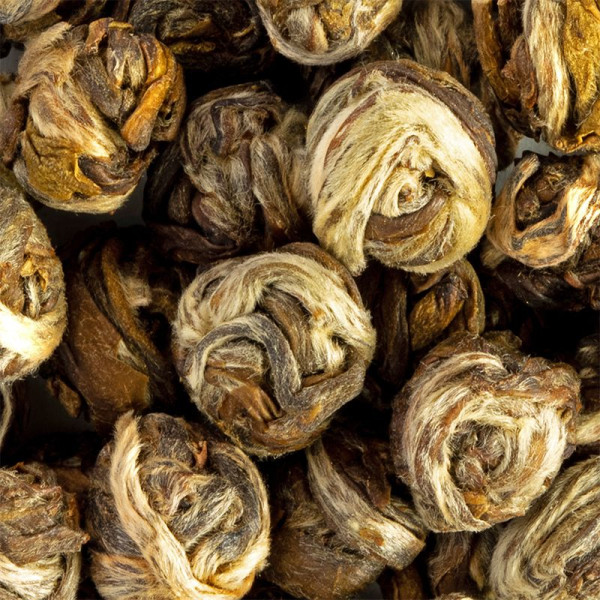
White Jasmine Dragon Pearls Tea
Organic White Jasmine Dragon Pearls reveals delicate hand-rolled jasmine pearls from China.
€12.90Discover
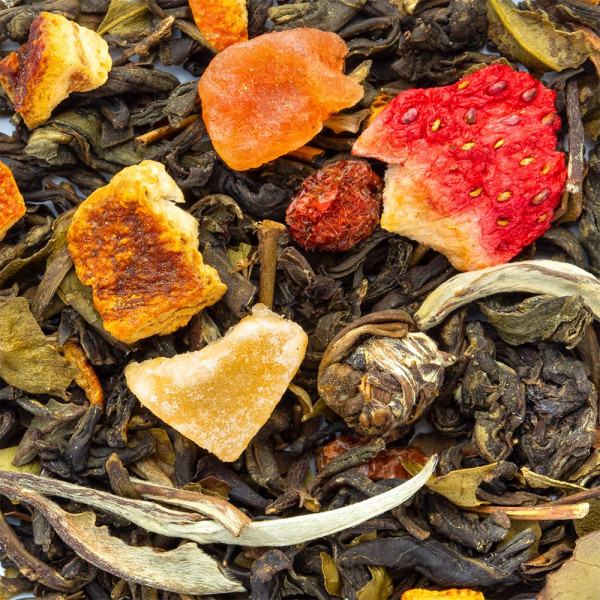
Dragon White Tea
The Dragon White Tea is an indulgent, exotic blend built on a Pai Mu Tan base, lifted by notes of lychee and peach.
€9.90Discover
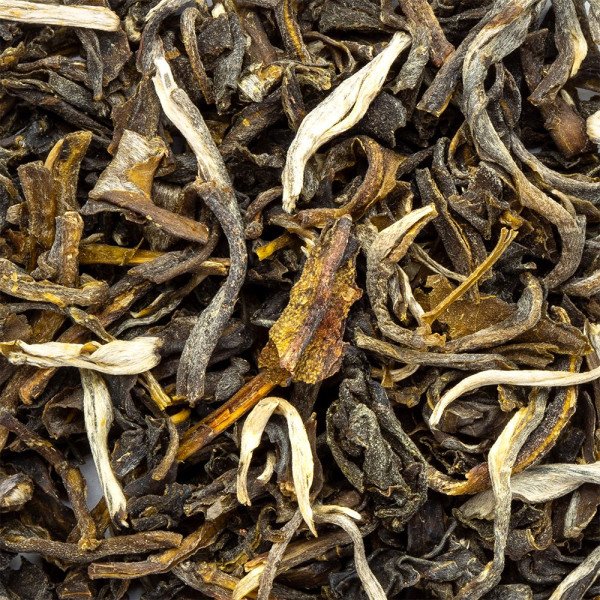
Vietnam Mao Feng White Tea
Organic Vietnam Mao Feng white tea is made from delicate hand-picked young buds, yielding a pale, luminous liquor with fresh, v…
€10.50Discover