White Tea Benefits: 7 Things Worth Knowing

It has long been known that drinking tea regularly is genuinely good for you. But not all teas offer the same benefits, even when they come from the same plant: the tea bush, or Camellia Sinensis. So what are the benefits of white tea? According to a growing body of research, white tea's advantages stand out from all other varieties. What sets one tea apart from another comes down to its origin, climate, harvest timing, which parts of the plant are picked, and how the leaves are processed before packaging. This gives us a range of varieties: black tea, red tea, green tea, yellow tea, and white tea, the last of which remains the rarest, the most prized, and the richest in polyphenols, particularly flavonoids, which are powerful natural antioxidants. White tea is made primarily from buds in the case of Silver Needle, and from buds plus the two youngest leaves for Bai Mu Dan. This is precisely why white tea's benefits are more concentrated than those of other teas. It also matters to distinguish between loose-leaf tea and tea bags. The latter, sold cheaply in supermarkets, often contains tea dust and little else. If you want to enjoy the full range of tea's qualities, loose-leaf is always the better choice.
White tea: a daily drink for body and mind
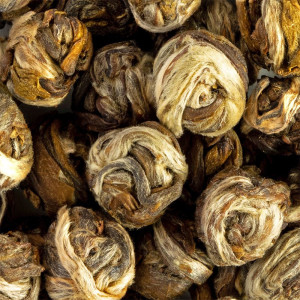 White Jasmine Dragon Pearls Tea€12.90
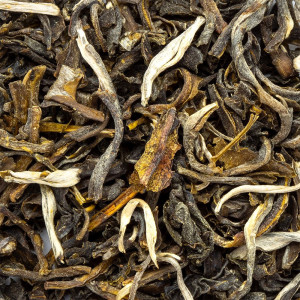 Vietnam Mao Feng White Tea€10.50
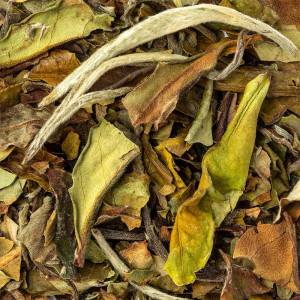 Paï Mu Tan White Tea€7.50
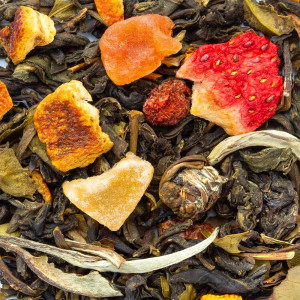 Dragon White Tea€9.90
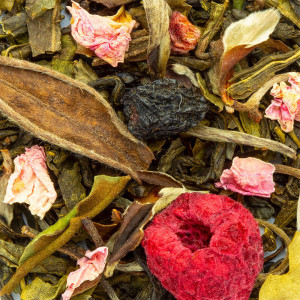 White Tea Currant Raspberry Rose€12.50
White tea is, first and foremost, a drink for pleasure and well-being, best enjoyed as part of a balanced lifestyle. Light and naturally low in caffeine, it fits beautifully into the softer moments of the day, from morning through to the afternoon, making 2 to 3 cups a day an easy and welcome habit. Why choose white tea? Because it is one of the most delicate teas and among the richest in catechins, a subclass of flavonoids valued for their qualities as a natural antioxidant. White tea also stands out for its remarkable aromatic finesse: fresh, floral notes with a gentle sweetness that make it a truly special cup. Like all teas, it contains tannins; to support digestive comfort and iron absorption, it is best enjoyed between meals rather than alongside them. A simple habit that helps you get the most from every cup.
Curious to try it? Browse our selection of organic loose-leaf white teas, delicate harvests and fine cuvées chosen by Julien Huot.
White tea benefits for the skin
Unlike other teas, white tea is harvested only once a year and undergoes no processing beyond simple withering (air-drying in the sun). Very lightly oxidized, white tea is rich in catechins (a subclass of flavanols), recognized as precious natural antioxidants. It is this richness, combined with minimal processing, that makes white tea one of the purest and most delicate teas available. Beyond its composition, it is a genuine sensory pleasure: a pale, clear liquor, floral aromas, and a softness on the palate that makes each cup a moment to savour. In short, a balanced diet complemented by regular cups of white tea sits naturally within a calm, healthy way of life built around small rituals and well-earned pauses.
What exactly is white tea?
White tea is the least processed of all tea types derived from the Camellia sinensis plant. Originating in the Fujian province of China, its history stretches back to the Tang dynasty (618–907 AD), when it was reserved exclusively for the emperor and his court. Today, Fuding white tea remains the global benchmark, followed by production from Sri Lanka, Vietnam, and India.
What sets white tea apart from other families (green tea, black tea, Oolong, Matcha) is its ultra-minimalist production. The leaves are neither rolled nor oxidized: simply withered in open air, then dried at low temperature. This near-absence of processing preserves the highest possible levels of catechins, polyphenols, and theaflavins, making white tea the richest in natural antioxidants.
The main white tea varieties
Several white tea varieties exist, each with its own unique profile. Here are the most recognized:
Bai Hao Yin Zhen (Silver Needle)
The most prized white tea. Made solely from unopened buds covered in fine silver down. Harvested exclusively in spring, by hand, over just a few days each year. Delicate, floral, lightly sweet. The grand cru of white tea, and the most expensive (40–100 €/100g).
Bai Mu Dan / Pai Mu Tan (White Peony)
Made from the bud and its two young adjacent leaves. More accessible than Silver Needle, with a richer aromatic profile: floral notes, honey, stone fruit. The most popular white tea in the West (15–30 €/100g).
Shou Mei / Gong Mei
A later harvest, with more mature, broader leaves. A more rustic profile with woody and mineral notes. An excellent everyday white tea with great value for money.
Anji Bai Cha
A curious case: technically a green tea (similar oxidation process), but its pale buds give it such a light colour that it is sold as "Anji white tea". A unique umami character, highly regarded in China.
How to prepare white tea properly
Preparing white tea calls for care and a gentle touch. Water that is too hot will destroy its delicate aromas and bring out unwanted bitterness.
- Quantity: 4–5g of leaves (about 1.5 teaspoons) per 200 ml of water.
- Temperature: 70–75°C maximum, never boiling.
- Steeping time: 4 to 6 minutes (longer than green tea, as the flavours release slowly).
- Re-steepable: 3 to 5 times, with the water a little warmer with each infusion.
- Best enjoyed plain, without sugar or milk, which would mask its natural finesse.
For iced tea, try a cold brew: 8g per litre of cold water, left in the refrigerator for 6 to 8 hours. The result is smooth, refreshing, and gently sweet.
White tea vs. other teas: the key differences
White tea stands apart from other tea families in several ways:
- Vs. green tea: very low oxidation (5–10%) compared to none for green. Slightly higher caffeine, but more concentrated antioxidants.
- Vs. black tea: unoxidized vs. 100% oxidized. Light and floral vs. full-bodied and malty.
- Vs. Oolong: not rolled vs. semi-oxidized and rolled. More delicate on the palate.
- Vs. Matcha: whole leaves vs. ground powder. Lower caffeine, but a different polyphenol profile.
White tea contains around 15–25 mg of caffeine per cup, compared to 30–50 mg for green tea and 40–70 mg for black tea. A natural choice for anyone looking for a gentle, antioxidant-rich brew.
White tea benefits in detail
Rich in catechins
White tea is among the teas highest in catechins, a subclass of flavonoids valued as a natural antioxidant. Its very low oxidation preserves this richness, making it a tea of exceptional purity, best enjoyed as part of a balanced diet.
Naturally low in caffeine
White tea is naturally low in caffeine (around 15 to 25 mg per cup), while still offering a high concentration of polyphenols. It is the ideal tea for those looking for something gentle, suitable from morning to evening.
A delicate aromatic profile
White tea wins you over with its finesse: fresh, floral notes with a gentle sweetness, a pale clear liquor, and a softness on the palate. It is a moment of quiet pleasure in its own right, appreciated for its elegance above all else.
A tea for pleasure and well-being
White tea fits naturally into a well-being routine built around small rituals. Valued for its softness and delicacy, it accompanies the pauses of the day and gently invites you to slow down. Several cosmetic houses also appreciate its extract for the botanical notes it brings to their creations.
How to choose a good white tea
When it comes to choosing white tea, four key criteria:
- Origin: Fujian (China) remains the absolute benchmark. Yunnan is a solid choice; Sri Lanka for more accessible options.
- Variety: Bai Mu Dan to explore, Silver Needle for excellence, Shou Mei for everyday drinking.
- Form: whole leaves and buds (never broken for white tea).
- Certification: organic white tea is essential for quality (tea leaves are highly absorbent of pesticides).
Avoid budget pyramid-bag white teas: they are often made from tea dust with little aromatic interest.
Our white tea selection at Thés & Traditions
Browse our full range of organic white tea, featuring several of the finest varieties:
- Pai Mu Tan White Tea: the classic, floral and approachable.
- Yin Zhen Silver Needle White Tea: the grand cru of silvery buds.
- Anji Bai Cha 1st Grade: a uniquely Chinese umami character.
- Dragon White Tea: a modern, flavoured take.
All our white teas are organically grown, sourced directly from Fujian producers. For guidance on brewing, see our guide on how to prepare white tea.
Precautions and contraindications
White tea is generally very well tolerated, but a few points to keep in mind:
- Caffeine: gentle as it is, it still contains 15–25 mg per cup. Best avoided in the evening if you are sensitive.
- Pregnancy: the WHO recommends no more than 200 mg of caffeine per day, equivalent to around 8 cups of white tea.
- Blood thinners: a theoretical interaction with vitamin K antagonists exists; worth monitoring.
- Iron deficiency: avoid drinking white tea with meals, as tannins can reduce iron absorption.
- Active gastric ulcer: avoid on an empty stomach to prevent irritating the stomach lining.
Outside these cases, 2 to 4 cups of white tea per day fits comfortably within a balanced diet.
Frequently asked questions about white tea
Which is the best white tea?
It depends. For pure finesse, Bai Hao Yin Zhen (Silver Needle) is the pinnacle. For everyday drinking, Bai Mu Dan offers the best value. Shou Mei is a great option on a tighter budget.
Does white tea really contain less caffeine?
Yes, 15–25 mg vs. 30–70 mg for other teas. That said, it is not caffeine-free.
How long does white tea keep?
Stored in an airtight tin away from light, 18 to 24 months without significant loss of quality. After that, the aroma fades but the tea remains perfectly drinkable.
Can you drink white tea every day?
Yes, 2 to 4 cups a day is a perfectly reasonable amount. See also our guide on drinking white tea daily for more.
White tea and weight loss: does it help?
A modest effect has been documented. It will not cause weight loss on its own, but it can support a balanced diet combined with physical activity.
Is white tea suitable for children?
Its low caffeine makes it better tolerated, but it is best avoided under the age of 12. For teenagers, the occasional cup is fine.
Why is white tea so expensive?
Three reasons: exclusively hand-picked, a very short harvest window (spring only), and low yields per hectare. Silver Needle requires around 30,000 buds to produce just 500g of dried tea.
Explore our organic white tea range: Pai Mu Tan, Yin Zhen Silver Needle, Anji Bai Cha, and our flavoured blends. Certified organic, direct sourcing.
Tempted to try it?
Our selection related to this article, loose leaf and organic.
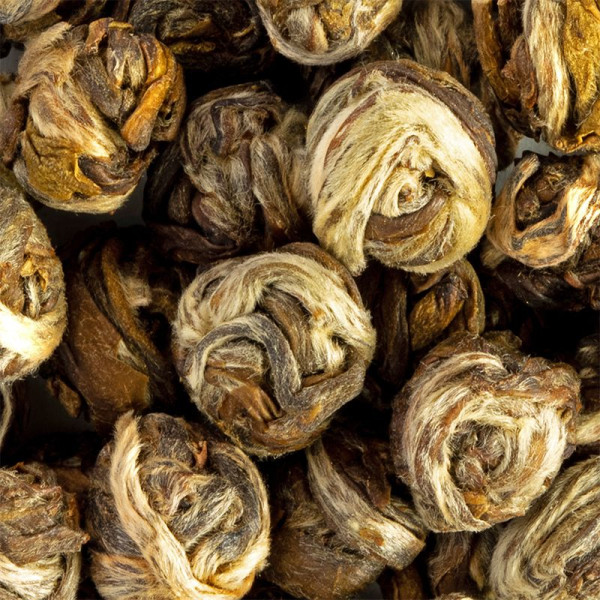
White Jasmine Dragon Pearls Tea
Organic White Jasmine Dragon Pearls reveals delicate hand-rolled jasmine pearls from China.
€12.90Discover
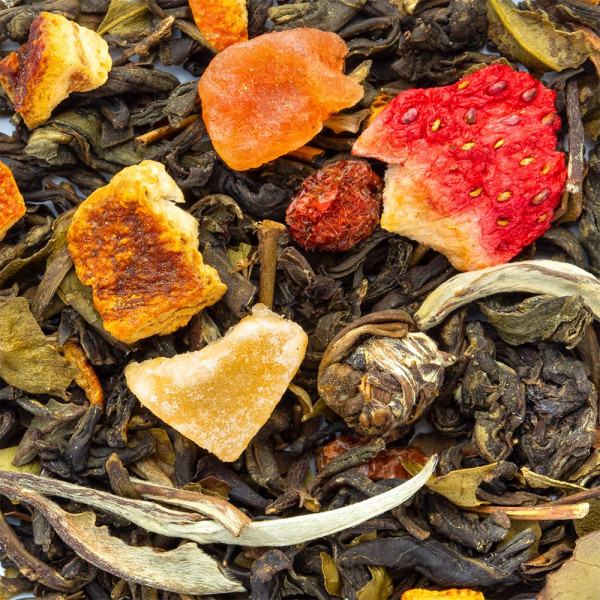
Dragon White Tea
The Dragon White Tea is an indulgent, exotic blend built on a Pai Mu Tan base, lifted by notes of lychee and peach.
€9.90Discover
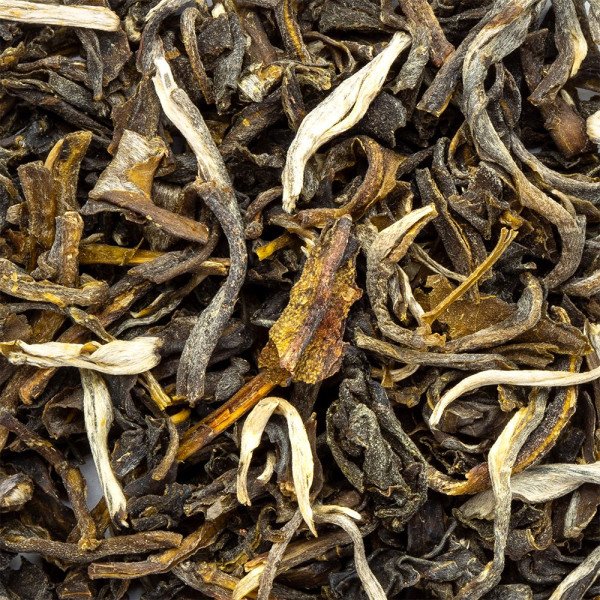
Vietnam Mao Feng White Tea
Organic Vietnam Mao Feng white tea is made from delicate hand-picked young buds, yielding a pale, luminous liquor with fresh, v…
€10.50Discover