How to Brew White Tea: The Traditional Method

More and more tea lovers are making white tea part of their daily ritual. Knowing how to brew white tea properly is key to enjoying its full flavour, and steeping time is everything. Whether served hot or iced, tea is always a refreshing choice. Rich in antioxidants and active compounds, yet low in caffeine, white and green teas offer a wide range of delicate, varied flavours to savour. For most of us, whether it's green tea, red tea, black tea, flavoured tea, Matcha, Rooibos, Darjeeling or even mint tea and herbal infusions, the basics of brewing remain the same: place the tea in an infuser or tea ball, bring water to the boil, pour it over the leaves while still just off the boil, and steep. But what does it take to brew a truly great cup? Among tea enthusiasts, white tea holds a place of honour. Rare and precious, it rightfully sits at the top of the tea world, demanding care and attention in the cup. Low in theine, Chinese white tea can be enjoyed at any time of day. Brewing it becomes a moment of its own, whether shared with family or savoured quietly among friends.
How to brew organic white tea
Organic white tea is considered the most delicate of all teas to brew and savour. Harvested by hand once a year in China's Fujian region, the finest buds and youngest leaves are plucked from the Camellia Sinensis plant and dried directly in the sun, with no further processing. While handling between harvest and packaging is kept to a minimum, brewing white tea well calls for patience and a little know-how. It can be prepared in a glass, clay or cast iron teapot, or in a Gaiwan (a lidded bowl) also known as a Zhong. Both methods are quite similar, but each deserves a closer look.
How to brew white tea in a Gaiwan: To brew white tea the traditional way using a Gaiwan, you will need an electric kettle, a bowl, and one or more Gaiwans. The Gaiwan is a fine glass or porcelain cup made of three separate parts:- The lid (a symbol of the sky)
- The body (a symbol of water, and of life)
- The saucer (a symbol of the earth)
Place a small amount of white tea leaves at the bottom of the Gaiwan (3g per 300ml of water). Use low-mineral water, spring water or filtered water. Heat the water and pour it into the body of the Gaiwan. The temperature should not exceed 70°C. White tea is particularly delicate and will scorch if the water is too hot, turning bitter and astringent. Immediately after pouring the first water, place the lid to act as a filter and empty the water into the dedicated bowl. This step serves to rinse the leaves and open the tea, allowing it to release its aromas and subtle fragrance. Pour fresh hot water into the body again, gently guiding the leaves along the sides and under the lid, then cover once more. The first infusion should steep for two to three minutes for a lighter cup, or three to four minutes for something fuller. The tea is then ready to enjoy: tilt the lid of the Gaiwan slightly to filter as you pour, and savour.
How to brew white tea in the Gong Fu Cha tradition
For the Gong Fu Cha method of brewing white tea, you will need several items to hand:- A traditional slatted bamboo tray with a base to collect and dispose of water at the end of the ritual
- An electric kettle
- A tea pitcher with strainer
- A small clay teapot (preferred) or a cast iron teapot, to retain heat longer
- A set of tasting cups
Begin by pouring hot water into the empty teapot. Use some of this water to warm the tea pitcher, and the rest to warm the cups. These three passes serve to rinse and warm the vessels. Discard the water from the cups into the tray. Add your measure of tea to the teapot, cover with hot water and discard this rinse water as well. This step cleans the leaves and prepares them to release their full aromas. Fill the teapot again, place the lid, then pour a little simmering water over the outside of the pot to maintain its temperature. Leave the white tea to steep for at least 8 minutes. Pour the tea first into the pitcher to ensure an even brew, then serve into the cups. If a Chinese white tea master were to prepare white tea in this pure tradition, you would notice that each gesture is repeated three times, honouring the earth, the spirits (life), and the sky.
White tea steeping time
The steeping time for white tea is longer than for most teas. Unlike black tea, which can turn bitter if steeped too long, white tea behaves quite differently: the longer it steeps, the more it unfolds its subtle, harmonious aromas. The Fujian Silver Needle white tea (Bai Hao Yin Zhen) needs 8 to 12 minutes to reveal its full flavour. Yunnan white tea requires around 8 minutes for its beautiful buds to release all their floral and fruity notes. In Western cultures, re-steeping the same leaves is not common practice, yet multiple infusions of white tea are well worth exploring: each steep brings a different expression, a new wave of flavour. It is also worth noting that the more a tea is re-steeped, the lower its theine content. With white tea already being naturally low in theine, a final cup in the evening is entirely possible, and a peaceful night's sleep all the more likely.
Explore our range of organic white teas: Pai Mu Tan, Yin Zhen Silver Needle, Anji Bai Cha and our flavoured blends. Certified organic, direct sourcing.
Tempted to try it?
Our selection related to this article, loose leaf and organic.
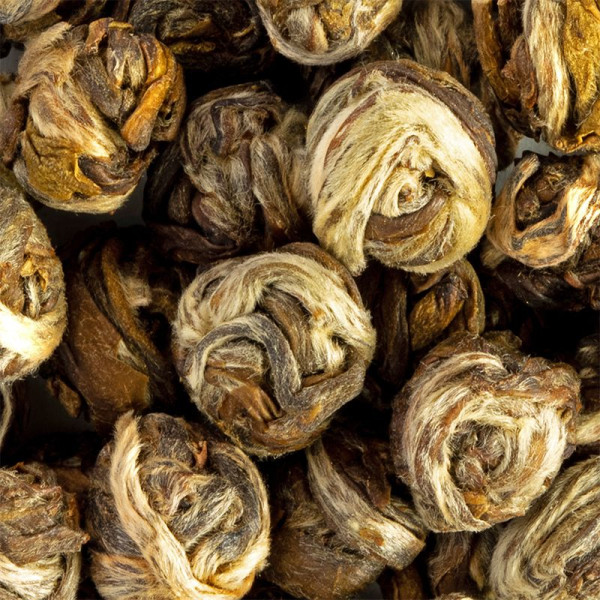
White Jasmine Dragon Pearls Tea
Organic White Jasmine Dragon Pearls reveals delicate hand-rolled jasmine pearls from China.
€12.90Discover
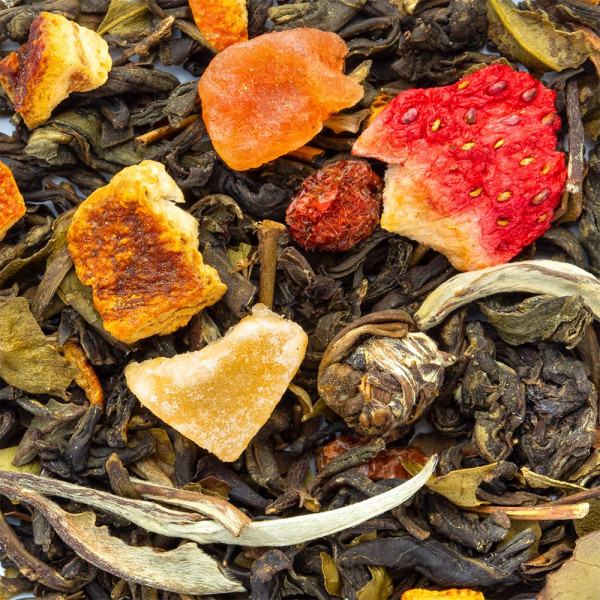
Dragon White Tea
The Dragon White Tea is an indulgent, exotic blend built on a Pai Mu Tan base, lifted by notes of lychee and peach.
€9.90Discover
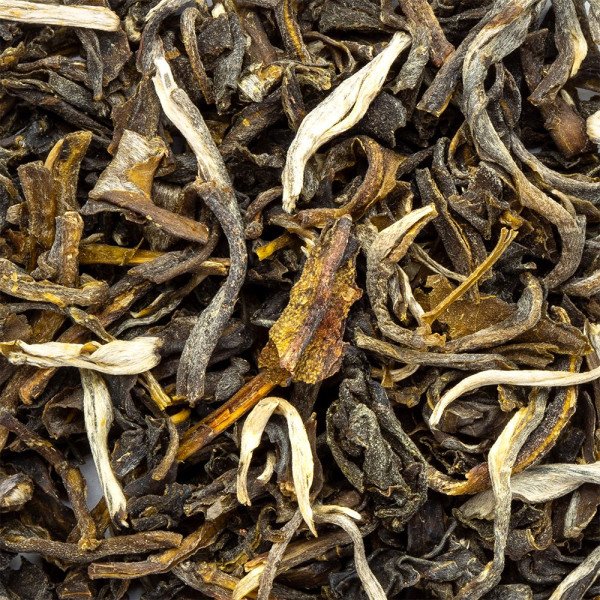
Vietnam Mao Feng White Tea
Organic Vietnam Mao Feng white tea is made from delicate hand-picked young buds, yielding a pale, luminous liquor with fresh, v…
€10.50Discover